India CPCB Wastewater Discharge Standards for Industries: What Operators Must Know
India CPCB wastewater discharge standards for industries set the national baseline in Schedule VI of Environment (Protection) Rules, 1986: BOD 30 mg/L, COD 250 mg/L, TSS 100 mg/L, pH 5.5–9.0, and oil and grease 10 mg/L for inland surface water; SPCB consents can be stricter.
The Role of the CPCB and SPCBs in Industrial Compliance
The Central Pollution Control Board (CPCB), established under the Water (Prevention and Control of Pollution) Act, 1974, is India's national authority for industrial wastewater standards. It publishes the General Standards for Discharge of Environmental Pollutants Part-A: Effluents, which every factory discharging wastewater must satisfy. Penalties for non-compliance include daily fines, consent revocation, and operational shutdowns.
The Water (Prevention and Control of Pollution) Act, 1974 is also the statute behind the consent mechanism. It prohibits disposal of polluting matter into water bodies without prior consent, requires industries to obtain consent before discharging sewage or trade effluents, and lets the boards issue directions that extend to closure or regulation of an industry. Penalty provisions for obstruction and damage sit alongside these consent powers, which is why consent conditions carry real operating weight.
Day-to-day enforcement runs through State Pollution Control Boards. A textile plant in Gujarat and a pharmaceutical unit in Telangana will see different consent conditions, even though the CPCB baseline is identical, because SPCBs can tighten limits based on local river assimilative capacity or downstream drinking-water intakes. In sizing a treatment train, the binding number is almost always the SPCB consent, not the CPCB schedule.
The core parameters — BOD, COD, TSS, pH, oil & grease, ammoniacal nitrogen, and total residual chlorine — protect against oxygen depletion, toxicity, eutrophication, and infrastructure corrosion. Getting these right early in ETP design is cheaper than retrofitting after consent refusal.
CPCB ETP Consent Compliance for Indian Factories: The Working Sequence
CPCB ETP consent compliance for Indian factories starts with identifying the discharge route, the sector schedule, and the conditions written in the Consent to Establish or Consent to Operate. A factory should treat the tightest applicable limit as the design target and retain the consent letter, laboratory reports, calibration records, and corrective-action log as one auditable file.
The phrase describes a practical sequence rather than a single piece of equipment. First classify the discharge as inland surface water, public sewer, land for irrigation, or marine coastal area. Next confirm whether the industry has a sector-specific schedule of its own. Finally compare the latest SPCB consent with CPCB Schedule VI and design each unit operation around the limiting parameter.
Two frequently searched descriptions are new norms of water as per cpcb for steel plants in india and india cpcb wastewater treatment guidlines. Both point engineers toward the same control question: which current national, sector-specific, and state consent conditions govern the actual outlet?
A useful compliance register has six fields: parameter, consent limit, sampling location, analytical method, operating alarm, and responsible operator. The register should distinguish a final discharge from a treated-water reuse outlet. It should also record whether a result is a grab sample, a composite sample, or an online signal.
General Standards for Discharge of Environmental Pollutants Part-A: Effluents
Schedule VI of the Environment (Protection) Rules, 1986 defines four discharge scenarios, each with its own parameter limits. The table below consolidates the current CPCB wastewater discharge standards and is the reference most consent engineers work from. It is a national baseline; the consent order and a sector schedule control whenever they impose a tighter condition.
| Parameter | Inland Surface Water | Public Sewers | Land for Irrigation | Marine Coastal Areas |
|---|---|---|---|---|
| Colour and odour | Shall not be objectionable | Shall not be objectionable | Shall not be objectionable | Shall not be objectionable |
| Suspended Solids (mg/L, max) | 100 (process wastewater) 10% above influent (cooling water) |
600 | 200 | 100 (process wastewater) |
| Particulate size of suspended solids | Shall pass 850-micron IS sieve | — | — | Floatable solids: <3 mm Settleable solids: <850 microns |
| pH Value | 5.5–9.0 | 5.5–9.0 | 5.5–9.0 | 5.5–9.0 |
| Temperature | Shall not exceed 5°C above receiving water temperature | — | — | Shall not exceed 5°C above receiving water temperature |
| Oil and Grease (mg/L, max) | 10 | 20 | 10 | 20 |
| Total Residual Chlorine (mg/L, max) | 1.0 | — | — | 1.0 |
| Ammonical Nitrogen (as N, mg/L, max) | 50 | 50 | — | 50 |
| Total Kjeldahl Nitrogen (as NH₃, mg/L, max) | 100 | — | — | 100 |
| Biochemical Oxygen Demand (BOD, mg/L, max) | 30 | 350 | 100 | 100 |
| Chemical Oxygen Demand (COD, mg/L, max) | 250 | — | — | 250 |
These are minimum national limits. Industry-specific schedules for textiles, pharmaceuticals, tanneries, sugar, distilleries, and iron & steel layer additional or tighter thresholds on top. For a deeper breakdown of one commonly cited threshold, see our guide to cpcb oil and grease discharge limit 10 mg/l inland surface water.
Do not interpret the table as permission to dilute an untreated stream. Equalisation, source segregation, water balance, and a defensible sampling point are part of compliance, because a concentration result is only meaningful when the flow and process conditions are known.
Key Parameters: Industrial Significance and Monitoring
Industrial wastewater parameters are both regulatory limits and process-control signals: BOD 30 mg/L, COD 250 mg/L, TSS 100 mg/L, pH 5.5–9.0, and oil & grease 10 mg/L define the inland-surface-water design envelope. Each result should be interpreted with flow, temperature, sampling location, and the operating state of the ETP.
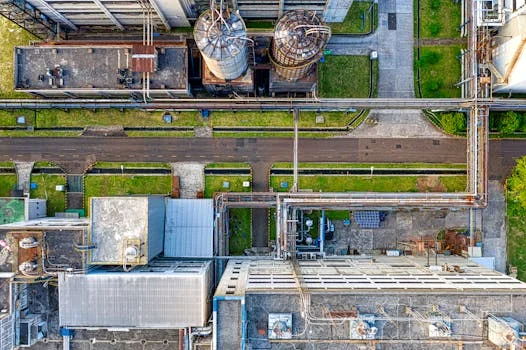
Each limit in the schedule exists because the parameter causes a specific harm downstream. Reading the limits as engineering numbers, rather than paperwork, helps operators distinguish a stable ETP from one that passes only under a short-lived operating condition.
Biochemical Oxygen Demand (BOD)
Limit: 30 mg/L for discharge to inland surface water.
Significance: BOD measures oxygen consumed by microbes breaking down organic matter. High BOD strips dissolved oxygen from rivers and triggers fish kills. Food processing, distillery, and pulp & paper plants generate the highest BOD loads and must design biological stages around this 30 mg/L ceiling.
Monitoring: Under Indian CPCB methods, BOD is measured over 3 days at 27°C. Most plants we size run between 18–25 mg/L at the ETP outlet to leave headroom for sampling variability. The operating target should be supported by trend data, not a single favourable sample.
Chemical Oxygen Demand (COD)
Limit: 250 mg/L for discharge to inland surface water.
Significance: COD captures both biodegradable and non-biodegradable oxidisable matter, so it always exceeds BOD. A COD/BOD ratio above 3 typically signals refractory organics that need tertiary polishing. Refineries and chemical plants lean on MBR systems or advanced oxidation to close this gap.
Monitoring: COD tests complete in 2–4 hours using closed-reflux colorimetric methods, which is why operators use it for daily process control. A rising COD trend with stable flow is a prompt to check production chemicals, equalisation mixing, and biological loading.
Total Suspended Solids (TSS)
Limit: 100 mg/L for inland surface water, 600 mg/L for public sewers.
Significance: TSS smothers benthic habitat, blocks UV disinfection, and clogs drip irrigation. Mining, textile, and metal-finishing streams need consistent removal; most plants we audit hit 60–80 mg/L with a well-tuned DAF unit ahead of the biological stage.
Monitoring: Gravimetric TSS via 1.2 µm filter papers, run daily at minimum. Operators should pair the laboratory result with clarifier blanket depth, sludge wasting, and turbidity trends.
pH Value
Limit: 5.5–9.0 across all four discharge scenarios.
Significance: Out-of-range pH corrodes sewers, kills aquatic life, and crashes nitrification. Electroplating and tannery streams often swing by 2–3 pH units during a shift, so inline neutralisation with redundant dosing pumps is the safe path.
Monitoring: Continuous inline pH meters with auto-shutoff on the discharge line. Calibrate the probe and verify the alarm against a laboratory check, because fouling can make a stable display misleading.
Oil and Grease
Limit: 10 mg/L for inland surface water, 20 mg/L for public sewers.
Significance: Oil films cut oxygen transfer and clog diffusers. Petroleum, metalworking, and edible-oil plants should plan oil-water separators as the first unit operation, not an afterthought. A poorly protected biological stage can lose performance after one slug load.
Monitoring: Solvent extraction (n-hexane) on a weekly composite sample. Keep the sampling container, preservation method, and laboratory report tied to the same sample identifier.
Nitrogen Compounds (Ammonical Nitrogen and TKN)
Limits: Ammoniacal N 50 mg/L, TKN 100 mg/L for inland and marine discharge.
Significance: Excess nitrogen drives eutrophication. Fertilizer, pharma, and food plants typically need a dedicated nitrification-denitrification stage or an MBR system to land below 50 mg/L ammoniacal N.
Monitoring: Daily colorimetric ammonia; weekly TKN by digestion/distillation. Confirm alkalinity, dissolved oxygen, and sludge age before increasing aeration, because more air alone does not solve a missing carbon or upset equalisation problem.
For guidance on instrumentation choices for COD, ammonia, and total phosphorus, refer to our analyzer selection guide.
Treatment Train Design for CPCB Compliance
ETP treatment-train design converts the binding consent limits into unit-operation targets. A compliant ETP is a sequence in which each stage is sized against the pollutant load at its outlet, with equalisation and bypass control preventing short-duration production peaks from reaching the final discharge.
A design review should compare average flow, peak hourly flow, pollutant mass load, temperature, pH range, shock-load frequency, sludge production, and the required reuse quality. Most plants we size for industrial estates run at the lower end of the biological loading range when consent risk matters more than minimum footprint.
-
Wastewater Characterization:
Profile at least one week of composite samples for BOD, COD, TSS, pH, oil & grease, ammoniacal N, and any sector-specific metals. Without this baseline, treatment design is guesswork. Capture production shifts, cleaning cycles, batch dumps, and storm-water intrusion separately.
-
Regulatory Assessment:
Match the characterization against CPCB Schedule VI and your SPCB consent. The textile sector, for example, carries additional limits on colour and chromium that the general schedule does not list. Confirm the discharge route before choosing the table column.
-
Treatment Plant Design:
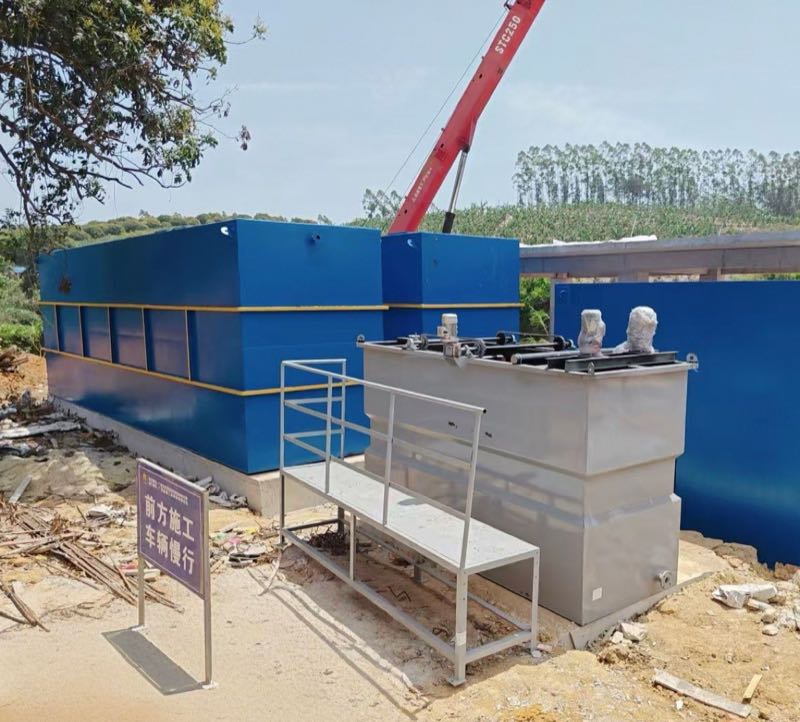
A typical train for inland-surface-water discharge runs:
- Pre-treatment: Screening, flow equalisation, oil & grease removal via DAF.
- Primary: Clarifier or flotation for settleables and TSS.
- Secondary biological: Activated sludge, SBR, or MBR to cut BOD/COD and nitrify ammonia.
- Tertiary: Sand/UF filtration, disinfection via chlorine dioxide or UV, plus polishing for residual COD.
-
Implementation and Optimisation:
Targets worth writing into your operating manual: HRT 6–8 h at 20°C for conventional activated sludge, MLSS 3,000–4,000 mg/L, F/M 0.2–0.4/day, and SVI below 150 mL/g. Dewater sludge with plate-and-frame filter presses to reach 22–25% DS. These are design and operating targets, not substitutes for the consent letter.
-
Monitoring and Reporting:
Online sensors for pH, TSS, COD, and flow on the final outlet, with a data logger that archives at least one year of records for SPCB audits. Define who reviews alarms, who authorises a diversion, and how a failed analyser is documented.
For the process in more detail, see our 7-step wastewater treatment guide, and for sizing equipment, the industrial wastewater treatment equipment selection guide.
Steel Plants, CETPs, and Sector-Specific Schedules
Integrated steel plants sit under a dedicated CPCB schedule with limits tighter than the general standard for oil & grease (10 mg/L), phenol (1 mg/L), cyanide (0.2 mg/L), and ammonia (50 mg/L), plus flow-normalised load caps at kg/tonne of finished steel. Most modern Indian steelworks pair a physico-chemical primary stage (lime softening, DAF) with a two-stage biological train and reuse treated water in coke quenching and slag cooling. Buyers comparing India CPCB wastewater discharge standards for industries at steel plants should pull both the general effluent schedule and the sector-specific notification before locking in equipment sizes.
The CPCB portal now carries a dedicated online effluent and emission monitoring section covering OCEMS, including complete information pages for industries subject to online continuous monitoring. Steel buyers should confirm the current parameter and analyzer list for their process units there before freezing the instrumentation schedule, because the monitored-parameter set differs between coke ovens, rolling mills, and sponge-iron units.
What Are CETP Discharge Standards in India?
Common Effluent Treatment Plants (CETPs) handling combined member effluent face an additional layer: the CETP outlet must meet CPCB norms while individual member discharges meet the inlet consent given to the CETP operator. Sizing the biological stage for a CETP typically assumes a 1.4–1.6× peaking factor over the daily average flow.
What Are STP and ETP Effluent Standards?
STP and ETP effluent standards in India both draw from Schedule VI, but the binding consent differs by discharge point and sector schedule. An industrial ETP discharging to inland surface water must hit BOD 30 mg/L and COD 250 mg/L; a municipal STP or sewer-connected plant may work to the public-sewer column (BOD 350 mg/L, TSS 600 mg/L) where the downstream STP provides secondary treatment.
Future Outlook: Stricter Enforcement, ZLD, and Digital Monitoring
Indian industrial wastewater compliance is moving toward tighter evidence, more reuse, and closer monitoring, while the governing consent remains the practical operating limit. The 2026 planning question is not whether a plant can pass one sample; it is whether the treatment, instrumentation, and records can demonstrate stable control through production changes.

Four forces are reshaping compliance economics across Indian industry in 2026 and beyond.
-
Stricter Enforcement:
CPCB and SPCBs have raised inspection frequency, and the National Green Tribunal (NGT) has levied recurring fines on repeated violators. Plants without real-time effluent data are the first to be shut down.
-
Water Reuse and Zero Liquid Discharge (ZLD):
Distilleries, dyes, and pharma units in water-stressed states are moving to ZLD using MBR followed by RO and brine recovery. A typical ZLD retrofit adds 35–60% to ETP capex but removes freshwater risk and most compliance exposure.
-
Digital Monitoring:
IoT effluent sensors feeding a cloud dashboard are now standard in consent applications for plants above 100 m³/d. Predictive analytics on aeration blower load and polymer dosing typically trim chemical OPEX by 10–15%.
-
Sustainable Practices:
Anaerobic digestion with biogas capture turns a sludge liability into a steam offset, paying back in 3–5 years at sites above 500 m³/d.
For the broader framework, see our industrial water management guide and the water reuse playbook. The separate Industrial Waste Discharge Permit South Africa: 2026 Limits article covers another jurisdiction; the standards and design decisions in this guide remain India-specific.
Who This Guide Is For and Next Step
This page is for plant engineers, EPC contractors, and procurement managers designing or auditing an ETP, STP, or CETP for an Indian facility. It is less useful for municipal-only STP operations without industrial loads, where the CPCB Schedule VI for sewage typically applies.
Selection checklist before you commit to a treatment train:
- Confirmed discharge scenario (inland water, sewer, irrigation, marine).
- Latest SPCB consent letter with parameter-wise limits.
- One-week minimum characterisation of influent BOD, COD, TSS, NH₃-N, oil & grease.
- Defined reuse target (cooling, boiler, gardening) if ZLD is on the roadmap.
- Online instrumentation list and data retention policy for SPCB reporting.
- Sludge disposal route and TS% target from the dewatering device.
Before procurement, reconcile the design basis, consent limits, mass balance, alarms, sampling plan, and sludge route in one review. Send your influent profile and consent conditions to our process team for a sized ETP proposal and a comparative quote on MBR, DAF, and filter press packages.
Frequently Asked Questions
What is the BOD limit for wastewater discharge in India?
The CPCB BOD limit for discharge to inland surface water is 30 mg/L max, 100 mg/L for land irrigation, and 350 mg/L max for discharge to a public sewer. Marine coastal areas allow 100 mg/L max. Most inland-discharge plants we see run between 18–25 mg/L at the outlet to absorb sampling variability, subject to the applicable consent and sector schedule.
What are the CPCB standards for industrial effluent discharge to inland surface water?
The binding numbers for inland surface water are BOD 30 mg/L, COD 250 mg/L, TSS 100 mg/L (process wastewater), pH 5.5–9.0, oil & grease 10 mg/L, ammoniacal N 50 mg/L, TKN 100 mg/L, and total residual chlorine 1.0 mg/L. Industry-specific schedules and SPCB consents add tighter limits on top where applicable.
Do wastewater discharge standards differ between public sewers and rivers in India?
Yes. TSS is 600 mg/L for public sewers versus 100 mg/L for inland surface water, and BOD is 350 mg/L for sewers versus 30 mg/L for rivers. Sewer discharge assumes downstream biological treatment at the municipal STP; river discharge does not, so the discharge route must be confirmed before equipment sizing.
How often does CPCB update its wastewater discharge standards?
The general effluent schedule was last substantively revised in 1993 and remains in force under the 1986 Environment (Protection) Rules. Sector-specific notifications and SPCB consents are updated more frequently, so always confirm the latest version before design. The current consolidated rules and any later amendments govern.
Which Act governs wastewater discharge standards in India?
The Environment (Protection) Rules, 1986, made under the Environment (Protection) Act, 1986, carry the Schedule VI effluent limits. The Water (Prevention and Control of Pollution) Act, 1974 constitutes the CPCB and SPCBs that enforce those limits and issue consents. The final design basis should still cite the current consent order and any sector notification.
Further Reading

Explore these in-depth articles on related wastewater treatment topics: