Why Color Is a Regulated Parameter in Egyptian Wastewater
Color is regulated in Egypt because it controls light penetration, protects coastal tourism revenue, and flags the recalcitrant organics that BOD and COD underestimate. EEAA's Oil, Soap and Detergents Industry — Inspection Manual (June 2002) explicitly lists color alongside BOD, COD, O&G, TSS, surfactants, pH, and temperature as a named parameter for the sector — a designation that, in practice, gets applied to any colored industrial discharge regardless of subsector. The numeric anchor for coastal and Nile discharges sits at approximately 50 Pt-Co (Hazen) units measured spectrophotometrically at 465 nm; discharges to public sewer permit roughly 100 Pt-Co.
Colored effluent blocks UV in the photic zone of receiving waters, suppressing phytoplankton photosynthesis and shifting the dissolved-oxygen balance downstream. On the Red Sea and Mediterranean coasts — both under Law 4/94 jurisdiction — visible plumes also have a direct economic cost in tourism perception, which is why EEAA inspectors weigh color as a discretionary trigger during routine audits. The EEAA Inspection Manual ties color to nuisance, eutrophication risk, and bioassay failure, not just aesthetics.
From a process-engineering standpoint, color usually signals a fraction that resists biological oxidation: azo and anthraquinone dyes, lignin derivatives, melanoidins, tannins, and certain surfactant chromophores. These compounds can pass through a conventional activated-sludge train with 10–30% color removal while BOD₅ is already at <30 mg/L, which is why a permit that only screens BOD/COD can be passed technically while still failing color. Egypt expresses color in Pt-Co (Hazen) units — APHA Method 2120B — by comparing sample absorbance at 465 nm against a platinum-cobalt standard solution; some labs also report ADMI (American Dye Manufacturers' Institute) tristimulus values or absorbance scans at 436/525/620 nm. When specifying a test, name the method, the wavelength, and the unit explicitly so procurement does not get back three different numbers.
Globally, color and oily-water limits have been tightening on a similar trajectory: Gerges (2003) noted the international oily-water discharge benchmark dropped from 40 ppm to 25 ppm by 2006, and EEAA's parameter ranges (BOD 20–600, COD 30–1100, O&G 5–100, TSS 30–800, pH 6–9.5, temperature ≤43°C) reflect the same compression. Treat Egyptian color as a parameter on a downward path, not a static number.
The Egyptian Legal Framework Governing Color Discharge
Four statutes and one inspection manual govern color in Egyptian industrial wastewater, and the rule a plant must meet is determined entirely by where the final effluent goes. Engineers specifying a treatment train should cite all four in the design basis, because EEAA permit reviewers cross-reference them when issuing or renewing the license.
Law 48/1982 is the original water-pollution statute and sets the baseline protection regime for the Nile, canals, drains, and lakes. It is the controlling law for any agricultural-drain discharge and establishes the philosophy that downstream reuse (irrigation) constrains upstream quality. Law 4/1994 ("Law 4/94") is the environmental protection law administered by EEAA (formed 1997) and covers discharges to the coastal marine environment and to open water — the strictest color regime, around 50 Pt-Co. Law 93/1962 as amended by Decree 44/2000 governs industrial discharges to the public sewer network, with the more permissive ~100 Pt-Co ceiling but tighter mass-loading controls upstream. Law 9/2009, read with Ministerial Decree 8/1983, regulates municipal and industrial wastewater treatment works, including reuse standards that effectively impose a color cap on any plant sending treated effluent to landscape or agricultural reuse.
The EEAA Oil, Soap and Detergents Industry — Inspection Manual (June 2002) is the most quotable reference for color as a named compliance parameter. It lists color in the parameter matrix for the sector and prescribes a composite sample per shift or a grab sample at peak discharge — the same protocol that the broader EEAA sampling guidance applies across sectors. Permit emission limit values are derived from the statutes above but are stated site-specifically in the EEAA permit itself; the permit can be, and routinely is, tighter than the generic law. When in doubt, enforce the permit value, not the law value.
For a comparative read on how Egypt's color framework sits against neighboring jurisdictions, the comparing Egypt's color limits with MENA industrial effluent standards guide cross-references parameter tables across Malaysia, Saudi Arabia, and the UAE, which is useful when a parent company is harmonizing discharge standards across plants.
Numeric Color Limits by Discharge Pathway in 2026

The numeric ceiling that applies to a plant depends on the receiving environment named in its EEAA permit. The table below consolidates the four pathways the compliance engineer will encounter in Egypt, with color in Pt-Co and the other routinely enforced parameters for context.
| Parameter | Coastal / Nile (Law 4/94) | Public Sewer (Law 93/62 + Decree 44/2000) | Agricultural Drain (Law 48/82) | Marine Outfall (Law 4/94) |
|---|---|---|---|---|
| Color (Pt-Co, 465 nm) | ~50 | ~100 | ~70 | ~50 |
| pH | 6–9 | 6–9.5 | 6–9 | 6–9 |
| BOD₅ (mg/L) | 20–30 | ≤600 | 60 | 20–30 |
| COD (mg/L) | 30–40 | ≤1100 | 100 | 30–40 |
| TSS (mg/L) | 30 | ≤800 | 60 | 30 |
| O&G (mg/L) | 5 | ≤100 | 15 | 5 |
| Temperature (°C) | ≤35 | ≤43 | ≤35 (≤10°C above receiving body) | ≤35 |
The coastal/Nile column is the tightest on color because the receiving water is the asset being protected — Mediterranean and Red Sea coastal tourism, Nile irrigation, and Lake Nasser fisheries all sit downstream of these discharges. Sewer-discharge plants get a more permissive ~100 Pt-Co ceiling, but the receiving POTW typically recycles a fraction of its inflow for landscape irrigation, so many sewer permits are being tightened toward 50–70 Pt-Co at the source. The marine-outfall pathway behaves like coastal discharge in practice because outfalls are usually within the EEAA coastal jurisdiction.
Always read the value stated in the plant-specific EEAA permit, not the generic law, because permits routinely apply tighter site-specific limits. A textile plant discharging to Alexandria's western sewer, for example, may have a permit clause specifying 70 Pt-Co even though Decree 44/2000 would nominally permit 100. Treat the table above as a design-basis floor; treat the permit as the contractual ceiling.
Sector-Specific Color Compliance: Textile, Pulp & Paper, Oil & Soap, Food
The same legal limit looks very different depending on the industry because the influent color load and the chemistry behind it vary by an order of magnitude. Specifying a treatment train starts with knowing where your sector sits on the color-load spectrum.
Textile and dye-house effluents typically enter the plant at 1,000–5,000 Pt-Co, dominated by reactive azo and anthraquinone dyes that resist biological oxidation. Biological treatment alone is insufficient; the standard train pairs coagulation/DAF for the hydrolysed dye fraction with ozone or Fenton oxidation for the chromophore break, often followed by activated carbon polishing. Pulp and paper streams run 500–3,000 Pt-Co from lignin and tannin derivatives; primary clarification plus activated sludge delivers partial color removal, but a 50–80% residual color cut from ozone or activated carbon is what closes the gap to the Egyptian ceiling. The DAF system design for color-laden industrial wastewater engineering guide has worked examples on the hydraulic loading and air-to-solid ratio these flows require.
For oil, soap, and detergents plants, the EEAA Inspection Manual explicitly names color as a key parameter alongside BOD, COD, O&G, TSS, TDS, surfactants, pH, and temperature. The pathway determines the target: coastal plants must reach ~50 Pt-Co, sewer plants ~100 Pt-Co, and a well-designed DAF plus biological train typically lands inside both windows. Food and beverage streams (sugar, distillery, soft drink, caramel production) run 200–2,000 Pt-Co from melanoidins; the conventional train is anaerobic (UASB or IC) plus aerobic (MBBR or activated sludge) plus ozone/AC polishing, which is the same architecture used for the toughest textile effluents. Dye intermediates and printing operations are the highest-load case, often requiring 95%+ Pt-Co reduction to comply with the Law 4/94 coastal ceiling of 50 Pt-Co.
Treatment Train Design to Meet Egypt's Color Limits
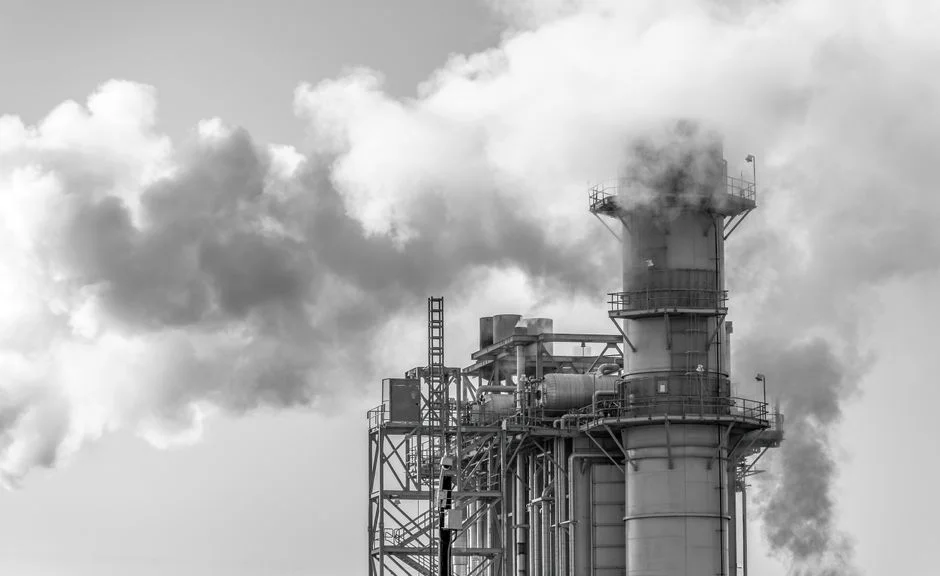
A defensible 2026 train for any color-laden industrial wastewater in Egypt stacks equalization, coagulation/DAF, biological treatment, advanced oxidation, and polishing carbon. The exact removal split depends on influent load, but the sequence is consistent enough to specify to procurement.
| Stage | Function | Typical Color Removal | Effluent Pt-Co (cumulative) | Equipment Reference |
|---|---|---|---|---|
| Equalization + pH adjust | Buffer hydraulic and chemical load, hold 6–9 pH window | 0–5% | Unchanged | EQ tank, HydropureWater automatic chemical dosing system |
| Coagulation / flocculation + DAF | Remove colloidal and dye-bound color, suspended solids | 60–80% | 200–1,000 (from 1,000–5,000) | HydropureWater dissolved air flotation (DAF) system, HydropureWater high-efficiency sedimentation tank |
| Biological (AS / MBBR / MBR) | Degrade bioavailable dyes and color precursors | 30–60% | 80–500 | HydropureWater MBR membrane bioreactor system |
| Ozone / AOP polishing | Break residual chromophores | 50–80% | 20–100 | Ozone generator, HydropureWater chlorine dioxide generator |
| Activated carbon polishing | Trim to single-digit Pt-Co for reuse or strict coastal limit | 70–90% | 5–30 | GAC contactor |
Equalization is non-optional on Egyptian textile and food streams because shift-discharge patterns routinely produce pH excursions below 4 or above 11, which would destroy coagulant performance and stall the biological stage. FeCl₃ at 50–200 mg/L, polyaluminum chloride (PAC) at 30–150 mg/L, or alum at 100–300 mg/L are the typical coagulants, paired with anionic polyacrylamide flocculant at 1–5 mg/L. The DAF stage handles hydraulic ranges of 4–300 m³/h per unit and removes oil and floated color solids in the same step, which is why oil-soap and food plants get two parameters knocked down simultaneously.
Biological treatment on bioavailable dyes removes 30–60% of the color that gets through coagulation, with MBR configurations preferred where the next stage is membrane filtration or direct ozone dosing — MBR effluent typically runs <10 mg/L TSS, which protects the ozone contactor and the carbon bed. Ozone at 5–30 mg/L dose with 10–20 minute contact time delivers the 50–80% residual color cut that pushes the train under 50 Pt-Co; a polishing GAC stage then trims the last 70–90% of residual chromophore and absorbs any ozone byproducts. For energy cost modeling on the biological stage, the aeration cost optimization for color-removing biological treatment guide has worked examples for Egyptian electricity tariffs. The suspended solids removal stages that protect the color-polishing train reference is also worth pulling into the design basis.
Sampling, Measurement, and How EEAA Enforces the Color Limit
EEAA's enforcement protocol for color is the same as for BOD, COD, and O&G: a composite sample per shift, or a grab sample at peak discharge, taken at the final disposal point. The sample is analyzed independently, not pooled, and the test method is Platinum-Cobalt (Hazen) at 465 nm reported in Pt-Co units — APHA Method 2120B. Some Egyptian labs report ADMI tristimulus color or absorbance scans at 436 nm, 525 nm, and 620 nm as a secondary check; both are defensible, but the permit number is the Pt-Co number, so that is the headline result.
EEAA inspectors can take split samples on demand, and documented exceedances of the color parameter — or any parameter in the permit matrix — can trigger permit suspension under the Law 4/94 enforcement provisions. The lab performing the test should be ISO/IEC 17025-accredited or hold Egyptian Accreditation Council (EGAC) accreditation; an unaccredited lab report is a weak defense in a permit challenge. Records of the composite-sample analyses must be retained for the period specified in the permit, typically 3–5 years, and made available to EEAA on request.
For inline flow data that supports a mass-loading argument (total Pt-Co load per shift, useful when the permit includes a loading component), the flow metering and sampling infrastructure for EEAA compliance engineering guide covers electromagnetic flow meter selection for the conductive streams typical of textile and food discharges.
Frequently Asked Questions

What is the color discharge limit for industrial wastewater in Egypt?
Approximately 50 Pt-Co (Hazen) units to coastal and Nile waters under Law 4/94, and approximately 100 Pt-Co units to the public sewer network under Law 93/1962 as amended by Decree 44/2000. Agricultural-drain discharges under Law 48/1982 typically sit around 70 Pt-Co. The exact value is the one written into the plant's EEAA permit.
Which Egyptian law governs color in industrial wastewater discharge?
Law 4/1994 (Law 4/94) governs coastal and open-water discharges and is enforced by EEAA. Law 93/1962 amended by Decree 44/2000 governs discharges to the public sewer. Law 48/1982 governs agricultural-drain discharges. Law 9/2009 covers municipal and industrial treatment works including reuse.
How is color measured for Egyptian EEAA compliance?
By the Platinum-Cobalt (Hazen) spectrophotometric method at 465 nm, reported in Pt-Co units per APHA Method 2120B, on a composite sample per shift or a grab sample at peak discharge. The test must be performed by an ISO 17025 or EGAC-accredited lab to be defensible.
Which treatment train reliably hits 50 Pt-Co for coastal discharge in Egypt?
Equalization and pH adjustment, coagulation/DAF for 60–80% color cut, biological treatment (MBR preferred) for 30–60% additional removal, ozone or AOP polishing for 50–80% residual color break, and activated carbon polishing to trim the final effluent under 50 Pt-Co. Equipment references for the HydropureWater dissolved air flotation (DAF) system and the HydropureWater MBR membrane bioreactor system are appropriate inclusions in the procurement spec.