Malaysia Industrial Effluent Limits 2026 Compliance Guide: What Applies
Malaysia industrial effluent limits under the 2026 compliance guide framework come from the Environmental Quality (Industrial Effluents) Regulations 2009. Standard A sets BOD 20 mg/L and COD 80 mg/L; Standard B sets looser caps. The Department of Environment enforces both under EQA 1974.
Malaysia's industrial effluent compliance decision starts with the receiving water, discharge route, and pollutant profile. Standard A is the tighter schedule for listed catchments, while Standard B generally applies to other inland waters and public sewers. The 2009 regulation also contains sector-specific COD schedules, monitoring duties, and restrictions that can change the design basis.
Which Industries in Malaysia with High Effluent Pollution Face Strict Limits?
Industries in Malaysia with high effluent pollution follow the Environmental Quality (Industrial Effluent) Regulations 2009. Earlier summaries used BOD at 20 mg/L, COD at 80 mg/L, suspended solids at 50 mg/L, and oil and grease Not Detectable for Standard A, with higher Standard B values. Keep those legacy values for comparison, but do not use a simplified summary as the sole 2026 permit basis.
Standard A applies when a premise discharges into catchments upstream of water supply intakes or sensitive inland waters. Standard B covers other inland waters and public sewers. Manufacturing, chemical processing, and mixed industrial-municipal streams all fall under this framework. For teams searching industrial effluent testing malaysia, the sampling point and schedule classification matter as much as the laboratory result.
Facility managers must treat monitoring as a continuous duty, not a one-off audit exercise. The DoE runs scheduled inspections and random sampling against the legal thresholds. Under EQA 1974, officers can issue stop-work orders or suspend operations when limits are significantly exceeded. Consistent treatment records protect uptime as well as environmental outcomes.
Palm oil, textile, pharmaceutical, and electroplating plants often carry the heaviest pollutant loads. The phrase industries in malaysia with high effluent pollution is useful for discovery, but engineers should replace the label with measured flow, concentration, variability, and receiving-water classification. For cross-market design context on industrial effluent discharge, compare parameter tables before locking Malaysian WWTP targets.
Complete Table of Industrial Effluent Limits: Standard A vs B
The Fifth Schedule of the 2009 Regulations lists allowable pollutant concentrations for industrial wastewater. Environmental engineers use these figures as design targets for upgrades and new plants. Missing even one parameter can trigger a non-compliance report during a DoE audit.
The table below preserves the article's original comparison and pairs each key parameter with its APHA method and the Standard A and Standard B limits. Accredited laboratory testing is required to show discharge stays within acceptable conditions.
| Parameter | Test Method (APHA) | Standard A (mg/L) | Standard B (mg/L) |
|---|---|---|---|
| pH Value | APHA 4500-H B | 6.0 – 9.0 | 5.5 – 9.0 |
| BOD5 at 20°C | APHA 5210 B | 20 | 50 |
| COD | APHA 5220 C | 80 | 200 |
| Suspended Solids (TSS) | APHA 2540 D | 50 | 100 |
| Mercury (Hg) | APHA 3112 B | 0.005 | 0.05 |
| Oil and Grease | APHA 5520 B | Not Detectable | 10 |
| Ammoniacal Nitrogen | APHA 4500-NH3 | 10 | 20 |
| Fluoride | APHA 4500-F C | 2.0 | 5.0 |
| Zinc (Zn) | APHA 3120 B | 1.0 | 1.0 |
| Arsenic (As) | APHA 3500-As C | 0.05 | 0.10 |
| Phenol | APHA 5530 D | 0.001 | 1.0 |
| Color (ADMI) | APHA 2120 F | 100 | 200 |
For 2026 design work, the DOE investor guide is a necessary schedule check. Its Appendix K2 reproduces the Fifth Schedule for mixed industrial effluent: BOD5 is 20 mg/L under Standard A and 40 mg/L under Standard B, zinc is 2.0 mg/L under both schedules, and oil and grease is 1.0 mg/L under Standard A and 10 mg/L under Standard B. These published values differ from selected legacy cells above.
The same DOE guide lists sector-specific COD conditions in the Seventh Schedule: pulp mill is 80 mg/L under Standard A and 350 mg/L under Standard B, recycled paper mill is 80 mg/L and 250 mg/L, pulp and paper mill is 80 mg/L and 300 mg/L, textile is 80 mg/L and 250 mg/L, fermentation and distillery is 400 mg/L under both, and other industries are 80 mg/L and 200 mg/L. Confirm the applicable schedule with the state DoE before equipment sizing.
Under Standard A, the earlier table's Not Detectable oil and grease entry was commonly read as below the APHA 5520 B method detection limit. That MDL is generally 0.5 mg/L to 1.0 mg/L, depending on laboratory equipment. The DOE-published Fifth Schedule instead shows 1.0 mg/L for the mixed-effluent Standard A row, so the permit wording and laboratory reporting limit must be checked together. Gravity separation alone rarely reaches this purity, so plants add physical-chemical polishing stages.
How Effluent Limits Are Enforced in Malaysia
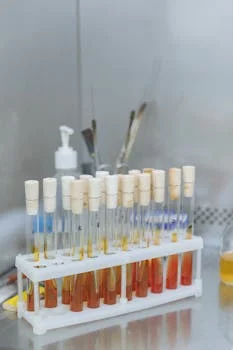
Enforcement starts with an Environmental Impact Assessment for prescribed activities. Before discharge begins, the facility must obtain written DoE approval. The permit states the discharge point, allowed volume, and whether Standard A or B applies based on location relative to intake zones.
After start-up, operators run self-monitoring, usually quarterly or semi-annual sampling at DoE-accredited labs. Officers also take unannounced grab or composite samples at the final outlet. A result above the limit triggers an immediate Notice of Violation.
The DOE industrial guidance page lists a Guidance Document on Performance Monitoring of Industrial Effluent Treatment Systems specified in Regulation 9(a), as well as a technical guidance document on industrial effluent characterization. That distinction is practical: performance monitoring shows whether the installed system is working, while characterization establishes the load and variability used for design.
Penalties can reach RM100,000, imprisonment for up to five years, or both. The DoE may halt the industrial process until a compliant treatment train is in place. Site-specific variances exist but remain rare and demand strong assimilative-capacity justification. See final wastewater discharge standard b compliance (malaysia) which level of treatment does it relate to primary, secondary or tertiary ? when mapping each unit process to the Standard B parameter it controls.
Industrial Effluent Compliance Penalties Malaysia EQA 1974: What Should a Plant Verify?
Industrial effluent compliance penalties Malaysia EQA 1974 are offence-specific, so a plant should verify the cited section, discharge condition, sampling evidence, and corrective deadline instead of relying on one headline amount. The earlier figure of RM100,000 and up to five years remains in this article as background, not as a substitute for current legal advice or a DoE notice.
The DOE eSWIS legislation index places the Environmental Quality (Industrial Effluents) Regulations 2009 within the EQA 1974 framework, while its displayed penalty example concerns scheduled waste under section 34B, summarised there as imprisonment up to five years and a fine not exceeding RM500,000. Do not transfer a scheduled-waste penalty automatically to an effluent case. Preserve sampling chains, calibration records, chemical dosing logs, sludge manifests, and written correspondence.
Which advanced wastewater treatment technologies help major plants meet strict effluent standards?
Standard A targets for BOD, COD, and oil and grease push plants beyond basic primary treatment. A compact MBR system for ultra-low BOD and COD effluent pairs biology with ultrafiltration. Field data from HydropureWater (2025) show BOD below 10 mg/L and COD below 50 mg/L, clearing Standard A with margin.
Food, textile, and metalworking sites with high FOG loads usually need a high-efficiency DAF system for oil & grease removal. Micro-bubbles of 20–50 microns float emulsified oils for skimming. With proper coagulation, DAF can cut FOG to <1 mg/L, supporting the Standard A Not Detectable rule.
You can compare DAF and gravity separators for FOG removal efficiency and cost when high-load streams dominate. Hospitals and clinics facing pathogen and residual organics often specify a Medical & Hospital Wastewater Treatment System as the polishing or dedicated medical line.
Which trade effluent consent compliance technologies help industrial sites on public sewers?
Sites on public sewers still face Standard B caps and consent conditions on solids, metals, and organics. A high-efficiency sedimentation tank with lamella plates can hold TSS below 30 mg/L in a footprint about 80% smaller than a traditional clarifier. Chemical dosing then precipitates zinc, mercury, or nickel before sand or carbon polishing.
Where land is tight, the MBR vs SBR comparison for industrial effluent compliance shows why MBR's smaller footprint and higher effluent quality often offset higher CAPEX. Similar zero-discharge engineering notes appear in the Amsterdam industrial wastewater treatment overview for plants comparing EU-style trains with Malaysian consent needs.
Engineers reviewing European packing density and reuse loops can also scan the Industrial Wastewater Treatment in Amsterdam: 2026 Engineering Specs, then adapt only the unit operations that map to local DoE limits. The Malaysian receiving-water classification remains the controlling constraint.
How should Malaysian data-centre discharge be managed?
The phrase regulated effluent and wastewater managemnt for the discharge from data centre should be translated into a Malaysian source-control plan, not a separate national limit. Data-centre facilities should identify cooling, cleaning, chemical storage, sanitary, and contractor-generated streams, then confirm whether each stream is industrial effluent, sewage, or scheduled waste before selecting a discharge route.
Most plants we size for variable industrial flow run at the lower end during normal production and need equalization for cleaning peaks. Online pH, flow, conductivity, and turbidity trends can flag a shock load, but final compliance still depends on the required laboratory method and the authorized sampling point.
Choosing the Right System: Capacity, Cost, and Compliance ROI
Malaysian buyers weigh CAPEX against OPEX and fine exposure. A cheap gravity trap that misses Standard A can cost more each year in penalties than a proper upgrade. One mini-case from plant budgeting: a 50 m³/h DAF package at about USD 80,000 removes the RM100,000 fine risk and thickens sludge enough to cut disposal fees.
Compliance ROI also includes avoided intake fees and kept production days. MBR permeate often suits cooling towers or floor washing, cutting freshwater use by up to 30%. Modular skid systems shrink onsite install time by 40%, which helps when a DoE order sets a short remediation window. Among industries in Malaysia with high effluent pollution, those gains usually decide the train faster than brochure feature lists.
Before comparing quotations, record the average and peak flow, pH range, BOD5, COD, TSS, oil and grease, metals, temperature, sludge volume, available footprint, discharge point, and reuse objective. Then ask each supplier to state the contracted outlet basis, laboratory method, chemical consumption, membrane replacement assumption, sludge route, standby philosophy, and operator workload.
| System Type | Capacity Range | Target Parameters | Compliance Value |
|---|---|---|---|
| DAF (Dissolved Air Flotation) | 4 – 300 m³/h | Oil & Grease, TSS, Insoluble COD | Essential for meeting Std A 'Not Detectable' oil limits. |
| MBR (Membrane Bioreactor) | 10 – 2,000 m³/d | BOD, COD, Bacteria, TSS | Ensures consistent <10 mg/L BOD; allows for water reuse. |
| Lamella Clarifier | 5 – 200 m³/h | TSS, Heavy Metal Precipitates | High-speed solids removal in limited plant space. |
| Chemical Dosing/Oxidation | Custom | Heavy Metals, Cyanide, Phenols | Required for specific toxic parameters in chemical plants. |
Practical selection checklist for Malaysian plants
- Confirm whether the outlet is Standard A, Standard B, a mixed-effluent schedule, or a sector-specific COD schedule.
- Use composite and grab sampling where the process profile requires both, and document the final outlet location.
- Separate oil, solids, biodegradable load, metals, color, and toxic compounds before choosing a single process.
- Size equalization, chemical storage, sludge handling, bypass prevention, and standby equipment for the actual peak condition.
- Set acceptance testing around the required parameter list, reporting limit, operating envelope, and authorized laboratory method.
Who This Is For / Who Should Look Elsewhere / Next Step
This guide is for EHS officers, process engineers, and plant managers sizing Malaysian WWTP upgrades against the 2009 Regulations. Readers seeking only municipal sewage rules or non-industrial stormwater codes should look elsewhere. If your lab data already show which parameters fail, map each exceedance to DAF, MBR, lamella, or dosing capacity before CAPEX lock-in.
Share recent influent and discharge analyses with an applications engineer when you need a Standard A or Standard B train sized to your flow and pollutant profile. A short review of the discharge route, schedule, peak flow, and failed parameters is enough to define the next design question; use the Malaysian effluent design review request when that review is required.
Frequently Asked Questions
What is the difference between Standard A and Standard B effluent limits in Malaysia?
Standard A is the stricter set of limits for listed catchment areas, while Standard B generally applies to other inland waters or public sewers. The legacy comparison in this article shows BOD at 20 mg/L and 50 mg/L, but the DOE-published mixed-effluent schedule shows BOD5 at 20 mg/L and 40 mg/L, so the discharge category must be verified before design.
How is BOD regulated in Malaysian industrial effluent?
Biochemical Oxygen Demand (BOD5) is regulated under the 2009 Regulations and must be matched to the applicable schedule and sampling method. The retained table shows Standard A at 20 mg/L and Standard B at 50 mg/L with APHA 5210 B, while the DOE mixed-effluent schedule reports 20 mg/L and 40 mg/L. Confirm the governing schedule with DoE.
Which industries face the toughest effluent compliance in Malaysia?
Palm oil, textile, pharmaceutical, and electroplating plants often face difficult compliance because their streams can combine organics, color, metals, or oil and grease. The correct train depends on measured loading, not the sector label alone. Food and metalworking sites may need DAF, while soluble organics and tight footprints can justify biological treatment or MBR polishing.
What should a Malaysian plant verify before choosing Standard B water discharge?
A Malaysian plant should verify the receiving water, discharge point, written DoE conditions, applicable schedule, monitoring plan, and complete pollutant list before choosing standard b water discharge malaysia as its design basis. Public-sewer discharge does not remove the need to control solids, metals, organics, and trade-effluent consent conditions. The plant should retain laboratory and operating records for every compliance decision.