Why Slaughterhouse Wastewater Is Different from Municipal Biosolids
A horizontal scroll decanter sized from a municipal biosolids datasheet will under-perform on slaughterhouse duty within the first shift. Slaughterhouse influent typically runs 800–5,000 mg/L BOD, 500–3,000 mg/L TSS, 200–2,000 mg/L FOG, and 100–400 mg/L TKN, with blood contributing up to 200,000 mg/L BOD per unit volume (per the 2021 Springer electrocoagulation–electroflotation study, Environmental Science and Pollution Research, doi:10.1007/s11356-021-12855-4). Municipal biosolids arrive at 0.5–2% DS and are well-flocculated after anaerobic digestion; slaughterhouse waste swings between 1–6% DS across a single shift and carries emulsified FOG, soluble blood protein, and paunch manure that resist gravity thickening. The peak-to-base flow ratio at a working plant runs 4:1 to 6:1, so any decanter sized on average daily flow will choke on the kill-floor surge unless the upstream equalization basin smooths the hydraulic load first.
The practical consequence is that the centrifuge cannot be the primary solids-liquids separator on this duty. It must follow a screening, equalization, and flotation train that removes the FOG and degrits the feed. Skip those steps and you inherit emulsified fat that coats the bowl wall, biological colloids that defeat the G-force field, and grit that wears the scroll flight in weeks rather than years.
The Mandatory Pre-Treatment Train Before the Centrifuge
Four unit operations sit between the kill floor and the centrifuge, in this order:
- Rotary mechanical bar screen, 3–6 mm aperture. A rotary mechanical bar screen removes hair, paunch manure, bone fragments, and paunch gut contents that would otherwise wedge in the centrifuge feed pipe or score the bowl. Expect 10–25% total solids capture and a downstream protection benefit that more than pays for the screen in scroll-flight replacement savings.
- Equalization basin, 8–12 hours of peak flow. Sized on the kill-shift hydrograph, not the daily average. A 6:1 peak-to-base ratio at a 500 m³/day plant needs roughly 125 m³ of working volume, plus 1–1.5 m of freeboard for foam. Aeration at 0.5–1.0 m³ air per m³ basin volume per hour prevents anaerobic odor and keeps FOG emulsified rather than floating as a hardened layer.
- Dissolved air flotation for FOG and floatable solids. A dissolved air flotation system operating at an A/S ratio of 0.02–0.05 (recycle-to-influent flow) achieves 60–85% FOG removal and drops FOG below 50 mg/L in the clarified stream — the threshold the centrifuge needs to keep the bowl wall clean. Hydraulic residence time of 20–30 minutes and surface loading of 5–10 m³/m²·h are the design numbers to hold.
- Sludge thickening to 3–5% DS. A DAF or gravity thickener concentrates the floated fraction before the decanter. Feed solids below 2% halts effective centrifugation because the scroll cannot push a watery sludge up the beach — you get centrate carryover and a cake that runs off the discharge port.
The operating principle is consistent across horizontal scroll decanter designs: feed enters the bowl, solids settle against the wall under G-force, the scroll conveys them up the beach, and clarified liquid overflows the weir at the opposite end. The Made-in-China LW530ND specification, with its high-pressure horizontal spiral configuration, illustrates why feed consistency matters — the scroll-to-bowl differential speed, the beach angle, and the pool depth are all tuned for a narrow feed-solids window, and slaughterhouse waste without thickening will sit outside that window for most of the shift.
Decanter Centrifuge Sizing Parameters for Slaughterhouse Duty

Sizing a decanter comes down to six numbers: feed flow, bowl diameter, main motor power, back-drive power, hydraulic capacity, and solids throughput. The table below gives field-validated values for the five flow bands a process engineer will encounter in this industry. Bowl diameters from 200–1,100 mm cover the full commercial envelope, but slaughterhouse duty clusters in the 250–530 mm range — the smaller end for batch kill floors below 200 head/day, the larger for continuous rendering plants above 1,000 head/day.
| Feed flow (m³/h) | Bowl diameter (mm) | Main motor (kW) | Back-drive (kW) | Hydraulic capacity (m³/h) | Solids throughput (kg/h) |
|---|---|---|---|---|---|
| 5 | 250 | 11 | 4 | 5–8 | 150–220 |
| 10 | 355 | 22 | 7.5 | 10–15 | 300–450 |
| 20 | 450 | 37 | 11 | 20–28 | 600–900 |
| 35 | 530 | 55 | 15 | 35–45 | 1,000–1,500 |
| 50 | 620 | 75 | 22 | 50–65 | 1,500–2,200 |
G-force range sits at 3,000–4,500 for biological slaughterhouse solids. Above 4,500 G, floc shears apart and fine solids bleed into the centrate; below 2,500 G, the cake exits wet and the scroll struggles to convey against under-compacted solids. Differential speed — the speed at which the scroll turns relative to the bowl — runs 8–25 rpm; the lower end gives clearer centrate but wetter cake, the higher end drier cake but more fine-solids carryover. Pool depth (the radial distance from the bowl wall to the liquid surface) acts as a settling-efficiency lever: a deeper pool extends clarification time and improves centrate quality, but it cuts hydraulic throughput by 10–20% at a given bowl speed. For abrasion resistance against bone dust and grit that survive the bar screen, specify duplex stainless steel (2205) on the scroll flights and a tungsten-carbide wear sleeve at the solids discharge port — the single most common rebuild point on a slaughterhouse decanter.
Polymer Conditioning: The Single Biggest Variable in Performance
Polymer selection and dose drive roughly 70% of dewatering performance on slaughterhouse duty. Cationic polyacrylamide (PAM) is the only chemistry that works: high cationic charge (60–80%) is required to neutralize the negatively charged protein and blood colloids that dominate this feed. Anionic polymers fail outright because the colloid surface charge is already negative, and adding more negative charge only stabilizes the suspension further. Target dose is 3–8 kg active polymer per ton of dry solids — bench-test on-site with a 1-L cylinder test (mix 500 mL thickened sludge with polymer doses from 2–12 kg/t DS, observe floc size, settling rate, and supernatant clarity).
Molecular weight 8–12 MDa is the working window. Below 6 MDa, flocs lack shear strength and break apart in the scroll conveyor; above 14 MDa, the floc is so viscous it smears on the bowl wall and rolls back into the centrate. Polymer activation requires 0.05–0.1% solution concentration and 30–45 minutes of maturation in a make-down tank with low-shear mixing (50–100 rpm) — fresh-make only, because solution older than 4 hours loses 30–50% of its activity. Dosing point is inline upstream of the centrifuge feed pipe with 10–30 seconds of mixing time; a static mixer suffices at flows below 15 m³/h, but a dynamic in-line mixer gives better floc integrity at higher flows. An automatic polymer dosing skid with flow-paced control and a maturity timer is the standard delivery package for plants above 10 m³/h.
Operating Parameters and Performance Benchmarks

Steady-state targets for a properly conditioned slaughterhouse decanter: cake dryness 20–28% DS, solids recovery ≥92% (calculated as cake solids / feed solids × 100), and centrate TSS below 800 mg/L for good performance or below 400 mg/L for excellent performance with optimized polymer. Power consumption benchmarks at 1.2–1.8 kWh per m³ of feed for a 20 m³/h unit. The gap between slaughterhouse cake at 20–28% DS and digested municipal cake at 28–35% DS comes from the higher fat and protein fraction in biological slaughterhouse solids — fat caps the achievable dryness because it acts as a binder and a lubricant, holding water in the cake matrix.
SCADA fault signals to watch: rising centrate TSS indicates polymer depletion or wrong charge density; rising vibration points to bowl imbalance from solids buildup on the scroll flight or the beach; declining back-drive torque signals under-feeding (the scroll is conveying less material than the bowl is receiving, so the differential speed is governed by drag rather than load). A 5% deviation in any of these from the commissioning baseline warrants a 15-minute jar test before the next shift, not a parts order.
Decanter Centrifuge vs. Plate-and-Frame Press: When to Use Which
Plate-and-frame filter presses reach 28–35% cake dryness — 8–10 percentage points higher than a decanter — but at 2–4× the polymer dose, 4–6× the labor cost, and 3–5× the cycle time per batch. The plate press wins only when the final cake must exceed 30% DS for incineration or when a batch slaughterhouse runs below 3 m³/h and cannot justify continuous equipment. The decanter wins everywhere else: continuous operation, footprint one-quarter that of a plate press, lower labor, and tolerance of the variable feed that a meat processing plant generates across a shift.
| Criterion | Decanter centrifuge | Plate-and-frame filter press |
|---|---|---|
| Cake dryness (% DS) | 20–28 | 28–35 |
| Polymer dose (kg/t DS) | 3–8 | 8–20 |
| Labor intensity | Low (continuous) | High (batch, plate cleaning) |
| Footprint | 1× | 4× |
| Feed variability tolerance | High | Low |
| Capex per m³/h | Lower | Higher |
A hybrid approach — plate-and-frame filter press for cake polishing after a primary decanter — makes economic sense only at facilities with on-site rendering incinerators where the 30%+ DS threshold pays a gate-fee differential. For plants hauling cake off-site, the decanter is the correct default. For a broader dewatering selection framework, the screw press vs belt press comparison covers the alternatives that consistently fail on slaughterhouse duty because of poor FOG tolerance and high polymer demand.
CAPEX, OPEX, and ROI for a Slaughterhouse Decanter Train
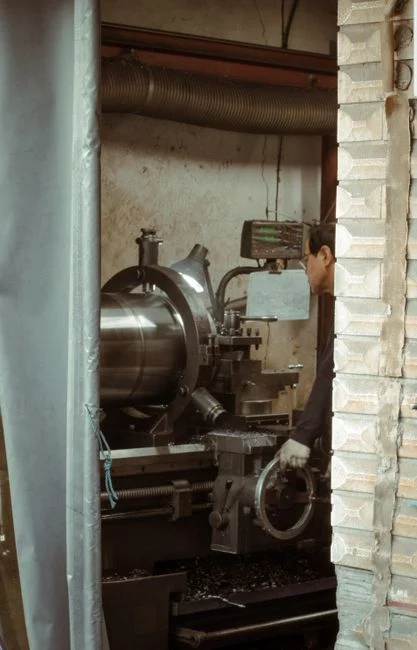
CAPEX for a complete 20 m³/h train (rotary bar screen, DAF, decanter, polymer skid, and interconnecting pipework) runs $180,000–$320,000 USD in 2026, with the spread driven by materials of construction (duplex stainless vs. 316L), automation level (manual vs. PLC with remote SCADA), and country of origin. OPEX breaks down as power 35%, polymer 30%, labor 20%, and maintenance 15% — total $1.40–$2.20 per m³ treated at a 20 m³/h unit. Sludge haulage savings deliver the payback: a properly thickened and dewatered cake gives 65–75% volume reduction versus unthickened waste, which at typical U.S. hauler rates of $40–$80 per wet ton returns the centrifuge CAPEX in 12–24 months for most plants above 10 m³/h. Plants below that threshold should evaluate containerized or rental units before committing to a permanent installation. For procurement planning, the meat processing wastewater treatment plant buyer's guide covers specification development, and the sludge dewatering cost reduction strategies article details where the largest OPEX savings hide in an existing operation.
Frequently Asked Questions
What pre-treatment is required before a decanter centrifuge on slaughterhouse wastewater? A 3–6 mm rotary bar screen, 8–12 hour equalization basin, dissolved air flotation targeting FOG below 50 mg/L, and sludge thickening to 3–5% DS — all four are non-negotiable for stable centrifuge operation (per HydropureWater field data, 2026).
Which polymer chemistry works for slaughterhouse sludge dewatering? Cationic polyacrylamide with 60–80% charge density and 8–12 MDa molecular weight, dosed at 3–8 kg per ton of dry solids; anionic polymers fail because the feed colloids are already negatively charged.
What flow rate range can a single decanter handle on this duty? A single horizontal scroll decanter with a 250–620 mm bowl covers 5–50 m³/h, with solids throughput from 150 to 2,200 kg/h depending on bowl diameter and feed solids concentration.
What cake dryness should I expect from a slaughterhouse decanter? 20–28% DS for biological slaughterhouse solids with optimized polymer conditioning, versus 28–35% DS for digested municipal biosolids — the gap reflects higher fat and protein content.
How is centrate from the decanter handled downstream? Centrate at 400–800 mg/L TSS returns to the head of the biological treatment stage (typically an SBR or MBBR), where residual organics and ammonia are removed before final discharge or reuse.