How Each Press Dewaters Sludge
A screw press dewaters sludge using a slowly rotating screw (typically 1-4 rpm) inside a cylindrical wedge-wire basket; free water drains through the basket slots while the screw conveys solids upward into a tapered, conical press zone where backpressure builds and a discharge pressure cone sets final cake dryness. A belt filter press dewaters sludge by squeezing conditioned flocs between two tensioned porous belts that converge through a gravity drainage zone, a W- or S-shaped wedge zone, and a high-pressure shear zone of small-diameter rollers before a scraper discharges the cake.
These two mechanisms explain the central performance gap: screw presses typically reach 20-28% dry solids (DS) and belt presses typically reach 18-22% DS. Polymer demand is the second mechanism-driven gap. Belt presses shear flocs continuously between moving belts, so the floc must be high-strength (high-Sheen, tightly bonded) to survive without breaking and re-releasing water. Screw presses transport flocs gently inside a static basket, so only a loose, large floc is needed to retain permeability, which drives the 30-50% polymer savings commonly cited for screw units. The Huber S-PRESS illustrates the canonical screw geometry: flocculation reactor upstream, conical basket for progressive pressure build, adjustable pressure cone at the discharge, and an automatic wash cycle for the wedge-wire basket (our 2026 engineering comparison covers the upstream polymer skid in more detail). For plants evaluating a third option, a plate and frame filter press sits at the higher-pressure, lower-throughput end of the same family.
Head-to-Head Comparison: Screw Press vs Belt Filter Press
The following table compares the ten primary decision criteria used by procurement committees. All ranges are 2026 typical-installation values for units sized at roughly 10-30 m³/h hydraulic capacity; your specific vendor quote may differ ±15%.
| Parameter | Screw Press | Belt Filter Press | Notes |
|---|---|---|---|
| Cake dryness (% DS) | 20-28% | 18-22% | Screw widens its lead on digested sludge; belt narrows the gap on fibrous primary sludge. |
| Hydraulic capacity (m³/h) | 1-50 | 5-150 | Belt is the higher-throughput option; screw dominates the < 50 m³/h band. |
| Polymer dose (kg/t DS) | 3-6 | 8-12 | Screw flocs are loose and large; belt flocs must resist continuous shear. |
| Washwater (m³/h) | 0.3-1 (enclosed) | 3-6 (open spray bars) | Huber S-PRESS uses an enclosed washwater system; belts are continuously sprayed to keep the fabric permeable. |
| Installed power (kW) | 1.5-7.5 | 2.2-15 | Screw press specific energy 0.05-0.15 kWh/m³ vs belt press 0.15-0.35 kWh/m³. |
| Footprint (m²) | 18-30 incl. polymer skid | 25-50 incl. polymer skid | Both need headroom for cake conveyor; belt additionally needs belt-tension access. |
| Noise (dB(A) at 1 m) | 65-72, fully enclosed | 75-85, open frame | Material difference near offices, labs, or property lines. |
| CAPEX range (USD installed, 2026) | $80,000-$150,000 | $40,000-$90,000 | Screw is mechanically simpler per kW but has tighter machining tolerances. |
| Typical OPEX ($/t DS) | $45-$70 | $65-$130 | Polymer and washwater drive the gap; labor and maintenance add a second tier. |
| Maintenance (hours/month) | 4-8 | 12-20 | Plus belt replacement every 2-4 years at $3,000-$8,000 per set for belt only — no consumable belt on a screw press. |
One-line verdict: belt filter press is the lower-CAPEX, higher-throughput workhorse; screw press is the lower-OPEX, lower-staffing, enclosed choice for the < 50 m³/h band. These performance metrics vary significantly based on the specific characteristics of the sludge being processed.
Match the Press to Your Sludge Type
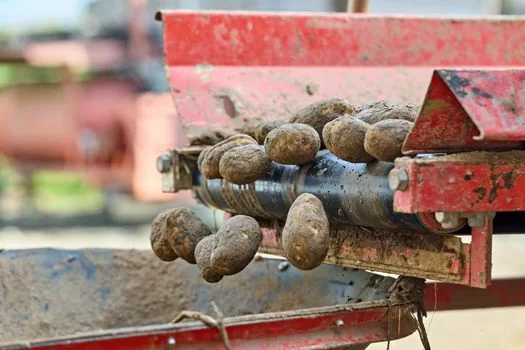
Sludge characteristics determine which capacity and performance band a facility actually requires. Use the rules below to convert the comparison table into a specific recommendation.
- Mesophilic digested sludge (2-4% feed DS): both presses work; screw press is preferred for enclosed, low-odor operation, with typical output 22-26% DS. Belt press is acceptable if the digester is outdoor and odor control is not a constraint.
- Waste activated sludge (WAS, 0.5-1.5% feed DS): belt press struggles with fine, low-density flocs at this feed concentration; screw press is favored below ~30 m³/h. Above 30 m³/h, consider a gravity belt thickener upstream or a decanter centrifuge instead.
- Primary sludge (3-6% feed DS, fibrous): belt press handles grit and fiber better because the open belt geometry tolerates rags; screw press risks basket blinding unless maceration and grit removal are installed upstream.
- Industrial high-solids (food, dairy, pulp & paper at 4-8% feed DS): belt press preferred for high throughput rates; screw press is viable only with maceration, grit removal, and feed dilution back to 3-4% DS.
- Oily/greasy sludge (FOG at 3-5% feed DS): screw press outperforms because open belts smear and blind; food-industry suitability of the screw geometry is documented in Myande's starch and corn-fiber applications.
Distill the above into a single decision rule: if feed DS is below 2%, flow is below 50 m³/h, and the unit is installed indoors, specify a screw press with an automatic polymer dosing skid; if flow exceeds 50 m³/h, or the sludge is fibrous, or the unit is outdoor/mobile, specify a belt filter press. For distillery and other high-strength industrial waste streams, the screw press cost for industrial wastewater breakdown shows where this rule bends.
2026 OPEX Worked Example: 10 t DS/d Digested Sludge
This worked example converts the performance matrix into a budget figure for a baseline case. This provides a defendable number for procurement committees.
Baseline: 10 t DS/d of mesophilic digested sludge, 24/7 operation, 330 operating days per year, giving 3,300 t DS/year processed. All costs in 2026 USD; polymer priced at $6/kg active.
| Cost line | Screw press ($/t DS) | Belt press, optimized ($/t DS) | Belt press, high polymer ($/t DS) |
|---|---|---|---|
| Polymer (3-6 kg/t screw; 8-12 kg/t belt) | $25-$35 | $50-$60 | $70-$80 |
| Power (0.05-0.15 vs 0.15-0.35 kWh/m³) | $4-$7 | $7-$9 | $9-$11 |
| Washwater (0.3-1 vs 3-6 m³/h) | $0.5-$1 | $3-$5 | $5-$7 |
| Labor (0.5 hr/shift screw; 0.75 hr/shift belt) | $8-$12 | $10-$13 | $12-$16 |
| Maintenance + parts | $5-$8 | $8-$12 | $10-$14 |
| Belt replacement amortization | $0 | $5-$10 | $5-$10 |
| Total OPEX | $45-$63 | $83-$109 | $111-$138 |
At the midpoint, screw press OPEX lands near $54/t DS and optimized belt press near $96/t DS. Annualized, that is approximately $178,000/year for the screw press versus $317,000/year for the belt press — a ~$139,000/year advantage to the screw press at optimized belt dosing, or ~$205,000/year if the belt polymer dose runs hot. Against the CAPEX delta (screw ~$115,000 installed vs belt ~$65,000 installed, midpoints), the payback is $50,000 / $139,000 ≈ 4-5 months against the optimized belt, or comfortably under 12 months against the high-polymer belt case. Both sit well inside the 12-24 month industry payback rule, and the gap widens further if the plant is water-constrained; the 2026 desludging cost optimization guide walks through water reuse scenarios that tip the balance further toward the screw press.
Installation, Footprint, and Operating Constraints
Site constraints can override CAPEX-driven decisions. Engineers typically discover these during layout reviews, and these factors often change the final selection when costs are similar.
- Footprint and headroom: screw press 18-30 m² including polymer make-up; belt press 25-50 m². Both need 3-4 m of headroom for the cake conveyor and, for belt presses, side access for belt tracking and tensioning.
- Noise: screw press 65-72 dB(A) at 1 m and fully enclosed; belt press 75-85 dB(A) because rollers, spray bars, and tracking actuators are exposed. The 10-13 dB(A) gap is material for any unit installed indoors near offices, control rooms, or labs.
- Washwater quality and quantity: belt press needs 3-6 m³/h of clear reuse water (typically clarified effluent) to keep belt permeability; screw press needs 0.3-1 m³/h, typically for the basket wash cycle. In a tight water balance, this 10× washwater gap alone can decide the spec.
- Operator skill: belt press requires daily attention to belt tracking, tension, spray nozzle cleaning, and roller alignment; screw press is largely turn-key, with a weekly basket wash and a periodic pressure-cone adjustment per the operating manual.
- Enclosure and odor: screw press is easily fully enclosed and ducted to an existing odor control train; belt press is typically open-frame and not practical to fully enclose, which is a decisive factor at indoor or near-residential sites.
Selection Checklist Before You Specify
Review these five questions in a brief meeting; any "no" on the screw-press side moves the specification toward a belt press or a third option such as a decanter centrifuge