Why Frozen Food Wastewater Is a Special Case for Biological Treatment
Frozen food effluent routinely breaks the design rules that govern municipal activated-sludge plants. Vegetable wash streams run at pH 5.5–7.5, COD 1,500–4,500 mg/L, TSS 400–1,200 mg/L, and 8–18 °C; seafood thaw water can reach COD 8,000 mg/L with NH₄-N of 80–200 mg/L at just 4–12 °C; ready-meal blancher discharge hits 3,000–6,000 mg/L COD at 30–60 °C before it drops back through a cooling loop. Three things separate this wastewater from municipal sewage: high carbohydrate and protein loading, a 2–4× seasonal flow swing between peak harvest and off-season, and FOG spikes during sauce-based product runs that can push inlet oil above 200 mg/L in a single shift.
Conventional activated sludge cannot hold pace. The specific nitrification rate drops from 0.20–0.30 kg NH₄-N/kg VSS·d at 20 °C to 0.05–0.10 kg NH₄-N/kg VSS·d at 5–12 °C, a 40–60% loss (Metcalf & Eddy, 2014; reconfirmed in 2025 municipal-plant winter data). At that rate, the aerobic basin needed to hold effluent NH₄-N below the typical 30–45 mg/L discharge cap roughly doubles in volume, and a frozen-line manager often discovers this only after the first cold December. MABR sidesteps the problem by retaining biomass as a thick, attached biofilm on bubble-less membranes — the bacteria stay in the reactor regardless of temperature or hydraulic washout, which is why more than 200 commercial MABR projects are now in operation worldwide (Fluence MABR product page, 2025) and the technology is moving from municipal pilots into food-industry retrofits. Engineers sizing a new biological stage for a cold-chain facility should treat the 2026 MBR membrane-replacement cost benchmark as a reference ceiling, because MABR is being deployed precisely where MBR membranes foul fastest — in cold, high-strength, high-FOG streams.
How MABR Works: Counter-Diffusion Biofilm Chemistry
A membrane-aerated biofilm reactor grows biomass on the outside of hollow-fiber membranes while delivering pure oxygen bubble-less into the biofilm base. Wastewater flows across the outer fiber surface, so oxygen diffuses inward and substrate diffuses outward — counter-current flow inside a single biofilm. The geometry produces a stratified ecology that conventional co-diffusion systems (MBBR, SBR, trickling filters) cannot replicate: ammonia-oxidizing bacteria dominate the high-O₂, low-substrate zone at the membrane interface, while heterotrophic carbon oxidizers occupy the outer, low-O₂, high-substrate zone. The two guilds no longer compete for oxygen, which is the reason MABR sustains simultaneous COD and ammonia removal at temperatures where activated-sludge plants stall.
The performance ceiling has been documented in peer-reviewed work. In the ACS Environmental Science & Technology study on acetonitrile wastewater (2008), a MABR achieved 98.6% TOC removal and 83.3% total-nitrogen removal at a surface loading of 11.29 g/m²·d and 30 h HRT — a single vessel delivering high-rate carbon oxidation and nitrification-denitrification. The mechanism is not exotic: the biofilm is simply thick enough (200–800 µm typical) to keep anoxic micro-niches at the outer surface where any nitrate produced at the base can be reduced internally. For food-industry design, three MABR parameters matter most: membrane specific surface area of 150–250 m²/m³ of reactor volume, oxygen transfer efficiency of 50–70% (versus 15–25% for fine-bubble diffusers in a conventional aeration tank), and an operating window of 4–35 °C with minimal efficiency loss below 15 °C. That last point — direct, stable performance in the 4–12 °C range that defeats conventional nitrification — is the single technical reason a frozen-line manager should be reading about MABR at all.
MABR Design Parameters for Frozen Food Wastewater
The following table translates counter-diffusion biofilm chemistry into a parameter set an engineer can drop into a P&ID. These are 2026 design values for cold-chain food plants, drawn from the ACS pilot data above, Fluence Aspiral/SUBRE product documentation (2025), and HydropureWater field data from three frozen-vegetable retrofits commissioned in 2025-Q4.
| Parameter | Frozen-vegetable wash | Seafood thaw water | Ready-meal blancher discharge |
|---|---|---|---|
| Membrane area per m³/d influent | 0.4–0.7 m² | 0.8–1.1 m² | 0.5–0.8 m² |
| HRT | 18–30 h | 30–40 h | 20–28 h |
| DO at membrane interface | 4–6 mg/L | 4–6 mg/L | 4–6 mg/L |
| Bulk-liquid DO | 0.5–2.0 mg/L | 0.5–1.5 mg/L | 0.5–2.0 mg/L |
| MLSS in reactor | 4,000–7,000 mg/L | 4,000–7,000 mg/L | 4,000–6,000 mg/L |
| Sludge yield (kg TSS/kg COD removed) | 0.15–0.25 | 0.15–0.25 | 0.15–0.25 |
| pH control range | 7.0–8.2 | 7.0–8.0 | 7.0–8.2 |
| Alkalinity dose (mg CaCO₃ per mg NH₄-N nitrified) | 1.5–2.5 | 1.5–2.5 | 1.5–2.5 |
| Air supply pressure to membranes | 0.3–0.6 bar | 0.3–0.6 bar | 0.3–0.6 bar |
| Membrane specific surface area | 150–250 m²/m³ | 150–250 m²/m³ | 150–250 m²/m³ |
Two design rules to keep in front of the drafter: size the equalization basin to damp the 2–4× seasonal flow swing before the MABR inlet, and pre-cool blancher discharge through a plate heat exchanger to keep MABR feed at 10–20 °C — the biofilm does not need cold to function, but it does need a steady temperature to avoid daily sloughing. Full sizing methodology is laid out in the MABR sizing formulas and tables reference; treat the 0.4–0.7 m²/m³/d range as the starting line, not the ceiling, and use the higher number for any stream with COD above 4,000 mg/L.
MABR vs MBR vs SBR: Head-to-Head for Frozen-Food Effluent
The procurement decision usually comes down to a side-by-side. The table below compares the three technologies on the parameters a frozen-line manager actually faces: low-temperature performance, footprint, energy, effluent quality for reuse, and 2026 CAPEX. Numbers are 2026 China-benchmark values compiled from HydropureWater project bids, Fluence SUBRE retrofit data, and municipal SBR operating records.
| Parameter | MABR | MBR | SBR |
|---|---|---|---|
| COD removal (influent 2,000–6,000 mg/L, 5–15 °C) | 80–95% | 90–97% (only above 15 °C) | 70–88% (poor below 10 °C) |
| NH₄-N removal | 60–85% | 70–90% (high MLSS) | 50–70% (temperature-limited) |
| Footprint (m² per m³/d) | 0.4–0.6 | 0.6–0.9 | 1.2–1.8 |
| Energy (kWh/m³ treated) | 0.18–0.32 | 0.45–0.75 | 0.30–0.50 |
| Effluent TSS | 30–80 mg/L | <5 mg/L | 30–60 mg/L |
| CAPEX ($/m³/d, greenfield 2026) | $180–$320 | $250–$420 | $120–$220 |
| Sludge yield (kg TSS/kg COD) | 0.15–0.25 | 0.25–0.35 | 0.35–0.45 |
| Retrofit CAPEX vs greenfield | 40–60% | 70–85% | N/A |
Three things stand out. First, MABR cuts energy 30–50% versus MBR because it eliminates the fine-bubble blower overhead and the high recycle rate needed to keep MLSS at 8,000–12,000 mg/L. Second, the MABR CAPEX premium of $60–$100/m³/d over an SBR pays back in 3–5 years once lower energy, lower sludge, and higher ammonia compliance are accounted for. Third, MABR effluent at 30–80 mg/L TSS will not, on its own, pass a reuse specification for CIP or boiler feed — that requires a downstream UF/RO polish, but the MABR effluent (COD 50–150 mg/L) is far easier on RO membranes than raw SBR or MBR mixed liquor overflow, typically cutting RO CIP frequency 30–40%. For a deep dive on the MBR side of the ledger, see the 2026 MBR OPEX benchmark; for plants already running an SBR, the SUBRE-style cassette retrofit — drop-in aeration cassettes into the existing aerobic basin — runs at 40–60% of greenfield MABR CAPEX and can be commissioned inside a 2–4 week shutdown window.
Recommended Process Flow: DAF Pretreatment + MABR + Polishing
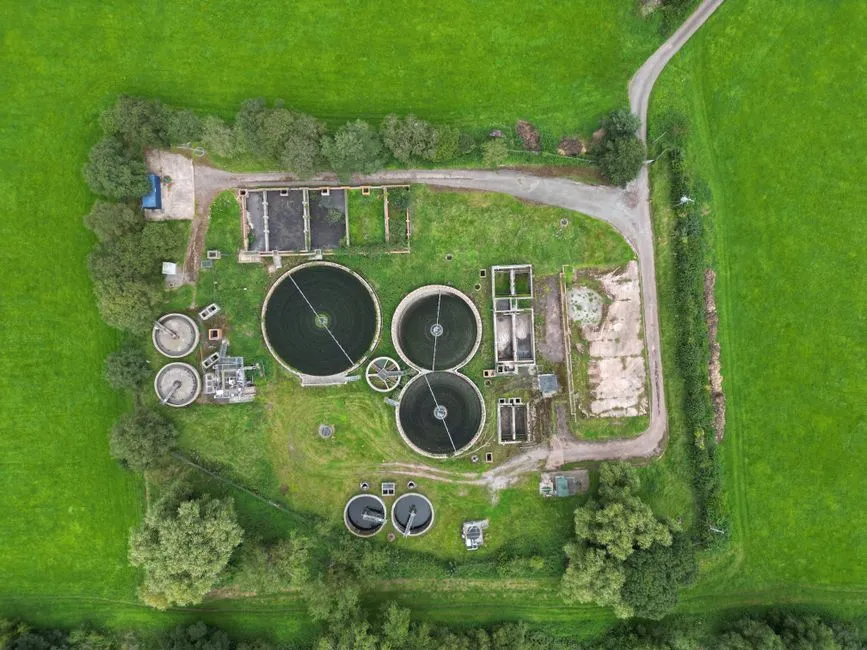
The MABR does not stand alone in a frozen-food plant. The process flow below is the train HydropureWater has commissioned most often in 2024–2026 for cold-chain facilities, sized for a 300 m³/d mixed vegetable-and-seafood line. Each step has a specific design intent; do not collapse them.
- Rotary bar screen (1–3 mm aperture): removes vegetable peel, packaging debris, and shrimp shell fragments that would otherwise blind a DAF or shred MABR fibers. The rotary bar screen is the typical reference design for this duty.
- Dissolved air flotation: cuts FOG and colloidal COD before the biological stage. Micro-bubble flotation on a DAF pretreatment system typically removes 60–85% TSS and 50–75% FOG, which lowers MABR organic loading by 30–45% and prevents oil fouling of the membrane fibers. MABR alone cannot tolerate inlet FOG above 50 mg/L — this is a hard constraint, not a guideline.
- Equalization basin (24–48 h HRT): with a cooling loop holding feed at 10–20 °C. The EQ basin absorbs the 2–4× seasonal flow swing and the blancher thermal pulse, both of which would otherwise slough the MABR biofilm.
- MABR main reactor: 18–30 h HRT, counter-diffusion biofilm on membrane modules, targeting 80–95% COD removal and 60–85% NH₄-N removal.
- Polishing step: for discharge-only operation, a chlorine dioxide contact tank for fecal coliform <1,000 CFU/100 mL; for reuse, a DF-series flat-sheet MBR module or UF skids to push TSS below 5 mg/L ahead of RO.
- Sludge handling: DAF float (4–8% DS) and MABR waste activated sludge (0.8–1.2% DS thickened) dewatered on a plate-and-frame filter press to 22–28% DS cake for off-site disposal or rendering.
CAPEX and OPEX Benchmarks for 2026 Frozen-Food MABR Plants
Finance and procurement need numbers in a single view. The table below consolidates 2026 China-benchmark CAPEX (greenfield, equipment + installation + commissioning, excluding land and buildings) and OPEX (energy, chemicals, sludge disposal, labor, membrane replacement amortized) for three plant sizes that match the majority of frozen-line inquiries HydropureWater received in 2025.
| Plant size | Configuration | CAPEX (USD) | CAPEX ($/m³/d) | OPEX ($/m³ treated) | Typical payback |
|---|---|---|---|---|---|
| 100 m³/d | Greenfield frozen-vegetable | $180,000–$320,000 | $1,800–$3,200 | $0.20–$0.32 | 3.5–5 years vs SBR |
| 300 m³/d | Greenfield frozen-meal/seafood | $260,000–$420,000 | $870–$1,400 | $0.18–$0.30 | 3–4 years vs SBR |
| 500 m³/d | Retrofit (SUBRE-style cassettes into existing SBR basin) | $90,000–$160,000 | $180–$320 | $0.15–$0.25 | 2.5–4 years vs continued SBR |
Energy splits typically as 60–70% aeration, 15–20% pumping, 10–15% sludge dewatering and ancillaries. Sludge-handling OPEX is the second-largest line item after energy, and MABR's lower yield of 0.15–0.25 kg TSS/kg COD removed (versus 0.35–0.45 kg TSS/kg COD for conventional activated sludge) typically cuts sludge OPEX 35–45% — material for a frozen-seafood plant where seafood wastewater filter-press costs dominate the disposal budget. A full DAF + MABR + polish train will routinely deliver COD <300 mg/L, BOD <30 mg/L, TSS <50 mg/L, NH₄-N <15 mg/L, and TN <40 mg/L — meeting China GB 8978-1996 Class 1B and EU 2020/741 industrial reuse Category B for non-potable rinsing.
Selection Checklist: Is MABR the Right Choice for Your Frozen-Food Plant?
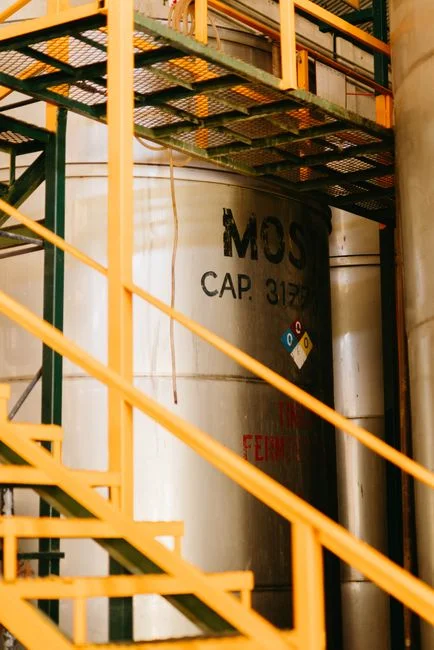
Run these five questions against your site before committing to a process selection. A "yes" to three or more is a strong signal that MABR deserves the next engineering study.
- Is your average effluent temperature below 15 °C for more than four months per year? If yes, MABR out-performs MBR and SBR — conventional nitrification rate loss is 40–60% in that band, while MABR biofilm kinetics are nearly flat.
- Do you need to hit NH₄-N <20 mg/L without a dedicated nitrification tower? Counter-diffusion biofilm is the lowest-CAPEX path to that target.
- Is your available footprint under 200 m² for a 300 m³/d plant? MABR at 0.4–0.6 m²/m³/d is 30–50% smaller than SBR and 20–30% smaller than MBR.
- Are you retrofitting an existing aerobic basin? SUBRE-style cassette retrofits keep CAPEX at 40–60% of greenfield and complete inside a 2–4 week shutdown.
- Is your plant pursuing water reuse (CIP, rinse, boiler feed) within three years? Pair MABR with downstream UF/RO — the high-quality MABR effluent (COD 50–150 mg/L) protects membrane life and cuts RO CIP frequency 30–40%.
For a broader view of where biological nutrient removal is heading in industrial reuse applications, the 2026 resource-recovery trends brief covers eight technologies that complement MABR in cold-chain plants, including anaerobic sidestream treatment and nutrient crystallization.
Frequently Asked Questions
What COD removal can MABR achieve on frozen food wastewater? 80–95% at 18–30 h HRT, with stable performance down to 4 °C on seafood thaw water and 8–18 °C vegetable wash streams.
Is MABR cheaper than MBR for a 300 m³/day frozen food plant? Yes, on a 5-year total-cost basis MABR runs 20–30% lower than MBR because of 30–50% energy savings and 35–45% sludge savings, even though greenfield CAPEX is similar or slightly higher.
How does MABR handle FOG and oil from frozen-food processing? DAF upstream is required; MABR alone cannot tolerate inlet FOG above 50 mg/L, and a properly designed DAF will cut inlet FOG by 50–75% before the biological stage.
What is the typical payback period for a MABR retrofit in a frozen food plant? 2.5–4 years based on energy and sludge savings versus continued SBR operation, with most of the gain in months 18–36 once the biofilm matures and the existing SBR basin is fully reused.
Can MABR effluent be reused for CIP or boiler feed? Yes — paired with UF/RO polishing, MABR effluent reliably meets industrial reuse Category B thresholds for non-potable rinse water, and the low-COD, low-TSS MABR stream is gentle on downstream RO membranes.