What Is the Oil and Grease Discharge Limit in Indonesia?
Under Indonesian law, the oil and grease discharge limit for industrial wastewater is 15 mg/L per Permen LHK No. 5 Tahun 2014 (Baku Mutu Air Limbah Kegiatan Industri), measured at the final outlet of the IPAL after treatment (Lampiran I/II). Marine and land-based discharge to sea under PP No. 22 Tahun 2021 is capped at 20 mg/L at the mixing zone, while domestic wastewater under Permen LHK No. 68 Tahun 2016 allows 10 mg/L after the septic tank or communal IPAL. Hitting any of these numbers reliably requires chemical conditioning followed by a dissolved air flotation system, typically sized at 0.5–1.0 m³/h per m² of surface loading with 5–15 ppm of anionic polymer dosing on the recycle line.
For lab work, "minyak dan lemak" is defined as the total recoverable hydrocarbon fraction extracted by n-hexane and quantified gravimetrically, per SNI 06-6989.10-2004 (equivalent to APHA 5520 B, the standard method referenced across Indonesian accredited laboratories). The fraction includes three operational bands that drive equipment selection: free oil as droplets larger than 150 µm that rise in a skim pit within minutes, dispersed oil at 20–150 µm that rises slowly and needs plate coalescence, and emulsified oil below 20 µm that is chemically stabilised and will pass straight through any gravity device without coagulant break. A palm-oil mill decanter overflow, for instance, routinely tests 800–3,000 mg/L total oil and grease but less than 5% of that is recoverable free oil; the rest is emulsified and dictates whether you buy an API separator or a full DAF package.
Indonesia's Regulatory Stack: From Constitution to Baku Mutu
The legal hierarchy that governs a discharge permit (IZIN) in Indonesia is a four-layer stack, and the EHS officer who cites only the bottom layer will lose the audit. At the top, UU No. 32 Tahun 2009 on Environmental Protection and Management sets the obligation to meet baku mutu and the criminal liability for non-compliance (Article 97–98, imprisonment up to 10 years). Layer 2 is PP No. 22 Tahun 2021 on Pengelolaan Kualitas Air Limbah, which succeeded PP No. 82 Tahun 2001 and explicitly authorises KLHK to set sector-specific numerical limits, including the 20 mg/L oil-and-grease figure for discharges reaching seawater. Layer 3 is the implementing ministerial regulation: Permen LHK No. 5 Tahun 2014 for generic industry, and Permen LHK No. 68 Tahun 2016 for domestic wastewater, which lists seven mandatory parameters — BOD, COD, TSS, pH, oil and grease, NH₃-N, and total coliform — confirmed in the Top 5 SERP excerpt from the Indonesian water discharge regulations overview. Layer 4 is sector-specific: Permen LHK 16/2019 for the food industry, the palm-oil annex inside Permen LHK 5/2014 for mills, and Kepmen LH No. 51/MENLH/10/1995 for offshore oil and gas activities.
The Bintan oil-sludge case in the Top 4 SERP excerpt is worth knowing because it shows where the discharge threshold collides with the receiving-water threshold. MARPOL 73/78 lets an offshore installation discharge bilge water at 15 ppm (roughly 15 mg/L), but Indonesia's seawater quality standard under Kepmen LH No. 02/1988 is set at 5 mg/L for the same parameter. The mixing-zone math in PP 22/2021 closes some of that gap, but a process engineer should not assume that meeting 20 mg/L at the outlet automatically clears the receiving-water test at the boundary of the 500 m zone. The applicable Permen is determined by the dominant activity code in the AMDAL, not by what equipment is on site. A palm-oil mill with a 45 t/h throughput cites the palm-oil annex inside Permen LHK 5/2014 (or Permen LHK 16/2019 if the downstream process is a refinery), not the generic industrial table.
| Layer | Document | Function in the Compliance Chain |
|---|---|---|
| 1 — Law | UU No. 32/2009 | Umbrella statute; sets criminal liability for non-compliance with baku mutu |
| 2 — Government Regulation | PP No. 22/2021 (succeeds PP 82/2001) | Defines marine/land-based discharge limits, mixing-zone methodology, and KLHK authority |
| 3 — Ministerial Regulation | Permen LHK 5/2014 (industrial), Permen LHK 68/2016 (domestic) | Sets the 15 mg/L industrial and 10 mg/L domestic numerical limits for minyak dan lemak |
| 4 — Sector Annex | Permen LHK 16/2019 (food), palm-oil annex of 5/2014, Kepmen LH 51/1995 (offshore) | Refines limits and sampling points for specific industry codes in the AMDAL |
Baku Mutu Comparison Table: Oil and Grease Across Indonesia's Standards
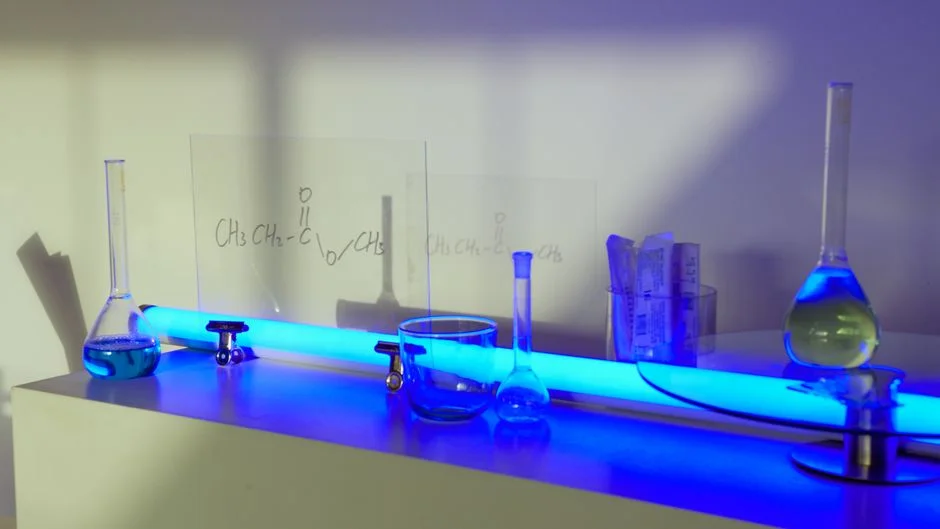
For a compliance matrix, the oil and grease limit is not a single number — it depends on which regulation governs the discharge point. The five rows below are the limits an EPC consultant or EHS officer will actually cite when filling out a KLHK reporting form.
| Regulation | Sector | O&G Limit (mg/L) | Sample Point |
|---|---|---|---|
| Permen LHK 5/2014 (Lampiran I/II) | Generic industrial discharge | 15 | Final outlet of IPAL |
| Permen LHK 16/2019 | Food industry | 15 | Outlet of on-site treatment plant |
| PP 22/2021 (marine) | Discharge to sea (land-based outfall) | 20 | At the mixing-zone boundary |
| Permen LHK 68/2016 | Domestic wastewater | 10 | After septic tank or communal IPAL |
| Kepmen LH 51/MENLH/10/1995 | Offshore oil & gas produced water | 25 | Boundary of the 500 m exclusion zone |
The Bintan case (Top 4 SERP excerpt) is the practical reminder: the receiving-water standard under Kepmen LH 02/1988 is set at 5 mg/L for oil and grease in seawater used for marine biota and fisheries, and KLHK inspectors will sample at the boundary, not at the outfall. A process design that hits 18 mg/L at the discharge point and relies on dilution in a 50 m water column is technically defensible under PP 22/2021's mixing-zone rules, but politically fragile. The 15 mg/L Permen LHK 5/2014 number is the safer engineering target, and it is the figure cited in virtually every IZIN pembuangan air limbah for industrial activities.
Why a Skim Pit or API Separator Won't Meet the 15 mg/L Limit
An API or CPI separator on its own removes 50–100 mg/L of free oil, which is acceptable as a pre-treatment step but lands 3–7× above the 15 mg/L baku mutu. The reason is straightforward: the bulk of the load in most Indonesian feedstocks is emulsified. A typical palm-oil mill effluent (POME) after the fat-pit carries 200–1,500 mg/L total oil and grease, of which less than 5% will separate by gravity in a 30-minute retention pit. A food-processing wash-down (edible oil refinery, dairy, instant-noodle line) sits at 100–800 mg/L, dominated by emulsified droplets stabilised by surfactants and proteins. A metalworking shop drawing from a sumpless coolant pit will see 200–2,000 mg/L with tramp oil emulsified by detergent. None of these streams reach 15 mg/L without chemical conditioning followed by air flotation.
Dissolved Air Flotation (DAF) achieves 85–95% total oil-and-grease removal and delivers 5–25 mg/L effluent at hydraulic loading rates of 5–25 m³/m²·h, which is 20–100× faster than an equivalent gravity clarifier. The design ratios that matter: dissolved gas ratio (air:saturated water) of 0.06–0.10 by volume, recycle rate 20–40% of the influent, and a saturator working pressure of 4–6 bar(g). The recycle stream flow is calculated as Q_recycle = 0.3 × Q_influent for most mineral-oil emulsions, dropping to 0.2 for high-temperature POME where the gas solubility is lower. The floated sludge skimmed off the top of a DAF runs 0.5–2% dry solids — too wet to landfill directly and too viscous to pump to a drying bed, so it routes onward to a mechanical dewatering step, typically a plate-and-frame filter press that brings the cake to 25–35% DS and recovers the polymer for the operator's mass balance.
DAF System Design Sizing for Indonesian Industrial Wastewater
A specifier sizing a DAF for a 50 m³/h food-processing plant in, say, Cikarang or Medan follows a five-step calculation. Step 1 is the influent characterisation: pull representative composite samples across one full production shift and measure total oil and grease, pH, temperature, and the emulsion stability index. Typical bands the engineer should expect are POME 500–4,000 mg/L, food processing 100–800 mg/L, metalworking 200–2,000 mg/L, and refinery produced water 20–100 mg/L. Step 2 is pre-treatment chemistry: bring pH to the 6.5–7.5 window with caustic or sulphuric acid, dose 50–150 mg/L of polyaluminium chloride (PAC) or alum as coagulant, and finish with 1–5 mg/L of anionic polyacrylamide (PAM) as flocculant. Both the coagulant and the flocculant are best dosed from a dedicated automatic chemical dosing skid paced by a magnetic flow meter on the DAF inlet — a manual dose tank is the most common cause of bulking and high-turbidity carry-over in the field.
Step 3 is the DAF sizing itself. The governing equation is A = Q / HLR, where A is the effective surface area in m², Q is the design flow in m³/h, and HLR is the hydraulic loading rate in m/h. For a 50 m³/h food-processing flow at HLR = 15 m/h, A = 3.3 m², so the specifier selects the next standard unit up. The DAF line (linked earlier) starts at 5 m² and scales to 80 m², which covers 7–1,200 m³/h. Step 4 is sludge handling: floated scum at 0.5–2% solids goes to a sludge holding tank with a slow-speed agitator (to keep the polymer from settling out), then to a filter press for the 25–35% dry cake. Step 5 is an optional effluent polish — if the operator targets water reuse for boiler feed or CIP, a sand filter or MBR drops residual oil to under 5 mg/L and lets an RO unit run at stable flux.
| Parameter | Food Processing | Palm Oil (POME) | Metalworking | Refinery Produced Water |
|---|---|---|---|---|
| Influent O&G (mg/L) | 100–800 | 500–4,000 | 200–2,000 | 20–100 |
| Target effluent (mg/L) | ≤15 | ≤15 | ≤15 | ≤25 (Kepmen 51/1995) |
| Coagulant dose (mg/L PAC) | 50–100 | 80–150 | 50–120 | 20–60 |
| Flocculant dose (mg/L PAM) | 1–3 | 2–5 | 1–4 | 0.5–2 |
| HLR (m/h) | 10–20 | 5–12 | 10–18 | 15–25 |
| Sludge DS to filter press | 1.0–2.0% | 0.5–1.5% | 1.0–2.0% | 0.5–1.0% |
For more on the underlying clarifier geometry and the difference between a full-flow and recycle pressurisation DAF, the DAF clarifier design and application guide walks through the saturator sizing and air-to-solid ratio, and the cavitation air flotation OPEX breakdown 2026 gives the maintenance cost numbers that feed the next section.
Cost of Meeting the 15 mg/L Oil and Grease Limit in Indonesia (2026)
The CAPEX envelope for 2026, taken from the HydropureWater DAF product line (2026 internal list pricing), is a 50 m³/h DAF skid at USD 28K–65K, a 100 m³/h unit at USD 55K–120K, and a 300 m³/h unit at USD 150K–320K. The skid includes the saturator, recycle pump, air compressor, scraper, and control panel — civil works, interconnecting piping, and the chemical dosing skid are typically quoted separately and add 30–60% to the equipment line. For a 5–20 m³/h containerised MBBR or dairy plant package, the band sits at USD 18K–45K.
OPEX for a chemical-conditioned DAF breaks down as electricity USD 0.012–0.025/m³ (1.5–3.0 kWh/m³ at PLN's 2026 industrial tariff of roughly USD 0.085/kWh), polymer USD 0.008–0.020/m³, and maintenance USD 0.005–0.012/m³, giving a total OPEX of USD 0.04–0.09/m³ treated. If the operator is targeting zero-liquid discharge and adds an RO pass behind the DAF, add USD 90K–220K to the CAPEX for a 50 m³/h RO and raise the OPEX to USD 0.18–0.32/m³. At the Q1 2026 exchange rate of 1 USD ≈ 15,800 IDR, a 50 m³/h DAF skid lands at IDR 440M–1.03B and a full 50 m³/h ZLD package at IDR 1.86B–4.69B. A process engineer quoting this for a board-approval deck should pair the CAPEX with the avoided IZIN penalty — KLHK's 2024 enforcement data (per Indonesian Ministry of Environment press release, 2025-09) shows median administrative fines of IDR 250M–750M per violation, which is the right context for the industrial wastewater treatment in Indonesia 2026 guide discussion of project IRR.
| Capacity | Configuration | CAPEX (USD, 2026) | CAPEX (IDR, 2026 Q1) |
|---|---|---|---|
| 50 m³/h | DAF skid only | 28,000–65,000 | IDR 440M–1.03B |
| 100 m³/h | DAF skid only | 55,000–120,000 | IDR 870M–1.90B |
| 300 m³/h | DAF skid only | 150,000–320,000 | IDR 2.37B–5.06B |
| 5–20 m³/h | Containerised MBBR / dairy plant | 18,000–45,000 | IDR 285M–710M |
| 50 m³/h | DAF + RO (ZLD target) | 118,000–285,000 | IDR 1.86B–4.50B |
Frequently Asked Questions
What is the maximum allowed oil and grease concentration in industrial wastewater discharged to surface water in Indonesia? The limit is 15 mg/L at the final outlet of the IPAL, per Permen LHK No. 5 Tahun 2014, Lampiran I and II, measured by the n-hexane gravimetric method (SNI 06-6989.10-2004).
What is the oil and grease limit for discharge to the sea under Indonesian law? PP No. 22 Tahun 2021 sets the marine discharge limit at 20 mg/L at the mixing-zone boundary, with the receiving-water standard under Kepmen LH 02/1988 often stricter at 5 mg/L.
Which equipment reliably meets the 15 mg/L oil and grease baku mutu? A dissolved air flotation (DAF) unit with chemical conditioning — pH adjustment to 6.5–7.5, 50–150 mg/L PAC coagulant, and 1–5 mg/L anionic PAM flocculant — typically achieves 85–95% removal and 5–25 mg/L effluent at 5–25 m³/m²·h hydraulic loading.
What regulation governs oil and grease from offshore oil and gas activities? Offshore produced-water discharge is set by Kepmen LH No. 51/MENLH/10/1995 at 25 mg/L measured at the boundary of the 500 m exclusion zone, with MARPOL 73/78 Annex I bilge thresholds layered on top for ship-source discharges.