What Is the Microplastics Discharge Limit in India?
The microplastics discharge limit in India is not yet a numerical particles/L or mg/L value for industrial effluent as of 2026. BIS IS 4707 (Part 2):2017 Amendment No. 2 bans plastic microbeads in rinse-off cosmetics from 1 July 2022. CPCB enforces via Schedule-I TSS, COD and O&G limits, Water Act Section 25 directions, and NGT orders, not a particle-count standard.
The parliamentary reply that anchors this reading is Rajya Sabha Unstarred Question 3118, answered 19.03.2026 by MoEFCC. It confirms CPCB has not notified a numerical industrial discharge value. Plant engineers therefore size trains against general consent conditions and demonstrable “no adverse effect,” not against a particles/L pass-fail number.
India's Microplastics Regulatory Framework in 2026
Four instruments currently shape compliance for any future microplastics discharge limit in India. CPCB issues industry-specific consents under the Water Act, 1974 and Air Act, 1981. Those consents apply Schedule-I effluent parameters (COD, TSS, O&G) to plastics, textiles, and personal-care units. The BIS product standard governs microbead content at the formulation stage.
MoEFCC coordinates policy through the Plastic Waste Management (PWM) Rules, 2016 (amended 2022). Those rules impose Extended Producer Responsibility on producers, importers, and brand-owners of plastic packaging. The National Green Tribunal adjudicates citizen petitions. It has issued binding orders on pellet (nurdle) spills and coastal microplastic contamination.
A Committee comprising CPCB, ICMR-NIREH, CIPET, and NCSCM, with CPCB as coordinator, has already submitted a report to the NGT. That committee is the body most likely to draft future numerical limits (Rajya Sabha reply 3118, 19.03.2026). NIREH's systematic review on microplastics in the human body supplies the health-evidence basis for any forthcoming standard. EPR under PWM Rules indirectly caps microplastic generation by mandating recycling targets and packaging-weight reductions. It still does not translate into an effluent concentration a plant can test against.
For day-to-day consent math, most plants we size for Indian textile and plastics clients still start from the published stp and etp effluent standards in india. They then add microplastic-specific barriers as a defensive layer ahead of any future particle limit.
| Instrument | Scope | Effective Date | What It Sets |
|---|---|---|---|
| IS 4707 (Part 2):2017 Amendment No. 2 | Rinse-off cosmetics (toothpaste, scrubs, face washes) | 1 July 2022 | Product ban on plastic microbeads ≤1 mm |
| PWM Rules 2016 (amended 2022) | Producers, importers, brand-owners of plastic packaging | 5 April 2022 (Amendment) | EPR recycling & collection targets |
| CPCB Schedule-I Consents | 17 industry categories incl. textiles, plastics, pharma | Continuous | Effluent TSS, COD, O&G limits (mg/L) |
| NGT Orders | Adjudicatory, case-by-case | Ongoing | Remediation, damages, pellet-spill penalties |
| MoEFCC Inter-Ministerial Committee | Future limits drafting | Report submitted, limits pending | Numerical particles/L (anticipated) |
Is There a Numerical Limit Yet, and How Is Enforcement Run?
No Schedule-I industry-specific microplastics value exists in mg/L or particles/L. COD is still set at 250 mg/L and TSS at 100 mg/L for composite textile effluent under typical consents. Rajya Sabha reply 3118 (19.03.2026) states that the inter-ministerial Committee's studies “did not have details about physiological or psychological impact of microplastics on humans.” The government has not notified a binding industrial discharge standard.
Interim enforcement runs on three mechanisms. First, CPCB applies general effluent parameters — total suspended solids (TSS), oil and grease (O&G), and visible plastic debris — during inspections of 17 Schedule-I categories. Second, regional officers may invoke Section 25 of the Water Act, 1974. That direction requires a discharger to prevent “adverse effect” on receiving water quality. Inspectors can flag microplastic-rich discharge even without a numerical limit. Third, NGT has issued binding orders on pellet spills and coastal contamination. It treats pellet loss as a violation of PWM Rules and the Environment Protection Act, 1986.
International benchmarks only position India's path; they do not bind Indian ETPs. The European Union has proposed a 3.5 particles/L limit for marine surface water under its revised Drinking Water Directive (2024), but it is not yet binding. The World Health Organization's 2023 call for microplastic monitoring in drinking-water systems stopped short of recommending numerical thresholds. Rathore et al. 2024 remains the most cited Indian land-based study for coastal flux. It covers Goa's 105 km coastline and 3,702 km² land area, quantifying riverine microplastic flux from six coastal estuaries. That dataset is the one most likely to anchor NGT-driven future limits (cited 33 times, DRS@nio).
Compliance officers cannot pass or fail an effluent sample against a microplastics number today. They can still be directed under Section 25 to demonstrate “no adverse effect.” DAF, MBR, and polishing filtration can be engineered to meet that evidentiary bar while the microplastics discharge limit in India remains un-notified.
What are CPCB effluent discharge standards?
CPCB effluent discharge standards for Schedule-I industries still list conventional parameters such as COD, TSS, and O&G in mg/L, not microplastic particle counts. Textile composite effluent commonly references COD at 250 mg/L and TSS at 100 mg/L under consent conditions. Microplastics sit outside that numeric table today. Plants defend discharge with the same TSS/O&G envelope plus treatment evidence that particles are retained. Broader consent context is summarised in the india cpcb wastewater treatment guidlines used by many EPC teams.
How do CETP discharge standards apply in India?
CETP discharge standards in India bind member units to the common effluent treatment plant's inlet specification and to the CETP's own consented outlet limits. A dyeing unit sending effluent to a Tiruppur or Surat CETP must keep gross solids, fibres, and FOG within the CETP acceptance window. Rejection triggers on-site enforcement. Microplastic-rich streams that blind CETP screens or raise outlet TSS become a plant-level liability even when no particles/L limit exists.
Industries Most Exposed to Microplastics Discharge Enforcement
Personal-care and cosmetics manufacturing sits at the top of the enforcement pyramid. The IS 4707 microbead ban directly targets rinse-off products — face scrubs, body washes, toothpastes. Inspections under the Drugs and Cosmetics Act, 1940 plus BIS sampling can seize non-compliant batches. Plants that previously used polyethylene microbeads and have not reformulated remain vulnerable to product-recall and factory-shutdown orders.
Synthetic textile manufacturing is the second-highest exposure sector. Polyester, nylon, and acrylic microfibre shedding during dyeing, washing, and finishing generates a continuous microplastic load in effluent. Sruthy & Ramasamy (2017) documented microplastic accumulation in Vembanad Lake, Kerala sediments. That work provided early downstream evidence of fibre pollution from Kerala's textile cluster. NGT petitions against Tirupur, Ludhiana, and Surat dyeing units cite it frequently.
Plastic pellet (nurdle) handling, transport, and primary plastic manufacturing face elevated enforcement risk following NGT pellet-spill rulings. Pellet loss during rail and container transshipment has produced multi-state penalties. Tyre wear from automotive and 2-wheeler manufacturing effluents is an emerging category. Airborne microplastic deposition per IQAir 2020 notes that 22 of 30 most polluted cities globally are in India. That deposition compounds stormwater runoff load into receiving drains. FMCG and packaged food facilities using polyethylene scouring pads in CIP alkaline wash tanks round out the priority inspection list.
| Sector | Primary Microplastic Source | Governing Instrument | Enforcement Risk (2026) |
|---|---|---|---|
| Personal care & cosmetics | Microbeads ≤1 mm in rinse-off products | IS 4707 (Part 2):2017 Amend. 2 | High — direct product ban |
| Synthetic textiles | Polyester/nylon/acrylic microfibres | CPCB Schedule-I, NGT petitions | High — fibre accumulation evidence |
| Plastic pellet handling | Nurdle spills in transport, storage | PWM Rules 2016, NGT orders | High — multi-state penalty precedent |
| Tyre & automotive | Styrene-butadiene tread wear in effluent | CPCB general consent, emerging | Medium — category forming |
| FMCG / packaged food | Polyethylene abrasives in CIP | FSSAI + CPCB Schedule-I | Medium — reformulation underway |
What CPCB standards apply to textile dyeing effluent?
CPCB standards for textile dyeing effluent still centre on COD, BOD, TSS, colour, and O&G under Schedule-I consents. Tiruppur clusters often face additional NGT scrutiny on fibre and sludge handling. Microfibre capture is therefore engineered as a TSS and solids-control problem today. The usual train is screen → DAF → MBR → polish, documented with particles/L monitoring so the plant can answer the next Section 25 direction.
Treatment Train for Industrial Microplastics Removal
A defensible 2026 treatment train combines mechanical screening, flotation, membrane bioreactor (MBR) separation, tertiary polishing, and oxidative disinfection. The design target is ≥90% capture of microplastics ≥1 µm before discharge. The five stages are engineered to be redundant. Even if a future CPCB limit is set in particles/L rather than mg/L, the train still produces measurable effluent quality for an NGT proceeding.
Stage 1 — Coarse screening. A rotary mechanical bar screen for macro-plastic removal with 6 mm bar spacing and a bypass channel captures fibrous debris, rags, and macro-plastics that would otherwise blind downstream membranes. Throughput sizing assumes 10–15% capture by mass of visible plastics entering the ETP.
Stage 2 — Dissolved air flotation. A dissolved air flotation system for buoyant microplastic removal lifts attached microplastics, free-oil and grease (FOG), and low-density polymer fragments (polyethylene, polypropylene) to the surface for skimming. Field operating data shows 92–97% TSS removal with hydraulic residence times of 20–30 minutes and a 30–50% recycle ratio for saturator pressurisation (HydropureWater field data, 2026).
Stage 3 — MBR with 0.1 µm PVDF membrane. The primary microplastic barrier is an MBR system using 0.1 µm PVDF MBR flat-sheet membrane modules. Nominal pore size is 0.1 µm. The biofilm-cake layer further reduces effective porosity. The MBR retains ≥90% of particles ≥1 µm and substantially more of the larger 5–100 µm fibre fraction that escapes DAF. Mixed liquor suspended solids (MLSS) are typically operated at 8,000–12,000 mg/L. Transmembrane pressure (TMP) is held below 0.3 bar through intermittent backwash. Operators should expect flux rates of 12–18 LMH at 25 °C.
Stage 4 — Polishing filtration. A multi-media filter for tertiary polishing (graded sand, anthracite, garnet) followed by a granular activated carbon (GAC) vessel removes sub-micron polymer residues, dissolved polymer additives, and solids that bleed through an MBR integrity breach. GAC contact time of 15–20 minutes targets the smallest particles that bypass membrane interception.
Stage 5 — Disinfection and oxidative polishing. A chlorine dioxide generator for oxidative polymer degradation at 1.0–1.5 mg/L residual ClO₂ fragments and oxidises residual nanoplastics. ClO₂ delivers 99.9% microbial kill at standard CT values. It also breaks down polymer chains through oxidative radical attack, reducing mass loading of remaining sub-micron particles. Where facilities require additional nanoplastic destruction, advanced oxidation processes for nanoplastic destruction can be added downstream of ClO₂.
Sludge handling. Skimmings from DAF, wasted activated sludge from the MBR, and backwash solids concentrate in a plate and frame filter press for microplastic-laden sludge. The dewatered cake — typically 22–28% dry solids — is sent to secure landfill or co-incineration in a captive cement kiln. That closes the mass-balance story the auditor will want to see.
| Stage | Equipment | Target Fraction | Expected Removal |
|---|---|---|---|
| 1. Screening | Rotary bar screen (GX), 6 mm | Macro-plastic, rags, fibres >6 mm | 10–15% by mass |
| 2. Flotation | DAF, 30% recycle | Buoyant MP 0.1–5 mm, FOG | 92–97% TSS |
| 3. MBR | 0.1 µm PVDF flat-sheet (DF) | Particles ≥1 µm, fibres 5–100 µm | ≥90% of ≥1 µm |
| 4. Polishing | Multi-media filter + GAC | Sub-micron residues, additives | Polishing to <5 NTU |
| 5. Oxidation | ClO₂ generator | Nanoplastics, pathogens | 99.9% kill, oxidative MP mass loss |
Monitoring, Sampling, and Reporting Protocol
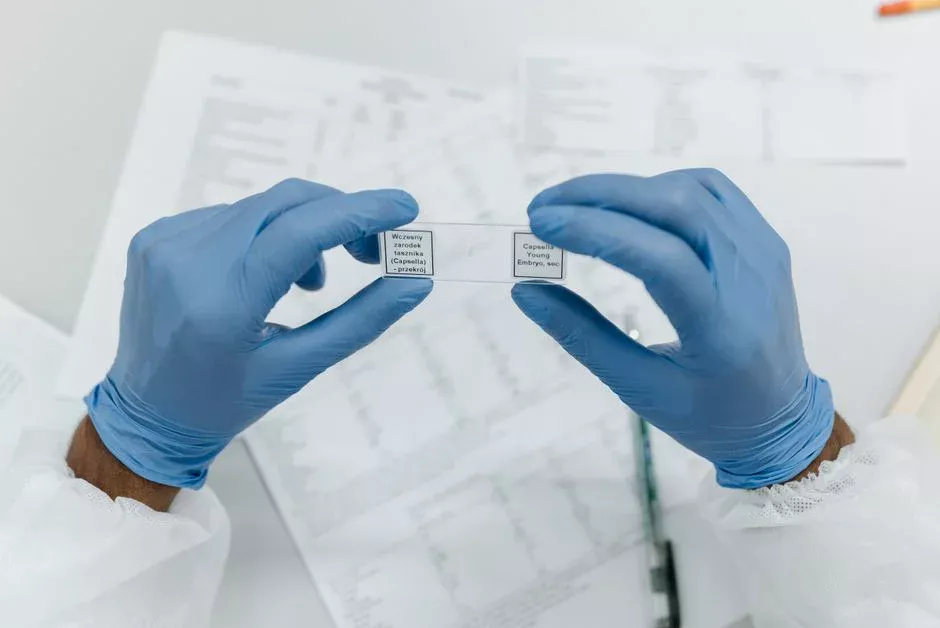
A defensible monitoring SOP rests on three pillars: contamination-free sampling, sequential size-class separation, and polymer-typed reporting. Use 24-hour composite samplers at the final outlet with stainless steel or glass collection vessels. Polymer nets, plastic sample bottles, and polymer-lined tubing must be excluded. They shed particles into the sample and inflate the count by 2–10× (per the methodology critique in Rathore et al. 2024, Goa study).
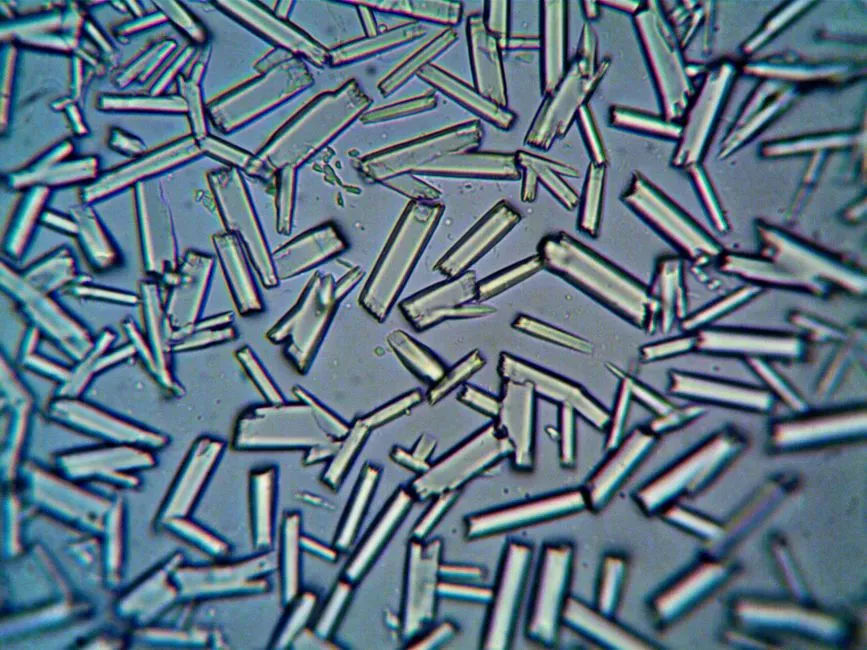
Filter the composite through a stainless-steel sieve stack: 5 mm, 1 mm, 300 µm, 100 µm, and finally a 0.45 µm membrane filter. Each fraction is dried at 60 °C, weighed, then inspected under a stereomicroscope (40×) for particle count. Polymer identification on a representative subset (minimum 100 particles per sample) is performed by FTIR or Raman spectroscopy. Report four metrics: particles/L by size class, polymer type distribution, mass in µg/L, and morphology (fragment, fibre, film, pellet).
Frequency should be monthly self-monitoring by the plant's ETP team, with quarterly third-party audits by an NABL-accredited laboratory. Chain-of-custody documents — sample label, time-stamp, preservation method, courier tracking — must be retained for at least three years for NGT defensibility. Where continuous effluent monitoring is mandated, the methodology in the remote SCADA monitoring for microplastics compliance reporting engineering guide can be adapted for turbidity-proxy correlation. Direct particle counting still requires manual sampling.
90-Day Compliance Action Checklist for Indian Facilities
Convert this article into an operational deliverable with a three-phase action plan. Phase 1 — Days 1–30: map every effluent stream against BIS 4707 (microbead ban) and CPCB Schedule-I applicability. Engage an NABL-accredited laboratory for a baseline microplastic audit at the inlet, MBR outlet, and final discharge. Tabulate the data by particles/L, size class, and polymer type.
Phase 2 — Days 31–60: review the existing treatment train against the five-stage DAF → MBR → MMF → GAC → ClO₂ flow. Identify the weakest barrier — in most facilities this is post-MBR polishing or oxidative disinfection. Scope a capex or opex upgrade with named equipment specifications. For phenolic co-contaminants in textile effluent, the controls in the CPCB phenol discharge compliance guide for Indian facilities can run in parallel with the microplastics workstream.
Phase 3 — Days 61–90: install or upgrade monitoring ports with stainless-steel sampling rigs. Train operators on chain-of-custody documentation. File EPR returns under PWM Rules 2016 (amended 2022) for any plastic packaging handled. Cross-reference CPCB's 1 July 2022 microbead enforcement circular and any state PCB supplement (MPCB, GPCB, TNPCB, KSPCB) for facility-specific consent conditions. The completed dossier — baseline data, treatment train review, monitoring SOP, and EPR filings — is the document to present at the next audit or NGT hearing.
Selection checklist before you commit capex. Confirm whether the site discharges direct to a receiving water or to a CETP. Quantify inlet particles/L by size class with an NABL lab. Verify DAF HRT 20–30 min and recycle 30–50%. Confirm MBR pore size ≤0.1 µm and TMP <0.3 bar. Add MMF + GAC polish if final turbidity exceeds 5 NTU. Lock ClO₂ residual at 1.0–1.5 mg/L. Close the mass balance with filter-press cake at 22–28% dry solids.
Who This Is For / Next Step
This guidance is for ETP managers, EPC process engineers, and compliance officers at cosmetics, textile, plastics, and FMCG plants that already hold CPCB or state PCB consents. Facilities with no rinse-off product line, no synthetic-fibre wet process, and no pellet handling can usually stay with conventional solids control until a numerical limit is notified. If you need a train sized against your consent and a baseline particles/L audit plan, request a process review through our microplastics ETP inquiry form.
Frequently Asked Questions
Does India have a numerical microplastics discharge limit in 2026?
No. India has not notified a numerical limit in mg/L or particles/L for industrial effluent as of 2026. The operative product rule is IS 4707 (Part 2):2017 Amendment No. 2. It bans plastic microbeads in rinse-off cosmetics from 1 July 2022 (Rajya Sabha Unstarred Question 3118, 19.03.2026). Enforcement uses Water Act Section 25 “no adverse effect” directions alongside Schedule-I TSS, COD, and O&G limits.
Which BIS standard governs microplastics in cosmetics?
IS 4707 (Part 2):2017 Amendment No. 2 is the operative BIS standard. It classifies microbeads in personal-care products and prohibits their use in rinse-off formulations, effective 1 July 2022. It does not set an effluent concentration limit that a discharge sample can pass or fail against.
What treatment train removes ≥90% of microplastics from industrial effluent?
A five-stage train of rotary bar screen, DAF, 0.1 µm PVDF MBR, multi-media filter with GAC, and ClO₂ disinfection typically achieves ≥90% removal of particles ≥1 µm. Those removals assume the HRT, recycle, TMP, and residual windows listed above. The MBR is the primary barrier. Oxidative disinfection fragments residual nanoplastics that pass membrane integrity checks.
What is the role of NGT in microplastics enforcement?
The National Green Tribunal adjudicates citizen petitions and has issued binding orders on pellet (nurdle) spills, coastal microplastic contamination, and textile effluent. NGT can direct remediation, impose damages, and order plant-level treatment upgrades under the Environment Protection Act, 1986 and PWM Rules, 2016, even without a national particles/L standard.
How do PWM Rules 2016 limit microplastic generation?
Extended Producer Responsibility under PWM Rules 2016 (amended 2022) caps plastic packaging weight, mandates recycling targets, and holds producers, importers, and brand-owners financially responsible for end-of-life management. EPR reduces microplastic generation at source but does not set an effluent concentration limit for ETP outlets.
Related Equipment
- 0.1 µm PVDF MBR flat-sheet membrane modules — specifications, capacity range, and technical data