What Are the South African Zinc Discharge Limits in 2026?
In South Africa, the zinc discharge limit depends on the receiving environment. Under the National Environmental Management: Waste Act (NEMWA, Act 59 of 2008) and the National Water Act (NWA, Act 36 of 1998), the Department of Water and Sanitation (DWS, formed 2014 from the former Department of Water Affairs) sets a General Standard of 5 mg/L total zinc for discharge to a water resource and 1 mg/L total zinc for discharge to a municipal sewage system (subject to SANS 289:2014 and municipal by-laws, which can tighten to 0.1–1 mg/L in stricter jurisdictions such as the City of Johannesburg and eThekwini). For irrigation return flow the General Standard permits up to 25 mg/L total zinc, dropping to 1 mg/L under the Special Standard where soil loading or downstream abstraction warrants tighter control.
The legal anchor is GN 636 of 2013 (Government Notice 633, 22 August 2013), published under NEMWA Section 24, which contains the National Norms and Standards for the Remediation of Contaminated Land and the associated waste classification limits. Discharge to a watercourse is authorised under NWA Section 21, which lists 11 defined "water uses" — Zn-bearing effluent typically triggers (a) "discharging waste or water containing waste into a water resource," (b) "disposing of waste in a manner which may detrimentally impact on a water resource," and (c) "using water for industrial purposes." Each trigger requires a Water Use Licence (WUL) or a General Authorisation from DWS, with conditions enforceable by Green/Blue Drop audits.
The General vs. Special Standard distinction is not a choice. DWS applies the Special Standard automatically when the receiving environment is a sensitive catchment, a RAMSAR-listed wetland, within 500 m of an irrigation abstraction point, or in a Water Management Area where the resource Quality Objectives (RQOs) classify Zn as a priority pollutant. The Special Standard for Zn is 0.5 mg/L to a water resource and 0.1 mg/L to a sewer where municipal sludge is reused on agricultural land. For context, the US EPA's categorical pretreatment standard at POTWs is 1 mg/L total Zn (40 CFR 433) — comparable to SA's 1 mg/L sewer limit but stricter than SA's 5 mg/L watercourse limit. The Xylem South Africa case study of a Massachusetts auto-auction facility documents a typical US POTW scenario where influent fluctuated 6–10 ppm against a 1 ppm discharge ceiling, solved with ion-exchange polishing — a precedent directly applicable to SA's Special Standard sites.
| Discharge Route | General Standard (Total Zn) | Special Standard (Total Zn) | Governing Instrument |
|---|---|---|---|
| Water resource (river, dam, wetland) | 5 mg/L | 0.5 mg/L | NWA Section 21 + GN 636 (2013) |
| Municipal sewer (POTW equivalent) | 1 mg/L (SANS 289) | 0.1 mg/L (by-law dependent) | Municipal by-law + SANS 289:2014 |
| Irrigation return flow | 25 mg/L | 1 mg/L | NEMWA + DWS Irrigation Strategy |
Which South African Industries Are the Largest Zinc Sources?
Three sectors dominate South African Zn loadings to municipal and industrial wastewater: mining and mineral processing, hot-dip galvanizing, and electroplating/electronics manufacturing. Secondary contributors include non-ferrous smelters (Zn, Cu, Pb, Cd co-stream), brass and bronze fabrication, alkaline battery production, and ZnO pigment manufacture — all of which produce process streams exceeding the 5 mg/L General Standard by 1–2 orders of magnitude.
Mining and mineral processing — particularly the Bushveld PGM operations, Witwatersrand gold tailings, and the Northern Cape Zn-Pb (Aggeneys/Gamsberg) operations — generate Zn-laden process water, return-flow decant, and stormwater runoff typically in the 5–200 mg/L range (HydropureWater field data, 2025–2026). These flows often co-exist with elevated sulphate, total dissolved solids (TDS 1,500–6,000 mg/L), and suspended solids (200–1,000 mg/L), which complicates downstream precipitation kinetics. Hot-dip galvanizing — concentrated in Saldanha, the Cape Town–Paarden Eiland cluster, and the Gauteng manufacturing belt — produces the highest Zn loadings in SA, with acid-pickling wash water and flux residues routinely measuring 20–500 mg/L Zn, and Kettle spills can push concentrations above 1,000 mg/L. Electroplating and printed circuit board (PCB) manufacture generate lower volumetric flows (typically 1–20 m³/day per line) but high concentration drag-out rinse waters at 10–150 mg/L Zn, often in the presence of chelating agents (cyanide, EDTA, citrate, ammonia) that suppress hydroxide precipitation and force treatment trains toward advanced oxidation + ion exchange. An electrocoagulation system designed for electronics-assembly wastewater addresses the chelation problem directly and is worth evaluating for SA PCB facilities.
| Industry | Typical Influent Zn (mg/L) | Key Co-contaminants | Flow Characteristic |
|---|---|---|---|
| Mining & mineral processing (PGM, Au, Zn-Pb) | 5–200 | Sulphate, TDS, Fe, Mn | High volume, batch |
| Hot-dip galvanizing | 20–500 (peaks >1,000) | Fe, acid (HCl/H₂SO₄), flux (ZnCl₂/NH₄Cl) | Spiky, wash-water dominated |
| Electroplating & PCB | 10–150 | Ni, Cu, CN⁻, EDTA, NH₃ | Low flow, high concentration |
| Non-ferrous smelters | 50–300 | Cd, Pb, Cu, Ni, As | Continuous, hot |
How Does Zinc Removal Chemistry Work at pH 8.5–9.5?
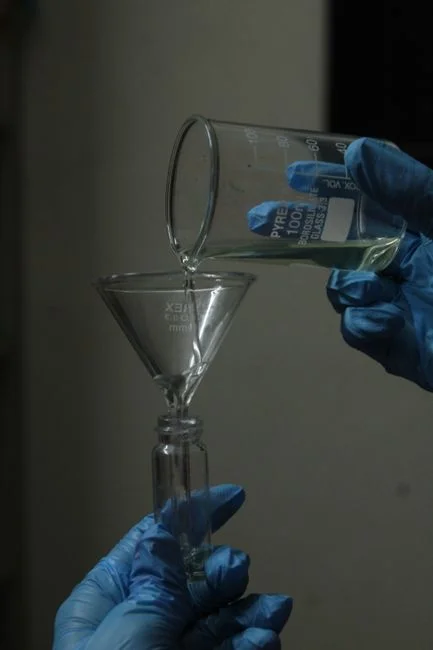
Zinc precipitates as amorphous Zn(OH)₂ with minimum aqueous solubility at pH 8.5–9.5, where theoretical residual Zn falls below 0.1 mg/L at 25 °C. In practice, plant effluent stabilises at 1–5 mg/L because of co-dissolved species (Zn-NH₃, Zn-Cl⁺ complexes), chelating organics, and the kinetic lag of hydroxide nucleation on suspended solids. The precipitation reaction is Zn²⁺ + 2OH⁻ → Zn(OH)₂(s), which translates to a stoichiometric caustic demand of approximately 1.2 kg NaOH per kg Zn precipitated (or 1.5 kg Ca(OH)₂ per kg Zn when lime is substituted — the lime route adds ~0.6 kg Ca²⁺/kg Zn to the TDS load, which is a deciding factor for water-reuse applications). The OPEX of hydroxide precipitation therefore scales roughly linearly with feed concentration, which is why galvanizers at 200 mg/L Zn spend 4× more on reagent per cubic metre than PCB shops at 50 mg/L.
Sludge yield is the second design driver. Hydroxide precipitation generates approximately 3–4 kg dry sludge per kg Zn removed, dominated by water of hydration, co-precipitated metals, and the excess hydroxide carrier (CaSO₄ if gypsum is used to push pH down again). At a 100 mg/L Zn feed and 95% removal, a 1,000 m³/day plant produces roughly 285–380 kg/day dry solids — small in absolute terms but a continuous landfill-classification liability under GN 636 (2013), which rates Zn-bearing sludge as Type 2 or Type 3 waste depending on leachable concentration (TCLP equivalent). Chelating agents common in electroplating — EDTA at 50–200 mg/L, citrate, ammonia at 100–500 mg/L — bind Zn²⁺ into soluble complexes that shift the apparent Ksp upward by 1–2 orders of magnitude, often pushing residual Zn to 10–30 mg/L even at pH 9.5. Two routes address this: (1) destruction of the chelator with Fenton oxidation (H₂O₂/Fe²⁺ at pH 3, 30–60 min HRT) or alkaline chlorination, followed by re-precipitation, or (2) sulfide polishing on the chelator-laden stream. Sulfide precipitation with NaHS or Na₂S achieves <0.1 mg/L residual Zn at a stoichiometry of ~0.5 kg S²⁻ per kg Zn — half the reagent mass of hydroxide — but introduces an H₂S occupational-health risk if pH drops below 8 (H₂S gas evolves below pH 7), so sulfide systems require sealed reactors, H₂S monitors, and dual-redundant pH control. For facilities without chelator loading, hydroxide precipitation remains the lowest-risk default; the automatic chemical dosing system shown in our reagent skid product line maintains pH within ±0.2 units, which is the practical band for hitting the 1–5 mg/L residual range.
Comparing Treatment Technologies for Zinc Compliance
Four technologies cover the bulk of SA Zn-compliance applications: hydroxide precipitation, sulfide precipitation, dissolved air flotation (DAF) polishing, and ion exchange. Electrodialysis and reverse osmosis are reserved for water-reuse or zero-liquid-discharge (ZLD) sites where treated effluent is recycled to rinse tanks or cooling towers — economically marginal for compliance-only operation in SA's current water-price environment.
Hydroxide precipitation is the workhorse: influent 50–500 mg/L Zn is reduced to 1–5 mg/L with low–medium CAPEX (ZAR 2–5 million for a 500 m³/day plant, 2026 installed) and medium OPEX dominated by caustic cost. Sulfide precipitation, used either as a primary step on chelator-laden streams or as a polish step, drops effluent below 0.5 mg/L from a 1–50 mg/L feed at medium CAPEX and low–medium OPEX, but requires tighter operator control. DAF polishing of hydroxide floc consistently delivers 0.5–2 mg/L incremental removal on the clarifier overflow, with very low CAPEX (ZAR 0.4–0.8 million retrofitted to an existing clarifier) and negligible OPEX beyond saturator air and a polymer dose of 1–3 mg/L. The pairing of hydroxide precipitation followed by a dissolved air flotation system is the most common SA treatment train for galvanizers targeting the 1 mg/L sewer limit. Ion exchange with chelating resins (Lewatit TP207, Amberlite IRC748, Purolite S930) achieves <0.1 mg/L effluent from a 1–5 mg/L feed and is the polishing step that reaches the Special Standard; the Xylem SCU media + service-exchange model (case study: Massachusetts auto-auction facility, influent 6–10 ppm, treated to <1 ppm) is proven at US POTW conditions and translates directly to SA Special Standard sites. Sludge handling downstream of any precipitation train requires a plate-and-frame filter press to reach 22–28% dry solids for legal landfill disposal or metals-recovery smelter feedstock.
| Technology | Influent Range (mg/L Zn) | Effluent Capability (mg/L Zn) | CAPEX Index (500 m³/day) | OPEX Index | Sludge Yield | Operator Skill |
|---|---|---|---|---|---|---|
| Hydroxide precipitation | 50–500 | 1–5 | Low–medium | Medium (caustic-driven) | 3–4 kg/kg Zn | Standard |
| Sulfide precipitation | 1–50 | <0.5 | Medium | Low–medium | 1.5–2 kg/kg Zn | High (H₂S risk) |
| DAF polishing of hydroxide floc | 1–10 (post-clarifier) | 0.5–2 incremental | Low | Very low | None (scrapes existing floc) | Low |
| Ion exchange (chelating resin) | 1–5 | <0.1 | Medium–high | Medium (resin + regenerant) | None on-site (resin exchange) | Low (service model) |
Building a South Africa-Ready Treatment Train
The decision framework below is what an SA process engineer should walk into a DWS pre-application meeting with. For facilities targeting the General Standard (5 mg/L water, 1 mg/L sewer, 25 mg/L irrigation), a three-step train — equalize, hydroxide precipitate, DAF polish — delivers compliance at lowest CAPEX. For Special Standard sites (0.5 mg/L water, 0.1 mg/L sewer, 1 mg/L irrigation) the train extends to a fourth step: ion exchange or sulfide polishing.
Step 1 — Equalization and pH correction: 24–48 hour HRT homogenises batch spikes from galvanizing kettles and prevents pH excursions downstream; target pH 7–8 prior to precipitation. Step 2 — Coagulation/flocculation: caustic or lime dosing to pH 8.5–9.5 with a coagulant aid (typically polyaluminium chloride at 50–150 mg/L) and an anionic flocculant (0.5–2 mg/L). A high-rate lamella clarifier follows. Step 3 — Primary solids separation: DAF or lamella clarifier achieving 2–5 mg/L residual Zn, suitable for General Standard discharge. Step 4 — Polishing: multimedia sand/anthracite filter for General Standard irrigation; ion exchange with chelating resin (Lewatit TP207 or equivalent) for Special Standard sewer or water discharge. Step 5 — Sludge handling: a plate-and-frame filter press dewatered to 22–28% dry solids; cake tested for Zn leachability under GN 636 (2013) TCLP equivalent, then routed to a licensed hazardous-waste landfill or, at higher Zn loadings, to a metals-recovery smelter. For facilities with cyanide, ammonia, or high COD co-loading, an upstream MBR-integrated wastewater treatment step should be evaluated to protect the precipitation train from organic passivation of the floc. Fully automated PLC dosing with pH/redox monitoring and data logging is the de-facto SA norm for facilities subject to DWS audits — manual systems fail compliance reporting because they cannot reconstruct the pH profile over a 24-hour period during an inspection.
Frequently Asked Questions
What is the legal zinc discharge limit to a watercourse in South Africa?
Under the General Standard the limit is 5 mg/L total zinc, dropping to 0.5 mg/L under the Special Standard when the receiving environment is a sensitive catchment, RAMSAR wetland, or near an irrigation abstraction point. The limits are enforced by DWS under the National Water Act Section 21 and the National Environmental Management: Waste Act (NEMWA) framework, with GN 636 (2013) as the supporting norms and standards.
What is the zinc limit for discharge to a South African municipal sewer?
The General Standard sets 1 mg/L total zinc to a municipal sewage system, anchored in SANS 289:2014. Municipal by-laws in Johannesburg, eThekwini, and Cape Town can tighten this to 0.1–1 mg/L depending on the receiving wastewater treatment works and downstream sludge reuse route.
Can South African industrial effluent be used for irrigation under the General Standard?
Yes, where the discharge route is irrigation return flow the General Standard permits up to 25 mg/L total zinc. Where soil loading, groundwater vulnerability, or downstream abstraction warrants tighter control, the Special Standard applies and the limit drops to 1 mg/L total zinc. Both routes require a Water Use Licence under NWA Section 21.