Why Chromium Discharge Limits Are Tightening in 2026: Regulatory Trends and Health Risks
Cr(VI) is a Group 1 carcinogen per the International Agency for Research on Cancer, linked to occupational lung cancer and contact dermatitis at airborne exposure levels above 5 µg/m³ as regulated under OSHA 1910.1026. The same toxicity profile drives effluent rules: the EPA's 2026 update references a 2024 IRIS assessment showing Cr(VI) bioaccumulation in aquatic organisms at concentrations below 0.05 mg/L, which is why the electroplating sector now faces a 0.05 mg/L Cr(VI) ceiling. In the EU, BAT-AEL ranges tightened in 2026 to 0.05–0.2 mg/L total chromium across BAT reference documents for leather and surface treatment, driven by REACH Annex XVII restrictions on Cr(VI) in consumer articles (EU 2025/2181, published 2025-08). China's national GB 21900-2008 stays at 0.5 mg/L total chromium, but provincial rules diverge sharply: Zhejiang's local standard enforces 0.1 mg/L Cr(VI), and direct-discharge permits in Guangdong and Jiangsu routinely require 0.1 mg/L or lower for tanneries and metal finishers. A 2025 Zhejiang tannery case illustrates the financial exposure: regulators issued an $80,000 fine after a discharge sample returned 0.45 mg/L Cr(VI), roughly 4.5x the local limit. For multinational operators shipping to both California POTWs (0.02 mg/L Cr(VI) for indirect dischargers) and EU tanneries, the compliance floor is no longer a single number but a stack of overlapping regional floors.
2026 Chromium Discharge Limits Compared: EPA vs. EU BAT-AEL vs. China GB Standards
Total chromium and Cr(VI) are the two parameters regulators enforce; Cr(III) is generally unregulated in effluent because it precipitates readily above pH 6 and is far less bioavailable. The table below consolidates the three jurisdictions that govern most industrial discharge permits in 2026, with sector footnotes where the limit varies.
| Parameter | Industry / Sector | EPA 2026 (mg/L) | EU BAT-AEL 2026 (mg/L) | China GB 21900-2008 (mg/L) |
|---|---|---|---|---|
| Total Chromium | General industrial | 0.1 | 0.1–0.2 (sector-dependent) | 0.5 |
| Total Chromium | Electroplating / surface treatment | 0.1 | 0.05–0.1 | 0.5 (Zhejiang local: 0.1) |
| Total Chromium | Leather / tanning | 0.1 | 0.1 | 0.5 |
| Total Chromium | Refractory / metallurgy | 0.1 | 0.2 | 0.5 |
| Cr(VI) | Electroplating | 0.05 | 0.05 | 0.1 (Zhejiang local) |
| Cr(VI) | Leather / tanning | 0.05 | 0.05 | 0.1 (Zhejiang local) |
| Cr(VI) | Refractory / metallurgy | 0.05 | 0.1 | 0.5 |
| Cr(III) | All sectors | No federal limit | No BAT-AEL | No national limit |
Key footnotes: California's Title 22 indirect-discharge limit for Cr(VI) is 0.02 mg/L, and several Bay Area POTWs enforce 0.01 mg/L for electroplaters under their waste-water ordinances. EU BAT-AEL values are ranges because the 2026 BAT conclusions for Common Waste Water and Waste Gas Treatment/Management Systems (CWW, 2026-02 publication) allow Member States to set permit conditions anywhere in the stated range. China's 0.5 mg/L national ceiling is the absolute maximum; provinces routinely halve it for Cr(VI) and for watershed-sensitive receiving waters. The practical compliance target for any multinational is the strictest applicable number, not the highest.
Chemical Precipitation for Chromium Removal: 2026 Engineering Specs and Compliance Pitfalls
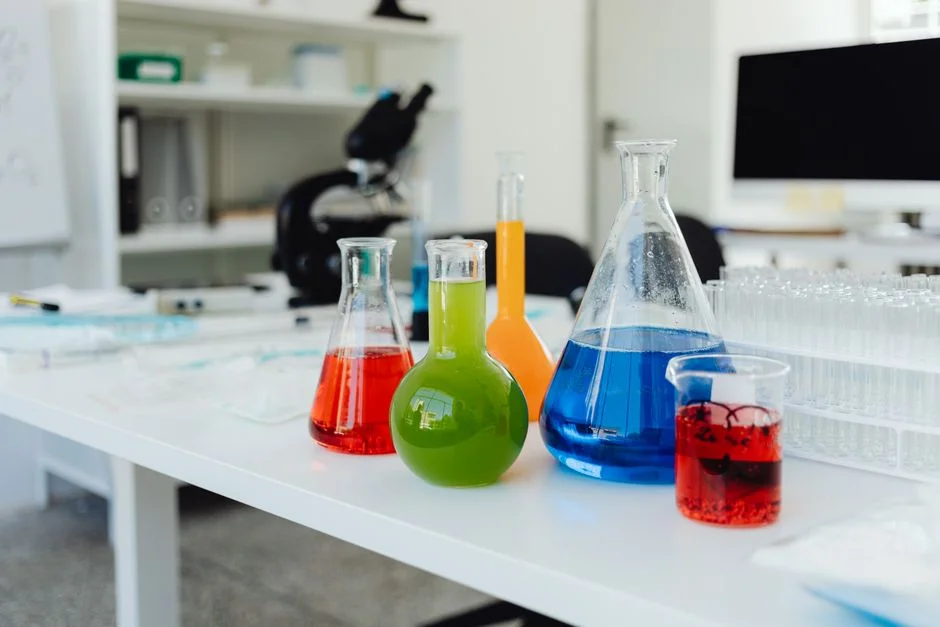
Chemical precipitation removes 99%+ of influent chromium when operated correctly and is the default for flows above 50 m³/h. The four-stage process flow is reduction, pH adjustment, precipitation, and solid–liquid separation. In stage one, hexavalent Cr(VI) is reduced to trivalent Cr(III) using sodium metabisulfite (Na₂S₂O₅) dosed at 1.5–3x the stoichiometric ratio, or ferrous sulfate (FeSO₄·7H₂O) at 2.5–4x stoichiometric ratio. Na₂S₂O₅ is preferred for high-purity effluent because it does not add dissolved iron to the stream; FeSO₄ is cheaper per kilogram but generates higher sludge volumes (roughly 2.5x by mass). The reduction reactor must hold pH at 2.0–3.0, verified with a continuous inline probe; pH above 3.0 is the single most common cause of incomplete Cr(VI) reduction because bisulfite oxidation slows sharply above that threshold. Reaction time in the reduction tank should be 30–60 minutes with moderate mixing (G = 300–500 s⁻¹).
Stage two raises pH to 8.5–9.5 using sodium hydroxide (NaOH) or lime (Ca(OH)₂); lime is cheaper but generates more sludge and can scale heat exchangers. At this pH, Cr(III) hydrolyzes to Cr(OH)₃, which has a solubility of roughly 0.08 mg/L at pH 9.0 and is removed by settling. Critical pitfall: pH above 9.5 redissolves Cr(OH)₃ as the tetrahydroxo complex [Cr(OH)₄]⁻, producing clear effluent with elevated total chromium and visible sludge carryover. Stage three requires a minimum 2-hour detention time in the clarifier with polymer flocculant dosing (0.5–2 mg/L cationic polyacrylamide). Stage four typically uses a multimedia filter or a plate-and-frame filter press for hazardous chromium sludge dewatering, which achieves 30–40% dry solids content and reduces landfill disposal volume by 75% versus belt-press dewatering. The resulting chromium hydroxide sludge is classified as EPA RCRA hazardous waste under D007 (chromium), with TCLP limits of 5 mg/L, and must be manifested to a licensed treatment, storage, and disposal facility (TSDF). For facilities where reagent precision is critical, PLC-controlled chemical dosing systems for precise chromium reduction maintain Na₂S₂O₅ feed within ±2% of the setpoint based on inline ORP and pH feedback, eliminating the most common manual-tuning failures.
Ion Exchange vs. Membrane Systems: When to Use Each for Chromium Removal
Ion exchange and reverse osmosis address chromium problems that chemical precipitation handles poorly: low-flow streams requiring very low discharge limits, and applications where treated water must be reused in the process rather than discharged. The decision depends on influent concentration, flow rate, and reuse goals.
Ion exchange with strong-base anion (SBA) resin such as Purolite A600 or Amberlite IRA 900 targets Cr(VI) as the dichromate (Cr₂O₇²⁻) or bichromate (HCrO₄⁻) anion, with loading capacities of 0.8–1.2 eq/L at chromium feed levels of 10–50 mg/L. The resin is regenerated with 4–8% NaOH followed by 10% NaCl, producing a small concentrated eluate that is then precipitated. Best fit: flows below 50 m³/h, Cr(VI) below 50 mg/L, and discharge limits at or below 0.05 mg/L.
Reverse osmosis rejects both ionic and particulate chromium, with 99%+ removal of Cr(VI) and Cr(III) at 60–80% recovery when feed SDI is below 3. RO makes sense when the operator wants closed-loop water reuse (typical permeate reuse displaces 60–80% of freshwater intake), when influent salinity is high and chemical precipitation would generate a high-TDS brine, or when the discharge limit is below 0.05 mg/L with no dilution available. Pretreatment is mandatory: multimedia filtration, antiscalant dosing, and cartridge filtration to 5 µm keep membranes from fouling on the iron and suspended solids that co-occur in plating bath rinses. Industrial RO systems for chromium reuse applications in electroplating commonly run at 70–80% recovery with concentrate recycled to the rinse tank.
| Parameter | Strong-Base Anion Exchange | Reverse Osmosis (RO) |
|---|---|---|
| Influent Cr range (mg/L) | 5–50 | 0.1–500 |
| Removal efficiency | 95–99% | 99%+ |
| CAPEX (USD per m³/h capacity) | 1,200–2,500 | 2,000–4,000 |
| OPEX (USD per m³ treated) | 0.15–0.30 | 0.40–0.80 |
| Footprint (relative) | Medium | Small (60% less than precipitation) |
| Regeneration frequency | Every 8–24 h per vessel | Membrane replacement every 3–5 years |
| Reuse potential | Limited (eluate still needs precipitation) | High (permeate is reusable) |
| Best fit | Low flow, moderate Cr, no reuse | High purity, reuse required, high salinity |
Nanofiltration (NF) sits between the two: it removes 80–95% of Cr(VI) at lower pressure than RO (0.4–0.8 MPa vs. 1.0–1.6 MPa), making OPEX $0.20–$0.40/m³, but cannot meet 0.05 mg/L discharge alone. NF is most often used as a polishing step after ion exchange, not as a standalone treatment.
Cost Breakdown and ROI for Chromium Removal Systems in 2026
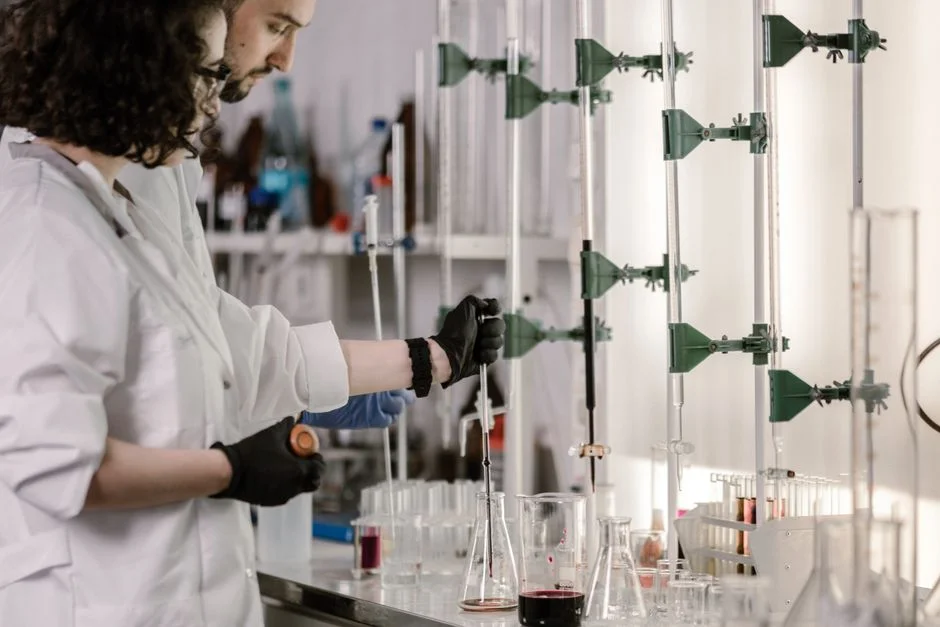
Procurement teams should budget 2026 CAPEX at $500–$1,500 per m³/h for chemical precipitation (tanks, dosing skids, clarifier, filter press), $1,200–$2,500/m³/h for ion exchange (vessels, resin, regeneration skid), and $2,000–$4,000/m³/h for RO (skid, membranes, high-pressure pumps, CIP system). OPEX tracks reagent and energy: chemical precipitation runs $0.05–$0.15/m³ dominated by Na₂S₂O₅ and NaOH consumption; ion exchange costs $0.15–$0.30/m³ with NaOH and NaCl for regeneration; RO OPEX of $0.40–$0.80/m³ reflects energy at 0.8–1.5 kWh/m³ plus membrane replacement amortized over 5 years. Sludge disposal adds $200–$400 per wet ton at a licensed TSDF, which is why dewatering to 35% dry solids (achievable with a filter press) directly reduces OPEX by 60% versus 20% dry-solids cake.
A worked example: a 100 m³/h tannery installing chemical precipitation faces roughly $120,000 CAPEX and $15,000/year OPEX (Na₂S₂O₅ + NaOH + sludge hauling). At one violation per year avoided at the Zhejiang $80,000 fine, payback is 1.5 years, and the Zhejiang 2025 case shows that fines are not capped at one event. Adding an RO polish for 60% permeate reuse reduces freshwater intake by 80,000 m³/year; at $0.50/m³ freshwater cost, that saves $40,000/year, shortening total payback on the combined system to under 2 years for facilities with acute water scarcity. The same calculation for an electroplater paying California's 0.02 mg/L Cr(VI) limit is even more favorable, because ion exchange and RO are the only systems that hold that target without dilution.
How to Select the Right Chromium Removal System: A 2026 Decision Framework
System selection follows five sequential checks. Step 1: characterize the influent. Use EPA Method 218.6 (ion chromatography) for Cr(VI) at the 0.01–1.0 mg/L range and Method 200.7 (ICP-OES) for total chromium; sample at 4-hour composite intervals for one week to capture shift-based variability. Step 2: check the flow rate. Above 50 m³/h, chemical precipitation has the lowest CAPEX and is the default; below 50 m³/h, ion exchange often wins on footprint and reagent OPEX. Step 3: evaluate reuse needs. If the operator needs 50%+ permeate reuse or must meet a discharge limit below 0.05 mg/L, add RO (or NF for less demanding reuse). Step 4: assess the available footprint. RO skids require roughly 60% less floor space than an equivalent precipitation train, which matters in retrofit brownfield projects. Step 5: lock the budget and weigh CAPEX against OPEX. A facility with cheap labor and expensive capital will tolerate the higher OPEX of RO; a facility with limited financing will prefer the lower CAPEX of precipitation, even at higher ongoing reagent cost. The full decision tree: Is Cr(VI) above 50 mg/L? → Yes: ion exchange or two-stage precipitation; No: proceed. Is reuse required? → Yes: RO/NF; No: precipitation or ion exchange. Is flow above 50 m³/h? → Yes: precipitation; No: ion exchange. For most tanneries and electroplaters discharging to a sewer, the answer is chemical precipitation followed by sludge dewatering; for facilities with strict reuse or discharge limits, the answer is ion exchange or RO. Related regulatory reading is available in our guides on oil and grease discharge limits for 2026, zinc discharge limits in Africa for 2026, and fine chemical wastewater treatment processes for 2026.
Frequently Asked Questions
What is the EPA chromium discharge limit for industry in 2026?
The EPA's 2026 effluent limit is 0.1 mg/L total chromium for most industrial sectors, with electroplating facilities facing a stricter 0.05 mg/L Cr(VI) ceiling (per 40 CFR 433 electroplating categorical standards and 2026 EPA updates).
What is the EU BAT-AEL for chromium in 2026?
EU BAT-AEL ranges from 0.05 to 0.2 mg/L total chromium in 2026, depending on sector; surface treatment and leather are at 0.05–0.1 mg/L, while refractory and metallurgy are at 0.2 mg/L (per CWW BAT conclusions, 2026-02).
What is the China GB 21900-2008 chromium limit?
China's national GB 21900-2008 limit is 0.5 mg/L total chromium, but provincial standards such as Zhejiang's impose 0.1 mg/L Cr(VI) for tanneries and electroplaters, creating the binding compliance number for most operations.
What is the best treatment for hexavalent chromium removal?
Chemical precipitation with sodium metabisulfite (1.5–3x stoichiometric) at pH 2.0–3.0 for reduction followed by pH 8.5–9.5 for Cr(OH)₃ precipitation removes 99%+ of chromium and is the default for flows above 50 m³/h.
How much does a chromium removal system cost in 2026?
CAPEX ranges from $500/m³/h (precipitation) to $4,000/m³/h (RO), with OPEX of $0.05–$0.80/m³ depending on technology; a 100 m³/h tannery system typically pays back in 1.5–2 years versus a single $80,000 non-compliance fine.
Is chromium hydroxide sludge hazardous?
Yes, chromium hydroxide sludge is classified as EPA RCRA hazardous waste under D007 with a TCLP limit of 5 mg/L chromium, and must be manifested to a licensed TSDF; dewatering with a filter press to 30–40% dry solids cuts disposal volume and cost by 60–75%.