
The Rule Stack a Tillamook Plant Engineer Must Cite in 2026
A Notice of Violation from the local sewerage authority is the document that reorders a Tillamook County plant manager's calendar in 2026. When a cheese, whey, dairy, brewery, or seafood processor in the Tillamook dairy corridor receives such a letter for elevated BOD, total suspended solids, or FOG, the clock starts on a 30–60 day window to submit a compliance plan with measurable effluent targets. Four rule layers stack on top of each other, and a 2026 NOV cites all four. Building a defensible Tillamook food and beverage plant 2026 pretreatment plan starts with naming each layer.
Clean Water Act §307(b) authorizes EPA to set national pretreatment standards, and those standards live in two CFR titles every plant engineer should bookmark. 40 CFR 403 (the General Pretreatment Regulation) applies to every industrial user discharging to a POTW; 40 CFR 432 sets categorical pretreatment standards for food and beverage point sources, split by subpart: meat products (432.1–432.10), dairy (432.21–432.30), grain mills (432.41–432.50), canned and frozen fruits and vegetables (432.61–432.70), and beverages (432.71–432.80). A Tillamook cheese, whey, fluid milk, or ice cream plant sits squarely in subpart 432.21–432.30; a creamery line still routes through 432.21 because the dairy SIC code dominates. A bakery or snack line on the same site would shift to 432.41–432.50, so subpart identification is the first compliance step. EPA's Attachment 3-1: Summary of Categorical Standards (December 2024) is the live index engineers should cite by version.
EPA delegates day-to-day enforcement to approved state and local programs. In Oregon, the Oregon DEQ Industrial Pretreatment Program runs under an approved 40 CFR 403 delegation, but the controlling authority for a specific Tillamook plant is the receiving POTW acting under its sewer use ordinance and any DEQ delegation. Tillamook-area plants discharge primarily to the Tillamook Bay wastewater system, the City of Tillamook treatment plant, and the Netarts-Oceanside Sanitary District for smaller coastal operations; cheese plants with on-site pretreatment can fall under direct DEQ oversight. Local limits can be stricter than the federal floor but never weaker (per 40 CFR 403.5), so the controlling number on BOD, TSS, FOG, or pH is almost always the local ordinance, not 40 CFR 432. A plant engineer who cannot cite the exact 40 CFR 432 subpart, the 40 CFR 403 general standard, and the local ordinance clause will struggle to contest BOD concentration findings with the sewerage authority.
Parameter Limits a Tillamook POTW Will Enforce in 2026
Most Oregon POTWs, including Tillamook-area authorities, set indirect-discharge limits on the parameters below. The values are typical ceilings seen across Oregon DEQ Industrial Pretreatment Program permits; the engineer must verify the exact numbers in their own discharge permit and the local sewer use ordinance before sizing any equipment or signing a purchase order. Each limit should be documented by basis—federal categorical, federal general, or locally stricter—so a NOV can be answered line by line.
| Parameter | Typical Oregon POTW ceiling | Basis |
|---|---|---|
| BOD₅ | 250–500 mg/L (30-day avg.); site-specific mass cap | 40 CFR 432 subpart + local limit |
| TSS | 250–400 mg/L (30-day avg.) | 40 CFR 403.5 + local limit |
| FOG (hexane extractable) | 100 mg/L; 200 mg/L instantaneous | Local limit (typical Oregon POTW) |
| pH | 6.0–9.0 standard units (instantaneous) | 40 CFR 403.5(b)(2) |
| Temperature | ≤40 °C (104 °F) at POTW headworks | Local limit (typical) |
| Ammonia (as N) | 20–50 mg/L (site-specific) | Local limit; receiving-stream ammonia criteria |
| Total phosphorus | 5–10 mg/L (site-specific) | Local limit; receiving-stream TP criteria |
| TDS / sulfate / chloride | Site-specific; check CIP discharges | Local limit; industrial waste survey |
| Oil and grease (visual) | No visible sheen at discharge manhole | 40 CFR 403.5(b)(7) + local ordinance |
The 100 mg/L FOG ceiling is the single number that most often triggers a NOV in dairy and seafood operations, and it is the design target the downstream equipment train must hit at the discharge manhole. Mass limits (lb/day) typically accompany concentration limits; check both before sizing a DAF.
The Five-Stage Pretreatment Train That Clears Those Limits
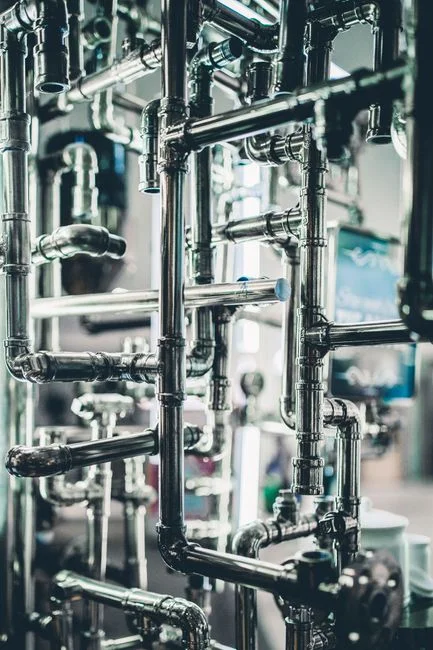
A defensible 2026 train for a Tillamook food or beverage plant follows a five-stage sequence, allowing the engineer to justify each performance metric to the authority stage by stage. Size the train for 1.5× average flow, not average daily flow, because Tillamook dairy and seafood lines peak during washdown and CIP cycles.
| Stage | Equipment | Target contaminant | Design metric |
|---|---|---|---|
| 1 — Headworks | Rotary mechanical bar screen | Rags, seeds, pulp, packaging debris | ≥6 mm opening; protects downstream pumps |
| 2 — FOG/TSS removal | Dissolved air flotation system | FOG, emulsified oil, colloidal TSS | FOG 800–1,500 mg/L → <100 mg/L; 0.5–1.0 gpm/ft² hydraulic |
| 3 — Equalization & chemistry | EQ basin + PLC-controlled coagulant and pH dosing skid | CIP pH swing (2–12), sugar/starch spikes, TDS | ≥8 hours retention; automated acid/cautic and polymer trim |
| 4 — Biological | MBR membrane bioreactor system (tight footprint) or MBBR/IFAS | Dissolved BOD, ammonia, residual protein-bound organics | MBR: ≤1 µm membrane effluent; MBBR/IFAS: 350–500 m²/m³ media |
| 5 — Sludge dewatering | Plate-and-frame filter press or rotary vacuum drum | DAF float + waste activated sludge | 20–25% cake solids; 75–80% volume reduction |
Stage 2 is the workhorse for cheese, whey, and seafood operations, where a properly coagulated dissolved air flotation system typically reduces FOG from 800–1,500 mg/L to under 100 mg/L and strips colloidal TSS before the biological stage (ALAR engineering data, 2026). Stage 3 stabilizes CIP surges that swing pH from 2 to 12 in a single shift, and pairs a PLC coagulant and pH dosing skid with the equalization tank to keep biology alive downstream. Stage 4 choice depends on footprint: an MBR delivers near-reuse quality in a tight envelope, while MBBR or IFAS offers lower capex where land allows. Stage 5 routes DAF float and waste activated sludge to a plate-and-frame filter press for dewatering to 20–25% cake solids, cutting hauling volume by 75–80% versus liquid sludge (HydropureWater field data, 2026). A 70,000 gpd (≈265 m³/day) plant is the reference scale for which Mead & Hunt commissioned a 10-day temporary pretreatment system (Mead & Hunt, 2024); the same 1.5× peak factor applies to permanent Tillamook installs.
Sub-Sector Overload Map for the Tillamook Dairy Corridor
Each sub-sector under 40 CFR 432 stresses different stages, and identifying which stage is overloaded dictates where to add capacity.
Cheese, whey, and fluid milk plants. Protein-rich waste drives foaming and odor in the biological stage; MBBR or IFAS should be specified with 350–500 m²/m³ of media to absorb protein-bound BOD, and DAF float must be routed to a dedicated FOG tank to prevent re-emulsification back into the equalization basin.
Craft breweries, distilleries, and confectionery lines. Sugar- and starch-dominated waste spikes BOD within hours of a batch; size equalization at ≥8 hours and add a high-rate biological stage to absorb the surge. A dairy wastewater treatment 2026 process guide gives comparable equalization sizing for adjacent dairy and hybrid lines.
Seafood and meat adjuncts. FOG in the raw stream often runs 800–2,000 mg/L; the dissolved air flotation system is the critical stage, and skimmed float must be routed to a separate FOG tank to keep the biological stage from choking.
Bakery, snack, and ready-meal lines. High suspended solids from pulp, seeds, and grains require properly sized screening and DAF stages, and CIP surges must be neutralized between the DAF and the biological reactor using the PLC-controlled coagulant and pH dosing skid. A lime dosing system design criteria 2026 reference helps when pH correction requires caustic or lime rather than mineral acid.
Six-Step Compliance Sequence to Clear a 2026 NOV
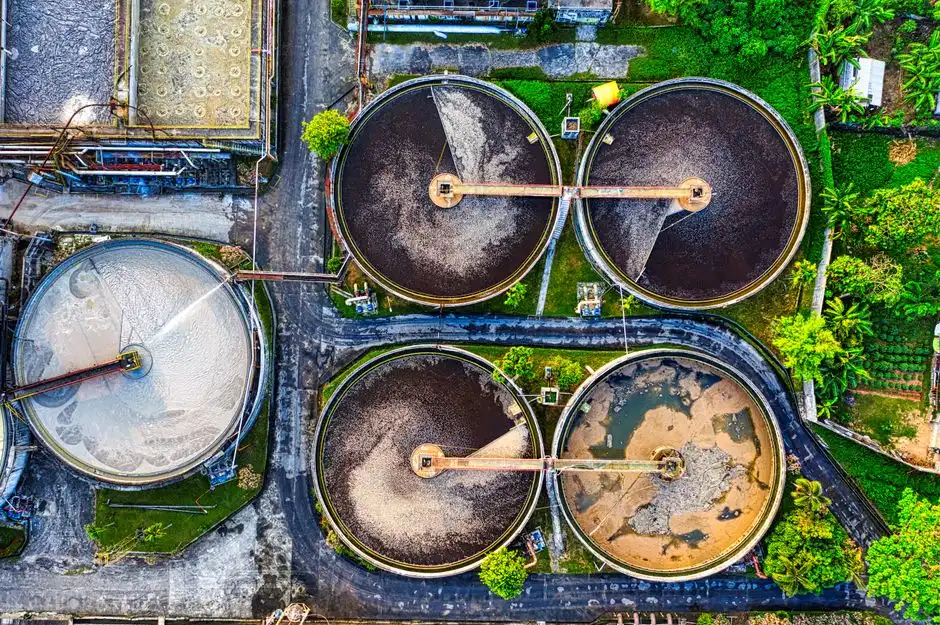
The defensible sequence an engineer can hand to the regulator with a 30–60 day response window is the same sequence an Oregon DEQ auditor will recognize. Aligning these six steps with the 2026 permit renewal window is the difference between a clean audit and an enforcement order.
- Baseline sampling. Run 24-hour composite sampling across at least five operating days, including a CIP day, and analyze at an Oregon-accredited lab for BOD₅, TSS, FOG, pH, ammonia, total phosphorus, temperature, and flow.
- Jar test and DAF pilot. Confirm coagulant and polymer dose on real plant water; a one- to two-week on-site pilot on a skid-mounted DAF is the cheapest insurance against undersizing.
- Written confirmation of local limits. Get the local POTW to confirm the exact BOD, TSS, FOG, pH, ammonia, TP, and mass caps in writing before final equipment selection; the limits in the parameter table above are starting points, not commitments.
- Final equipment selection and PO. Lock the train at 1.5× average flow with documented headroom on FOG and BOD; release the PO only after step 3 returns.
- Installation. A full DAF-plus-biology train requires 8–16 weeks for procurement, foundation work, and commissioning; a temporary pretreatment system can be deployed in roughly 10 days if a NOV precludes waiting (Mead & Hunt, 2024).
- 90-day shakedown with monthly DMRs. Submit monthly discharge monitoring reports to the POTW and DEQ as required; tune coagulant and polymer dose; verify cake solids and hauling reduction against the design target. The 90-day window should land inside the 2026 permit renewal cycle so the plant enters the new permit with documented compliance.
Frequently Asked Questions
Which 40
Frequently Asked Questions
Which 40 CFR 432 subpart applies to a Tillamook cheese or whey plant?
Facilities processing cheese and whey typically fall under 40 CFR 432 Subpart K (Condensed Whey Subcategory) or Subpart L (Dry Whey Subcategory), depending on the specific product output. If the facility is classified as a large processor, it may also be subject to the broader requirements for the Meat and Poultry Products Point Source Category if integrated operations exist on-site.
What FOG level can a DAF realistically hit before sewer discharge in 2026?
A properly operated and chemically assisted Dissolved Air Flotation (DAF) unit can consistently reduce Fats, Oils, and Grease (FOG) concentrations to between 50 mg/L and 100 mg/L. Achieving these levels by 2026 requires precise dosing of coagulants and flocculants adjusted in real-time to match the influent loading variations typical of high-strength dairy waste streams.
How long does it take to install a full DAF plus biological pretreatment train?
The design, permitting, and installation of a full pretreatment train—including DAF and biological processes like Moving Bed Biofilm Reactors (MBBR) or Membrane Bioreactors (MBR)—typically requires 18 to 24 months. This timeline accounts for site-specific engineering, local building permits, equipment lead times for specialized pumps and aeration systems, and the necessary commissioning period for biomass acclimation.
What temperature limit applies to industrial discharges at a Tillamook POTW headworks?
Industrial discharges to the Tillamook Publicly Owned Treatment Works (POTW) are generally restricted to a maximum temperature of 104°F (40°C) at the point of discharge into the collection system. This limit is set to prevent damage to sewer infrastructure and to ensure that the biological processes within the treatment plant remain within the optimal operating range for nitrifying bacteria.
Can a local sewer use ordinance be weaker than the federal pretreatment floor?
No, a local sewer use ordinance cannot be weaker than the federal pretreatment standards established by the Clean Water Act. While local authorities have the legal mandate to impose more stringent local limits (Local Limits) to protect the POTW's specific treatment capacity and receiving water quality, they are prohibited from permitting any discharge that exceeds the federal categorical pretreatment standards (CPS).