What Pretreatment Means for a Gulf Coast Mining or Metals Plant
Pretreatment under 40 CFR 403 is the treatment an industrial user performs before wastewater reaches a publicly owned treatment works (POTW); it is not the same regulatory track as a direct NPDES discharge to surface water under 40 CFR 122. The federal rule sets prohibited-pass-through and prohibited-discharge categories, while every numerical local limit is written by the receiving POTW and approved by a state authority. On the US Gulf of Mexico coast that means the Texas Commission on Environmental Quality (TCEQ), the Louisiana Department of Environmental Quality (LDEQ), the Mississippi Department of Environmental Quality (MDEQ), the Alabama Department of Environmental Management (ADEM), and the Florida Department of Environmental Protection (FDEP) act as the approval authorities over City of Houston, San Antonio Water System, New Orleans Sewerage & Water Board, Jackson, Mobile, and Jacksonville pretreatment programs respectively.
The financial exposure under 40 CFR 403.5 — surcharges for excess loading, administrative and civil penalties up to the federal maximum per violation day, pass-through liability when damage occurs at the POTW, and the potential loss of discharge authorization — is what makes pretreatment a board-level topic for Gulf Coast metals operators, not a maintenance-line item. The petrochemical wastewater discharge standard 2026 guide covers a parallel enforcement posture for adjacent Gulf Coast sectors and reinforces that the receiving POTW — not the plant — is the immediate compliance customer. The hydrogeologic context also matters: the Gulf Coast Regional Aquifer-System Analysis (USGS, 1984) documented that increased groundwater demand is anticipated to meet urban growth, expanded energy development, and irrigated agriculture in the Gulf coastal plain, so local pretreatment programs are tightening as freshwater intake becomes more contested.
Pollutants to Target in Mining and Metals Wastewater
The pollutant suite a Gulf Coast metals plant is expected to manage at the discharge sampling point includes total suspended solids (TSS) at 200–3,000 mg/L, total dissolved solids (TDS) often 1,500–10,000 mg/L depending on the amount of brackish or saline groundwater blended into the process, oil and grease at 50–500 mg/L for streams that contact lubricants or hydraulic fluids, free and emulsified hydrocarbons, pH excursions outside the typical POTW window of 5.0–10.5 SU, sulfate at 200–2,500 mg/L from acid mine drainage and ore-wash circuits, and a metals set that always includes iron and manganese and frequently includes copper, zinc, lead, nickel, and arsenic, with cyanide complexes appearing in some hydrometallurgical circuits.
The Gulf-Coast-specific risk is the TDS ceiling. Many receiving POTWs run a 1,000–1,500 mg/L TDS daily-maximum local limit because high conductivity upsets their biological stage and corrods their collection-system concrete; plants that draw from the coastal aquifer and blend it with process water can push influent conductivity above 5,000 µS/cm before chemistry is even added. When that happens, deionization or reverse-osmosis polishing is moved upstream of the discharge point, not added at the end. Flow equalization is the first non-mechanical step for a reason: mining and metals plants generate slug loads from batch leaching, ore washing, and stormwater runoff, and without 6–24 hours of buffer the downstream chemical stage overdoses and underdoses on the same shift. The 2022 ACS ES&T Engineering review on industrial water treatment and reuse frames the broader pressure: as water scarcity in the United States continues through the 21st century, the plant that designs pretreatment to enable recycling as well as discharge compliance holds a structural cost advantage over the plant that treats the sewer as a free sink.
The 2026 Pretreatment Process Train, Step by Step
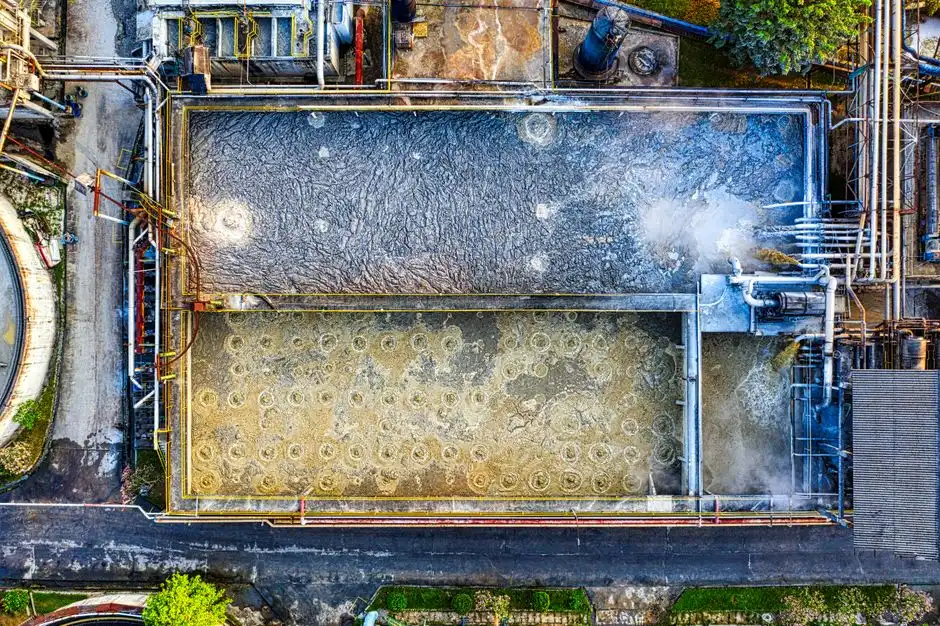
The defensible unit-operation sequence for a Gulf Coast mining/metals plant in 2026 is mechanical screening → flow and pH equalization → pH adjustment and chemical precipitation → dissolved air flotation → biological polishing → final clarification and discharge monitoring. Each step has a job and a failure mode, and the order is not a preference — it is what 40 CFR 403 categorical pretreatment standards and most Gulf Coast POTW enforcement orders assume the plant is running.
- Mechanical screening. A GX series rotary mechanical bar screen at 2–6 mm opening removes rags, plastics, ore fragments, and coarse debris that would otherwise rag up DAF nozzles and trash pumps; bar screens are cheaper to operate than fine screens for the TSS loads typical of mining circuits.
- Flow and pH equalization. 6–24 hours of detention damps batch peaks and stabilizes pH to within ±0.5 SU of setpoint before chemistry is added; size for the diurnal and storm peak, not the average day.
- pH adjustment and chemical precipitation. Lime or caustic drives hydroxide precipitation of target metals at pH 8.5–10.5; sodium sulfide or carbonate is added where tighter residuals are required (e.g., Pb, Ni). Dosing is controlled by a PLC-controlled automatic chemical dosing system paced off an inline pH meter and flow meter, with jar testing refreshed quarterly.
- Dissolved air flotation. A dissolved air flotation (DAF) system in the 4–300 m³/h capacity range removes floated oil and grease and carries the metal-hydroxide floc to the surface for skimming; hydraulic retention time is typically 20–40 minutes and air-to-solids ratio is held at 0.03–0.08.
- Biological treatment. An MBR-integrated wastewater treatment train or conventional activated sludge stage reduces residual organics and any biodegradable metal-complexing agents; this is where ammonia and COD are dropped before the final clarifier.
- Final clarification and discharge monitoring. A high-efficiency sedimentation tank or MBR membrane barrier takes the last TSS cut; flow meter, pH, and temperature probes on the discharge line feed the POTW's required continuous recorder.
Deviations from the order are justified by site-specific water chemistry — for example, when free oil is the dominant load, an API or CPI separator may be placed ahead of the DAF — but the chemical stage should never run upstream of equalization, and biological treatment should never see the raw metal-laden stream. The DAF sizing itself is the most common engineering error in this train; the DAF sizing for copper concentrator water guide walks through how surface loading rate, recycle ratio, and floc strength drive the actual unit footprint.
Design Parameters and Target Effluent Ranges
The table below is the artifact an engineer brings to a P&ID review. Influent ranges reflect what flows into the equalization basin at a typical Gulf Coast metals or ore-wash plant; POTW discharge targets are the local limits that drive equipment sizing. Where a number cannot be cited generically because it is set by the receiving POTW, the cell says so — never guess a local limit.
| Parameter | Typical mining/metals influent | POTW discharge target | Treatment step responsible | Reference |
|---|---|---|---|---|
| pH (SU) | 2.0–12.0 (batch swings) | 5.0–10.5 (site-specific) | Equalization + pH adjustment | 40 CFR 403.5; TCEQ 30 TAC §305 |
| TSS (mg/L) | 200–3,000 | ≤200 daily max (site-specific) | Screening → precipitation → DAF/clarifier | 40 CFR 403 categorical; local POTW ordinance |
| Oil & grease (mg/L) | 50–500 | ≤100 daily max (site-specific) | DAF | 40 CFR 403.5(b)(7) |
| Total Cu (mg/L) | 1–50 | 0.5–3.0 daily max | Precipitation (pH 8.5–9.5) + DAF | 40 CFR 413/467 categorical |
| Total Zn (mg/L) | 2–100 | 1.0–5.0 daily max | Precipitation (pH 9.0–10.0) + DAF | 40 CFR 413/467 categorical |
| Total Pb (mg/L) | 0.5–20 | 0.1–0.6 daily max | Sulfide precipitation + DAF | 40 CFR categorical; site-specific local limit |
| Total Ni (mg/L) | 0.5–30 | 0.5–2.0 daily max | Precipitation (pH 9.5–10.5) | Site-specific — confirm with local POTW |
| TDS / conductivity | 1,500–10,000 mg/L | Site-specific — confirm with local POTW | Source control / RO polishing if required | POTW ordinance; FDEP FAC 62-625 |
| Sulfate (mg/L) | 200–2,500 | Site-specific — confirm with local POTW | Source control / biological sulfate reduction | Site-specific |
| Flow (continuous) | Diurnal + storm peaks | Per discharge permit | Equalization basin + flow meter on discharge | 40 CFR 403 monitoring |
For the primary TSS-removal step, the head-to-head choice is usually between a DAF unit and a lamella clarifier. The trade-off is well-defined enough to put in writing:
| Criterion | DAF | Lamella clarifier (high-efficiency sedimentation tank) |
|---|---|---|
| Surface loading rate | 10–25 m³/m²·h (hydraulic) | 2–5 m³/m²·h (effective plate area) |
| Footprint for 100 m³/h | Small — single compact cell | Larger — plate pack depth drives floor area |
| Oil & grease removal | Strong — flotation is native to the process | Weak — oil rises and re-enters the overflow |
| Chemical demand | Higher (coagulant + flocculant + air) | Lower (coagulant only, in many cases) |
| Sludge consistency | Thin float (~1–3% solids) | Settled sludge (~2–5% solids) |
| Best-fit scenario | Oil/grease present; metal-hydroxide floc; tight space | Low oil; chemistry-limited design; thickening is a priority |
Rule of thumb: when oil and grease exceed ~50 mg/L or the local limit is ≤100 mg/L, DAF is the correct primary stage. When oil is incidental and the design brief emphasizes sludge thickening and lower chemical operating cost, a lamella clarifier pulls ahead.
Sludge Handling and Reuse Considerations
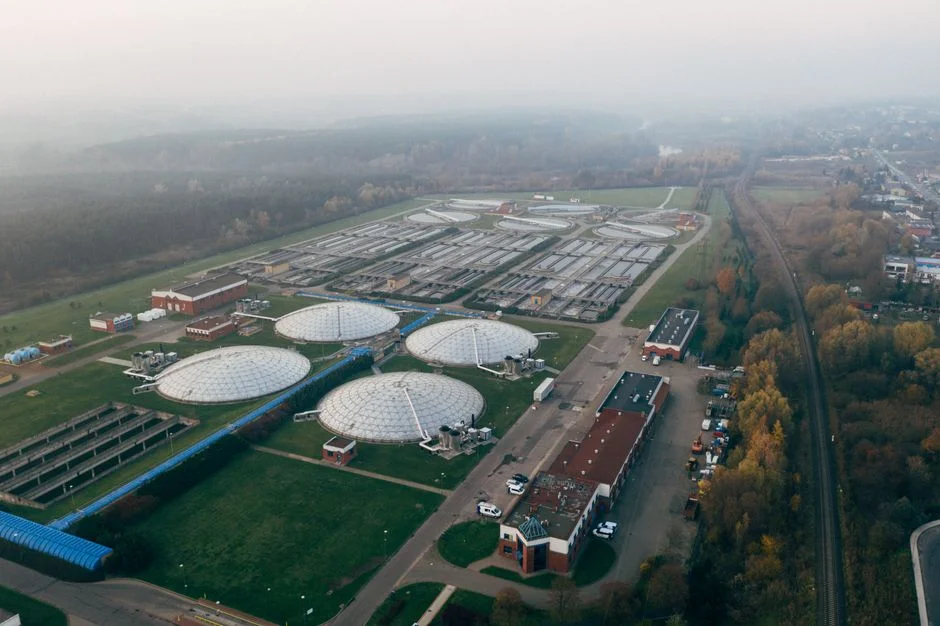
Discharge compliance solved at the cost of a new solids-disposal liability is not a solution. Chemical precipitation and DAF generate a metal-rich hydroxide sludge that, when the underlying metals are above TCLP thresholds, is classified as a hazardous waste under RCRA subtitle C. A plate and frame filter press at 6–15 bar operating pressure is the standard dewatering choice for metal-hydroxide sludges because it routinely produces a 25–40% dry cake that can be sent to a secure landfill or, where licensed, returned to a metals smelter for recovery. Volume reduction at the dewatering step — not whether the discharge meets the local limit — is what determines whether pretreatment is operationally affordable across the plant's life, and it is the line item a financial controller will challenge in the capital review.
Sampling, Reporting, and the 2026 Compliance Cadence
The compliance program has three parts and they are all auditable. The first is the sampling cadence: 24-hour composite samples at the discharge monitoring point, with continuous pH and flow on a chart recorder or SCADA, frequency as defined in the local POTW permit (typically daily flow + pH, weekly composites, monthly metals). The second is reporting: self-monitoring reports (SMRs), spill prevention and countermeasure (SPCC) plan updates, and any benchmark exceedance must be filed with the state authority and the POTW inside the notification window defined by the permit — hours, not days. The third is documentation: chain of custody for every sample, calibration logs for every online probe, and a written response procedure for excursions. All three are routinely requested in a POTW audit and they are what separate a defensible pretreatment program from a paper one.
| Activity | Frequency | Responsible | Reference |
|---|---|---|---|
| Continuous flow + pH monitoring | Continuous at discharge monitoring point | Plant operations | 40 CFR 403.12(g) |
| 24-hour composite sampling | Per permit schedule (often weekly) | Plant EHS / contract lab | POTW discharge permit |
| Metals panel (Cu, Zn, Pb, Ni, etc.) | Monthly minimum, often quarterly | Certified lab | 40 CFR 413/467 categorical; local limit |
| Self-monitoring report (SMR) | Monthly or quarterly per permit | Plant EHS manager | 40 CFR 403.12 |
| Benchmark exceedance notification | Hours, not days | Plant manager + EHS | POTW permit; state authority rules |
| Probe calibration log | Per manufacturer (typically monthly) | Maintenance / EHS | 40 CFR 403 audit-readiness |
Frequently Asked Questions
What is the difference between POTW pretreatment and an NPDES direct discharge permit?
Pretreatment under 40 CFR 403 applies to industrial users that send wastewater to a publicly owned treatment works and is enforced through the receiving POTW and the state authority (TCEQ, LDEQ, MDEQ, ADEM, FDEP on the Gulf Coast). An NPDES direct discharge permit under 40 CFR 122 applies when the plant discharges treated wastewater directly to surface water; the limits and the enforcement agency are different. A plant that sends wastewater to a POTW does not need an NPDES permit for that flow, but it does need a POTW discharge permit and must satisfy 40 CFR 403 categorical standards where they apply.
Which unit operation is the single largest driver of compliance cost for a Gulf Coast metals plant?
Chemical precipitation paired with DAF is typically the largest operating-cost line because it consumes lime or caustic, coagulant, flocculant, and compressed air, and it produces the metal-rich sludge that has to be dewatered and disposed. Skipping or under-sizing equalization upstream is the most common reason that chemical and sludge costs run over budget, because the chemistry stage then has to chase batch swings instead of a steady feed.
Does the local POTW or the federal government set the numerical discharge limits?
The numerical limits are written by the receiving POTW, approved by the state authority, and then enforced through the POTW's industrial pretreatment program; 40 CFR 403 sets the regulatory floor (categorical standards for industries like metal finishing under 40 CFR 413 and 467) and prohibits pass-through and interference, but the specific daily-maximum and monthly-average numbers a plant designs to are local. Always confirm the current local limit with the receiving POTW before finalizing equipment sizing.