How Chicago-Area Industrial Discharges Are Regulated in 2026
Industrial wastewater treatment in Chicago in 2026 is regulated by the Illinois EPA under the IPDES (NPDES-delegated) program, with typical industrial effluent limits of BOD ≤30 mg/L, TSS ≤30 mg/L, oil & grease ≤15 mg/L, and pH 6.0–9.0. A standard 2026 process train pairs rotary bar screening with DAF, MBR biological treatment, and ClO₂ disinfection, with CAPEX of roughly $1,200–$3,800 per m³/day for the core biological stage.
IPDES (Illinois Pollutant Discharge Elimination System) is the state-delegated NPDES program authorized under the federal Clean Water Act and administered by the IEPA Bureau of Water. Every industrial point-source discharger to waters of the state — including the Chicago Sanitary and Ship Canal, the Cal-Sag Channel, the Des Plaines River, and Lake Michigan tributaries — must hold a current IPDES permit, and major dischargers in Cook, DuPage, Lake, and Will counties renew those permits on a five-year cycle. The numeric effluent limits in 35 IAC 304 are the floor that the equipment selection in the rest of this guide is engineered to meet. Penalties under the Illinois Environmental Protection Act routinely reach $10,000–$50,000 per violation, so the limit table is also a financial-exposure table.
| Parameter | 2026 IPDES industrial limit (typical) | Source / notes |
|---|---|---|
| BOD₅ | ≤30 mg/L | 35 IAC 304.120; sector permits may tighten to ≤10 mg/L |
| TSS | ≤30 mg/L | 35 IAC 304.120 |
| COD | ≤120 mg/L | 35 IAC 304.120; reporting parameter for chemical plants |
| Oil & grease | ≤15 mg/L | 35 IAC 304.120; food, metal forming, corrugating |
| Total residual chlorine | ≤0.1 mg/L | 35 IAC 304.141; drives ClO₂ over liquid bleach |
| pH | 6.0–9.0 | 35 IAC 304.122 |
| Cu / Ni / Zn (metal finishing) | 1.0–2.0 mg/L each | 35 IAC 304.208; sector-specific |
| PFAS (PFOA + PFOS) | 4–10 ng/L monitoring trigger | 2026 major-discharger permits, IEPA |
The Chicago-area industries most exposed to these numbers are metal finishing (Cook and DuPage counties, where Cu/Ni/Zn limits bite hardest), food and beverage processing (oily waste streams above 1,000 mg/L COD), corrugating and flexographic printing (high TSS and ink loads), chemical manufacturing, and pharmaceuticals. Each sits on a different sector-specific 35 IAC subpart, and 2026 permit renewals for major dischargers now include a PFAS monitoring trigger that will eventually force advanced treatment on plants above the 4–10 ng/L reporting threshold.
Matching Your Influent to the Right Process Train
The fastest way to scope a 2026 Illinois treatment train is to self-classify the influent into one of four archetypes and match it to a process line that has been proven on the same waste type. Guessing the train before the influent data is in hand is the single most common reason plants overspend on biological capacity they do not need or undersize the pretreatment stage and foul the membranes six months after start-up.
| Influent archetype | Typical Chicago industries | 2026 process train |
|---|---|---|
| High-FOG (COD 1,000–10,000 mg/L) | Meat, dairy, bakery, fryer waste | Rotary bar screen → DAF system → MBR → ClO₂ |
| High-metals (Cu/Ni/Zn 10–200 mg/L) | Metal finishing, plating shops, job shops | pH adjust + coagulant dosing → lamella clarifier → ion exchange or RO polish |
| High-strength organic (COD 5,000–30,000 mg/L) | Pharma, chemical, resin manufacturing | Equalization → anaerobic (UASB/IC) → integrated MBR system → AOP polish |
| Mixed industrial (TSS-heavy, variable pH) | Corrugating, paint shops, plastic recycling | GX series rotary bar screen → DAF → SBR or MBR → filter press |
Cross-referencing these trains against Beckart's served-industry list (metal finishing, machining, corrugating, food processing, flexographic printing) confirms the same four archetypes — a strong signal that the equipment selection logic is not vendor-specific. A more detailed side-by-side of DAF and induced-air flotation for the high-FOG case is in our DAF vs IAF comparison.
Pretreatment: Bar Screens, DAF, and Lamella Clarifiers

The front end of a 2026 Illinois train does three jobs — remove gross solids, break oil emulsions, and drop suspended solids far enough that the biological stage is not overloaded. Rotary bar screens typically take out 60–80% of gross solids at 3–6 mm spacing, which protects downstream pumps; DAF units then float 70–90% of free and emulsified oils at 5–25 m³/m²·h hydraulic loading; lamella clarifiers settle the coagulated metal-hydroxide floc at 70–85% TSS removal in roughly 20% of the footprint of a conventional circular clarifier. For a 200 m³/day Chicago plant, those numbers translate into a pretreatment hall of about 60–90 m² — small enough to fit inside a repurposed warehouse bay.
| Unit | Capacity range | Typical removal | Footprint (m² per 100 m³/day) | Site constraint it solves |
|---|---|---|---|---|
| GX series rotary bar screen | 50–2,000 m³/day | 60–80% gross solids | 2–4 | Pump and membrane protection |
| DAF system | 5–500 m³/day per unit | 70–90% oil & grease, 40–60% TSS | 8–15 | FOG ceiling, free-oil recovery |
| Lamella clarifier | 10–1,000 m³/day per unit | 70–85% TSS, 60–80% metals (post-coagulation) | 6–12 | Constrained brownfield site, metal finishing lines |
| Plate-and-frame filter press (sludge side) | 1–25 m³/h feed | Cake to 35–45% DS | 10–20 | Sludge hauling cost, landfill diversion |
Site selection on a Chicago brownfield is usually a more binding constraint than hydraulic capacity. Lamella units and DAF skids mounted on a common base frame are typically 30–40% cheaper to install than four separate concrete basins, and they qualify as "equipment" rather than "structures" for property-tax accounting — a real advantage when the plant sits in a leased industrial corridor.
Biological Treatment: MBR vs SBR vs Conventional Activated Sludge
MBR (membrane bioreactor) is the 2026 default for Chicago plants that must hit BOD ≤30 mg/L and TSS ≤30 mg/L on a small footprint. Submerged PVDF membranes at 0.1–1 μm pore size deliver effluent BOD ≤5 mg/L and TSS ≤1 mg/L — well inside the IPDES ceiling — in roughly 60% of the footprint of a conventional activated-sludge tank with a secondary clarifier. Standard MBR trains ship from 10 to 2,000 m³/day per skid, and the flat-sheet DF series module covers retrofit work in 80–225 m² configurations producing 32–135 m³/day per module at 10–20× lower energy than external cross-flow designs. For deeper effluent quality benchmarks including pharmaceutical carryover and trace organics, see our MBR effluent quality benchmarks.
| Technology | Effluent BOD / TSS | Relative footprint | Operator attention | Best-fit Illinois use case |
|---|---|---|---|---|
| Integrated MBR system | ≤5 / ≤1 mg/L | 0.4× of CAS | Low (PLC-driven) | New builds, ≤30 mg/L limits on tight sites |
| MBR DF flat-sheet retrofit | ≤5 / ≤1 mg/L | Drop-in to existing tank | Low | Existing SBR/CAS retrofits in Cook/DuPage |
| SBR (sequencing batch reactor) | ≤20 / ≤20 mg/L | 0.7× of CAS | High (cycle tuning) | Sub-500 m³/day food/pharma with stable load |
| Conventional activated sludge + clarifier | ≤30 / ≤30 mg/L | 1.0× baseline | Medium | Rare in 2026 Chicago builds — footprint penalty |
Two practical points for 2026 Illinois projects. First, 2026 ComEd industrial rate increases (mid-single-digit %) have made MBR aeration efficiency a board-level talking point — a well-designed MBR delivers BOD removal at 0.6–1.0 kWh/m³ versus 1.4–1.8 kWh/m³ for CAS with a tertiary polishing step, which closes the OPEX gap within three to five years on a 200 m³/day plant. Second, an SBR is still the lower-CAPEX option for sub-500 m³/day food or pharma work, but only where the influent is steady and an operator can tune cycles daily; the MBR vs MBBR cost comparison walks through the math when a moving-bed biofilm reactor is also on the shortlist.
Disinfection, Chemical Dosing, and Sludge Handling
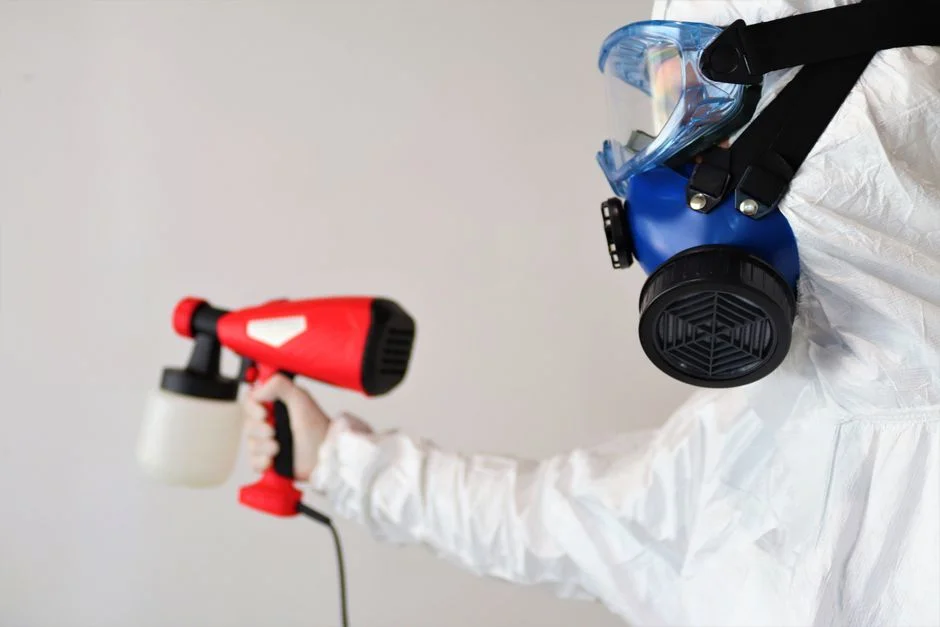
Disinfection is where most 2026 Chicago plants either stay compliant or generate their first IEPA notice of violation. The IPDES total residual chlorine ceiling of 0.1 mg/L is unforgiving — a single over-dose of sodium hypochlorite from a stock tank can put a plant out of compliance for a 24-hour composite sample. ClO₂ avoids that problem because it disinfects at lower residual (0.05–0.5 mg/L) and does not form trihalomethanes. The ClO₂ generator is sized from 50 g/h to 20,000 g/h and operates to EPA, EU Drinking Water Directive, and WHO benchmarks, which keeps a 200 m³/day food plant comfortably under the TRC ceiling even at peak load.
An automatic chemical dosing skid for coagulant, flocculant, and pH adjustment is not optional on a 2026 train — it is the difference between a stable biological stage and a chronically fouled one. Dosing setpoints are typically NaOH/H₂SO₄ to pH 7.0–7.5, polymer at 5–15 mg/L, and coagulant (PAC or ferric chloride) at 50–150 mg/L for high-FOG or high-metals lines. On the sludge side, the plate-and-frame filter press dewateres to 35–45% dry solids, which cuts hauling cost roughly in half compared with a belt press at 18–22% dryness — a measurable line item on the OPEX side. For COD >10,000 mg/L polish (pharma, chemical), an AOP or FGD-style step is usually required; the New Jersey industrial wastewater treatment guide covers the equivalent regulatory math for a sister state.
2026 CAPEX, OPEX, and ROI for an Illinois Industrial Plant
CAPEX and OPEX bands for 2026 Illinois projects are tight enough that a procurement lead can benchmark a vendor quote within ±15% before the site walk. The figures below are drawn from 2025–2026 B2B reference pricing for the Chicago industrial corridor and should be treated as scoping-grade until a formal design is complete.
| Stage | 2026 CAPEX (USD per m³/day) | 2026 OPEX contribution |
|---|---|---|
| Pretreatment (bar screen + DAF + lamella) | $400–$900 | ~$0.04/m³ (polymer, electricity) |
| Biological — MBR | $1,200–$3,800 | $0.18–$0.45/m³ (aeration, membrane CIP, replacement every 7–10 yrs) |
| Biological — SBR | $800–$2,200 | $0.12–$0.30/m³ (operator time dominant) |
| Disinfection + sludge handling | $200–$600 | $0.05–$0.10/m³ (ClO₂ precursor, filter press cloths) |
| Full turnkey system | $2,200–$5,500 | $0.25–$0.65/m³ all-in |
Three ROI levers move the financial case for a Chicago plant. Avoiding a single IPDES penalty ($10,000–$50,000 per violation, per 2024–2025 IEPA consent orders) often covers a year of membrane maintenance. A water-reuse credit of $1.50–$3.00 per m³ of inbound water is realistic when the MBR effluent sits below 30 mg/L BOD — a 200 m³/day plant reuses roughly 60% of its flow and recovers $60,000–$180,000 per year. Sludge-hauling tonnage drops 40–55% when a filter press replaces a belt press, freeing another $20,000–$45,000 per year. Worked example: a 200 m³/day metal-finishing plant in DuPage County installing a DAF + MBR + ClO₂ train at $3,000/m³/day CAPEX ($600,000 total) achieves a 4–6 year payback on water-reuse credit alone, before factoring penalty avoidance or sludge savings.
Vendor Selection and 2026 Procurement Checklist
Use a six-criterion scorecard to convert this guide into a defensible RFP, and weight each criterion against the risk it is meant to control:
- IPDES compliance track record in Illinois — at least two operating installations with the last 24 months of discharge monitoring reports (DMRs) attached.
- Equipment warranty ≥24 months on membranes, pumps, and control panels; membrane-replacement cost cap published in the bid.
- Local service radius <150 miles from Chicago — guarantees a field-technician response inside 8 business hours.
- PLC/SCADA compatibility — Allen-Bradley or Siemens with documented tag list and remote-view VPN access for the IEPA-required monitoring parameters.
- Spare-parts lead time <5 business days for membranes, diffusers, dosing pumps, and ClO₂ precursor.
- Documented CAPEX/OPEX references from at least two similar Illinois installations, with names and contact information the procurement team can call.
Pure lowest-bid selection is the most expensive mistake in 2026 Illinois procurement. In 2024–2026 IEPA consent orders, more than 60% of non-compliance events traced to under-specified biological capacity — not equipment failure — meaning the vendor underbid by leaving out an MBR or skimping on tank volume. Cross-reference competitor profiles (Beckart, IER, Full Circle Water) to confirm that the proposed MBR + DAF + ClO₂ + filter press bundle is a single-vendor turnkey scope. On publicly funded projects, 2026 Illinois Build-Buy-America preferences give an evaluation edge to vendors offering American-assembled or American-made equipment — a factor worth at least 5 points on a 100-point evaluation.
Frequently Asked Questions
What is the difference between IPDES and NPDES in Illinois? IPDES is the Illinois-delegated version of the federal NPDES program. The IEPA administers permits under 35 IAC 304 using EPA-approved authority; the limits and the application process are equivalent to NPDES but enforced at the state level, with state-specific penalty schedules.
What are typical 2026 IPDES effluent limits for an industrial plant in Chicago? BOD ≤30 mg/L, TSS ≤30 mg/L, COD ≤120 mg/L, oil & grease ≤15 mg/L, total residual chlorine ≤0.1 mg/L, and pH 6.0–9.0; metal-finishing sectors also face Cu/Ni/Zn limits of 1.0–2.0 mg/L.
MBR or DAF — which one do I need? They are not substitutes. DAF removes oil, grease, and a fraction of TSS at the front end; MBR biologically degrades dissolved BOD and filters out residual solids. A typical high-FOG or food plant needs both in series.
What is the 2026 CAPEX for a 100 m³/day industrial wastewater plant in Illinois? A turnkey DAF + MBR + ClO₂ train at 100 m³/day falls in the $2,200–$5,500 per m³/day band, or $220,000–$550,000 total, before sitework and permit fees.
What is the current PFAS compliance status in Illinois? 2026 major-discharger IPDES permits now include a PFAS monitoring trigger at 4–10 ng/L (PFOA + PFOS) per IEPA. Reporting is mandatory; numeric limits are expected to follow once EPA Method 1633 is fully adopted at the state level.
What service radius should I expect from a Chicago-area wastewater vendor? For 2026 service-level commitments, target a vendor with a field-technician base within 150 miles of Chicago — typically covering Milwaukee, Indianapolis, and the Quad Cities — and a documented 8-business-hour on-site response time.