Why Albia-area Transportation Equipment Plants Are on the Pretreatment Hook
Discharging process wastewater from a transportation equipment plant near Albia, Iowa into a sanitary sewer is governed by a three-tier regulatory chain that any plant environmental engineer must understand before specifying a single pump. The U.S. EPA sets the National Pretreatment Program under 40 CFR Part 403, Iowa DNR implements and enforces the program through delegation, and the local POTW — typically the Monroe County Regional Sewer District or the City of Albia — adopts a sewer use ordinance, issues the SIU permit, and runs the day-to-day sampling and enforcement. The three layers are not redundant; the local ordinance is the binding document at the discharge manhole, and 40 CFR Part 403.5(a) is the federal floor that prohibits any discharge that causes interference (a discharge that, alone or in combination with other discharges, inhibits or disrupts the POTW treatment process) or pass-through (a discharge that exits the POTW into receiving waters without being effectively treated).
Most transportation equipment plants in the Albia corridor — Tier-2 heavy-truck component suppliers, chassis fabricators, parts coaters, and small assembly operations — qualify as Significant Industrial Users (SIUs) under 40 CFR Part 403.3 because they discharge categorical process waste streams from metal-finishing, phosphate/nickel plating, or parts-washing, not just domestic sewage. Once an SIU designation is triggered, the plant is on the hook for a Baseline Monitoring Report, a 90-day compliance report, twice-yearly self-monitoring, and written slug-control planning. The economic and permitting gravity of these requirements is amplified by a structural fact that newer engineers often miss: U.S. sewer connectivity is below average in many census tracts (per openRxiv, 2023), which means the Albia-area POTW is the single most likely legal receptor for any process wastewater the plant generates, and bypassing it with a surface discharge triggers a separate NPDES permit under Iowa DNR. The transportation equipment manufacturing base itself is long-established and water-intensive, documented across the U.S. DOT Nationwide Personal Transportation Survey series (1969, 1990, 1995, and later iterations archived at ICPSR), which means regulators already have decades of process-knowledge on the sector — newer plants cannot argue that their waste streams are unusual. The 2026 pretreatment compliance playbook for petroleum refineries facing similar constraints is documented in a parallel 2026 pretreatment guide for U.S. petroleum plants.
What Comes Out of a Transportation Equipment Plant: The Five Waste Streams
A defensible pretreatment train starts with a defensible waste-stream inventory. In a Tier-2 transportation equipment plant near Albia, five distinct waste streams converge on the headworks, and each carries a different pollutant signature that the unit operations must address. The U.S. transportation manufacturing base is overwhelmingly water-intensive (per the NPTS series archived at ICPSR), so these streams recur at almost every plant regardless of product mix.
The five streams, with their typical concentrations and target pollutants, are summarized in the table below.
| Waste Stream | Typical Sources | Key Pollutants | Typical Concentration |
|---|---|---|---|
| Parts washing / alkaline cleaning | Aqueous washers, soak tanks, ultrasonic baths | Emulsified oils, high pH (10–13), iron and zinc fines, surfactants | O&G 500–2,000 mg/L; TSS 200–800 mg/L |
| Machining and cutting fluids | CNC sumps, EDM, grinding coolant | Free and emulsified oils, COD 2,000–20,000 mg/L, occasional Ni/Cr from tool wear | COD 2,000–20,000 mg/L; O&G 1,000–10,000 mg/L |
| Metal-finishing rinse water | Phosphate, nickel, zinc, or chrome plating rinse stages | Categorical metals — Ni, Cr, Zn, Pb — and acids/alkalis | Regulated under 40 CFR 413/433 |
| Assembly and chassis rinse | Final rinse, leak-test water, floor wash | Low strength, high flow; dilutes stronger streams | TSS 50–200 mg/L; O&G <100 mg/L |
| Paint-booth and overspray washwater | Waterborne or water-curtain spray booths | Paint solids, solvents, high COD, often dewatered separately | COD 1,000–5,000 mg/L; TSS 300–1,500 mg/L |
The metal-finishing stream is the most heavily regulated and must be segregated from the others so that the categorical standards under 40 CFR 413 (electroplating) and 40 CFR 433 (metal finishing) can be met before the streams are combined. Paint-booth water often needs its own polymer program because the overspray solids are light and difficult to float without a coagulant aid. The assembly and chassis rinse stream is the hydraulic workhorse — it sets the average daily flow that the equalization tank must buffer.
The 2026 Pretreatment Train: Screening → Equalization → DAF → Biological → Polishing
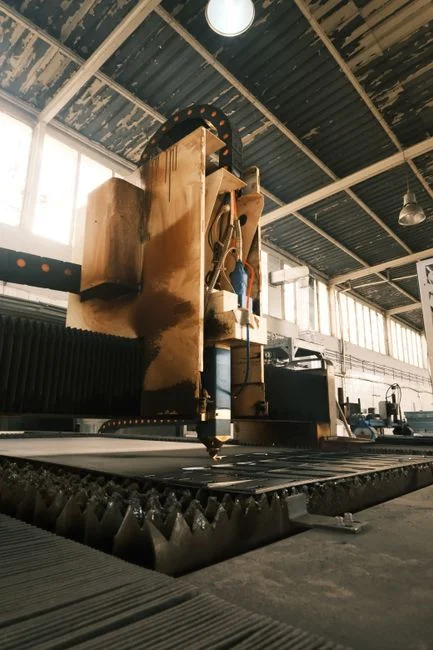
The 2026-vintage pretreatment train for an Albia-area transportation equipment plant is a five-step sequence plus a side-stream sludge handling line, and each step has a defensible design rationale that holds up to a Monroe County / Iowa DNR permit review. The order is not arbitrary: removing rags and grit upstream of a DAF protects the saturator and skimmer; equalizing upstream of biological treatment prevents MLSS washout; polishing downstream of biological treatment handles the residual metals and TSS that escape flotation.
- Step 1 — Mechanical screening. A GX rotary mechanical bar screen with stainless-steel rakes and a self-cleaning brush design removes rags, plastics, and large solids at the headworks. Typical bar spacing is 3–6 mm; openings finer than 3 mm are not recommended ahead of a DAF because they blind rapidly with paint solids.
- Step 2 — Flow and load equalization. A 24-hour buffer tank smooths hydraulic and organic shocks from batch parts-washing and single-shift plating operations. Typical sizing is 8–12× the average hourly flow (per HydropureWater field data, 2026). The equalization tank doubles as the slug-control buffer required for a written Slug Control Plan under 40 CFR 403.8(f).
- Step 3 — Dissolved air flotation. The workhorse for O&G and emulsified oil removal is the dissolved air flotation system, available from 4 to 300 m³/h. Micro-bubble saturation (typically 50–80 μm bubble size) with automatic skimming handles the bulk of the free and emulsified oil. A automatic chemical dosing system delivering alum, PAC, or anionic polyacrylamide (5–15 mg/L typical) is required to break oil-in-water emulsions that the DAF cannot float on its own.
- Step 4 — Biological treatment. Two 2026-appropriate options exist. For new builds where space is tight, the submerged MBR membrane bioreactor (PVDF 0.1 μm, 10–2,000 m³/day, 60% smaller footprint than conventional activated sludge) delivers a sub-5 mg/L TSS effluent and a stable MLSS of 8,000–12,000 mg/L. For small rural facilities or buried retrofit applications, the WSZ underground integrated package plant (1–80 m³/h, A/O process) is a viable low-operator alternative. The decision rule in 2026: MBR for any plant above 50 m³/day or where the local POTW requires TSS <10 mg/L; WSZ for plants below 50 m³/day with no on-site operator.
- Step 5 — Polishing and disinfection. If the local limits are tighter than federal categorical standards — for example, zinc below 1 mg/L — a multimedia filter or low-pressure RO polisher is added. Final disinfection is handled with a chlorine dioxide generator (up to 20,000 g/h) before the discharge manhole.
Side stream: Oily DAF skimmings and biological waste activated sludge are routed to a plate-and-frame filter press (1–500 m² filter area) for dewatering to 25–35% dry solids. The filtrate returns to the head of the plant; the cake is hauled off-site as industrial waste. A useful sizing analog is the 2026 DAF sizing guide for compressor oily condensate, which applies the same micro-bubble principles to a related FOG stream.
Pretreatment Targets You Must Hit: Influent vs. Effluent Parameter Table
The 40 CFR Part 403 framework sets a federal floor; the Monroe County Regional Sewer District sewer use ordinance sets the local ceiling that the engineer must design against. The numeric targets below are the values a competent 2026 design hits, drawn from typical categorical standards, Iowa DNR enforcement summaries, and field data from operating plants.
| Parameter | Combined Influent (raw wastewater at headworks) | After DAF (post-flotation) | After MBR / Biological (post-treatment) | POTW Discharge Limit (typical categorical) |
|---|---|---|---|---|
| pH | 7.0–11.0 (alkaline cleaning spikes) | 7.0–8.5 | 6.5–8.5 | 6.0–9.0 SU |
| Oil & Grease | 500–2,000 mg/L | <50–100 mg/L | <10 mg/L | <100 mg/L |
| TSS | 200–800 mg/L | <100 mg/L | <5 mg/L (MBR) / <30 mg/L (A/O) | <250 mg/L |
| COD | 2,000–20,000 mg/L | 800–3,000 mg/L | <50 mg/L (MBR) | Local ordinance value |
| BOD5 | 1,000–8,000 mg/L | 300–1,500 mg/L | <10 mg/L (MBR) | Local ordinance value |
| Nickel (Ni) | 2–20 mg/L (plating only) | <1–3 mg/L | <0.5 mg/L | per 40 CFR 413/433 |
| Chromium (Cr) | 1–10 mg/L (plating only) | <1 mg/L | <0.5 mg/L | per 40 CFR 413/433 |
| Zinc (Zn) | 2–15 mg/L | <2 mg/L | <1 mg/L | per 40 CFR 413/433 |
| Lead (Pb) | 0.5–5 mg/L | <1 mg/L | <0.5 mg/L | per 40 CFR 413/433 |
| Flow range | Design for 4–300 m³/h using the DAF family; undersizing is the #1 cause of permit excursions (HydropureWater field data, 2026). | |||
Two design rules from this table matter most in 2026. First, the DAF alone rarely gets O&G below 50 mg/L without polymer — the polymer dose is not optional for emulsified machining fluids. Second, an MBR cuts TSS roughly 20× versus a conventional clarifier, which is the difference between passing and failing a tight local TSS limit during a high-loading week. A case study on a similar high-FOG emergency situation is documented in the emergency DAF case study at a truck-stop lagoon.
Permit, Sampling, and Documentation: What the Local POTW Will Ask For
The Monroe County / City of Albia POTW will not issue an SIU permit without a complete submittal, and the submittal has a predictable structure that engineers can prepare in advance. Start with the SIC/NAICS code — transportation equipment manufacturing maps to NAICS 336, and the control authority uses this code to apply the correct categorical standards. Submit a Baseline Monitoring Report (BMR) under 40 CFR 403.12(b) describing each process waste stream, expected pollutant concentrations, and the treatment train, followed by a 90-day compliance report once the system is operational. Self-monitoring frequency for SIUs is twice yearly by federal default, but the local sewer use ordinance can impose quarterly monitoring; request the current ordinance text from the POTW before sizing the sample station so that the sampling tap and flow meter are in the right location from day one.
The Slug Control Plan required under 40 CFR 403.8(f) is satisfied in practice by the equalization tank's 8–12× hourly-flow buffer and a written description of how batch discharges from plating lines and parts washers are sequenced into that buffer. A pass-through event caused by a slug discharge is one of the most common causes of EPA enforcement actions against small manufacturers (per EPA enforcement summaries, 2025-08). Recordkeeping should be engineered from the start: chain-of-custody for every sample, calibration logs for pH probes and flow meters, a maintenance log for the DAF saturator and MBR membrane, and three-year minimum retention. The broader documentation pattern is well established in regional pretreatment guides such as the 2026 industrial wastewater engineering guide for Dallas, which covers the same federal floor with a different local ordinance overlay.
Cost and CAPEX Reality Check for a 2026 Albia-Area Installation
CAPEX for a 2026 pretreatment train in the Albia area falls into three predictable bands, and the procurement lead should budget against these before requesting formal quotes. A DAF skid only (4–50 m³/h class) with polymer system and control panel runs roughly $80K–$250K installed depending on tankage, building requirements, and whether the unit is indoor or outdoor-rated. A full MBR pretreatment train — screening plus equalization plus DAF plus MBR plus sludge press — for a 50–200 m³/day plant runs roughly $650K–$1.6M turnkey, with the MBR's 60% footprint reduction cutting building and HVAC cost significantly relative to a conventional activated-sludge retrofit. The operating cost drivers are predictable: polymer and coagulant chemicals typically account for 15–25% of OPEX, MBR membrane replacement every 5–8 years is a known six-figure line item on a 100 m³/day unit, sludge hauling tracks the dry-tonnage out of the plate press, and aeration electricity dominates the rest.
The honest framing for the finance lead is cost of compliance versus cost of non-compliance. A single pass-through violation under 40 CFR 403.5(a) can trigger EPA civil penalties of up to $25,000 per day per violation (per EPA 2025 enforcement guidance) plus Monroe County POTW surcharges that often exceed the entire CAPEX of a compliant system. The unit operations described in this article are not theoretical — they are the same building blocks used in the emergency DAF case study at a truck-stop lagoon, and the 2026 DAF sizing guide for compressor oily condensate, both of which show that a properly sized DAF plus biological polishing pays back inside one avoided enforcement action.
Frequently Asked Questions
What local POTW and state authority governs pretreatment discharge near Albia, Iowa?
The control authority chain is three-tier: U.S. EPA sets the National Pretreatment Program under 40 CFR Part 403, Iowa DNR implements it through delegated authority, and the Monroe County Regional Sewer District or City of Albia POTW issues the SIU permit and enforces the local sewer use ordinance at the discharge manhole. The local ordinance is the binding document and is typically stricter than the federal categorical standards.
What oil and grease, TSS, and pH limits apply to a transportation equipment plant discharging to the Albia POTW?
Typical categorical and local limits for an SIU are oil and grease below 100 mg/L, TSS below 250 mg/L, and pH 6.0–9.0 standard units, with metals (Ni, Cr, Zn, Pb) controlled under 40 CFR 413 and 433 categorical standards. The Monroe County / Albia POTW ordinance may impose tighter local limits; the engineer must request the current ordinance text before final design.
Which unit operation removes the bulk of emulsified oil from parts-washing wastewater?
A dissolved air flotation system — specifically a DAF rated 4–300 m³/h with micro-bubble saturation and an automatic chemical dosing system for polymer or coagulant — removes 90–95% of emulsified oil, typically bringing O&G from 500–2,000 mg/L down to below 100 mg/L in a single stage (HydropureWater field data, 2026).
When should a transportation equipment plant choose an MBR versus a conventional A/O package plant?
Choose a submerged MBR membrane bioreactor (PVDF 0.1 μm) for any plant above 50 m³/day or where the local POTW requires TSS below 10 mg/L; the MBR delivers a 60% footprint reduction and stable effluent. Choose a buried A/O package plant (WSZ series) for small rural facilities below 50 m³/day with no on-site operator, where capital cost and simplicity outweigh the higher effluent TSS.
How often does a Significant Industrial User near Albia need to self-monitor?
Federal default self-monitoring for SIUs is twice yearly under 40 CFR Part 403, but the Monroe County / Albia POTW sewer use ordinance may require quarterly or more frequent monitoring depending on the categorical standard. Confirm the required frequency with the POTW before designing the sample station and flow meter location.