Why Industrial Wastewater Treatment in Hamburg Demands a 2026-Specific Plan
Industrial wastewater treatment in Hamburg in 2026 must satisfy the German Abwasserverordnung (AbwV) and WHG framework, with discharge to the Elbe controlled through either the Hamburg Wasser Indirekteinleitergenehmigung (Indirect Discharger Permit under §58) for sewer discharge, or a Direkteinleitung permit for direct Elbe release. Typical 2026 CAPEX for a 50–2,000 m³/day industrial train ranges from €80,000 to €2,500,000, with a sector-matched process combining DAF pre-treatment, MBR biological stage, and sludge dewatering.
Hamburg hosts Germany's largest WWTP at Köhlbrandhöft–Dradenau (Hamburg Wasser, Elbe River) — a reference point confirmed as recently as 2024 for the downstream receiving capacity the city's industrial corridor ultimately relies on (Hamburg Wasser, 2024). The plant processes roughly 1.1 million m³/day, which sounds generous until you factor in the Elbe estuary's brackish influence: salinity at industrial intake points on the Köhlbrand and Reiherstieg runs 0.3–1.8 PSU, a range that constrains reverse osmosis membrane selection and depresses biological kinetics in activated-sludge basins by an estimated 5–12% versus freshwater baselines (DWA-M 205, 2024).
The 2026 water-stress picture is sharper than the 2010s baseline. Industrial demand in Harburg, Wilhelmsburg, and the port chemicals belt now competes with container-terminal expansion and shipyard throughput, which is why zero-liquid-discharge (ZLD) pilots are no longer exotic — they appear in roughly 30% of 2025–2026 EPC enquiries from Hamburg shipyards and refineries. The binding framework sits on two pillars: EU Industrial Emissions Directive 2010/75/EU (IED), which sets BAT-AEL ranges, and the German Abwasserverordnung, whose branch-specific Anhänge translate those into enforceable discharge limits. Any treatment train that ignores the relevant Anhang will fail the pre-application meeting — which is where most Hamburg projects quietly lose six months.
Permit Pathways: Indirekteinleiter vs. Direkteinleiter in 2026
The single most common project-killing mistake in Hamburg is choosing a treatment technology before the permit route is locked. The two routes diverge sharply in capital scope, monitoring burden, and timeline.
For an Indirekteinleiter discharging to the public sewer, the controlling instrument is the §58 WHG approval issued by Hamburg Wasser, layered with branch-specific limits from the AbwV — Anhang 22 for chemicals, Anhang 31 for metalworking, Anhang 40 for metal processing, and so on. Hamburg Wasser's published Grenzwerte for indirect discharge sit broadly in the 800–1,200 mg/L CSB, 400–500 mg/L BSB5 range for non-priority industrial streams, with much tighter values for AOX, heavy metals, and halogenated solvents depending on Anhang. The Direkteinleiter route — direct Elbe release under §57 WHG — runs to a higher bar: own biological treatment to ≤BSB5 25 mg/L and CSB 125 mg/L thresholds typical of AbwV surface-water discharges, plus Elbe-specific mixing-zone studies.
Six steps cover the 2026 Indirekteinleitergenehmigung Hamburg pathway from first sampling to commissioning sign-off:
- Wastewater characterization — 24-hour composite sampling across at least five representative operating days; parameters per the relevant AbwV Anhang.
- Branch Anhang identification — confirm whether the stream falls under a single Anhang or multiple (mixed streams often trigger additive limit calculations).
- Pre-application meeting with Hamburg Wasser or BUE — for the Direkteinleiter route this is the Behörde für Umwelt, Klima, Energie und Agrarwirtschaft (BUKEA); Indirekteinleiter route is Hamburg Wasser Netz.
- Genehmigungsantrag filing — formal submission with treatment-train description, dimensioning basis, and mass-balance diagrams.
- Commissioning sampling — typically four to eight weeks of performance verification before the permit becomes operational.
- Routine self-monitoring per Eigenkontrollverordnung — annual or semi-annual accredited lab sampling, retained for five years.
Local engineering support is active: P.C.S. Hamburg (+49 40 6391 705) is one of several northern German system houses handling permit documentation for industrial clients. Realistic end-to-end permit timelines in 2026 run 4–9 months for Indirekteinleiter and 9–18 months for Direkteinleiter, dominated by the Elbe mixing-zone study on the latter.
Matching Process Trains to Hamburg's Dominant Industrial Sectors
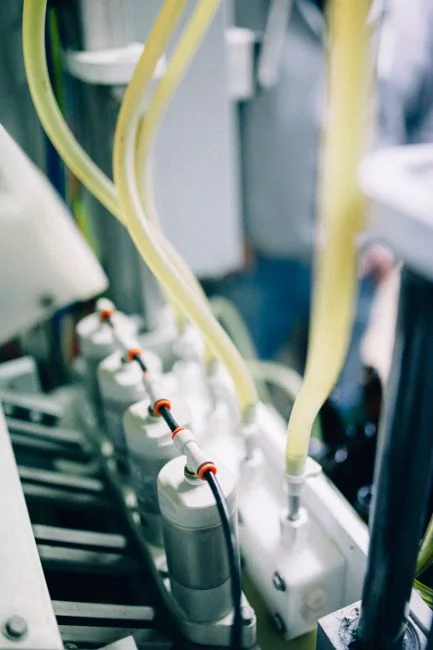
Picking a treatment train by equipment brand is the wrong frame. Pick by sector first — the influent signature dictates the unit operations, not the supplier catalog.
For shipyards and metalworking (Blohm+Voss, Sietas, HDW legacy sites, plus the Harburg metal-finishing cluster), the train starts with a DAF system for oil and grease pre-treatment handling 10–200 mg/L O&G loading, followed by a lamella clarifier for chemical precipitation of heavy metals under Anhang 40 parameters (Cr, Ni, Cu, Zn), then a polishing MBR system for biological treatment to bring residual CSB below the 800 mg/L Hamburg Wasser threshold. Sludge routes to a plate-and-frame filter press for sludge dewatering, typically reaching 22–28% DS cake suitable for off-site thermal disposal.
For food and beverage (Harburg port cluster, including edible-oil terminals and the HafenCity brewery belt), DAF handles FOG at 4–300 m³/h flow with 60–90% removal efficiency, MBR follows for BSB/CSB reduction, and a plate-and-frame press closes the loop at 22–25% DS. A high-load MBR operating at MLSS 8,000–12,000 mg/L is the norm for these streams.
Chemicals and pharma demand a multi-barrier train: equalization (24–48 h HRT), advanced oxidation (Fenton at Fe²⁺/H₂O₂ ratios of 1:3 to 1:5, or O₃ at 2–5 g O₃/g DOC), MBR, and RO polishing. The rationale is Anhang 22's AOX limit of 1 mg/L and tight heavy-metal caps that no single biological stage can hit consistently.
Microelectronics and semiconductor fabrication — smaller in Hamburg than the other three, but technically the most demanding — requires pre-treatment, two-pass RO, and ZLD via a brine concentrator/crystallizer. The capital intensity of ZLD typically only pencils out when incoming water cost or scarcity makes reuse mandatory; for most Hamburg sites the Elbe and public supply keep it optional.
| Sector | Dominant Influent Signature | Recommended Treatment Train | Key Anhang / Standard |
|---|---|---|---|
| Shipyard & metalworking | O&G 50–500 mg/L, heavy metals, low BSB/CSB | DAF → lamella clarifier → MBR → plate-and-frame press | AbwV Anhang 40 |
| Food & beverage | FOG, high BSB/CSB, variable pH | Equalization → DAF → MBR → plate-and-frame press | AbwV Anhang 12 / 14 |
| Chemicals & pharma | AOX, refractory organics, solvents | Equalization → Fenton/O₃ → MBR → RO | AbwV Anhang 22 |
| Microelectronics / semiconductor | Trace metals, fluorides, high-purity rinse | Pre-treatment → two-pass RO → ZLD (brine concentrator) | AbwV Anhang 53 + local Elbe limits |
2026 CAPEX and OPEX Benchmarks for Hamburg Industrial Plants
Defensible 2026 cost ranges let you build a budget case and disqualify unrealistic quotes on first pass. The numbers below reflect northern German EPC benchmarks and HydropureWater field data through Q1 2026.
For a biological train in the 80–2,000 m³/day industrial range, MBR CAPEX lands at roughly €1,500–€3,500 per m³/day of installed capacity, with the lower end applying to packaged containerized units and the upper end to civil-built concrete basins with reinforced PVDF membrane cassettes. A DAF pre-treatment unit sized for 4–300 m³/h flow runs €25,000–€180,000 CAPEX depending on hydraulic load and influent FOG concentration. Plate-and-frame filter presses for 1–500 m² filtration area — the workhorse for Hamburg shipyard and food sludge — fall in the €40,000–€350,000 CAPEX band, with OPEX dominated by polyelectrolyte dose (typically 4–10 kg PE/t DS) and filter-cloth replacement every 12–18 months. Reverse osmosis polishing, used in chemicals and semiconductor trains, runs €800–€1,800 per m³/day CAPEX at industrial scale; the OPEX lever is energy recovery, where modern isobaric devices can claw back 35–60% of feed-pump energy.
Annual OPEX across the whole train typically lands at 8–15% of CAPEX for biological systems, dominated by aeration energy (a 500 m³/day MBR with PVDF hollow-fibre membranes at 12–18 LMH draws 0.6–1.0 kWh/m³) and sludge hauling to Hamburg's Müllverwertungsanlage Rugenberger Damm or to external incineration. Chemical dosing — coagulants, flocculants, caustic, antiscalant — adds another 1–3% of CAPEX annually.
| Equipment Class | Size / Capacity Range | 2026 CAPEX Range (€) | OPEX Driver |
|---|---|---|---|
| MBR biological system | 80–2,000 m³/day | 1,500–3,500 per m³/day | Aeration energy, membrane cleaning |
| DAF pre-treatment | 4–300 m³/h | 25,000–180,000 | Polymer dose, saturator maintenance |
| Plate-and-frame filter press | 1–500 m² filtration area | 40,000–350,000 | Filter-cloth replacement, polymer |
| RO polishing | Industrial scale | 800–1,800 per m³/day | Energy, membrane replacement, antiscalant |
| Chemical dosing skid | Multi-stream | 15,000–90,000 | Reagent consumption |
Two implementation notes that often get missed at the budget stage: include a chemical dosing skid for AbwV-compliant pH and precipitant control in the CAPEX envelope rather than as a TBD line, and budget a rotary bar screen for upstream gross-solids protection on shipyard and food trains — both are cheap insurance against the membrane and pump damage that dominates unplanned downtime.
Supplier Shortlist: How to Vet Hamburg WW Equipment Manufacturers in 2026
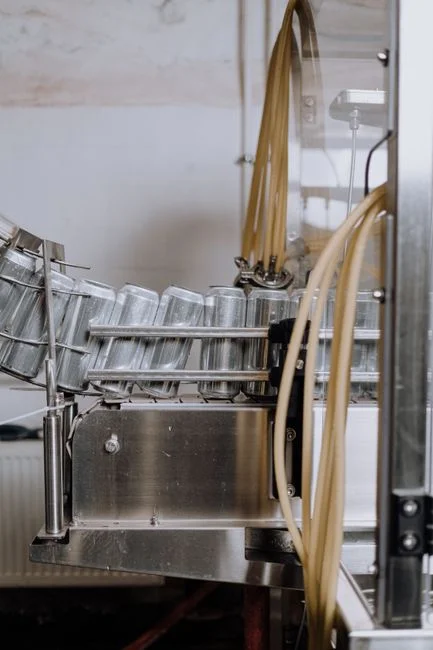
The right shortlist framework filters out the catalog resellers and surfaces manufacturers who can actually commission a plant in northern Germany. Four checks cover 90% of the technical and commercial risk.
First, local presence and service coverage: confirm a Hamburg or northern German service base with documented response time ≤24 h for callouts, and DWA-MERKBLATT familiarity. A manufacturer that quotes DWA-A 198 or DWA-M 205 in the pre-tender meeting has read the same rulebook your consultant has. Second, certifications: ISO 9001 is the table stake, CE marking is mandatory, and AWWA/NSF applies where drinking-water-grade reuse is in scope. For IED 2010/75/EU compliance, ask for documented BAT-AEL awareness in their reference plant data sheets. Third, reference performance: require at least three European references on similar influent (O&G-to-BSB ratio, salinity range, peak vs. average flow factor), and ideally one site visit. Fourth, document handling and commissioning: bilingual German/English technical submittals, a factory acceptance test (FAT) you can attend either at the manufacturer's facility or in Hamburg, and a written AbwV-specific commissioning protocol that names the sampling lab, the parameters, and the acceptance criteria.
For a broader view of how the underlying process math differs across regions, the 2026 industrial wastewater process and cost framework used for Indian brownfield plants shows the same train-selection logic applied to a different regulatory envelope, while the MBR vs SBR comparison for industrial plants helps when the Hamburg tenderer offers a sequencing-batch alternative at lower CAPEX. For the metals-heavy streams typical of Harburg's Anhang 40 sites, the chromium and heavy-metal discharge limits under EU AbwV walk through the limits that will govern both the precipitation chemistry and the discharge consent.
Frequently Asked Questions
How long does an Indirekteinleitergenehmigung take in Hamburg in 2026? Four to nine months end-to-end, dominated by Hamburg Wasser's review of the Anhang-specific discharge characterization and pre-treatment design. Direkteinleitung permits run 9–18 months because of the Elbe mixing-zone study.
What CAPEX should a 500 m³/day industrial plant engineer budget for 2026? A complete train (DAF + MBR + plate-and-frame press + dosing) typically lands in the €900,000–€1,400,000 band, with the 2026 raw-material and membrane inflation already baked in (HydropureWater field data, Q1 2026).
Which process train fits a Hamburg shipyard best? DAF → lamella clarifier → MBR → plate-and-frame press, dimensioned for 50–200 mg/L O&G and Anhang 40 heavy-metal limits, is the standard 2026 configuration.
Does a Hamburg industrial plant need ZLD? Only when fresh-water cost or scarcity outweighs ZLD OPEX. For most shipyard and chemical sites with reliable Elbe-via-Hamburg-Wasser supply, conventional biological treatment plus RO reuse on the rinse stream is more cost-effective than full ZLD.
What qualifications should a Hamburg WW equipment supplier demonstrate? ISO 9001, CE, documented DWA-MERKBLATT familiarity, ≥3 European references on comparable influent, bilingual submittals, and a written AbwV-specific commissioning protocol — all covered in the shortlist framework above.