Why a Hungarian acquisition is a permit-transfer event, not a clean slate
When Bayer acquires a plant in Hungary, the site remains bound by the existing IPPC/IED permit issued under Government Decree 226/2023 and Act CLXXXV of 2012. Bayer must notify the regional government office (kormányhivatal) of the operator change within 15 days, then apply for permit modification or re-issuance under 314/2005 Korm. rendelet. Wastewater limits follow Decree 220/2004 surface-water thresholds, NEO 90/2008 for on-site treatment, and EU IED BAT Conclusions including BREF CWW (2016).
A change of legal operator under Hungarian environmental law is treated as a permit modification, not a greenfield authorisation. The 15-day notification duty to the regional kormányhivatal runs from the date the operator change is registered; late filing triggers an administrative fine under Act LIII of 1995 on general environmental protection, and in aggravated cases the authority may suspend the operating permit until the application is regularised. The BAT-AELs and emission limit values (ELVs) fixed in the existing permit bind the new operator from Day 1 — meaning any non-compliance event that occurred before closing becomes Bayer's liability in the regulator's record book, regardless of what the private data room showed. The regime mirrors the EU IED "general binding rules" principle, so a multi-jurisdictional Bayer compliance team can map it to other European sites without re-learning the conceptual framework.
The four-layer regulatory stack that governs a Hungarian industrial site
Hungarian industrial wastewater compliance operates as a four-layer instrument stack, and an acquirer must read the same permit through all four lenses to understand what is actually binding. Layer 1 is the EU framework: Industrial Emissions Directive 2010/75/EU, the BREF for Common Waste Water and Waste Gas Treatment in the Chemical Sector (CWW, 2016), and the sector BREFs — LVIC-S for specialty organics and LVIC-AAF for agrochemical formulation — each of which carries its own BAT-AEL ranges. Layer 2 is the Hungarian statutory layer: Act CLXXXV of 2012 on waste, Act LIII of 1995 on general environmental protection, and Act LVII of 1995 (the Water Act) which sets the overarching duty to avoid water-body harm. Layer 3 is the national government-decree layer, where 226/2023 Korm. rendelet implements the IED domestically, 220/2004 Korm. rendelet sets the numeric surface-water discharge quality standards, 28/2004 Korm. rendelet fixes wastewater monitoring frequency, and 90/2008 (NEK) governs the design and acceptance of on-site treatment plants. Layer 4 is the individual IPPC/IED permit issued by the regional kormányhivatal, which codifies site-specific ELVs, monitoring frequency, reporting cadence and sludge-handling duties — and is the document that actually drives Day 1 obligations.
Wastewater discharge limits Bayer's Hungarian site must meet

Decree 220/2004 (as amended) sets the national surface-water discharge quality standards. The values below are the headline parameters an EHS team will see in the existing site permit; site-specific BAT-AELs from BREF CWW (2016) can be tighter and become binding once reflected in the permit text.
| Parameter | Decree 220/2004 surface-water limit (mg/L, unless stated) | Source / cross-reference |
|---|---|---|
| COD | 150 (typical industrial ELV band 50–150) | 220/2004 Annex; BREF CWW BAT-AEL 30–200 |
| BOD₅ | 25–50 (receiving-water dependent) | 220/2004; BREF CWW BAT-AEL <20–40 |
| Total suspended solids (TSS) | 50–200 depending on receiving body | 220/2004; BREF CWW BAT-AEL <10–70 |
| Total nitrogen (TN) | 25–50 | 220/2004; BREF CWW 5–50 |
| Total phosphorus (TP) | 2–10 | 220/2004; BREF CWW 0.5–10 |
| AOX (adsorbable organically bound halogens) | 0.5–2.0 (sector-specific, flagged for crop-protection actives) | 220/2004; BREF CWW <0.1–2.0 |
| Cu / Zn / Pb / Cd / Ni / Cr (total) | 0.05–2.0 each, Cd ≤0.05 | 220/2004; BREF CWW metals |
| Hg (total) | 0.01–0.05 | 220/2004 |
| Specific pesticide active-ingredients | Set case-by-case in the site permit (typically µg/L range) | Site permit; BREF CWW |
AOX and specific pesticide active-ingredients are explicitly flagged for crop-protection plants and require dedicated monitoring beyond standard organics — typically GC-ECD or LC-MS on 24-h composite samples. Decree 28/2004 ties monitoring frequency to plant size in m³/day: plants above 2,000 m³/day default to 24-h composite, while smaller plants may run on spot or flow-proportional sampling. Where the BREF CWW BAT-AEL is tighter than the Decree 220/2004 value, the site permit will adopt the BAT-AEL and that becomes the legally binding number.
Pollutant priorities by likely Bayer process stream
Bayer's Hungarian operations are most likely crop-protection active-ingredient manufacture, pharmaceutical API and intermediate manufacture, formulation and packaging, or shared utility services — and each stream carries a different pollutant signature. Crop-protection active manufacture generates high-COD, high-AOX, solvent-bearing wastewater with pesticide active residues that typically require activated carbon or advanced oxidation polishing (ozone, O₃/H₂O₂, UV/H₂O₂) downstream of biological treatment. Pharmaceutical API and intermediate manufacture produces high-COD/BOD wastewater with variable salinity, antibiotic residues, and solvents such as methanol, acetone, dichloromethane and toluene — a typical train is MBR for organics removal plus RO/UF polishing for salinity and trace-API control. Formulation and packaging sites discharge relatively low-strength wastewater but face periodic cleaning-in-place (CIP) spikes with high suspended solids, surfactants and product-loss carryover; equalisation plus DAF pre-treatment for high-solids wastewater is the standard answer. Shared utility wastewater — boiler blowdown, cooling-tower blowdown, laboratory wastewater — is typically routed separately and the permit will set individual stream limits or a combined limit weighted by stream flow. An acquirer should map the seller's product mix to the matching stream before sizing any upgrade scope.
For sites where the biological stage needs to be strengthened, an MBR membrane bioreactor for Hungarian industrial sites is the workhorse option because it achieves simultaneous BOD/COD reduction, nitrification and biomass retention in one tank. Where the discharge target is reuse-quality or where AOX/pesticide residuals must be cut further, an RO polishing train typically follows biological treatment.
Pre-Closing due diligence: what the acquirer must pull from the seller
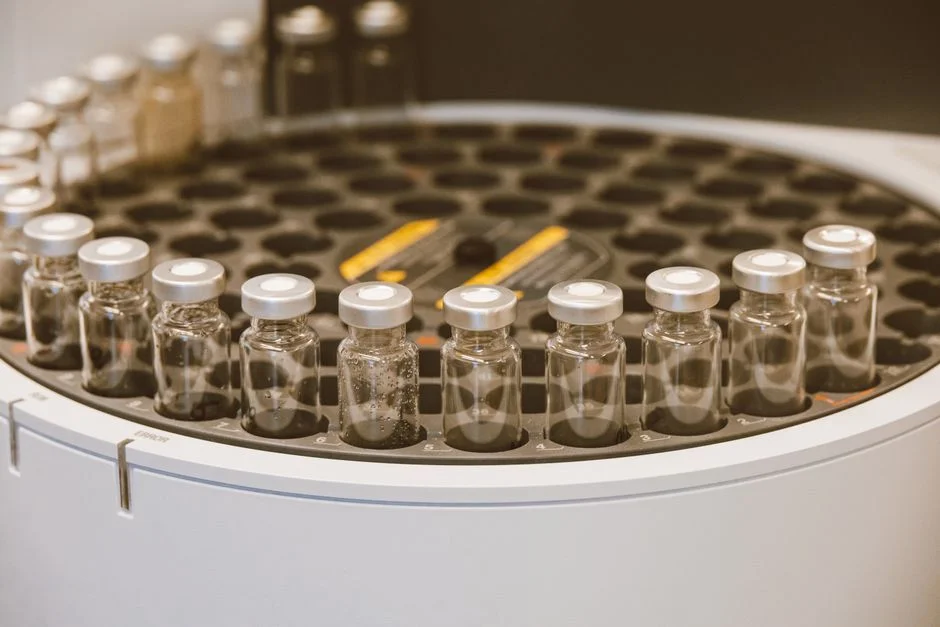
Due diligence on a Hungarian industrial site should be structured around five document packages, and missing any of them creates post-Closing exposure. First, the existing IPPC/IED permit in full — all modifications, authority correspondence, public-hearing records and prior non-compliance rulings for the past 10 years; the Hungarian authority can revisit permit history when Bayer files its modification application. Second, monitoring reports submitted under the self-monitoring plan required by Decree 28/2004, plus any non-compliance events, authority inspections (hatósági ellenőrzés) and the associated corrective-action letters. Third, the current BAT compliance position against the relevant BREF — typically CWW (2016), LVIC-S, or LVIC-AAF — and any upgrade obligations already written into the site permit, including deadlines. Fourth, the on-site treatment plant design basis and as-built capacity: flow (m³/day), COD/BOD load (kg/day), hydraulic retention time, sludge age, and critically the headroom for any future product-mix change, because Bayer's product portfolio is unlikely to match the seller's exactly. Fifth, the sludge management chain of custody under waste-code classifications in Act CLXXXV of 2012 and the EU Waste Framework Directive 2008/98/EC, including EWC codes, licensed haulier details and downstream disposal or recovery facility permits. The M&A team should treat the absence of any one of these as a price-adjustment trigger, not a flag for further enquiry.
Post-Closing 100-day compliance checklist
Post-Closing execution is where deal value is either protected or eroded, and the table below sequences the regulatory and engineering tasks in the order the kormányhivatal expects to see them.
| Phase | Days | Compliance action | Legal anchor |
|---|---|---|---|
| Notify | 0–15 | File change-of-operator notification with the regional kormányhivatal — deed, new operator details, updated environmental insurance. | 314/2005 Korm. rendelet; 226/2023 Korm. rendelet |
| Apply | 15–60 | Submit permit modification or re-issuance application; engage an accredited (NAKK/NAH) laboratory for parallel monitoring. | 314/2005 Korm. rendelet |
| Baseline | 30–90 | Run a 30-day baseline monitoring campaign covering all Decree 220/2004 parameters, including AOX and the site-specific pesticide panel. | 220/2004 Korm. rendelet; 28/2004 Korm. rendelet |
| Gap-analyse | 60–120 | Benchmark the on-site train against BREF CWW BAT-AELs; identify upgrade scope — equalisation, biological stage, AOP, sludge handling. | BREF CWW (2016); site IPPC permit |
| Integrate | Beyond 120 | Integrate the site into Bayer's group EHS reporting; assign a local környezetvédelmi megbízott if the staffing threshold applies. | 16/2016 Korm. rendelet |
The first three phases are non-discretionary: missing the 15-day notification window or filing a deficient modification application are the two most common causes of post-Closing administrative fines in Hungary.
Where on-site treatment typically needs investment in Hungary
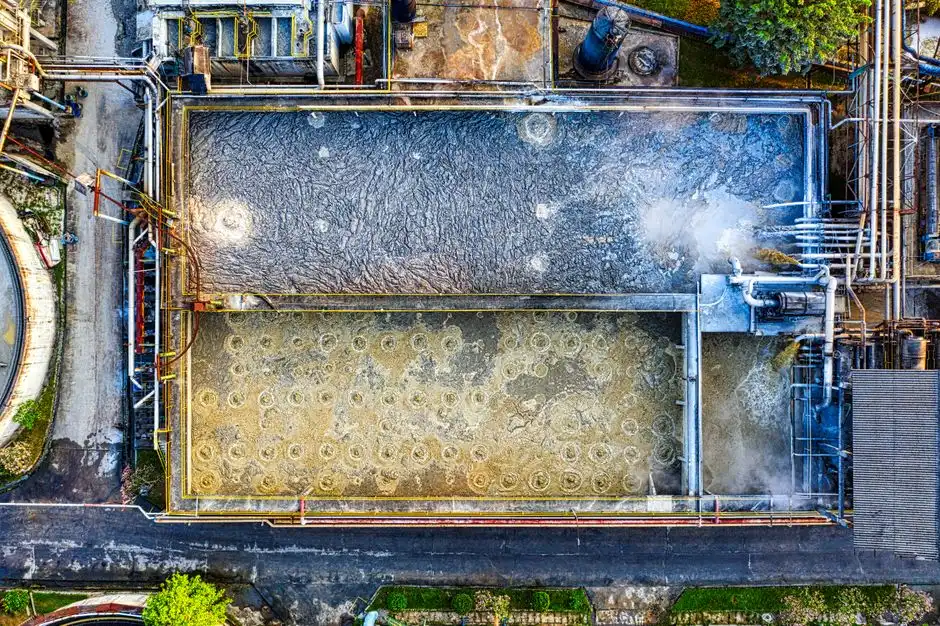
Once the baseline monitoring results are in hand, the gap against BREF CWW BAT-AELs usually concentrates in three unit-operation areas. The biological stage is the most common upgrade site: an MBR membrane bioreactor for Hungarian industrial sites or a sequencing batch reactor (SBR) is the typical answer to tightened COD and nitrogen limits, with sludge age control in the 20–40 day band to sustain nitrification across cold influent temperatures. Pre-treatment is the second hot spot: a DAF pre-treatment for high-solids wastewater or a lamella clarifier handles suspended solids, FOG and colloidal load from formulation and cleaning streams, and protects downstream biology from hydraulic or load shocks. Polishing is the third — an UF polishing step or full RO is added when the permit requires reuse-quality discharge or when AOX and pesticide residuals must be cut further to meet site-specific ELVs. Sludge handling is the often-overlooked fourth line: a plate-and-frame filter press for Hungarian sludge handling reduces sludge volume before transport off-site under Hungarian waste codes, cutting lifetime disposal cost and improving the operating margin of the biological stage. For a comparison with parallel European deals, the SK On Germany plant acquisition guide is a useful counterpoint, and the SK On Arizona acquisition compliance guide shows the US-side framing; for central-European industrial wastewater parallels outside the IED system, data center and industrial wastewater in Warsaw, Poland covers a comparable regulatory stack.
Frequently Asked Questions
How quickly must Bayer notify the Hungarian authority of the operator change?
The change-of-operator notification must be filed with the regional kormányhivatal within 15 days of the operator change being registered, under 314/2005 Korm. rendelet read with 226/2023 Korm. rendelet. Late filing is an administrative offence under Act LIII of 1995 and can trigger a fine or, in aggravated cases, suspension of the operating permit.
Does the existing IPPC permit transfer automatically on closing?
No. Hungarian law treats a change of legal operator as a permit modification event, not an automatic transfer. Bayer must apply for modification or re-issuance under 314/2005 Korm. rendelet within the notification window, and the existing ELVs and BAT-AELs bind Bayer from Day 1 until the authority issues the modified permit.
What AOX and pesticide limits apply to a Hungarian crop-protection site?
AOX is set under Government Decree 220/2004 (as amended) at sector-specific values typically in the 0.5–2.0 mg/L band, and BREF CWW (2016) BAT-AELs can tighten this to below 0.1–2.0 mg/L once reflected in the site permit. Specific pesticide active-ingredients are set case-by-case in the site permit, usually in the µg/L range, and require dedicated GC-MS or LC-MS monitoring.
What is the monitoring duty after closing?
Decree 28/2004 Korm. rendelet sets monitoring frequency by plant size: plants above 2,000 m³/day default to 24-h composite sampling on the parameters in Decree 220/2004, while smaller plants may run on spot or flow-proportional sampling. Self-monitoring reports are submitted to the regional kormányhivatal on the schedule set in the site permit.
Does Bayer need a local Hungarian environmental officer on site?
If the site crosses the staffing thresholds in 16/2016 Korm. rendelet, Bayer must appoint a környezetvédelmi megbízott (environmental officer) — a qualified individual registered with the regional authority. The appointment, qualifications and reporting duties of that role are independent of, and sit alongside, Bayer's group EHS reporting line.