What changes at the moment SK On signs the closing
When SK On's name replaces the existing operator on a German plant register, the company steps into the wastewater discharge permit the same day ownership transfers. Under section 57(1) of the Federal Water Act (Wasserhaushaltsgesetz, WHG), "waste water can only be discharged into waters if its pollution load is kept to the lowest level achievable in line with the best available technology" (BMUKN, Waste Water). That obligation is attached to the operator, not to the landowner or the holder of title, so it cannot be deferred or renegotiated through the share purchase agreement.
The legal mechanic is straightforward but unforgiving. An indirect-discharge permit (Indirekteinleitergenehmigung) issued by the local Zweckverband, and any direct-discharge Wasserrechtliche Genehmigung issued by the Bezirksregierung, are granted to a named operator. The change of operator triggers a Mitteilungspflicht — a written notification — to the Wasserbehörde identifying the new operator, the technical manager, the Handelsregister excerpt, and the USt-IdNr. No discharge under the new name is permissible until the authority acknowledges the notification.
The acquirer is also buying into Germany's water-sector investment cycle. More than five billion cubic metres of waste water are generated each year by private households, industry and commercial activities, and almost 9,000 public plants sit downstream of every indirect discharger (BMUKN). The sector is entering a period of major transition, with modernisation, climate resilience, ageing infrastructure and stricter EU requirements driving urgent action (Sweco press release, 2025-12). This regulatory trajectory defines the operational environment for the asset SK On is acquiring.
The German regulatory stack that applies to a battery plant
Four legal layers stack on top of a battery cell plant, and each one binds at the moment of transfer. At the top, EU Industrial Emissions Directive 2010/75/EU (IED) drives integrated permitting for large industrial installations and obliges operators to demonstrate compliance with BAT-AEL ranges defined in the relevant BREFs. The second layer is the Federal Immission Control Act (Bundes-Immissionsschutzgesetz, BlmSchG) and its 4. BlmSchV; a battery plant typically crosses the IED threshold once coating, formation, or electrolyte mixing exceeds the capacity triggers in Annex I. The third layer is WHG plus the Waste Water Ordinance (Abwasserverordnung, AbwV), and this is where the EV-battery effluent fingerprint meets German numeric limits. The fourth layer is local: the Indirekteinleitergenehmigung from the city Zweckverband, with pre-treatment parameters for heavy metals, fluoride, and AOX often tighter than federal minimums.
Mapping the EV-battery effluent to the right AbwV annex is the first engineering question a buyer must answer. Annex 31 covers wastewater from metal-processing and forming operations and is the natural fit for cathode foil coating and current-collector cleaning. Annex 36 covers chemical surface treatment of metals and is the right reference for electrolyte-mixing rooms and formation-stage rinsing, where LiPF6 hydrolysis generates fluoride. German Länder addendum requirements can be stricter than the federal AbwV minimums, and the acquirer must read the Länder implementation note, not just the federal text.
A long-horizon obligation is already on the books: "European legislation stipulates that by 2045 certain treatment plants must be fitted with technologies such as special membranes or oxidation processes that can remove these pollutants" (BMUKN). SK On inherits a 2026–2045 capex horizon the day it closes.
| Regulatory layer | Instrument | Trigger at closing | Applies to EV-battery because |
|---|---|---|---|
| EU | IED 2010/75/EU | Re-notify BREF compliance to competent authority | Coating + formation exceed IED capacity thresholds |
| Federal | BlmSchG / 4. BlmSchV | Change-of-operator notification, Genehmigung re-issue if capacity changes | Electrolyte mixing, solvent handling |
| Federal | WHG §57 + AbwV Annex 31, 36 | Operator-attached discharge obligation, Anhang applies on day 1 | Co/Ni plating lines, fluoride-bearing rinse water |
| Local | Indirekteinleitergenehmigung | Re-issue to new operator, often stricter than AbwV | Discharge to municipal Zweckverband |
| Forward | EU micropollutant retrofit obligation | Capex planning to 2045 | NMP, PFAS trace residuals |
EV-battery effluent fingerprint and what BAT-AEL means in practice
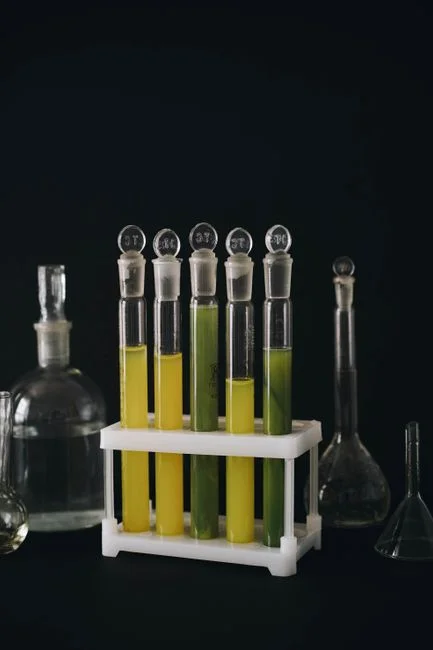
The influent numbers an SK On engineer will see on day one depend on whether the plant is a coating-and-slitting facility, a formation-and-aging facility, or both. A typical NMP-coated cell line delivers coating wastewater in the range 1,000–10,000 mg/L NMP, with fluoride from LiPF6 hydrolysis at 50–500 mg/L, lithium at 5–50 mg/L, cobalt at 0.5–10 mg/L, nickel at 0.5–5 mg/L, total COD at 2,000–20,000 mg/L, and a coating-bath carryover that pushes pH to 9–11. These ranges are consistent with published lithium-ion cell line audits and the electronics wastewater reference set, including the electronics wastewater plant 2026 engineering and capex guide.
BAT-AEL in this context is the EU BREF system interpreted through WHG §57(1). The relevant reference documents are the Non-Ferrous Metals BREF and the Waste Treatment BREF, both of which set discharge ranges for heavy metals, total nitrogen, and COD that the competent authority will benchmark against the plant's self-monitoring data. A plant whose current pre-treatment relies on settling plus a conventional biological stage will not reliably remove NMP or fluoride, and the change-of-operator package will need an upgrade plan filed with the Wasserbehörde. Advanced oxidation (ozone, Fenton) or membrane separation is required to close the gap, and conventional biological treatment alone is no longer defensible for NMP-bearing streams.
| Parameter | Typical influent (mg/L) | BAT-AEL target range (mg/L) | Treatment stage that closes the gap |
|---|---|---|---|
| NMP | 1,000–10,000 | < 10 (site-specific) | Advanced oxidation (O₃ / H₂O₂ / Fenton) |
| Fluoride | 50–500 | < 20 (typical AbwV benchmark) | Ca-precipitation + polishing ion exchange |
| Cobalt | 0.5–10 | < 0.5 | Chemical precipitation at pH 9–10 |
| Nickel | 0.5–5 | < 0.5 | Chemical precipitation at pH 9–10 |
| Lithium (Li⁺) | 5–50 | Site-specific, recovery often preferred | RO / selective ion exchange |
| COD | 2,000–20,000 | < 200 (indirect discharge typical) | MBR + ozone polishing |
| pH | 9–11 | 6.5–9.5 | Neutralisation upstream of biological stage |
Comparable process-side lessons from adjacent industries are documented in the field guide on Samsung Electronics CMP wastewater management at new fab sites, which uses the same MBR-plus-oxidation logic the German acquirer should plan around.
Permit-to-commissioning timeline SK On should expect
Step 1 is pre-signing due diligence. The M&A team must pull the existing Wasserrechtliche Genehmigung, the Indirekteinleitergenehmigung, the AbwV self-monitoring logs, and the last three years of non-conformance reports. Anything older than the current BREF cycle is a red flag, and the purchase-price mechanism should account for an upgrade obligation.
Step 2 is the change-of-operator notification. SK On files with the Bezirksregierung or Landratsamt and the local Zweckverband, attaching the operator identification, USt-IdNr., Handelsregister excerpt, and the named technical manager. Authorities typically acknowledge within four to eight weeks, but a heavy-metal or fluoride gap can trigger a longer review.
Step 3 is re-baselining against current BAT. Where the existing permit predates the latest BREF, a Sanierungsplan is filed. A realistic timeline for heavy-metal and fluoride-tightening upgrades is 6–18 months, with civil works dominating the schedule. The acquirer should plan commissioning milestones around that window, not around the closing date.
Step 4 is commissioning under the new name. No new batch of coating wastewater should be discharged under SK On's name until the Wasserbehörde confirms the Mitteilung is acknowledged in writing. "No objection" in practice looks like a written Bestätigung, not a phone call, and that document should be on file before the first production shift.
What a compliant treatment train looks like in 2026
A defensible 2026 train for an EV-battery plant runs: equalization, then DAF for suspended solids and metal-hydroxide removal, then a lamella clarifier with sludge recirculation for metals precipitation, with PLC-controlled chemical dosing for pH and fluoride adjustment feeding a calcium-precipitation stage followed by polishing ion exchange for fluoride residuals. The biological stage is an MBR membrane bioreactor for compact biological treatment, sized with headroom for the 2045 micropollutant retrofit. NMP residuals are handled with an ozone or ozone-H₂O₂ advanced oxidation stage, and the discharge finishes with chemical-free UV disinfection for indirect-discharge streams rather than chlorination where the receiving Zweckverband has tight AOX limits.
The UV stage is effective against chlorine-resistant organisms including Cryptosporidium and Giardia (HydropureWater UV product spec), which matters where the indirect-discharge stream feeds a recreational water body. The MBR skid referenced here meets EPA and EU Urban Waste Water Directive 91/271/EEC discharge requirements, which is the same benchmark the German Wasserbehörde will apply to a battery plant's indirect discharge. To avoid a civil-works retrofit in 2045, the MBR tankage should be over-sized now, the ozone reactor should be sized for trace-PFAS polishing, and the dosing system should be specced with a fluoride probe in the loop rather than relying on grab sampling.
For context on the broader 2026 ETP engineering landscape — including media selection, civil works, and capex bands — the 2026 ETP engineering buyer's guide gives a useful cross-check on what German EPCs will be quoting through 2026.
Frequently Asked Questions
Does SK On inherit the existing wastewater permit automatically on closing?
No. The existing Indirekteinleitergenehmigung and Wasserrechtliche Genehmigung remain valid, but the operator on the permit changes. Under WHG §57(1) and AbwV, the obligation is operator-attached, so SK On must file a Mitteilung with the Wasserbehörde before discharging under its own name. (BMUKN, Waste Water.)
Which AbwV Annex applies to NMP and fluoride effluent from a battery plant?
Annex 31 covers metal-processing wastewater and typically governs the cathode coating line. Annex 36 covers chemical surface treatment and typically governs electrolyte mixing and formation rinsing, where LiPF6 hydrolysis generates fluoride. Both are read together with the Länder addendum.
What is the 2045 micropollutant retrofit obligation?
EU legislation requires that "by 2045 certain