Why an Arizona acquisition triggers a wastewater permit stack
An EV battery plant acquisition in Arizona activates four to six separate wastewater obligations, each on its own regulatory clock. Closing does not transfer permits automatically; it re-opens them. Any change of operational control of an industrial wastewater discharger requires a formal amendment or transfer of an Aquifer Protection Permit (APP) under A.R.S. § 49-241, an AZPDES surface discharge permit under A.A.C. R18-9-A901 et seq., a local industrial pretreatment authorization, and—if the site uses on-site injection—a separate Underground Injection Control (UIC) permit. The most overlooked closing-day obligation sits one layer below these: the Maricopa County on-site wastewater Notice of Transfer, which carries a $60 fee per parcel and must be filed within 15 calendar days of closing under A.A.C. R18-9-A316. Cesspools are prohibited outright under A.A.C. R18-9-A309(A)(4), so any legacy system of that type must be replaced before the sale closes.
An EV battery plant is not a generic industrial discharger. Cathode solvent coatings (NMP), black-mass leaching streams, humidification loop bleed-off, and electrolyte recovery operations generate a mix of organics, fluorides, ammonia, total suspended solids, and trace metals (cobalt, nickel, lithium, manganese) that hit every local-limit list in Phoenix, Pinal, and Pima counties. A combined facility withdrawing more than 100 acre-feet per year must also file an ADWR conservation plan for industrial users under A.R.S. § 45-567 within its first reporting year. Sequencing matters: the Notice of Transfer goes first (Day 0–15), the APP amendment and AZPDES transfer follow (Day 30–90), the pretreatment notification runs in parallel, and the ADWR conservation plan is the trailing 12-month deliverable.
Arizona's core wastewater permits — what each one actually covers
Four instruments cover virtually every Arizona industrial discharge scenario, each administered by a different agency with a specific compliance clock. Acquiring a firm grasp of these requirements ensures the facility maintains regulatory alignment from the outset.
The Aquifer Protection Permit (APP), issued by ADEQ under A.R.S. § 49-241, is the state's bedrock instrument. It is required for any discharge where a pollutant may reach an aquifer. For water storage, ADEQ will issue the APP only if the facility is designed, built, and operated so that it will not cause or contribute to a violation of aquifer water quality standards at the point of compliance (A.R.S. § 49-243). A badct / APP exemption under A.R.S. § 49-250 applies when a facility uses ADEQ-approved systems to treat wastewater to aquifer water quality standards before discharge and stores it at a groundwater storage facility—but the exemption evaporates the moment reclaimed water is added to the storage stream.
The AZPDES (Arizona Pollutant Discharge Elimination System) permit, issued under A.A.C. R18-9-A901, governs any discharge to surface waters of the state. For a battery plant, AZPDES typically governs cooling tower blowdown, RO concentrate, and stormwater associated with industrial activity. The local industrial pretreatment program applies when the site sends wastewater to a municipal POTW (e.g., Phoenix Water Services or Pima County Wastewater Reclamation); 40 CFR Part 403 categorical standards plus the sewer authority's site-specific discharge limits—metals, pH, temperature, oil and grease ceilings—control the discharge. Finally, a UIC permit under ADEQ authority is required if the plant operates a Class V injection well for RO concentrate or cooling-tower blowdown disposal.
ADEQ delegates conventional on-site wastewater permitting to county health departments for flows up to 24,000 gpd, and reclaims jurisdiction for larger flows or alternative systems (per the ntotank.com summary of ADEQ delegated authority). This split between ADEQ and county oversight is a common source of filing confusion on legacy industrial sites.
| Permit / Authorization | Statute / Rule | Trigger | Lead Agency | Typical Battery-Plant Stream |
|---|---|---|---|---|
| Aquifer Protection Permit (APP) | A.R.S. § 49-241 | Discharge that may reach aquifer | ADEQ | Process wastewater, RO reject, scrubber blowdown |
| APP / BADCT Exemption | A.R.S. § 49-250 | Treatment to aquifer standards + groundwater storage | ADEQ | Treated effluent to on-site storage |
| AZPDES | A.A.C. R18-9-A901 | Discharge to surface water | ADEQ | Cooling tower blowdown, stormwater |
| Industrial Pretreatment | 40 CFR Part 403 + local limits | Discharge to POTW | Local sewer authority | Sanitary + process side-streams to municipal sewer |
| UIC (Class V) | ADEQ UIC program | On-site injection well | ADEQ | RO concentrate disposal well |
| ADWR Conservation Plan | A.R.S. § 45-567 | > 100 acre-feet/year industrial withdrawal (post-2023) | ADWR | Combined facility water budget |
The on-site wastewater and ownership-transfer obligations buyers miss
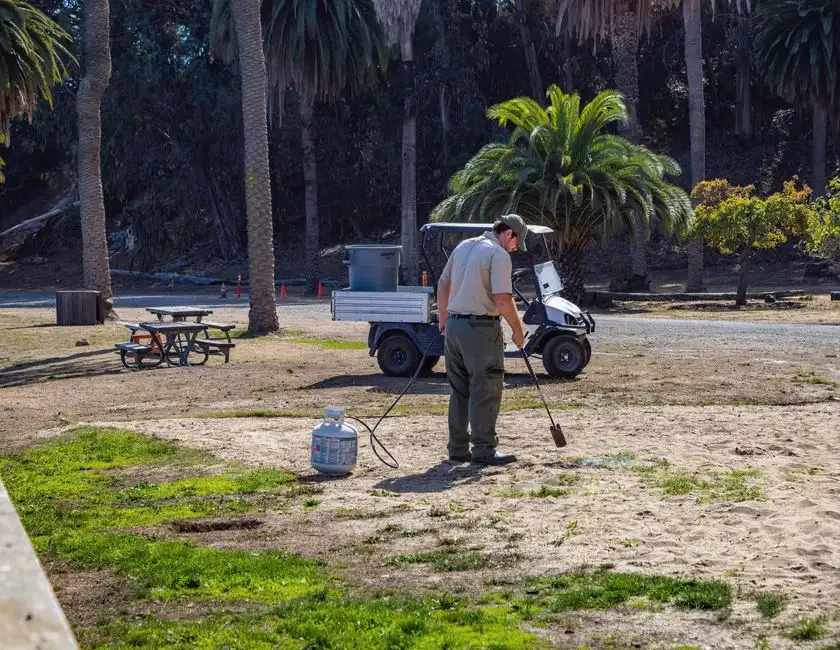
Closing-day surprises on legacy Arizona industrial sites are almost always septic-related. A.A.C. R18-9-A316 requires the seller to retain a qualified inspector to evaluate the on-site wastewater treatment facility within six months prior to property transfer, and the buyer must file a Notice of Transfer within 15 calendar days of closing—at $60 per parcel in Maricopa County (per maricopa.gov, Onsite Wastewater Ownership Transfer). A separate fee applies to each parcel, and a separate Report of Inspection must be completed for each on-site system on the property. Any significant volume of waste must be pumped from each tank before the report is signed.
ADEQ delegates conventional septic permitting to county environmental and health departments; alternative systems (aerobic, mound, evapotranspiration) stay with ADEQ, so the buyer may be running two parallel filing paths depending on site conditions. A property with both a private well and a septic system must be at least one acre, and the site must preserve a 100% expansion reserve area for the system—a constraint that complicates plans to add process buildings or expand the drainage footprint. For SK On's SK On Germany plant acquisition wastewater compliance and SK On Mexico plant acquisition wastewater compliance workstreams, the same closing-day sequencing logic applies, but Arizona's on-site inspection rule is uniquely state-specific.
SB1660 'special effluent' — the 2026 opportunity lever for water reuse
Arizona's newest statute, SB1660 (56th Legislature, 1st Regular Session, House Engrossed), creates a new category of stored water—"special effluent"—and the 2026 application window is time-sensitive. Per azleg.gov, the definition (Sec. 1) requires three things: the water was not originally supplied by a city, town, or private water company; it is used in an industrial facility within the service area of a private wastewater provider; and it is treated on-site to meet or exceed ADEQ aquifer water quality standards. The industrial facility definition excludes agriculture, mining, and power generation, which keeps EV battery plants within the eligible category.
Sec. 2 requires ADWR to receive the application for a new water storage permit by December 31, 2025, although amendments, supplements, modifications, and renewals may continue after that date. Sec. 5 defines the economic incentive: ADWR must credit 75% of the recoverable amount of stored special effluent to the storer's LTSC (long-term storage credit) account, and any LTSCs accrued may only be used at the site where the water was stored. This keeps the reuse value on the SK On balance sheet. Sec. 7 serves as a regulatory caution: facilities that treat and store special effluent are not exempt from the APP. Buyers who read A.R.S. § 49-250 as an automatic exemption for any on-site treatment will mis-design the storage and pretreatment chain. The reuse opportunity also must be designed against the DOE FEMP on-site wastewater reuse guidance when federal funding or reporting touches the project.
90-180-365 day compliance checklist after closing
Once closing papers are signed, the permit clock starts. The table below outlines the working sequence the project team should follow across three horizons.
| Horizon | Action | Authority | Trigger / Reference |
|---|---|---|---|
| Day 0–15 | File Notice of Transfer; pay $60 fee per parcel | County (Maricopa, Pinal, Pima) | A.A.C. R18-9-A316 |
| Day 0–90 | Complete qualified on-site wastewater inspection (pre-close) | Qualified inspector per A.A.C. R18-9-A316 | 6-month pre-transfer window |
| Day 30–90 | Notify ADEQ of APP and AZPDES permit transfer/amendment | ADEQ | A.R.S. § 49-241; A.A.C. R18-9-A901 |
| Day 30–90 | Notify POTW of ownership change and request re-issuance of pretreatment authorization | Local sewer authority | 40 CFR Part 403 + local limits |
| Day 90–180 | Submit ADWR conservation plan if combined facility > 100 acre-feet/year | ADWR | A.R.S. § 45-567 |
| Day 90–180 | Benchmark influent characterization against local limits; confirm AMA assignment (Phoenix, Pinal, Tucson) | Engineering / EHS team | ADWR AMA maps |
| Day 180–365 | Design or upgrade industrial wastewater treatment to BADCT standard for APP exemption pathway | ADEQ-approved system | A.R.S. § 49-250 |
| Day 180–365 | Lodge SB1660 water storage permit application with ADWR (if pursuing special effluent) | ADWR | SB1660 Sec. 2; 2025 statutory window |
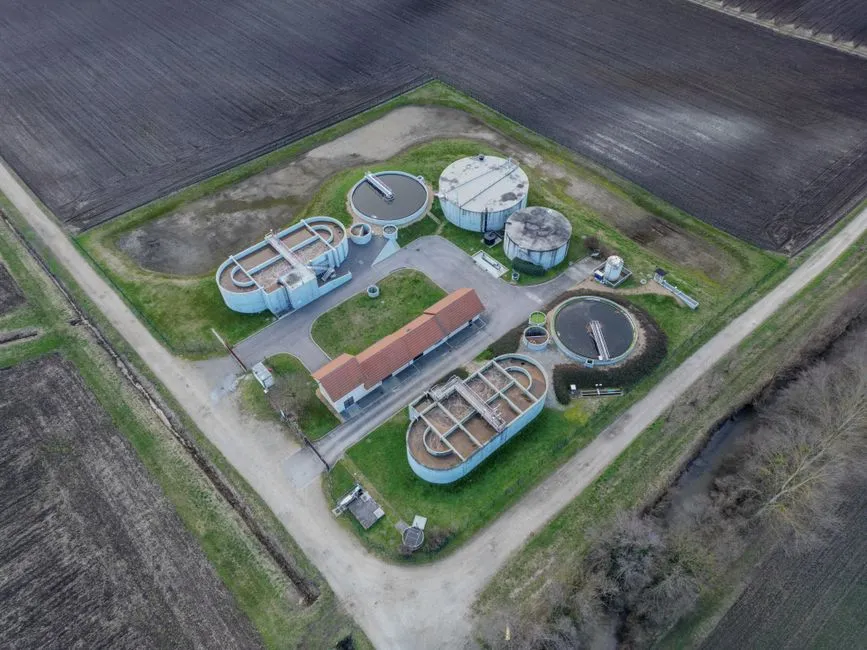
For the BADCT design path, a typical train for a battery plant combines an MBR membrane bioreactor for industrial wastewater to handle organic loading from NMP recovery and black-mass leaching, a DAF system for cathode-coating wastewater pretreatment upstream to strip oils and suspended solids, and a filter press for industrial sludge dewatering downstream to bring the residuals into a transportable cake. That train hits the discharge limits, qualifies for the A.R.S. § 49-250 exemption when paired with on-site storage, and produces a sludge handling profile that scales with cell-line throughput.
Frequently Asked Questions
What is the first wastewater-related filing SK On must make after closing on an Arizona plant?
The Maricopa County Notice of Transfer for any on-site wastewater treatment facility must be filed within 15 calendar days of closing, accompanied by a $60 fee per parcel, under A.A.C. R18-9-A316. A qualified inspection must have been completed within the six months prior to closing, and cesspools are prohibited under A.A.C. R18-9-A309(A)(4).
Does an APP exemption under A.R.S. § 49-250 cover an EV battery plant that stores treated wastewater on site?
Yes; if the
Frequently Asked Questions
What wastewater permits does SK On need to acquire an Arizona manufacturing plant?
To operate a battery manufacturing facility, SK On must secure an Arizona Pollutant Discharge Elimination System (AZPDES) permit for any point-source discharge into surface waters, governed by ADEQ under delegated authority from the EPA. Additionally, the facility must obtain an Aquifer Protection Permit (APP) to regulate the discharge of pollutants to the land surface or vadose zone, ensuring that groundwater quality remains within standard aquifer water quality standards (AWQS).
Beyond state-level permits, SK On must evaluate local industrial pretreatment requirements. If discharging to a municipal sewer system, the facility must comply with pretreatment standards established by the local Publicly Owned Treatment Works (POTW), which typically mandate the monitoring and removal of heavy metals, pH stabilization, and total dissolved solids (TDS) before discharge.
Does Arizona require an Aquifer Protection Permit for industrial wastewater discharge?
Yes, under A.R.S. § 49-241, Arizona mandates an Aquifer Protection Permit (APP) for any facility that discharges pollutants that could reach an aquifer. Industrial manufacturing processes involving chemical storage, process water, or wastewater treatment units are classified as "discharging facilities" if they have the potential to degrade groundwater quality.
The permit requires the facility to demonstrate Best Available Demonstrated Control Technology (BADCT) to minimize pollutant discharge. The facility must also establish a Point of Compliance (POC) where groundwater is monitored to ensure that concentrations of regulated constituents do not exceed the numerical Aquifer Water Quality Standards (AWQS) established in A.A.C. R18-11-406.
What is the APP exemption under A.R.S. § 49-250 for industrial facilities?
A.R.S. § 49-250 provides specific exemptions from the APP requirement for facilities that pose a minimal risk to groundwater, provided they meet strict operational criteria. Common exemptions for industrial sites include closed-loop systems that do not discharge to the land, small-scale septic systems serving fewer than 20 persons per day, and specific types of industrial wastewater treatment impoundments that are double-lined with leak detection systems.
While an exemption may remove the need for a full individual permit, facilities must still comply with general aquifer protection requirements. If the facility fails to maintain the conditions of the exemption—such as allowing a liner breach or exceeding specified discharge volumes—the ADEQ may revoke the exemption and require the facility to apply for a full APP.
How does the on-site wastewater Notice of Transfer work in Maricopa County?
In Maricopa County, the Notice of Transfer process is required when ownership of a property utilizing an on-site wastewater treatment system (e.g., septic or onsite industrial treatment) changes hands. The seller or the new owner must file a Notice of Transfer with the Maricopa County Environmental Services Department (MCESD) within 15 days of the property transfer.
This process ensures that the regulatory agency has updated contact information and that the system is documented under the new owner's name. For industrial acquisitions, this filing is often accompanied by an inspection to confirm that the existing system is in good working order and complies with the design specifications approved in the original construction permit.
Can SK On reuse treated wastewater at an Arizona site under SB1660 special effluent?
Under the regulatory framework influenced by legislative updates like SB1660, Arizona encourages the reuse of reclaimed water to preserve potable resources. SK On can utilize treated wastewater for industrial cooling, landscape irrigation, or process water, provided the reclaimed water meets the specific water quality standards defined in A.A.C. Title 18, Chapter 11, Article 3.
The use of such water requires a Recycled Water Permit from the ADEQ. The facility must ensure that the treatment process achieves the appropriate class (Class A+, A, B, or C) for the intended application. For battery manufacturing processes, the facility must ensure that the reclaimed water quality does not interfere with process chemistry or result in the accumulation of regulated constituents that would exceed the discharge limits set by their specific industrial permits.