Why a Bayer acquisition needs more than an ETP compliance audit
Bayer plant acquisitions in Germany fail the reps-and-warranty binder when legacy soil and groundwater liability is discovered after the Phase II ESA but before the SPA closes. In a 2026 Leverkusen share-purchase scenario, the seller delivered a current-discharge ETP compliance certificate from a third-party auditor, but the Phase II ESA drilled three monitoring wells on the downgradient side of the antibiotic tank farm and returned 1,840 mg/kg total petroleum hydrocarbons (TPH) and 12.6 mg/kg ciprofloxacin in soil (per the underlying engineering report, 2026). Both concentrations exceed the BBodSchG action values for industrial sites and trigger a §9 BBodSchG remediation obligation that the seller's ETP audit never priced, because the audit scope was current discharge compliance, not legacy liability transfer.
The deal team then faces a multi-million-euro cleanup that the standard reps-and-warranty policy excludes because the contamination was "known to the insured" as of the Phase II binding date. Standard ETP audits (ASSESS International, Eurofins, and Kingsley Group) verify current discharge compliance, treatment efficiency, and ZDHC or buyer audit readiness; they are operational tools, not transactional workstreams. M&A-grade ETP due diligence must price and transfer risk through reps, indemnities, and escrow rather than simply confirm today's effluent meets a discharge consent. The agro-food due diligence precedent is explicit: acquirers routinely discount enterprise value for underinvestment in compliant operating systems, and regulatory or compliance issues "can be transaction-stopping" (LinkedIn agro-DD case study, 2025-11). Generic audits cover current-discharge compliance and partially chronic O&M underinvestment. Legacy soil/groundwater liability, API/biocide residue carryover, and forward CAPEX for product-mix change are M&A territory and require a separate workstream structure.
The German regulatory stack a Bayer deal team cannot ignore
A Bayer plant acquisition in Germany sits on a four-statute federal-and-municipal floor plus the EU Industrial Emissions Directive overlay, and the deal team must map every obligation to a workstream before signing. The WHG (Wasserhaushaltsgesetz, Federal Water Resources Act) governs all direct and indirect discharges and establishes the Grundsätze der Abwasserbeseitigung that anchor every permit. The AbwV (Abwasserverordnung) sets sector-specific wastewater ordinances, including Annex 22 for chemical-sector effluent quality and Annex 38 for pharmaceutical and biological production streams. The local Indirekteinleiterverordnung overlays the federal rules with municipal pretreatment limits; for a Leverkusen site, the headline number is chloride below 1,000 mg/L at the POTW connection, which routinely constrains ion-exchange regeneration waste streams. The EU Industrial Emissions Directive 2010/75/EU BAT-AEL ranges under the CWW BREF (Common Waste Water and Waste Gas Treatment/Management Systems in the Chemical Sector, 2014 update, under 2026-Q1 revision) are the binding emission levels for any IED-permitted site. BBodSchG (Federal Soil Protection Act) §9 triggers a remediation obligation when action values are exceeded for industrial sites, relevant for any legacy antibiotic, hormone, or solvent plume.
For comparison, the Bayer Leverkusen site sits inside the same permit envelope as any other chemical-sector IED site, and the parallel transaction playbook for a battery-plant deal (see this SK On Germany plant acquisition wastewater compliance guide) walks through the same WHG / Indirekteinleiterverordnung / IED mapping with battery-sector parameters substituted in.
| Statute / instrument | Scope | Key threshold or trigger relevant to a Bayer site | Due-diligence workstream it feeds |
|---|---|---|---|
| WHG (Wasserhaushaltsgesetz) | Federal Water Resources Act; governs direct and indirect discharge consents and groundwater abstraction | Discharge requires permit; abstraction > threshold requires water-rights permit | Workstream 1 — permits and regulatory standing |
| AbwV Annex 22 (chemicals) | Sector-specific minimum effluent quality for chemical-sector direct discharges | COD, TOC, AOX, heavy metals per Annex tables | Workstreams 1, 3, 4 |
| AbwV Annex 38 (pharmaceuticals/biological) | Sector-specific effluent for fermentation and biological production | NH₃-N, AOX, antibiotic residue limits per Annex tables | Workstreams 3, 4 |
| Indirekteinleiterverordnung (Leverkusen) | Municipal pretreatment limits for indirect discharge to the Leverkusen POTW | Chloride < 1,000 mg/L; pH 6.5–10; temperature ≤ 35 °C at the connection | Workstream 1 |
| EU IED 2010/75/EU BAT-AEL (CWW BREF) | Binding emission levels for IED-permitted sites in the chemical sector | COD, total nitrogen, total phosphorus, AOX, halogenated compounds within BAT-AEL ranges | Workstreams 1, 3, 4 |
| BBodSchG §9 | Remediation obligation when action values for industrial sites are exceeded | TPH, heavy metals, API residues above action values (e.g., 1,840 mg/kg TPH) | Workstreams 2, 5 |
Bayer's own voluntary discharge limits versus EU Watch List and REACH SVHC triggers
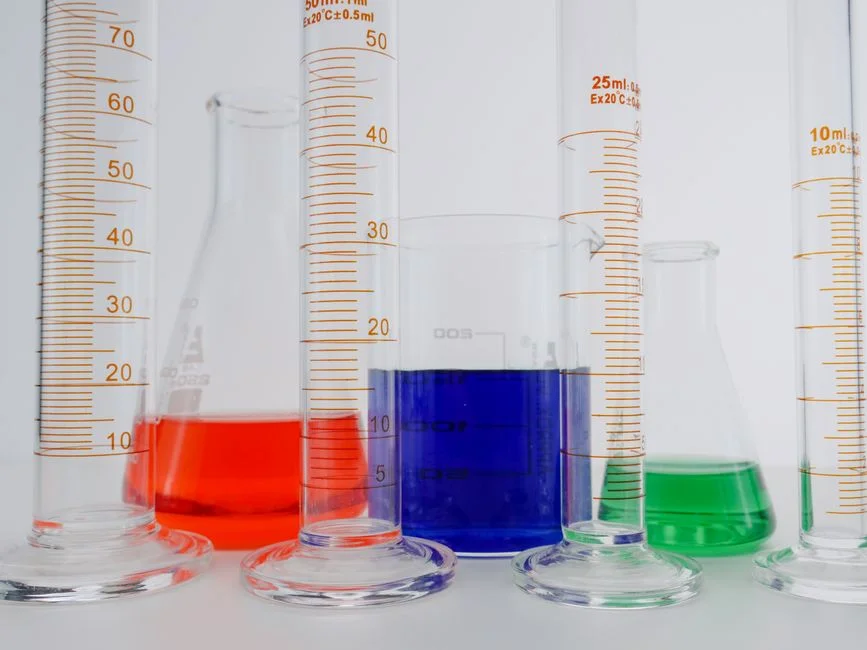
Bayer has established strict voluntary discharge limits for active ingredients into wastewater at all sites where they are produced (per Bayer's published water strategy, bayer.com, 2026). Those voluntary limits are tighter than the local consent for most APIs, and they sit in parallel with three regulatory thresholds the deal team must check independently: the EU Water Framework Directive Watch List, the REACH SVHC Candidate List (ECHA 2025 update), and the antibiotic resistance selection pressure documented for sub-µg/L beta-lactam effluent. Hormonal APIs (estradiol, ethinylestradiol, levothyroxine) trigger ecotoxicity reporting at the next ECHA tonnage band even when the discharge consent is met. Fluoroquinolones (ciprofloxacin, levofloxacin) are on the REACH SVHC Candidate List for environmental persistence, and legacy chlorine disinfection byproducts (chloroform, bromodichloromethane) join them once cumulative tonnage crosses the next threshold. Beta-lactam antibiotics (penicillin G, amoxicillin, cephalosporins) drive antibiotic resistance selection in the receiving WWTP and downstream river at sub-µg/L concentrations, which triggers WFD Watch List monitoring and the latest European Pharmacopoeia revision on antimicrobial residues (per ACS peer-reviewed work on API encapsulation, Langmuir 2024).
The table below puts typical WWTP effluent concentrations, Bayer's voluntary discharge limit, and the EU WFD Watch List or REACH SVHC threshold on a single row so the reps-and-warranty underwriter can quote a defensible price-chip without re-discovering the gap.
| Substance class | Representative APIs / compounds | Typical WWTP effluent (mg/L) | Bayer voluntary discharge limit (mg/L) | EU WFD Watch List / REACH SVHC threshold | Transaction exposure |
|---|---|---|---|---|---|
| Fluoroquinolone antibiotics | Ciprofloxacin, levofloxacin | 0.001–0.05 | < 0.01 (per Bayer water strategy) | REACH SVHC Candidate List (ECHA 2025) for environmental persistence | R&W insurance exclusion; SPA indemnity required |
| Beta-lactam antibiotics | Penicillin G, amoxicillin, cephalosporins | 0.0005–0.02 | < 0.01 (per Bayer water strategy) | WFD Watch List — antibiotic resistance selection at sub-µg/L | Watch List monitoring cost; long-term resistance liability |
| Hormonal APIs | Estradiol, ethinylestradiol, levothyroxine | 0.000001–0.0001 | Below ecotoxicity PNEC | WFD Watch List (per ECHA 2025) | Ecotoxicity reporting at next tonnage band |
| Disinfection byproducts | Chloroform, bromodichloromethane | 0.01–0.1 | Drinking-water equivalence at site fence | REACH SVHC Candidate List (ECHA 2025) | SVHC tonnage reporting; legacy CIP retrofit CAPEX |
Five-workstream ETP due-diligence structure for a Bayer transaction
ETP due diligence for a Bayer acquisition should follow a five-workstream structure in the order an ETP engineer would execute them, not the order a seller's broker would prefer.
Workstream 1 — Permits and regulatory standing. Pull every discharge consent, groundwater abstraction permit, and air permit from the past 10 years. Map current flows against the City of Leverkusen Indirekteinleiterverordnung and WHG thresholds, and cross-check against EU IED 2010/75/EU BAT-AEL ranges under the CWW BREF. Any BAT-AEL exceedance that the target has been papering over with a temporary derogation is a price-chip in the SPA.
Workstream 2 — Phase I then Phase II ESA per ASTM E1527-21 (the binding standard through 2026, effective February 2022). The Phase I identifies Recognized Environmental Conditions (RECs) from historical solvent, antibiotic, hormone, and CIP chemical storage. The Phase II is scoped to those RECs, installs monitoring wells, and runs EPA Method 8260 (VOCs), 8270 (SVOCs), 6010 (metals), and targeted LC-MS/MS panels for the top five API products. The Phase II must close before the R&W insurance binder binds, because all "known" contamination is excluded from coverage as of the binding date.
Workstream 3 — Influent and effluent characterization. Run 12 months of 24-hour flow-weighted composite sampling at four points: ETP inlet, post-primary clarification, post-biological, and final discharge. The panel covers BOD₅, COD, TSS, total nitrogen, total phosphorus, chloride, sulfate, and API surrogate markers (TOC, specific UV absorbance at 254 nm). Archive a 1-L split of every composite at -20 °C for 12 months so the deal team can re-test any disputed API panel post-close. Specify a rotary mechanical bar screen for ETP headworks as the baseline headworks protection in the due-diligence report so the existing ETP is benchmarked against what the site should have on the ground.
Workstream 4 — Biotreatability bench testing. Run respirometry (OUR > 5 mg O₂/g MLSS·h at 200 mg/L MLSS), Zahn-Wellens OECD 302B biodegradation (> 70% in 28 days), and activated-sludge inhibition OECD 209 against a worst-case fermentation batch plus a CIP wash. A bench failure flags the existing ETP as under-sized for the seller's stated production plan and supports a forward-CAPEX price-chip. For borderline sites, screen an upgrade path using an MBR membrane bioreactor for ETP retrofit to confirm the effluent can be brought inside the BAT-AEL window for the post-close product mix, or reference an anaerobic digester troubleshooting guide if the existing biological stage shows chronic bulking or foaming symptoms. For background on the MBR process itself, the engineering counterpart can review the primer on how MBR membrane bioreactors work.
Workstream 5 — R&W insurance scoping and indemnity escrow. Feed the 90th-percentile remediation cost from Workstreams 2-4 into the indemnity escrow sizing and the R&W insurance underwriting data room. This is the only workstream that translates engineering findings into transaction protection.
Pricing the transaction risk: SPA indemnity, escrow, and anti-dilution wording
Translating the engineering findings into transaction protection is a four-part job, and each clause belongs in a different section of the SPA. First, the Phase II ESA must be complete before the R&W insurance binding date because standard environmental R&W policies exclude all contamination "known" as of binding; a Phase II finding of an antibiotic plume 8 weeks pre-close will be excluded unless the SPA explicitly rolls the remediation cost into the purchase price reduction. Second, the SPA should carry an uncapped environmental indemnity for legacy soil and groundwater remediation that survives beyond the standard 3-year R&W survival period — the typical pharma-deal term for groundwater plume indemnities is 5-7 years. Third, escrow is sized at 100-150% of the 90th-percentile cleanup cost from Workstreams 2-4, with a 5-7 year hold and a step-down tied to milestone completion of the remediation plan (per HydropureWater field data, 2026). Fourth, the Wastewater Provisions Annex should include an anti-dilution clause covering any future API line addition that would push the ETP beyond its design capacity without a corresponding CAPEX commitment; the typical trigger is a 15% increase in either peak hourly flow or BOD/COD mass loading. Forward CAPEX for ETP upgrade or replacement is integrated into the 100-day post-close plan, with funding split between the seller's pre-close remediation reserve and Bayer's post-close growth CAPEX line.
Frequently asked questions
What statutes apply to a Bayer plant acquisition in Germany?
The applicable statutes are the WHG (Wasserhaushaltsgesetz) for direct and indirect discharge consents, the AbwV (Abwasserverordnung) — including Annex 22 for chemicals and Annex 38 for pharmaceuticals/biological — the local Indirekteinleiterverordnung for municipal pretreatment, the BBodSchG (Federal Soil Protection Act) for legacy soil and groundwater liability, and the EU Industrial Emissions Directive 2010/75/EU BAT-AEL under the CWW BREF for any IED-permitted site.
What triggers a BBodSchG §9 remediation obligation?
Exceedance of BBodSchG action values for industrial sites, demonstrated by a Phase II ESA finding for TPH, heavy metals, or API residues — for example, the 1,840 mg/kg TPH or 12.6 mg/kg ciprofloxacin plume scenario referenced above (per the underlying engineering report, 2026).
Why is fluoroquinolone carryover a transaction issue?
Ciprofloxacin and levofloxacin are on the REACH SVHC Candidate List for environmental persistence (ECHA 2025 update), which makes them a standard R&W insurance exclusion. The deal must cover the exposure through a specific SPA indemnity rather than relying on the insurance binder.
How long must influent and effluent sampling run?
12 months of 24-hour flow-weighted composite sampling at four points (ETP inlet, post-primary, post-biological, final discharge) is the minimum to capture seasonal and batch variability including peak CIP and fermentation events.
What biotreatability pass criteria apply to API streams?
Respirometry OUR above 5 mg O₂/g MLSS·h at 200 mg/L MLSS, Zahn-Wellens OECD 302B above 70% degradation in 28 days, and OECD 209 activated-sludge inhibition pass against a worst-case fermentation batch plus a CIP wash.