Why Brazil's Sewage Plants Run Differently
Brazilian municipal plants operate under a distinct influent envelope that breaks most North American or European design templates. Typical raw sewage in Brazilian cities runs BOD 200-500 mg/L, COD 400-900 mg/L, TSS 200-450 mg/L, pH 6.5-8.0, and influent temperatures of 22-30°C year-round, per CETESB monitoring data and the SNIS national sewage atlas. That temperature range is decisive: at 25-30°C, anaerobic kinetics in UASB reactors run 2-3× faster than in temperate climates, which is why UASB trains are standard for small and medium plants in Brazil rather than the exception.
Combined sewer systems in São Paulo, Rio de Janeiro, and Recife deliver wet-weather hydraulic peaks 3-5× dry-weather flow (DWF) and shock organic loads 2-4× the design BOD, a load-variability pattern that the Springer LCA literature on Brazilian treatment plants documents as a primary cause of effluent non-compliance. Only about 51% of Brazilian municipal wastewater is currently collected (SNIS 2023 baseline, projected to 2026 planning horizon), meaning most new plants must also accommodate rapidly growing catchment populations and intermittent upstream discharges. Engineers sizing a plant should assume at least 30% hydraulic reserve and 20% organic reserve above calculated peak loads. The regulatory backbone for the ammonia nitrogen discharge limit in Brazil for 2026 is reviewed separately and ties directly into the nitrogen side of this design envelope.
CONAMA 430/2011 and CONAMA 357/2005: The Compliance Floor
CONAMA Resolution 430/2011 sets the minimum effluent standard for any municipal sewage treatment plant in Brazil discharging to inland or coastal waters, while CONAMA 357/2005 defines the receiving-water-class quality that determines whether those minimums are enough or whether the project must tighten further. Article 14 of CONAMA 430/2011 defines secondary treatment as BOD ≤ 120 mg/L for plants commissioned before the resolution, with a stricter BOD ≤ 30 mg/L target for new plants discharging to sensitive watersheds. Most state environmental agencies (CETESB in São Paulo, INEA in Rio, SEMAD in Minas Gerais) enforce the 30 mg/L target by default for new builds in 2026.
The table below summarizes the operational compliance floor an engineer should design around.
| Parameter | CONAMA 430/2011 Standard Limit | Tightened Limit (sensitive watershed / Class 2 receiving water) |
|---|---|---|
| pH | 5.0 - 9.0 | 6.0 - 8.0 |
| BOD₅ | ≤ 120 mg/L (or ≤ 30 mg/L for new plants) | ≤ 5 - 10 mg/L |
| COD | Removal ≥ 70% | ≤ 40 mg/L |
| TSS | ≤ 150 mg/L (or ≤ 30 mg/L for new plants) | ≤ 30 mg/L |
| Total Nitrogen (TN) | ≤ 20 mg/L | ≤ 10 mg/L |
| Ammoniacal Nitrogen (NH₃) | ≤ 20 mg/L | ≤ 5 mg/L (Class 2) |
| Total Phosphorus | Per receiving water class | ≤ 1 mg/L (Class 2) |
| Oils & Grease | ≤ 100 mg/L | ≤ 50 mg/L |
| Total Fecal Coliforms | Per receiving water class | ≤ 1,000 CFU/100 mL (Class 2) |
CONAMA 357/2005 enters the picture the moment the discharge is to a Class 2 or Class 3 water body: BOD up to 5 mg/L, dissolved oxygen ≥ 5 mg/L, and tighter fecal coliform ceilings apply. The practical effect is that a single process train rarely satisfies both the federal default and the state-level tightening, so the designer must identify the receiving-water class before sizing the tertiary step.
Process Train Options for Brazilian Municipal Plants
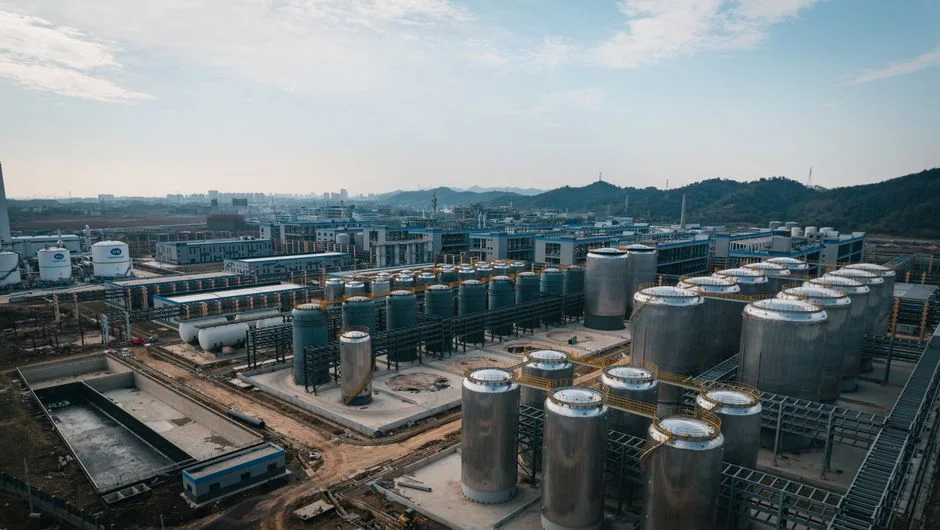
Four process trains dominate Brazilian procurement in 2026: UASB plus polishing, conventional activated sludge (CAS), membrane bioreactor (MBR), and sequencing batch reactor (SBR). The right choice is driven by flow size, land availability, reuse intent, and operator skill rather than by any single efficiency metric. UASB followed by a DAF or trickling filter polishing step remains the Brazil-preferred train for 1,000-20,000 m³/day plants, delivering 60-75% OPEX reduction versus CAS per CETESB anaerobic-technology studies conducted in São Paulo and Paraná. A typical UASB reactor runs at 6-10 hour hydraulic retention time (HRT) and upflow velocity 0.5-0.7 m/h, achieving 60-75% BOD removal before polishing.
Conventional activated sludge with extended aeration takes over above 20,000 m³/day, where the higher organic load justifies full aerobic treatment. Standard design parameters are HRT 6-8 hours, F/M ratio 0.15-0.25 kg BOD/kg MLVSS·d, SRT 15-25 days, and mixed liquor suspended solids 3,000-4,500 mg/L. Where land is constrained or reuse is required, submerged PVDF MBR (0.1 μm nominal pore size) cuts footprint by 50-70% versus CAS and delivers BOD < 5 mg/L and TSS < 1 mg/L in a single step. HydropureWater's MBR integrated wastewater treatment system is rated for 10-2,000 m³/day per skid, with optional tertiary dissolved air flotation system for phosphorus precipitation before the membrane step.
For 500-5,000 m³/day plants with intermittent or batch inflow, SBR remains a strong choice: 2-3 cycles per day, equalization volume at 0.3× daily flow, and decanter-controlled discharge that eliminates the need for separate clarifiers. The four trains compare as follows under typical Brazilian municipal conditions.
| Criterion | UASB + Polishing | Conventional AS | MBR | SBR |
|---|---|---|---|---|
| Best fit flow range | 1,000 - 20,000 m³/d | > 20,000 m³/d | 500 - 50,000 m³/d | 500 - 5,000 m³/d |
| Footprint (m² per 10,000 m³/d) | 3,000 - 4,000 | 4,000 - 5,000 | 1,500 - 2,500 | 3,500 - 4,500 |
| Energy (kWh/m³) | 0.10 - 0.20 | 0.40 - 0.60 | 0.50 - 0.80 | 0.30 - 0.50 |
| Sludge yield (kg DS/kg BOD) | 0.10 - 0.20 | 0.40 - 0.60 | 0.30 - 0.45 | 0.35 - 0.50 |
| Effluent BOD (mg/L) | 20 - 60 | 20 - 30 | < 5 | 15 - 25 |
| Operator skill required | Low to medium | Medium to high | High | Medium |
For a tropical-climate project, UASB-based trains almost always win on energy and sludge, MBR wins on footprint and reuse, and CAS still wins at very large scale where operator familiarity and parts availability dominate the decision.
How to Handle the Sludge: Stabilization, Dewatering, Disposal
Sludge handling is 30-50% of municipal plant OPEX and is the line item most often under-budgeted in Brazilian RFQs. UASB sludge is already partially stabilized, typically with 40-55% VS destruction in the reactor, and can be dewatered directly without aerobic digestion. CAS sludge by contrast requires separate aerobic digestion at 15-20 day SRT, adding 0.05-0.08 kWh/m³ of plant energy and 0.4-0.6 kg DS/kg BOD of biosolids to handle.
Two dewatering options dominate in Brazil: plate-and-frame filter press and screw press. Plate-and-frame press operation typically reaches cake dryness 22-28% DS at 1.5-2.5 hours per cycle, while screw presses deliver 18-23% DS continuously. Polymer (cationic polyacrylamide) dose runs 3-6 kg per ton of dry solids, and Brazilian operators report 30% lower polymer consumption at 25°C+ versus temperate benchmarks because higher sludge temperature lowers viscosity. The HydropureWater plate and frame filter press is rated for 2-15 m³/h filtrate capacity with automatic plate shifting and a wash cycle, which is the configuration most common in 5,000-50,000 m³/day plants. Disposal under CONAMA 375/2006 (biosolids land application) remains the lowest-cost pathway where agricultural receiving land is available, and the 30-year design life expected by Caixa Econômica and ANA financing should cover the full biosolids permit cycle.
CAPEX and OPEX Ranges for 2026 Brazilian Projects
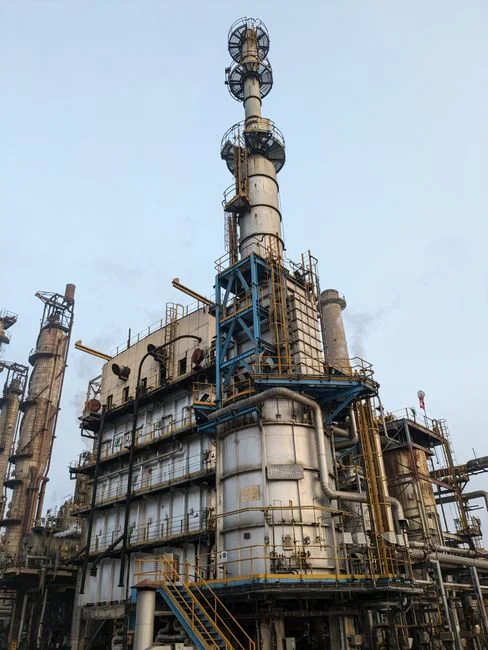
Brazilian projects in 2026 typically see CAPEX in the ranges below, drawn from 2025-2026 South American market data, BNDES financing benchmarks, and recent municipal tenders. OPEX excludes financing and major sludge disposal costs but includes energy, chemicals, labor, and routine maintenance.
| Process Train | CAPEX (USD per m³ daily capacity) | OPEX (USD per m³ treated) | Energy share of OPEX |
|---|---|---|---|
| UASB + Polishing | 150 - 400 | 0.05 - 0.12 | 35 - 50% |
| Conventional Activated Sludge | 250 - 500 | 0.15 - 0.30 | 45 - 60% |
| MBR | 400 - 800 | 0.20 - 0.40 | 50 - 65% |
| SBR | 200 - 450 | 0.12 - 0.25 | 40 - 55% |
Plants in the 1,000-5,000 m³/day band carry a 20-30% scale penalty versus plants above 10,000 m³/day, primarily because civil works, electrical distribution, and SCADA costs do not scale linearly. Imported package plants such as the WSZ underground package sewage treatment plant can reduce CAPEX by 25-40% on small-to-medium projects by consolidating civil work and equipment into a single fabricated skid. Anaerobic plant energy can be partially offset by biogas-to-boiler or biogas-to-CHP arrangements at UASB plants above 5,000 m³/day, typically recovering 30-50% of plant heat demand. For the detailed cost-driver logic that drives the OPEX bands above, the SBR plant operating cost breakdown for 2026 provides a useful side-by-side. ANA and Caixa Econômica financing terms typically require a 30-year design life and 20-year mechanical warranty on rotating equipment, which should be encoded in the tender.
Supplier Selection: Local Fabrication, Chinese Imports, or EPC Turnkey
Three sourcing channels are open to a Brazilian procurement team in 2026. Brazilian OEMs and licensed local fabricators (including distributors for SAT, Sulzer, KSB, and a long list of national steel-tank fabricators) offer short delivery distances, Portuguese-language commissioning support, and conformity with FINAME/BNDES financing rules for locally manufactured equipment. Lead times run 4-8 months. Chinese package-plant manufacturers now hold 35-40% of the small-municipal segment in Brazil (industry trade press 2024-2025), with delivery in 60-90 days ex-Shanghai or Ningbo, integrated skid design, and CAPEX savings of 25-40% against equivalent European equipment. European EPC turnkey providers (Veolia, SUEZ, WABAG) remain the default for projects above 50,000 m³/day and for tenders that require a 24-month performance guarantee, but lead times run 12-18 months and CAPEX is 40-80% higher than the Chinese alternative.
Use the following five-criterion shortlist when evaluating offers: CAPEX per m³, delivery time, local service presence, O&M simplicity, and reference plants operating in tropical climate. At least three of the five should be weighted above 15% in your scoring matrix, with reference plants in a tropical climate as a non-negotiable. For a deeper comparison specific to the small-municipal segment, see the package sewage treatment plant suppliers in Brazil for 2026 buyer's guide.
Frequently Asked Questions
What permits does a municipal sewage plant in Brazil need? At federal level, CONAMA 430/2011 sets the effluent standard. At state level, the operator must hold a Licença de Operação (LO) issued by the state environmental agency (CETESB in São Paulo, INEA in Rio, SEMAD in Minas Gerais, IAT in Paraná, among others), and in many states a separate Licença de Instalação (LI) before construction. ANA approval is required for plants that abstract or discharge to federal waters.
What is the typical BOD and COD of Brazilian municipal sewage? Per CETESB and SNIS averages, raw influent runs BOD 200-500 mg/L, COD 400-900 mg/L, with BOD/COD ratio typically 0.45-0.55 and TSS 200-450 mg/L.
How much does a 5,000 m³/day municipal plant cost in 2026? For UASB plus polishing, expect USD 1.5-2.5M CAPEX; for MBR, USD 2.5-4M. Both bands exclude site works, electrical interconnection, and the OFA (Licença de Operação) permit fees, which can add 15-25%.
Can a package plant meet CONAMA 430/2011 limits? Yes. Integrated package units combining a primary settler, biological reactor, and tertiary polishing can consistently deliver BOD ≤ 30 mg/L, TSS ≤ 30 mg/L, and TN ≤ 20 mg/L, with optional UV disinfection for fecal coliform compliance.
What is the typical plant footprint for 10,000 m³/day? CAS layout: 4,000-5,000 m² including sludge handling. MBR layout: 1,500-2,500 m² for the same throughput, with the reduction coming from the elimination of secondary clarifiers and most of the tertiary stage.
Related Equipment
- HydropureWater's MBR integrated wastewater treatment system — specifications, capacity range, and technical data
- Dissolved air flotation system — specifications, capacity range, and technical data
- WSZ underground package sewage treatment plant — specifications, capacity range, and technical data
- HydropureWater plate and frame filter press — specifications, capacity range, and technical data