What a Package Sewage Treatment Plant Is and Why It Fits Brazil
A package sewage treatment plant is a pre-engineered, factory-assembled biological treatment skid that arrives on site with only inlet/outlet piping, power, and a concrete pad required for commissioning (the B&P Water Technologies 'pre-engineered and pre-assembled' framing is the industry baseline). For Brazilian operators in the 5–500 m³/day band, this delivery model compresses install windows from 12–18 months — typical of stick-built civil plants — to 5–7 months, and cuts CAPEX per cubic meter by roughly 40% because civil work and on-site labor are minimized.
Brazil's industrial geography is decentralized by design: food and beverage clusters around São Paulo and Rio Grande do Sul, mining in Minas Gerais and Pará, pulp and paper concentrated in Bahia and Mato Grosso do Sul, and offshore oil and gas support bases in Rio de Janeiro, Salvador, and Macaé. A WSZ buried A/O package plant or a skid-mounted MBR can be trucked into a mining camp or a condensate-handling base without the months of earthworks that a conventional activated-sludge basin demands, and the unit can be relocated when a lease expires or a process line is moved.
Package units are typically sized from 1 m³/h (the lower limit of the WSZ series) up to roughly 80 m³/h, which covers the design flow at the majority of small-to-medium industrial sites and decentralized municipal clusters in Brazil. Three configurations dominate Brazilian deployments: buried (WSZ, with the lid used as green space or parking), surface-mounted (skid on a concrete pad, common at food plants), and trailer-mounted (used at oil and gas service bases where the unit must be redeployable within 48 hours).
Brazilian Discharge Standards: CONAMA 430, CETESB, INEA and COPAM
CONAMA Resolution 430/2011 sets the federal effluent baseline: BOD ≤ 120 mg/L or ≥ 60% removal, oils and greases ≤ 50 mg/L, and pH 5–9 (CONAMA 430/2011 federal default). Any package plant sold into Brazil must be able to clear those numbers in writing, with a contractual effluent guarantee rather than a generic "meets local standards" clause.
State bodies are the binding constraint, not the federal floor. CETESB in São Paulo typically requires BOD ≤ 40 mg/L or 80% removal for direct discharges to receiving waters; INEA in Rio de Janeiro and COPAM in Minas Gerais each publish their own annexes with parameters that vary by river basin and effluent type. A supplier that quotes only against the CONAMA 430 federal default is undersizing the plant — the procurement engineer must size the biological stage to the strictest applicable state limit, and that decision typically pushes the spec toward MBR rather than extended-aeration activated sludge.
For water-reuse or zero-liquid-discharge projects — common in mining, offshore, and beverage bottling — CONAMA 491/2018 sets reuse-quality parameters (turbidity, E. coli, total phosphorus) that conventional activated sludge cannot reliably meet; an MBR followed by RO is the typical configuration. A packaged wastewater treatment plant sized only to CONAMA 430 will fail the moment a state inspector or a buyer's EHS team runs the receiving-water calculation, so require the supplier to commit, in writing, against the specific state-level permit you will be operating under.
| Authority | Instrument | Typical BOD limit | Notes |
|---|---|---|---|
| Federal | CONAMA 430/2011 | ≤ 120 mg/L or ≥ 60% removal | Default baseline for any industrial discharge |
| São Paulo | CETESB Annex | ≤ 40 mg/L or 80% removal (typical) | Tighter for watercourse discharge; reuse rules under DECRETO 8468 |
| Rio de Janeiro | INEA NT-202.R-10 | State annex, often BOD ≤ 40 mg/L | Variable by basin; offshore discharges under IBAMA concurrent review |
| Minas Gerais | COPAM/CERH 01/2008 | State annex, BOD ≤ 40–60 mg/L range | Color and COD caps apply to textile and pulp & paper |
| Federal (reuse) | CONAMA 491/2018 | Reuse-quality parameters | Drives MBR + RO spec for zero-liquid-discharge projects |
Technology Comparison: MBR vs. SBR vs. A/O vs. MBBR for Brazilian Effluents
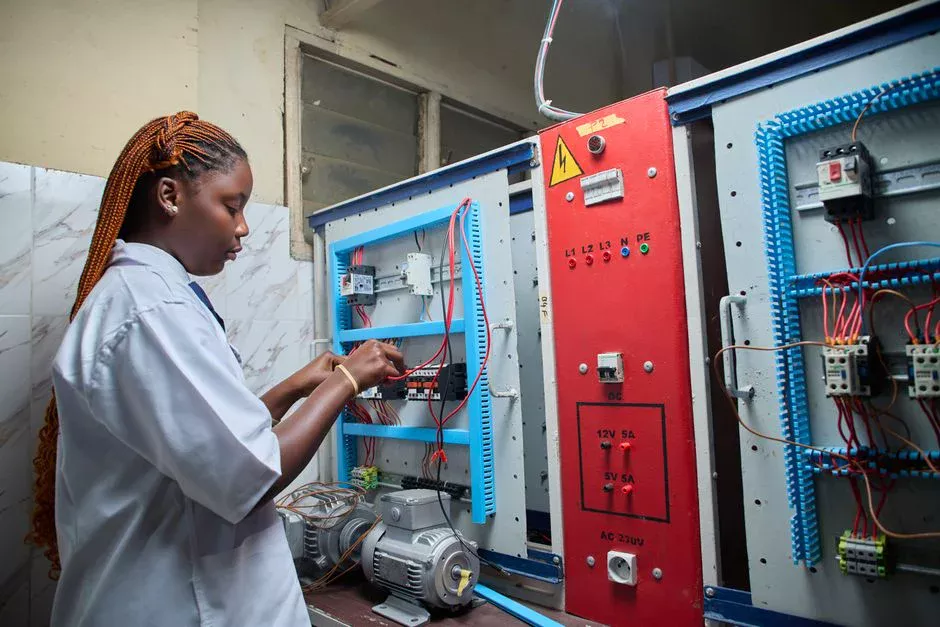
Process choice is dictated by discharge target and influent variability, not by capital preference. MBR delivers the lowest effluent BOD and TSS — typically BOD ≤ 5 mg/L and TSS ≤ 5 mg/L with sub-1 μm membrane filtration — and runs a footprint roughly 60% smaller than conventional activated sludge, which matters on space-constrained food and beverage sites in the São Paulo metropolitan area. SBR handles variable flows well (a slaughterhouse with batch discharges or a seasonal fruit processor), accepts higher CAPEX in automation, and produces BOD around 15–25 mg/L. A/O in the WSZ buried configuration is the lowest-CAPEX option for decentralized domestic sewage and small industrial flows of 1–80 m³/h, runs on biological contact oxidation, and typically needs no dedicated operator. MBBR tolerates toxic shock — a real advantage for oil and gas produced water or chemical plant effluents — at the cost of a less-polished effluent (BOD ~15–30 mg/L) than MBR. The integrated MBR package system and the WSZ buried A/O package plant together cover roughly 70% of Brazilian small-to-medium industrial and municipal decentralized demand in 2026.
| Parameter | MBR | SBR | A/O (WSZ series) | MBBR |
|---|---|---|---|---|
| Typical effluent BOD (mg/L) | ≤ 5 | 15–25 | 20–30 | 15–30 |
| Typical effluent TSS (mg/L) | ≤ 5 | 15–30 | 20–30 | 20–40 |
| Footprint index (vs. conventional AS = 1.0) | ~0.4 | ~0.6 | ~0.5 (buried) | ~0.7 |
| CAPEX index (5–500 m³/day, base = 1.0) | 1.4 | 1.1 | 1.0 | 1.2 |
| OPEX index (energy-driven) | 1.3 | 1.0 | 0.8 | 1.1 |
| Best-fit Brazilian industries | Food & beverage, pharma, mining camps, water reuse | Slaughterhouses, seasonal agro-industry | Decentralized municipal, small industrial, hospitality | Oil & gas, chemical, pulp & paper pre-treatment |
10-Point Vendor Evaluation Checklist for Brazilian-Focused Suppliers
Generic supplier directories — DirectIndustry, Made-in-China, San Lan — list manufacturers but do not verify the operational criteria a Brazilian buyer actually needs. Print this 10-point scorecard, score each candidate 0–5 per line, and disqualify any supplier that scores below 3 on the non-negotiable items. Brazilian project references and a CONAMA 430 effluent guarantee in writing are non-negotiable; SCADA and remote monitoring are nice-to-have but should still be scored because they reduce OPEX risk over the 10–15 year asset life.
| # | Criterion | Weight | Red flag if missing |
|---|---|---|---|
| 1 | Documented Brazilian project references (food, mining, oil & gas, pulp) | Non-negotiable | No commissioning photos or end-user letters |
| 2 | Portuguese-language O&M manuals, electrical drawings, P&IDs | Non-negotiable | Only English or machine-translated documents |
| 3 | Written effluent guarantee against CONAMA 430 + state annex | Non-negotiable | "Will meet local standards" with no number |
| 4 | Inmetro or equivalent electrical certification for control panels | Non-negotiable | No CE/UL/Inmetro certificate, only factory self-declaration |
| 5 | CETESB / INEA / COPAM approval track record or state permit support | Non-negotiable | No documentation of state-level submissions |
| 6 | Sea-freight experience to Santos, Suape, Itajaí, Rio Grande | High | Only inland China trucking photos |
| 7 | On-site commissioning team in Brazil or local service partner | High | "Engineer will fly in from Asia" without local backup |
| 8 | Spare-parts warehouse location and lead time (target: < 7 days) | High | Lead time 30+ days from factory |
| 9 | Remote-monitoring / SCADA capability in Portuguese | Medium | No SCADA, only local panel indicators |
| 10 | Financial stability / years in business / audited financials | Medium | < 5 years operating history, no audited statements |
Red flags to disqualify a candidate outright: a supplier that refuses to provide Portuguese documentation, has no Brazilian port delivery record, or quotes only on equipment cost without itemized freight (typically 8–12% of FOB), commissioning labor, and Brazilian import duties (II 14–18% depending on NCM code, plus ICMS 12–18% and PIS/COFINS ~9.25%). A PO that ignores landed cost is a budget rupture waiting to happen.
2026 CAPEX, OPEX and Logistics Benchmarks for Package Plants Shipped to Brazil
CAPEX for a packaged wastewater treatment plant landed at a Brazilian port in 2026 varies primarily with flow band and biological process. A 100 m³/day MBR package ships in the USD 1.8M–2.5M FOB range, plus 8–12% sea freight, plus Brazilian import duties and ICMS; a budget request to the CFO should always carry the all-in landed figure, not the factory price. OPEX is energy-driven — 45–60% of annual cost is aeration and pumping (per standard SBR OPEX references), 15–25% is sludge handling, and the remainder is labor, chemicals, and membrane replacement. For a 100 m³/day MBR plant running two shifts, expect USD 0.18–0.30 per cubic meter treated at 2026 industrial electricity tariffs in São Paulo or Minas Gerais.
Logistics drives the project schedule more than most buyers expect. Typical 60–90 days from PO to ex-factory, 30–40 days sea freight to Santos or Suape, and 2–4 weeks on-site commissioning produce a 5–7 month total project duration for a Brazilian site. Any supplier that promises "4 months total" is either shipping from a stocked skid yard or skipping the commissioning window — both are risks. For Brazilian food and beverage and pulp and paper sites with high FOG or fiber loading, pair the MBR with a DAF pre-treatment unit rated 4–300 m³/h to protect the membranes and extend CIP intervals from monthly to quarterly.
| Flow band (m³/day) | Typical process | FOB CAPEX (USD) | All-in landed (Brazil, USD) | Footprint (skid count × 40 ft) |
|---|---|---|---|---|
| 5–25 | WSZ buried A/O | 30,000–90,000 | 45,000–130,000 | 1 |
| 25–100 | A/O or MBBR | 120,000–450,000 | 170,000–620,000 | 1–2 |
| 100–300 | MBR or SBR | 600,000–1,500,000 | 820,000–2,050,000 | 2–4 |
| 300–500 | MBR + DAF pre-treatment | 1,800,000–2,500,000 | 2,450,000–3,400,000 | 4–6 |
Matching Supplier Profile to Your Brazilian Project Scenario
Use the scenario-to-spec mapping below to shortlist your final 2–3 suppliers. For Scenario A — a mining or oil and gas remote camp running 50–200 m³/day with water reuse required — specify a skid-mounted MBR followed by RO, require documented 10+ year membrane life, and prioritize suppliers with logistics experience into Northern or Northeastern Brazil (Suape, Pecém). For Scenario B — a São Paulo food and beverage plant at 100–300 m³/day discharging to a CETESB-regulated waterway — specify MBR or A/O with a DAF pre-treatment unit in front, and demand CETESB approval evidence plus Portuguese documentation. For Scenario C — a budget-constrained municipal cluster at 20–80 m³/day — specify the WSZ buried A/O configuration: lowest CAPEX, simplest operation, no dedicated operator required. For Scenario D — a pulp and paper or textile site at 200–500 m³/day with color and COD limits — specify MBR or MBBR with chemical pre-treatment, and verify the supplier has handled COD shock loads above 2,000 mg/L on a comparable site. Across all four scenarios, insist on the DF-series flat-sheet MBR cassettes or an equivalent third-party-replaceable membrane format so you are not locked into a single OEM for the next 15 years of consumables.
Frequently Asked Questions
What is the typical CAPEX per m³/day for a package STP in Brazil in 2026? For a 100 m³/day MBR package the FOB benchmark is USD 1,800–2,500 per m³/day, with an all-in landed cost in Brazil of roughly USD 2,450–3,400 per m³/day after sea freight, II, ICMS, and PIS/COFINS; smaller WSZ buried A/O plants in the 5–25 m³/day band run USD 1,200–1,800 per m³/day landed.
Do MBR package plants meet CONAMA 430 discharge limits? Yes — an MBR package sized to 100 m³/day routinely delivers BOD ≤ 5 mg/L and TSS ≤ 5 mg/L, which is well below the CONAMA 430/2011 federal default of BOD ≤ 120 mg/L and below the CETESB typical cap of BOD ≤ 40 mg/L for discharges to receiving waters.
How long do shipping and commissioning take from Asia to a Brazilian site? Allow 60–90 days ex-factory, 30–40 days sea freight to Santos, Suape, or Itajaí, and 2–4 weeks on-site commissioning — a 5–7 month total project duration is realistic for a 2026-vintage order.
What certifications must a foreign supplier provide for Brazilian import? Inmetro (or equivalent IEC/UL) certification on control panels, a Portuguese-language O&M manual, the test certificates for pressure vessels per NR-13, and a commercial invoice with NCM code that allows the buyer to pre-classify the II rate (typically 14–18%).
When should I choose MBR over conventional activated sludge for a Brazilian project? Choose MBR when the discharge target is BOD ≤ 20 mg/L (CETESB/INEA/COPAM direct discharge), when the site is space-constrained (under 60% of conventional activated sludge footprint), when water reuse or zero-liquid discharge is in scope, or when influent variability would force a large equalization tank on an activated-sludge design.