Introduction: Understanding Wastewater Treatment Costs in Tamale
Estimating wastewater treatment plant costs in Tamale involves assessing capital expenditures (CAPEX) for equipment and civil works, and operational expenses (OPEX) for energy, chemicals, and labor. While a specific 1,000 m³/day plant in Tamale was reported, its cost was not disclosed; however, general fecal sludge treatment costs can be less than €45 per capita (CAPEX) and €10 per capita/year (OPEX), with total project costs varying widely based on technology, capacity, and site-specific requirements. Tamale, as Ghana’s fourth-largest city and the capital of the Northern Region, faces a significant infrastructure gap where a population exceeding 360,000 generates vast amounts of liquid waste, yet only 7-10% receives adequate treatment. This discrepancy underscores the urgent need for investment in Ghana wastewater infrastructure to protect public health and the local environment.
Recent developments, such as the Pureco and Jospong Group partnership which established a 1,000 m³/day Septopure® wastewater treatment plant (WWTP) in Tamale, demonstrate that state-of-the-art solutions are becoming localized. However, for a municipal planner or an industrial facility owner, the primary challenge remains financial predictability. The wastewater treatment plant cost in Tamale is not a static figure; it is a dynamic calculation influenced by the nature of the influent, the strictness of Ghana EPA discharge standards, and the selected treatment methodology. To navigate this complexity, stakeholders must distinguish between the initial "sticker price" of the facility and the long-term costs required to keep the system compliant and functional.
This guide provides a structured breakdown of these costs, categorizing them into Capital Expenditure (CAPEX)—the upfront investment for design and construction—and Operational Expenditure (OPEX)—the recurring costs for daily management. By understanding these drivers, project managers can move beyond high-level estimates toward actionable budgets that reflect the realities of the Tamale market.
Capital Expenditure (CAPEX): Initial Investment Breakdown for WWTPs in Tamale
Capital expenditure for wastewater treatment in Ghana typically includes a 10-15% contingency buffer to account for fluctuating material costs and site-specific logistical challenges. The initial investment is heavily weighted toward technology procurement and the physical construction of the facility. For project managers, understanding the sewage treatment plant price requires a granular look at the components that make up the total CAPEX. Equipment costs represent the largest portion of this investment, encompassing primary screening units, aeration blowers, clarifiers, and advanced filtration systems. For instance, an Underground Package Sewage Treatment Plant (WSZ Series) provides a compact, integrated solution that can significantly reduce the complexity of on-site assembly compared to traditional built-in-place systems.
Civil works and infrastructure development in Tamale present unique cost drivers. This includes land acquisition, extensive excavation, and the construction of reinforced concrete tanks or foundation pads for modular units. Geological surveys are mandatory to determine soil stability, as the region's soil characteristics can dictate the depth and reinforcement required for foundations. Engineering and design fees also contribute to CAPEX, covering feasibility studies, detailed hydraulic modeling, and the legal costs associated with securing permits from the Water Resources Commission and the Environmental Protection Agency (EPA) of Ghana. installation and commissioning involve specialized labor, often requiring expert technicians to ensure that membrane systems, such as an Integrated MBR Membrane Bioreactor System, are calibrated correctly for the local climate.
| CAPEX Component | Description | Typical % of Total CAPEX |
|---|---|---|
| Equipment Procurement | Pumps, blowers, MBR modules, screens, and control panels. | 40% - 50% |
| Civil Works | Excavation, concrete structures, piping, and site preparation. | 25% - 35% |
| Engineering & Design | Feasibility studies, technical drawings, and permitting. | 5% - 10% |
| Installation & Commissioning | On-site assembly, electrical wiring, and performance testing. | 5% - 10% |
| Contingency Fund | Buffer for unforeseen site conditions or price inflation. | 10% - 15% |
While benchmarks suggest that a 1,000 m³/day plant might cost approximately Rs 15 million (roughly $180,000 USD) in some international contexts, localized costs in Tamale are often higher due to the importation of specialized components and the logistical costs of transporting heavy equipment to the Northern Region. For a more detailed comparison of regional pricing, stakeholders can review the package wastewater treatment plant costs in India to understand how global supply chains influence local pricing structures.
Operational Expenditure (OPEX): Recurring Costs for Sustainable WWTP Operation in Ghana
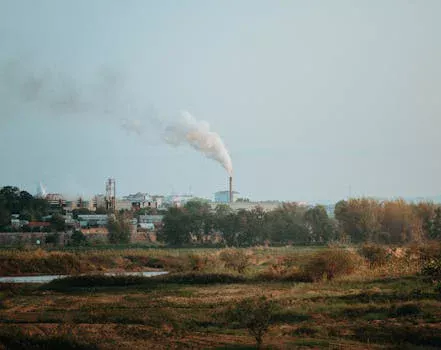
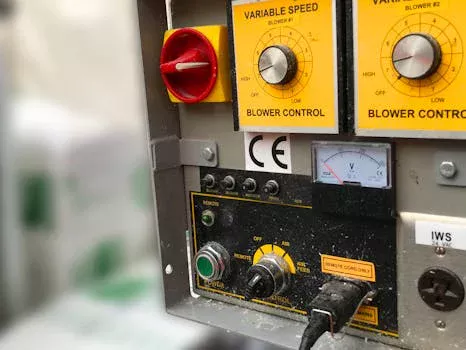
Recurring operational costs for fecal sludge treatment in sub-Saharan Africa are benchmarked at less than €10 per capita annually, though industrial applications often see higher figures due to chemical intensity. OPEX is the critical factor that determines whether a municipal WWTP cost remains sustainable over its 20-year lifespan. Energy consumption is the most significant recurring expense, particularly for biological processes that require constant aeration. In MBR systems, the energy required for membrane scouring and high-pressure pumping must be balanced against the superior effluent quality produced. Effective energy management often involves the use of Variable Frequency Drives (VFDs) and automated control systems to match power use with actual flow rates.
Chemical costs are another vital component, especially for industrial facilities in Tamale that may require specialized treatment for high-strength waste. This includes coagulants for solids removal, pH adjusters, and disinfectants. Utilizing an automatic chemical dosing system ensures precise application, preventing the waste of expensive reagents and ensuring compliance with discharge limits. For disinfection, a chlorine dioxide generator offers a reliable method for pathogen removal, which is essential if the treated water is intended for irrigation or industrial reuse. Additionally, sludge management—the process of dewatering, transporting, and disposing of the solid byproduct—can account for up to 30% of total OPEX. Implementing a plate and frame filter press can significantly reduce these costs by decreasing the volume of sludge that requires disposal.
| OPEX Category | Primary Cost Drivers | Estimated Annual Impact |
|---|---|---|
| Energy / Electricity | Aeration blowers, submersible pumps, and lighting. | High |
| Chemical Reagents | Flocculants, disinfectants, and nutrient supplements. | Medium |
| Labor & Staffing | Certified operators, security, and maintenance technicians. | Medium |
| Maintenance & Parts | Membrane replacement, pump seals, and sensor calibration. | Medium |
| Sludge Disposal | Dewatering, transport fees, and landfill tipping fees. | High |
Labor costs in Tamale must account for both routine daily operation and periodic skilled maintenance. While automated systems reduce the headcount required on-site, they necessitate a higher level of technical training for the staff. Regular monitoring and reporting to the Ghana EPA also incur costs for laboratory testing and administrative compliance, ensuring the Tamale sanitation investment remains legally protected.
Key Factors Influencing Wastewater Treatment Plant Costs in Tamale
The relationship between treatment capacity and total plant cost is non-linear, as economies of scale generally reduce the cost per cubic meter as flow rates increase. When planning industrial wastewater solutions in Tamale, several technical and environmental variables dictate the final budget. The first factor is treatment capacity (flow rate); while a small 50 m³/day package plant for a hotel has a lower total price than a 5,000 m³/day municipal facility, the cost per liter treated is significantly higher for the smaller system. This is due to the fixed costs of control systems, engineering, and mobilization that apply regardless of the plant's size.
Influent wastewater quality is the second major driver. Municipal sewage is relatively predictable, but industrial wastewater from food processing or manufacturing in the Northern Region may contain high levels of Chemical Oxygen Demand (COD), fats, oils, and grease (FOG). Such contaminants require robust pre-treatment, such as a Dissolved Air Flotation (DAF) System, which adds to both CAPEX and OPEX. the required effluent quality set by Ghana's regulatory bodies influences technology selection. If the goal is basic discharge into a water body, a Conventional Activated Sludge (CAS) system may suffice. However, if the project aims for high-grade reuse or must meet stringent nitrogen and phosphorus limits, an Integrated MBR Membrane Bioreactor System becomes necessary, increasing the initial investment in exchange for a smaller footprint and higher water purity.
| Factor | Low-Cost Scenario | High-Cost Scenario |
|---|---|---|
| Influent Strength | Domestic sewage (Low BOD/COD) | Industrial waste (High COD/TSS/FOG) |
| Effluent Standard | Basic discharge (Irrigation) | High-purity reuse (Potable/Industrial) |
| Site Conditions | Flat, stable soil near power grid | Sloped terrain, unstable soil, remote location |
| Technology Choice | Stabilization ponds or CAS | Membrane Bioreactor (MBR) or SBR |
| Automation Level | Manual operation | Fully automated PLC/SCADA systems |
Site-specific conditions in Tamale also play a role. Proximity to the power grid and existing water lines can reduce infrastructure costs, while remote sites may require investment in solar power arrays or long-distance piping. Additionally, the local climate, characterized by high temperatures and distinct wet/dry seasons, affects biological treatment rates and evaporation levels in open-air systems, potentially requiring specialized tank covers or cooling mechanisms to maintain process efficiency.
Cost Estimation Methodology & Maximizing ROI for Tamale Projects
A comprehensive Life Cycle Cost Analysis (LCCA) reveals that initial capital outlay often represents only 20-30% of the total cost of a wastewater treatment plant over a 20-year operational lifespan. For investors in Tamale, the goal should be to minimize the "Total Cost of Ownership" rather than just the initial CAPEX. The methodology for accurate cost estimation begins with a thorough feasibility study and wastewater characterization. Without knowing exactly what is in the water, any quote provided by a supplier is merely an educated guess. A detailed Request for Proposal (RFP) should include daily flow averages, peak flow variations, and specific contaminant concentrations to ensure comparable bids.
Maximizing Return on Investment (ROI) in the Ghanaian context often involves leveraging automation and energy-efficient equipment. While automated systems increase the wastewater treatment plant cost breakdown and ROI analysis in the short term, they prevent costly equipment failures and reduce chemical waste. project managers should explore resource recovery. In Tamale's agricultural landscape, treated effluent can be sold or used for irrigation, and stabilized sludge can be processed into organic fertilizer, creating revenue streams that offset OPEX. For a deeper understanding of how these financial models work in similar emerging markets, a B2B pricing guide for wastewater treatment plants can provide valuable comparative data on ROI timelines and financing structures.
Frequently Asked Questions
What is the typical cost range for a small wastewater treatment plant in Tamale?
For a small decentralized system (50-200 m³/day), costs typically range from $40,000 to $120,000 depending on the technology used. Package plants like the Underground Package Sewage Treatment Plant (WSZ Series) are often the most cost-effective for these capacities due to reduced civil works.How does the cost of a sewage treatment plant for industrial use compare to a municipal one?
Industrial plants are generally more expensive per cubic meter of capacity because they require specialized pre-treatment stages (like DAF units) to handle high-strength pollutants that would overwhelm a standard municipal biological process.What are the main operational costs to consider for a WWTP in Ghana?
The primary expenses are electricity for aeration and pumping, followed by chemical dosing and the labor required for maintenance. Sludge removal is also a significant recurring cost that is often overlooked during the budgeting phase.Can package wastewater treatment plants reduce overall costs in Tamale?
Yes. Package plants reduce costs by minimizing on-site construction time, lowering engineering fees through standardized design, and requiring a smaller physical footprint, which reduces land acquisition and preparation costs.What are the financing options available for wastewater treatment projects in Ghana?
Financing often comes from a mix of municipal bonds, international development grants (such as those from the World Bank or African Development Bank), and private-public partnerships (PPPs) like the one seen in the Tamale Pureco project.
Related Equipment
The following HydropureWater products are engineered for the wastewater challenges discussed above:
- Underground Package Sewage Treatment Plant (WSZ Series) — view specifications, capacity range, and technical data
- Integrated MBR Membrane Bioreactor System — view specifications, capacity range, and technical data
- Dissolved Air Flotation (DAF) System — view specifications, capacity range, and technical data
Need a customized solution? Request a free quote with your specific flow rate and pollutant parameters.