Navigating 'Hawalli' vs. 'Hawaii': Why Your Search Results May Be Misleading
Hawalli is a major governorate in the State of Kuwait, distinct from the American state of Hawaii, which often dominates search engine results for wastewater infrastructure. For a procurement specialist or facility manager in the Middle East, this geographical confusion creates a significant information gap. Most top-ranking search results discuss municipal projects in Hawaii, USA, such as the $337 million Hilo project or the $517 million Honouliuli expansion. These are massive public utility undertakings funded by US tax dollars and designed for entire cities, bearing little relevance to the B2B needs of an industrial facility in Kuwait.
The cost of a wastewater treatment plant in Hawalli, Kuwait, for industrial or commercial use, typically ranges from $50,000 for compact package units up to several million dollars for large-scale MBR or DAF systems, excluding civil works. Key factors include flow rate, required effluent quality, technology choice, and operational expenses, which can constitute 70-80% of the total lifecycle cost. Unlike the municipal headlines from the USA, a private project in Hawalli requires a specific focus on industrial effluent treatment Hawalli standards, local environmental regulations, and the unique challenges of the Kuwaiti climate and utility costs. Establishing this distinction is the first step in creating an accurate budget for wastewater treatment Kuwait projects.
Understanding Wastewater Treatment Plant Costs: CAPEX vs. OPEX in Hawalli
Capital expenditure (CAPEX) for a wastewater treatment plant covers the procurement of physical assets, while operational expenditure (OPEX) accounts for the ongoing costs required to meet Kuwaiti environmental discharge standards. For businesses in Hawalli, the initial price tag of the equipment is often the focus during procurement, but a wastewater treatment plant cost breakdown in the Middle East reveals that the long-term financial commitment is heavily weighted toward operation. CAPEX includes the design, engineering, equipment manufacturing, transportation to Kuwait, and the installation of the system. It also covers necessary civil works, such as concrete tank construction or underground excavation for package plants.
Operational expenditure (OPEX) is the recurring cost of keeping the system running. In Hawalli's industrial sectors, this includes electricity to power blowers and pumps, chemical reagents for coagulation and pH adjustment, labor for system monitoring, and the periodic replacement of consumable parts like membranes or filter cloths. Crucially, OPEX also includes sludge disposal and laboratory testing to ensure compliance with the Environment Public Authority (EPA) of Kuwait. Over a 20-year lifespan, OPEX typically accounts for 70% to 80% of the total cost of ownership. Therefore, a system with a lower CAPEX but high energy demand may eventually prove more expensive than a high-efficiency system with a higher upfront cost. Understanding this wastewater CAPEX OPEX relationship is vital for accurate water treatment system investment Hawalli planning.
Key Factors Influencing WWTP Cost for Industrial & Commercial Projects in Hawalli
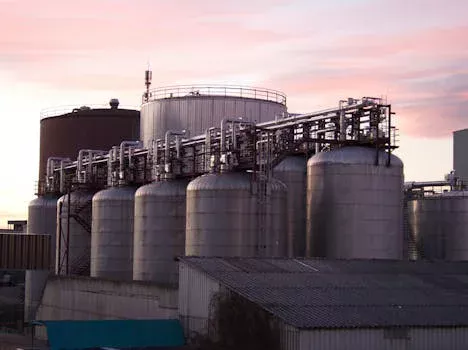
The hydraulic loading rate, measured in cubic meters per day, serves as the primary engineering variable that dictates the size of treatment tanks and the capacity of mechanical equipment. A facility producing 50 m³ of wastewater per day will require significantly smaller infrastructure than a large industrial site producing 500 m³ per day. However, volume is not the only driver; the concentration of contaminants—measured as Biochemical Oxygen Demand (BOD), Chemical Oxygen Demand (COD), and Total Suspended Solids (TSS)—directly impacts the complexity of the treatment process. High-strength industrial wastewater requires more intensive aeration or specialized chemical pretreatment, which increases both CAPEX for larger equipment and OPEX for energy and chemicals.
Local regulations in Kuwait also play a decisive role in pricing. If the treated water is intended for discharge into the public sewer system, the standards are generally less stringent than if the water is intended for reuse in landscaping or cooling towers. Achieving "reuse quality" effluent requires tertiary treatment stages, such as Ultrafiltration (UF) or Reverse Osmosis (RO), which can increase project costs by 30-50%. Additionally, the site conditions in Hawalli—such as soil stability and proximity to existing utility lines—will influence the cost of civil works. Automation levels also fluctuate the price; a fully automated PLC-controlled system reduces the need for manual labor but increases the initial sewage treatment plant pricing Middle East estimates.
| Cost Factor | Impact on CAPEX | Impact on OPEX | Description |
|---|---|---|---|
| Flow Rate (m³/day) | High | Medium | Determines tank size, pump capacity, and footprint. |
| Effluent Quality Standards | High | High | Stricter standards (reuse) require MBR or RO stages. |
| Influent Strength (BOD/COD) | Medium | High | High levels increase aeration energy and chemical use. |
| Level of Automation | Medium | Low (Reduction) | PLC/SCADA increases upfront cost but lowers labor costs. |
| Sludge Management | Low | Medium | Dewatering equipment cost vs. ongoing disposal fees. |
Cost Comparison of Common Industrial Wastewater Treatment Systems for Hawalli
Membrane Bioreactor (MBR) systems typically require a higher initial capital investment compared to conventional activated sludge but offer a 50-70% reduction in physical footprint. For commercial developments in Hawalli where land value is high, the compact nature of HydropureWater MBR Membrane Bioreactor systems provides a significant advantage. These systems combine biological treatment with membrane filtration, producing high-quality effluent suitable for reuse. While the CAPEX is higher due to the cost of the membranes, the high level of automation and reduced sludge production can optimize long-term OPEX. You can find a detailed comparison of MBR and MBBR technologies to help determine which biological process fits your budget constraints.
For smaller commercial applications or residential complexes, HydropureWater WSZ Series underground package sewage treatment plants offer a package plant Kuwait cost advantage. These integrated units are pre-engineered and can be installed underground, minimizing civil works and preserving surface area for parking or landscaping. In industrial settings involving high levels of oils, fats, or suspended solids, HydropureWater Dissolved Air Flotation (DAF) systems are often used as a primary treatment stage. DAF systems require an investment in air compression and chemical dosing equipment, but they are essential for protecting downstream biological processes and avoiding municipal fines. It is helpful to compare DAF clarifiers with other sedimentation technologies when evaluating pretreatment costs. Finally, managing the resulting waste requires HydropureWater plate and frame filter presses for sludge dewatering, which reduces the volume of waste for disposal and lowers OPEX.
| System Type | Typical Capacity | Relative CAPEX | Primary Use Case |
|---|---|---|---|
| Integrated Package (WSZ) | 1 - 80 m³/h | Lower | Small commercial, hotels, residential. |
| DAF System | 4 - 300 m³/h | Medium | Food processing, oil & grease removal. |
| MBR System | 10 - 2,000 m³/day | Higher | High-quality reuse, limited space sites. |
| Sludge Filter Press | 1 - 500 m² area | Medium | Dewatering for all industrial WWTPs. |
Estimating Your Project Cost: A Procurement Framework for Hawalli Businesses
Accurate project estimation requires a detailed laboratory analysis of the raw wastewater to identify specific contaminants that may necessitate specialized pretreatment stages. Without a clear understanding of the influent—such as the presence of heavy metals, high salinity, or volatile organic compounds—a facility risks purchasing a system that is either under-designed (leading to regulatory fines) or over-designed (wasting capital). The procurement process should begin with an initial assessment of flow volumes and space availability. Once the wastewater characteristics are defined, businesses should engage with manufacturers to develop a preliminary design and budget.
When issuing a Request for Quotation (RFQ), it is essential to specify the desired level of automation and the specific Kuwaiti environmental standards that must be met. A thorough package plant Kuwait cost evaluation should include not just the equipment price, but also the cost of shipping, commissioning, and operator training. Procurement specialists should perform a lifecycle cost analysis, comparing different technological approaches over a 15-year horizon. This approach ensures that the selected industrial effluent treatment Hawalli solution provides the best value, balancing upfront wastewater CAPEX OPEX considerations with reliable performance and compliance.
Return on Investment (ROI) and Long-Term Value of Wastewater Treatment in Hawalli
Investing in high-efficiency wastewater treatment allows Kuwaiti businesses to mitigate the rising costs of industrial water procurement and avoid significant financial penalties for environmental non-compliance. In Hawalli, where water is a precious resource, the ability to reuse treated effluent for non-potable applications—such as irrigation, dust suppression, or industrial cleaning—provides a direct and measurable ROI. By reducing the volume of fresh water purchased from the municipal grid, companies can significantly lower their utility bills, often recouping the cost of advanced systems like MBR within a few years.
Beyond direct financial savings, a modern wastewater treatment plant enhances corporate social responsibility (CSR) profiles and ensures business continuity. As environmental regulations in Kuwait continue to tighten, having a robust treatment system in place protects the facility from sudden operational shutdowns or legal challenges. systems equipped with HydropureWater automatic chemical dosing systems and high-efficiency motors reduce energy and reagent waste, further improving the ROI. Ultimately, a well-planned water treatment system investment Hawalli is not just a regulatory necessity but a strategic asset that stabilizes operational costs and supports sustainable growth.
Frequently Asked Questions

What is the average cost for a small industrial wastewater treatment plant in Hawalli?For a small-scale industrial or commercial facility in Hawalli, a compact package treatment plant typically starts around $50,000. However, the total price can increase based on the complexity of the pollutants and the need for specialized civil works or tertiary treatment stages.
How much do operational costs contribute to the total WWTP cost?Operational expenditures (OPEX) generally account for 70% to 80% of the total lifecycle cost of a wastewater treatment plant over 20 years. This includes power, chemicals, labor, and maintenance.
What are the main factors that increase the cost of a wastewater treatment plant?The primary cost drivers are the daily flow volume, the concentration of contaminants (like high COD/BOD), and the required effluent purity. Systems designed for water reuse are more expensive than those designed for basic sewer discharge.
Can wastewater treatment plants reduce water utility bills?Yes. By treating wastewater to a standard suitable for reuse in irrigation or cooling processes, facilities in Hawalli can significantly reduce their consumption of expensive municipal water, leading to a faster ROI.
What permits are required for a wastewater treatment plant in Kuwait?Businesses must obtain approvals from the Kuwait Environment Public Authority (EPA). This involves submitting technical designs and environmental impact assessments to ensure the system meets national discharge standards.