What Bandung Industrial Buyers Actually Need From a WWTP Manufacturer
A wastewater treatment plant manufacturer in Bandung must deliver an engineered system matched to local industrial effluent — typically high-COD textile or food-processing wastewater — and compliant with Indonesia's PP No. 22/2021 and KLHK discharge standards. For 2026 projects, viable manufacturers offer modular MBR, SBR, or A2O packages sized 10–2,000 m³/day with full PLC automation, on-site commissioning, and IDR-denominated lifecycle support. The real job is not to buy a tank; it is to buy a guaranteed effluent curve, a documented process design, and a service footprint that survives the next five years of operation.
Bandung's industrial geography drives the engineering brief. Textile and garment finishing concentrate in Cimahi, Rancaekek, and Majalaya, where dye bath and print wash effluent drives COD to 5,000 mg/L or higher. Food and beverage plants cluster around Rancaekek and the southern corridor with COD 2,000–8,000 mg/L and FOG above 500 mg/L during peak campaigns. Chemical processors add pH excursions and salinity that a domestic-grade packaged unit will not survive. To anchor capacity thinking, the PDAM Tirtawening Badak Singa WTP treats 172,800 m³/d of municipal water from Cisangkuy and Cikapundung rivers (PDAM field data, 2016) — a useful reminder that even a single Bandung industrial estate can exceed 5,000 m³/d, while a packaged 50–500 m³/d modular skid remains the realistic envelope for most factory discharge permits.
That scope is what separates a manufacturer from a reseller. A factory-direct supplier such as HydropureWater, with skid fabrication, PLC programming, and on-site commissioning in West Java, matches the buyer profile: a plant manager or project engineer who needs one throat to choke when the discharge permit is at risk. Resellers trading imported skids cannot offer that.
Bandung Wastewater Characteristics and 2026 Regulatory Envelope
Any manufacturer shortlist in Bandung must be scored against the actual influent profile the plant will feed it, not a textbook municipal average. Textile effluent in the Cimahi–Majalaya corridor typically arrives at COD 1,500–5,000 mg/L, BOD 800–2,500 mg/L, pH 6–9, temperature 30–45°C, and color 200–800 Pt-Co from reactive and disperse dye processes. Food and beverage streams run hotter in organic load — COD 2,000–8,000 mg/L, BOD 1,200–4,000 mg/L, FOG 200–600 mg/L — with batch-driven flow swings that punish under-sized equalization. Chemical plants layer in pH excursions, sulfate, and occasional solvent breakthrough that the equalization tank must survive before biological treatment.
The discharge envelope is set by PP No. 22/2021 (Indonesian Government Regulation No. 22 of 2021 on Environmental Management) and the KLHK Minister of Environment Regulation on industrial wastewater quality standards. The parameters a manufacturer must guarantee on the discharge line are COD, BOD, TSS, pH, ammonia, sulfide, color, temperature, and flow — with daily and instantaneous limits enforced by DLH West Java inspectors using SNI 6989 testing methods. Ask any vendor which SNI methods their guarantee covers, and whether their sampling protocol matches what DLH will use during the next audit.
| Parameter | Textile influent (typical) | Food & beverage influent (typical) | KLHK industrial discharge limit (PP 22/2021 class) |
|---|---|---|---|
| COD (mg/L) | 1,500–5,000 | 2,000–8,000 | ≤100–250 (activity-dependent) |
| BOD (mg/L) | 800–2,500 | 1,200–4,000 | ≤50–150 |
| TSS (mg/L) | 200–800 | 300–1,200 | ≤50–200 |
| pH | 6–9 | 5–9 | 6.0–9.0 |
| FOG (mg/L) | — | 200–600 | ≤15–25 |
| Color (Pt-Co) | 200–800 | — | — (activity-specific) |
| Temperature (°C) | 30–45 | 30–40 | ≤38 |
Bandung's ambient temperature of 23–28°C keeps biological kinetics in the mesophilic band, but incoming effluent above 40°C from textile dye baths still requires quench cooling upstream of any bioreactor — another scope item the manufacturer must price in.
Process Selection: MBR, SBR, A2O, or Hybrid for Bandung Effluents
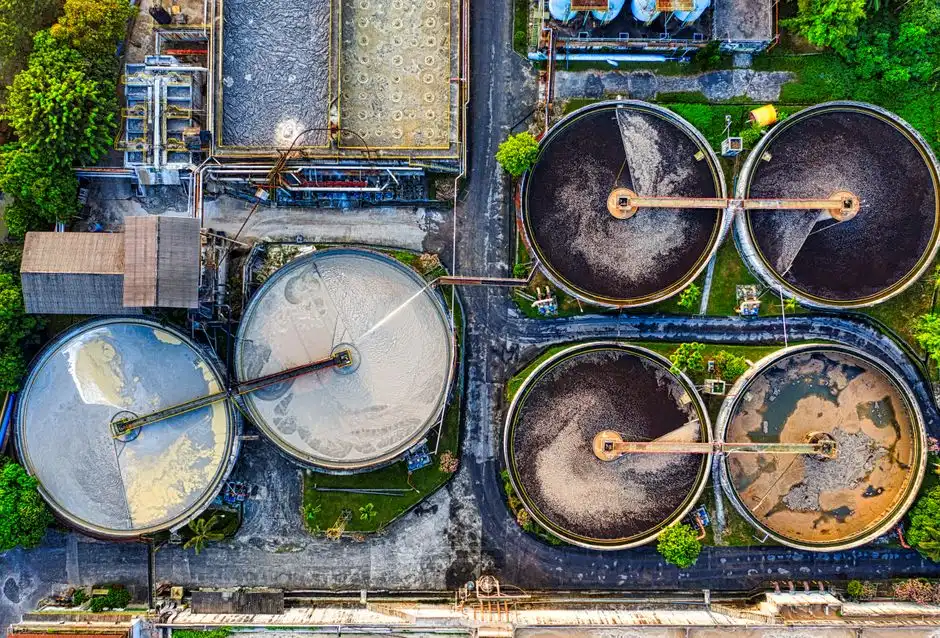
Process choice drives 60–70% of the lifetime cost of a Bandung WWTP, so it must be owned by the buyer before the manufacturer quote arrives. Four configurations cover the majority of West Java industrial cases.
MBR (Membrane Bioreactor) delivers effluent COD ≤50 mg/L and TSS ≤5 mg/L on a footprint roughly 60% smaller than conventional activated sludge, which makes it the default for space-constrained Cimahi sites and for plants targeting water reuse on the rinse line. An integrated MBR membrane bioreactor system sized 50–500 m³/day is the common packaged envelope. MBR also rides the regulatory trend toward tighter TSS and coliform limits under PP 22/2021 monitoring.
SBR (Sequencing Batch Reactor) runs 15–25% lower CAPEX than MBR and handles batch-driven food and beverage flows of 10–500 m³/day well, at the cost of a larger equalization footprint and lower effluent polish. Pair SBR with a 2026 SBR operating cost breakdown to verify the energy penalty from intermittent aeration against the MBR alternative before you commit.
A2O (Anaerobic-Anoxic-Oxic) is the right answer when nitrogen or phosphorus discharge limits are tight under KLHK monitoring, particularly for textile finishing with ammonia-laden dye effluent. It trades footprint for biological nutrient removal, and it should be specified with online NH₃-N and PO₄ probes if the buyer expects permit renewals to tighten.
Hybrid Anaerobic + MBR — typically a UASB or IC reactor upstream of an MBR polish — is the configuration for high-strength textile effluent above 3,000 mg/L COD. The anaerobic stage cuts aeration energy 40–60% versus a standalone aerobic train, while the MBR polish guarantees the discharge curve. For a broader process perspective, the 2026 municipal sewage treatment engineering guide walks through the same selection logic at municipal scale, which translates directly to industrial applications.
| Process | Effluent COD (mg/L) | Effluent TSS (mg/L) | Best-fit Bandung influent | Footprint vs. CAS | CAPEX vs. MBR |
|---|---|---|---|---|---|
| MBR | ≤50 | ≤5 | Textile, F&B, water reuse | ~40% | Baseline |
| SBR | ≤80 | ≤20 | F&B 10–500 m³/day, batch flow | ~60% | −15 to −25% |
| A2O | ≤60 | ≤20 | Textile with N/P limits | ~70% | −5 to −10% |
| UASB + MBR | ≤50 | ≤5 | Textile COD >3,000 mg/L | ~50% | +10 to +20% |
Each row maps to a discharge-compliance outcome, not a brand. The buyer who walks into a vendor meeting with this table in hand has already de-risked the process scope.
Manufacturer Evaluation Matrix: 7 Criteria Bandung Buyers Should Score
Seven criteria, weighted against the buyer's actual risk exposure, will filter a long vendor list down to two or three defensible bidders. Weight the first three criteria heaviest — they are the ones that determine whether a system survives the first 24 months of operation.
| # | Criterion | What to verify | Red flag |
|---|---|---|---|
| 1 | In-house process engineering vs. reseller | Own fabrication shop, own process PE, no middleman | Sends you a Chinese datasheet with no Indonesian P&ID |
| 2 | Indonesia service footprint | Local commissioning crew in West Java, IDR-denominated support contract | Agent network only, no service engineers |
| 3 | FAT/SAT capability | Factory Acceptance Test video, on-site Site Acceptance Test in Bandung | No FAT offered, or "we'll test at site" |
| 4 | PLC/SCADA platform | Remote monitoring, alarm logging, trending — see the WSZ series underground packaged sewage treatment plant spec for a representative full-automation baseline | Hard-wired relays, no remote access |
| 5 | Containerized/modular lead time | 6–8 weeks ex-factory for 50–200 m³/day skids | >16 weeks, or no fixed ship date |
| 6 | Spare parts inventory in IDR | 5-year priced spare parts list, local stocking | Spare parts priced in USD with 12-week lead |
| 7 | Documented reference projects | Operating textile or F&B plant at comparable influent loading in tropical climate | Only municipal or cold-climate references |
HydropureWater, as a manufacturer, owns the fabrication, automation, and FAT process, and ships containerized systems at the 6–8 week ex-factory window. Imported OEMs without Indonesian service engineers will score low on criteria 2 and 6, which is usually the deciding factor in a 24-month OPEX comparison.
2026 CAPEX and OPEX Benchmarks for a Bandung WWTP Project
IDR-denominated benchmarks stop a vendor quote from drifting by 30% in either direction. The figures below are typical 2026 turnkey ranges for a packaged, containerized, PLC-automated system — civil works excluded — and they assume a tropical-climate textile or F&B application with full equalization and sludge handling.
| Capacity (m³/day) | CAPEX range (IDR, 2026) | OPEX range (IDR/month, 2026) | Typical configuration |
|---|---|---|---|
| 50 | 1.5–3.2 billion | 55–90 million | SBR or compact MBR, skid-mounted |
| 100 | 2.8–6.5 billion | 95–160 million | MBR or SBR + equalization |
| 500 | 14–32 billion | 420–780 million | A2O or UASB+MBR, full civil |
OPEX is dominated by aeration energy at 45–60% of the monthly bill, with sludge hauling 15–25%, chemicals 8–12%, and labor 10–15% rounding out the load. A 2026 OPEX breakdown for MBBR spare parts and consumables gives the consumable-side detail. Currency volatility matters: foreign-manufactured systems priced in USD expose the buyer to a 5–15% IDR swing during a 6-month build, while Indonesia-fabricated modular units priced in IDR lock the budget. Add 10–15% contingency for import duty and AML/CFTA paperwork on any imported skid.
Pre-Purchase Checklist: 12 Questions to Ask Any Bandung WWTP Manufacturer
Twelve questions, in order, that any serious vendor should answer without flinching. Bring this list to the meeting.
- Can you provide a guaranteed effluent performance curve tied to my actual influent characterization — not a generic datasheet?
- What is your scope boundary: civil, mechanical, electrical, PLC, and commissioning — and what is explicitly excluded?
- Is your system skid-mounted, pre-wired, and factory-tested before shipment?
- What PLC/SCADA platform do you use, and do you offer remote monitoring and alarm escalation?
- What is the ex-factory lead time for a 50 / 100 / 500 m³/day system in 2026?
- Can you provide an IDR-denominated spare parts list with 5-year fixed pricing?
- Do you have a reference site in Bandung or West Java — or a comparable tropical textile/F&B plant — that I can visit?
- What warranty terms apply to membranes, blowers, pumps, and the control panel?
- What is your response-time SLA for a Bandung site, in hours, for both remote and on-site attendance?
- How is the system sized for peak wet-weather flow and shock organic loads?
- What is the chemical dosing philosophy, and do you supply a PLC-controlled chemical dosing system sized to my effluent?
- What sludge dewatering solution do you recommend, and is a plate and frame filter press part of the scope?
A vendor who answers all twelve on the first visit is shortlist-worthy. A vendor who cannot produce a guaranteed effluent curve is not.
Frequently Asked Questions
What discharge limits apply to an industrial WWTP in Bandung in 2026? Industrial discharge is governed by PP No. 22/2021 and the KLHK Minister of Environment Regulation on industrial wastewater quality standards. Typical activity-class limits are COD ≤100–250 mg/L, BOD ≤50–150 mg/L, TSS ≤50–200 mg/L, pH 6.0–9.0, and temperature ≤38°C, with ammonia, sulfide, and color limits set per activity class. DLH West Java audits against SNI 6989 sampling methods.
How long does a packaged modular WWTP take to deliver in 2026? A 50–200 m³/day containerized or skid-mounted system from a manufacturer with ex-factory inventory typically ships 6–8 weeks after purchase order, plus 2–4 weeks for site installation and commissioning. Larger 500 m³/day systems or units with full civil works run 16–24 weeks end-to-end.
What is a realistic 2026 CAPEX for a 100 m³/day WWTP in Bandung? For a packaged, PLC-automated MBR or SBR system with equalization, expect IDR 2.8–6.5 billion excluding civil works, and IDR 95–160 million/month OPEX. Civil works, permitting, and DLH commissioning fees add 15–25% on top.
Should I choose MBR or SBR for a Bandung textile or F&B plant? MBR if space is constrained, water reuse is a target, or discharge TSS must stay below 10 mg/L. SBR if the budget is tighter, the flow is below 500 m³/day, and batch variability is acceptable. For high-strength textile COD above 3,000 mg/L, a hybrid UASB+MBR cuts lifetime energy cost by 40–60% versus a single-stage aerobic train. See the decentralized wastewater treatment trends for 2026 for the broader market context.
What makes HydropureWater a manufacturer rather than a reseller for Bandung buyers? HydropureWater owns the fabrication, PLC programming, FAT, and on-site commissioning workflow, with documented reference installations at comparable influent loading. That single-throat accountability — design, fabrication, automation, commissioning, and IDR-denominated spare parts support — is the structural reason to evaluate a manufacturer over a trading house for any 2026 Bandung WWTP project.