Why Sourcing a WWTP in Indonesia Is Different in 2026
Your shift supervisor at the Surabaya plant has just sent a photo of foam rolling out of the equalization tank. The influent BOD is 1,800 mg/L, the palm-oil mill is running at 110% of design flow, and you have three weeks to issue a purchase order for a new IPAL. This is the buying environment the rest of this guide is built around: tight timelines, local discharge limits that can be stricter than the national floor, and a supplier list that mixes Chinese EPCs, local system integrators, and Japanese–European license holders.
Indonesia uses the term IPAL (Instalasi Pengolahan Air Limbah) for WWTP, and every document in the RFQ — datasheets, P&IDs, the BAP commissioning report — should be titled accordingly so the regulator and the notary read the same artefact. The national industrial effluent standard is Permen LHK No. 68/2016, which sets BOD at 30 mg/L, COD at 100 mg/L, TSS at 30 mg/L, and oil & grease at 5 mg/L (with category-specific nitrogen and phosphate limits). Provincial governors can and do impose tighter numbers: Pergub DKI Jakarta 122/2005, for example, pushes municipal IPAL discharge to BOD 20–30 mg/L and COD 40–60 mg/L depending on receiving-water class, and several East Java and Riau Pergub follow the same pattern.
Climate shapes the design. Tropical ambient temperatures of 27–33 °C accelerate biological kinetics — the standard BOD removal rate constant k roughly doubles between 15 °C and 30 °C, so a reactor sized for temperate Europe can be shrunk by 30–40% in Java. The downside is odor and vector control: sulfide generation in upstream gravity thickeners and rising sludge in secondary clarifiers both get worse above 30 °C, and the design has to budget for covered tanks and deodorization. Finally, the 2026 commissioning cycle for the Jakarta Bay reclamation plants and the Suez/Ulu Pandan catchment upgrade is pulling membrane and ENR (enhanced nutrient removal) capacity into Indonesia, which is good for delivery times on PVDF modules and BNR skids but tightens pricing for the rest of 2026.
The Four Process Trains Most Indonesian Suppliers Quote
Almost every proposal you receive in 2026 will be one of four process trains, sometimes combined. The job is to match the train to your flow band and influent matrix before you look at price.
The WSZ buried package plant combines anoxic/oxic contact oxidation, sedimentation, and chlorination inside a single carbon-steel or FRP tank that is buried below grade. It is sized for 1–80 m³/h, runs unattended, and is the default for hotels, resorts, hospitals, and residential estates where footprint and visual impact matter more than effluent quality. Typical effluent is BOD 20–30 mg/L, TSS ≤30 mg/L, which clears Permen LHK 68/2016 but does not meet reuse targets. The buried WSZ package sewage treatment plant is the canonical example.
The MBR (membrane bioreactor) couples a conventional activated-sludge tank with a submerged PVDF or flat-sheet membrane module rated at 0.1 µm nominal pore size. Solids stay in the bioreactor, so the clarifier is removed and the footprint drops by roughly 60% versus conventional activated sludge at the same flow. An integrated MBR membrane bioreactor system typically covers 10–2,000 m³/day and produces reuse-grade effluent (BOD ≤5 mg/L, TSS ≤1 mg/L, turbidity ≤1 NTU) that can go straight to cooling-tower make-up, boiler feed (with polishing), or landscape irrigation. MBR is the standard answer when the buyer needs reuse or wants to discharge to a tight Pergub DKI class-A water body.
The SBR (sequencing batch reactor) is a time-based process: fill, react, settle, decant in a single tank. It handles variable influent well because the operator can lengthen the react phase on a high-strength day, and the batch structure gives excellent settling without a separate clarifier. SBR is common in palm-oil mill effluent (POME) applications and small municipal IPALs across Sumatra and Kalimantan where flow swings between 50% and 150% of average. Effluent is similar to a well-run conventional activated-sludge plant: BOD 20–30 mg/L, TSS 20–30 mg/L.
The DAF + biological train puts a dissolved air flotation unit upstream of an anoxic/aerobic biological stage. A dissolved air flotation system rated 4–300 m³/h removes 60–90% of FOG and suspended solids before they reach the biology, which protects the biomass from shock loading and prevents the clarifier blanket from floating. This is the default pre-treatment for food, dairy, slaughterhouse, and textile sites where fats, oils, and grease or dye-bearing colloids would otherwise kill the biology.
| Process Train | Typical Flow Range | Default Application in Indonesia | Key Equipment |
|---|---|---|---|
| WSZ package (A/O + sed + chlorination) | 1–80 m³/h | Hotels, hospitals, residential, small commercial | Buried carbon-steel/FRP tank, submersible pumps, chlorinator |
| MBR (activated sludge + 0.1 µm PVDF membrane) | 10–2,000 m³/day | Reuse, tight discharge, electronics, pharma, food | Submerged membrane module, permeate pump, scour air blower, CIP skid |
| SBR (batch activated sludge) | 50–5,000 m³/day | Palm oil (POME), small municipal IPAL, variable influent | Batch tanks, decanter, blowers, PLC sequence controller |
| DAF + bio (anoxic/aerobic) | 4–300 m³/h DAF, bio sized to load | Food, dairy, slaughterhouse, textile, palm-oil downstream | DAF skid with saturator, anoxic + aerobic tanks, MBBR or CAS |
Head-to-Head: MBR vs SBR vs WSZ vs DAF-Bio for Indonesia
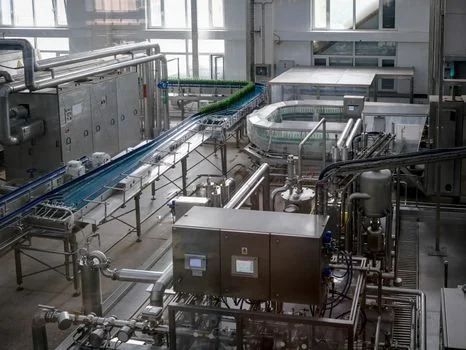
The decision in 60 seconds: WSZ wins on capital cost below 500 m³/day, MBR wins on effluent quality and reuse eligibility above 10 m³/day, SBR wins on influent variability, and DAF-bio wins on FOG/TSS loading. No train wins everywhere, and most 2026 Indonesian IPALs end up as a hybrid — DAF upstream of an MBR or SBR for industrial sites, WSZ alone for domestic.
The CAPEX spread is wide. Field data from 2026 supplier quotes puts WSZ turnkey installed cost at roughly USD 250–600 per m³/day for the 25–500 m³/day band, while a fully equipped MBR system with stainless-steel membrane cassettes lands at USD 800–1,400 per m³/day, driven by membrane area (a DF series PVDF flat sheet membrane module rated 80–225 m² per stack is typical) and the stainless content of the permeate and CIP skids. OPEX for MBR is typically 20–35% higher than CAS/SBR because of the membrane scour air (continuous, ~0.3–0.5 m³ air per m³ permeate) and periodic chemical cleaning — quantify this at 0.08–0.14 USD/m³ for industrial sites (HydropureWater field data, 2026). Footprint is where MBR pulls ahead: at 0.05–0.10 m² per m³/day versus 0.20–0.35 m² per m³/day for SBR with separate clarifier, MBR cuts site area by 50–70%, which is decisive on a tight Jakarta or Surabaya industrial lot.
| Criterion | WSZ Package | MBR | SBR | DAF + Bio |
|---|---|---|---|---|
| Flow band | 1–80 m³/h (24–1,920 m³/day) | 10–2,000 m³/day | 50–5,000 m³/day | 4–300 m³/h DAF; bio sized to load |
| CAPEX (USD per m³/day, 2026 turnkey) | 250–600 | 800–1,400 | 500–900 | 700–1,200 (DAF + bio combined) |
| OPEX (USD per m³ treated) | 0.05–0.10 | 0.08–0.14 | 0.06–0.11 | 0.10–0.18 (FOG chemistry included) |
| Footprint (m² per m³/day) | 0.08–0.15 (buried) | 0.05–0.10 | 0.20–0.35 | 0.15–0.25 |
| Effluent BOD / TSS (mg/L) | 20–30 / ≤30 | ≤5 / ≤1 | 20–30 / 20–30 | 15–25 / 15–25 |
| Reuse eligible | Landscape only | Yes (cooling, boiler, irrigation) | Landscape only | Process water with polishing |
| Operator skill required | Low (unattended) | Medium (membrane CIP, MLSS) | Medium (cycle tuning) | Medium–High (DAF chemistry + bio) |
| Best fit in Indonesia | Hotels, hospitals, residential | Reuse, tight Pergub, electronics | POME, small municipal, variable flow | Food, dairy, slaughterhouse, textile |
Matching Equipment to Permen LHK 68/2016 and Local Discharge Limits
The compliance test is binary: does the proposed process train hit your discharge number, in writing, with a design margin? A "compliant with Permen LHK 68/2016" line on a quotation is not enough — you need a process guarantee that names BOD, COD, TSS, NH₃-N, total P, and oil & grease, tied to the design influent you provided.
For national industrial effluent under Permen LHK 68/2016, the headline numbers are BOD 30 mg/L, COD 100 mg/L, TSS 30 mg/L, oil & grease 5 mg/L, with category-specific limits on ammonia (typically 5–10 mg/L), total P (2–10 mg/L depending on receiving water), pH 6.0–9.0, and temperature ≤38 °C. Any of the four process trains in the previous section can meet BOD and TSS, but FOG at 5 mg/L is the failure mode for every food, palm-oil, and slaughterhouse site — without a dissolved air flotation system upstream, the biology alone will not reliably pull FOG below 10 mg/L. For municipal IPAL discharge under Pergub DKI Jakarta 122/2005, the floor is BOD 20–30 mg/L and COD 40–60 mg/L depending on the receiving-water class, with class A (drinking-water source) pushing toward BOD ≤10 mg/L. The jump from BOD 30 to BOD 5 is what tips the choice from SBR or WSZ to integrated MBR membrane bioreactor system, since the membrane physically excludes the particulates that carry residual BOD.
| Parameter | Permen LHK 68/2016 (Industrial) | Pergub DKI 122/2005 (Municipal, typical) | Process Train That Clears the Limit |
|---|---|---|---|
| BOD₅ | 30 mg/L | 20–30 mg/L | WSZ, SBR, MBR, DAF+bio |
| COD | 100 mg/L | 40–60 mg/L | WSZ, SBR, MBR, DAF+bio |
| TSS | 30 mg/L | 30–50 mg/L | WSZ, SBR, MBR, DAF+bio |
| Oil & grease | 5 mg/L | 5–10 mg/L | DAF+bio mandatory for food/palm oil |
| NH₃-N (as N) | 5–10 mg/L (category) | 5–10 mg/L | A/O MBR or SBR with nitrification; CAS insufficient |
| Total P (as P) | 2–10 mg/L (category) | 2–5 mg/L | Biological P removal + chemical precipitation; MBR/SBR |
| pH | 6.0–9.0 | 6.0–9.0 | All trains (with equalization) |
7-Point Checklist for Evaluating a WWTP Supplier in Indonesia
The technical comparison above tells you what to buy. The checklist below tells you who to buy it from. A 2026 Indonesian IPAL project is at least 50% logistics and after-sales, so score every bidder on the same seven criteria and weight the scorecard before you open the price envelope.
- Local service presence. Indonesian service engineers within 48 hours to Jakarta, Surabaya, Medan, and Balikpapan. A supplier with only a sales office and no service team will sell you a membrane module and leave you waiting six weeks for a replacement.
- Spare parts inventory in Indonesia. Membrane modules, aerator diaphragms, dosing-pump heads, pressure transducers, and PLC cards stocked locally — not shipped from Shanghai or Hamburg. Ask for a warehouse address and a parts list with Indonesia-bound SKUs.
- Reference IPAL projects in Indonesia. Commissioned plants with the same influent matrix: palm oil, textile, food, hospital, or municipal. Ask for site visit references and check the BAP commissioning report against the design influent.
- Process guarantee in writing. Tied to Permen LHK 68/2016 numbers (BOD 30, COD 100, TSS 30, oil & grease 5 mg/L) or your Pergub number, not generic "compliant" wording. The guarantee should name the penalty for non-performance — usually liquidated damages per mg/L exceedance per day.
- Documentation in Bahasa Indonesia. Operating manuals, maintenance procedures, and PLC alarm messages in Bahasa Indonesia, with an English HMI for foreign engineers during commissioning. The Indonesian-language documentation is a hard requirement for the BAP handover to the client's operations team.
- Commissioning and training included. Not optional, not extra. On-site commissioning, operator training (minimum 40 hours), and a six-month performance warranty should be line items in the supply scope, not "available on request."
- After-sales SLA and remote monitoring. Defined response time (target ≤48 hours to site), remote monitoring option via VPN or 4G to the supplier's service center, and an annual maintenance contract with a fixed price. For a deeper read on what to look for in a 2026 Indonesian MBR supplier, see the MBR supplier comparison for Indonesia.
Cost Benchmarks and What to Put in Your RFQ
2026 turnkey CAPEX for an Indonesian IPAL, sized as USD per m³/day of design flow and inclusive of civil, mechanical, electrical, and PLC but excluding land:
- WSZ package plant, 25–500 m³/day: USD 250–600 per m³/day. Buried, minimal civil work, single-supplier scope.
- MBR, 50–2,000 m³/day: USD 800–1,400 per m³/day. Driven by membrane area, stainless content, and PLC scope; reuse-grade effluent justifies the premium for sites with a water budget.
- SBR, 100–5,000 m³/day: USD 500–900 per m³/day. Lower than MBR because no membrane, higher than WSZ because of the batch-tank civil work and decanter.
- DAF + bio, 10–300 m³/h: USD 700–1,200 per m³/day combined. FOG chemistry drives the OPEX.
OPEX for a DAF + biological train breaks down to electricity at 30–40% (blowers, permeate pumps, DAF saturator compressor), chemicals at 40–50% (polymer for the DAF, CIP chemicals for the membrane if MBR, coagulant for phosphorus polishing), sludge handling at 10–20% (dewatering on a plate and frame filter press or volute), and labor at 5–10%. Flag the 40–50% chemical share in vendor scoring — it is the line item most often under-quoted. For a detailed 2026 OPEX breakdown of a DAF plant, the DAF plant OPEX breakdown walks through the numbers line by line.
The RFQ you send to the shortlist should request, at minimum: (1) design influent characterization, (2) design effluent guarantees named against Permen LHK 68/2016 (or your Pergub), (3) process flow diagram, (4) P&ID, (5) general arrangement drawings, (6) PLC I/O list and HMI screen shots, (7) spare parts list with unit prices, (8) commissioning timeline with critical-path milestones, and (9) a chemical dosing skid priced per the automatic chemical dosing system topology you already have on site. Quotes missing any of items 1–6 are non-comparable — return them for completion before evaluating price.
Frequently Asked Questions
What is the national effluent standard for industrial IPAL in Indonesia in 2026? Permen LHK No. 68/2016 sets BOD 30 mg/L, COD 100 mg/L, TSS 30 mg/L, oil & grease 5 mg/L, with category-specific ammonia and phosphate limits. Pergub DKI Jakarta 122/2005 is tighter for municipal discharge to water bodies, typically BOD 20–30 mg/L and COD 40–60 mg/L.
Which WWTP technology is cheapest for a small hotel or hospital in Indonesia? A buried WSZ package plant, sized 1–80 m³/h, at USD 250–600 per m³/day turnkey. It is fully buried, unattended, and clears Permen LHK 68/2016 for BOD and TSS. The buried WSZ package sewage treatment plant is the standard reference design.
Which WWTP technology is required for water reuse in Indonesia? MBR with a 0.1 µm PVDF membrane, producing BOD ≤5 mg/L and TSS ≤1 mg/L. An integrated MBR membrane bioreactor system sized 10–2,000 m³/day is the typical 2026 specification for cooling-tower make-up, boiler feed, and landscape irrigation reuse.
How is FOG handled for food and palm-oil wastewater in Indonesia? A DAF unit upstream of the biological stage. A dissolved air flotation system rated 4–300 m³/h typically removes 60–90% of FOG and TSS, bringing the load on the biology into a range that meets the 5 mg/L oil & grease limit.
How long does commissioning take for a 500 m³/day MBR in Indonesia? 10–14 weeks from container arrival: 2–3 weeks for civil handover and erection, 3–4 weeks for mechanical and electrical install, 2 weeks for commissioning and trial run, 1–2 weeks for BAP and operator training. Plan the order 6 months ahead of plant start-up to clear the monsoon season.