What an MBR System Supplier in Indonesia Actually Delivers
An MBR combines activated-sludge biology with submerged microfiltration or ultrafiltration membranes in a single tank, replacing the secondary clarifier and tertiary sand filter of a conventional activated-sludge (CAS) train. Effluent quality is defined by membrane pore size — typically 0.1 μm for PVDF flat-sheet modules — not by sludge settleability, which is why MBR effluent turbidity routinely drops below 1 NTU without polymer dosing. A qualified MBR system supplier in Indonesia should provide PVDF submerged membrane modules, integrate biological treatment with solid-liquid separation, and deliver effluent that clears PP No. 22/2021 limits on the first pass (COD typically ≤50 mg/L, TSS ≤30 mg/L).
Capacity range matters more than brand name. Specifying engineers should expect 10–2,000 m³/day on a single integrated skid, with a footprint 60% smaller than an equivalent CAS plant at the same loading (HydropureWater field data, 2026). The membrane cassette itself is the key unit: PVDF flat-sheet at 0.1 μm pore size, 80–225 m² active area per cassette, delivering 32–135 m³/day per module at design flux. These four numbers — flow, footprint, pore size, cassette area — are the ones a buyer should paste verbatim into an RFQ before negotiating price.
In the Indonesian market, a "supplier" is usually a two-entity structure: an overseas OEM (China, Japan, Korea, or Singapore) that manufactures the membrane modules and skid, plus a local EPC contractor or agent that handles civil works, installation, commissioning, and after-sales service. Treating these as a single vendor leads to warranty gaps; treating them as two contracts from day one is the safer procurement pattern, and the integrated MBR membrane bioreactor system scope should be split accordingly.
PP No. 22/2021 Compliance: The Non-Negotiable Indonesian Benchmark
PP No. 22 Tahun 2021 — the implementing regulation for Job Creation Law (UU No. 11/2020) on environmental management — is the live effluent standard cited by Dinas Lingkungan Hidup (DLH) inspectors in 2026. Facilities that fail Class II industrial discharge limits face administrative sanctions up to revocation of operational permits, so MBR selection must be anchored to these numbers, not to generic "pollution control" claims. The 2026 installed base of MBR in Indonesian food, textile, and nickel-processing plants is largely the result of PP 22 enforcement pressure on existing CAS plants that could not meet the new TSS and COD ceilings.
The table below maps the PP 22/2021 Class II limits against typical MBR effluent quality. The compliance margin is what makes MBR the default technology choice for new builds in 2026.
| Parameter | PP 22/2021 Class II limit | Typical MBR effluent (PVDF, 0.1 μm) | Compliance margin |
|---|---|---|---|
| COD | 50–100 mg/L (sector-specific) | <50 mg/L | 0–50 mg/L headroom |
| TSS | 30–50 mg/L | <5 mg/L | 25–45 mg/L headroom |
| pH | 6.0–9.0 | 6.5–8.0 | Inside band |
| Oil & grease | ≤10 mg/L | <5 mg/L with pre-skimmer | ≥5 mg/L headroom |
| Ammonia (NH₃-N) | ≤10 mg/L (sector-specific) | <2 mg/L at MLSS 10,000 mg/L | 8 mg/L headroom |
| Turbidity | Not specified | <1 NTU | Enables reuse |
For nickel-processing specifically — a major MBR use case in Sulawesi and Halmahera — the heavy-metal and total-N limits in PP 22/2021 Appendix II are tighter than the generic industrial table, and MBR alone will not meet them. A chemical precipitation stage upstream (pH 10–11 with NaOH or lime) plus MBR polish is the standard train, and buyers should reference the nickel discharge limit in Indonesia compliance guide when sizing the upstream stage.
Engineering Criteria to Specify in Your RFQ
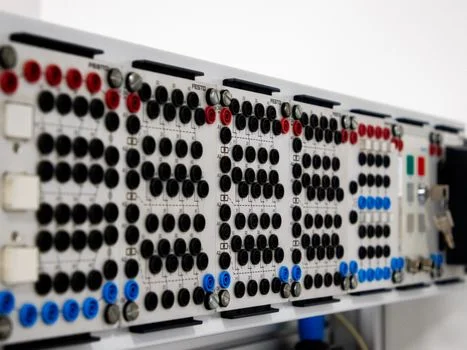
An RFQ that omits operating parameters becomes a price-comparison exercise between suppliers quoting different scopes. The criteria below are the minimum technical envelope a 2026 industrial MBR must meet; suppliers that cannot respond to each line item with a guaranteed value should be removed from the shortlist.
| Parameter | Specification to write into the RFQ | Why it matters |
|---|---|---|
| Membrane format | PVDF flat-sheet, 0.1 μm pore, ≥600 kDa MW | CIP tolerance and mechanical strength |
| Membrane format (alt) | PVDF/PE hollow-fiber, 0.1 μm pore | Lower CAPEX/m², higher fouling rate |
| MLSS operating range | 8,000–12,000 mg/L | Defines aeration tank volume and SRT |
| Design flux | 15–25 L/m²·h (avg), 30 L/m²·h (peak) | Required membrane area and cassette count |
| Trans-membrane pressure | ≤30 kPa at design flux | Triggers CIP when sustained |
| Recovery | ≥95% (permeate/influent) | Limits concentrate bleed volume |
| Scour aeration | 0.3–0.6 m³ air/m² membrane area/min | Non-negotiable for submerged MBR |
| Control architecture | PLC + HMI, Modbus TCP or 4G telemetry | Remote monitoring for multi-site operators |
Two format decisions drive most of the OPEX difference. PVDF flat-sheet modules are easier to clean in place (CIP) — operators can isolate a single cassette and backflush with 2,000 mg/L NaOCl without draining the tank — and they tolerate higher MLSS (up to 15,000 mg/L briefly) without irreversible fouling. Hollow-fiber modules offer 30–40% higher packing density and 15–25% lower CAPEX per m², but CIP requires a dedicated skid and broken fibers are non-repairable in the field. For food and textile effluents with high suspended solids, flat-sheet is the conservative 2026 default; for electronics and pharmaceutical reuse, tight UF at 0.01 μm is required and the supplier shortlist narrows to three or four global brands.
The control architecture line is the one most commonly under-specified. A 2026 industrial MBR should ship with PLC + HMI, Modbus TCP or 4G remote telemetry, and trending for trans-membrane pressure, flux, and MLSS. Suppliers quoting relay logic only or analog panel meters should be flagged as a 2015-era design.
2026 Supplier Comparison: What the Top Contenders Actually Offer
The Indonesian MBR market in 2026 segments cleanly into four supplier archetypes. A serious buyer should evaluate at least one from each column before issuing an RFQ, because the price-to-risk ratio differs by an order of magnitude between archetypes.
| Criterion | Multinational OEM (local subsidiary) | Local Indonesian EPC / agent | Chinese OEM direct | Japanese / Korean premium |
|---|---|---|---|---|
| Country of manufacture | Singapore / India / China | China, assembled in ID | China (DF series etc.) | Japan / Korea |
| Lead time to Jakarta | 8–12 weeks | 4–8 weeks (stocked modules) | 8–16 weeks (4–6 wk mfg + 2–4 wk sea) | 14–24 weeks |
| Membrane type stocked | Hollow-fiber, mixed brands | Varies, often Chinese OEM | PVDF flat-sheet (DF series) | Flat-sheet (Kubota), hollow-fiber (Toray, CSM) |
| Local service agent | Yes (30+ year presence benchmark) | Yes (the EPC itself) | Via Indonesian EPC partner | Yes (representative office) |
| CAPEX range (skid, 100 m³/day) | $1.0M–$1.4M | $0.9M–$1.2M | $0.7M–$1.0M | $1.3M–$1.8M |
| Reference projects in ID | Food, textile, palm oil — many | Domestic industrial parks | Nickel, textile, food — growing | Municipal, large industrial |
| Warranty | 2–3 years parts | 1–2 years | 3–5 years pro-rata on membrane | 3–5 years comprehensive |
The multinational OEM archetype is anchored by Ion Exchange Asia Pacific's 30-year Indonesian presence, which sets the benchmark for "local trust" and installed-base confidence. Their limitation is price — typically 20–35% above Chinese OEM direct for equivalent scope — and longer lead time on non-standard skids. The local Indonesian EPC archetype offers the fastest delivery and the most flexible commercial terms, but membrane quality depends entirely on which Chinese OEM they are reselling at the time of quotation; this is the highest-variance option.
Chinese OEM direct, including the DF series PVDF flat-sheet membrane module class, offers 15–30% lower CAPEX than Western brands at 4–6 week manufacturing lead time plus 2–4 weeks CIF Jakarta or Surabaya sea freight. The historical objection — lack of local service — has been solved by most credible Chinese OEMs partnering with an Indonesian EPC for commissioning and warranty service, which is a contract structure the buyer should require rather than hope for. Japanese and Korean premium (Kubota, Toray, CSM) remains the right choice for municipal tenders and pharmaceutical reuse where membrane traceability and 25-year reference lists outweigh price.
2026 CAPEX and OPEX Benchmarks for Indonesian MBR Projects
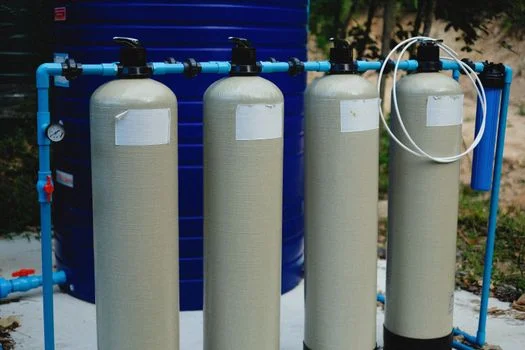
Procurement directors defend MBR purchases in financial language, not membrane language. The benchmarks below are drawn from HydropureWater's 2025–2026 project pipeline in Indonesia and are the numbers to anchor any internal CAPEX memo against.
| Cost item | 10–500 m³/day range | 500–2,000 m³/day range | Driver |
|---|---|---|---|
| Integrated skid CAPEX | $8,000–$12,500 per m³/day | $4,500–$7,000 per m³/day | Economy of scale on tankage and blowers |
| Energy OPEX | $0.04–$0.09 per m³ treated | $0.03–$0.06 per m³ | Aeration dominates; 60–70% of energy use |
| Membrane replacement | $1,200–$1,800 per 100 m² cassette, every 5–8 yr | Same per m²; bulk pricing on 1,000+ m² | PVDF lifespan; food effluent = shorter cycle |
| CIP chemicals | $0.005–$0.015 per m³ | Same per m³ | NaOCl + citric acid, every 2–4 months |
| Labor | 0.5 FTE at 100 m³/day | 1.5 FTE at 1,000 m³/day | PLC automation reduces staffing |
A worked 10-year TCO example for a 200 m³/day textile MBR: CAPEX $1.6M (skid + civil) plus $35K/yr OPEX ($18K energy, $8K membrane accrual, $4K CIP, $5K labor) totals $1.95M over 10 years. The equivalent CAS train runs $1.1M CAPEX (clarifier, sand filter, sludge press) but $55K/yr OPEX (polymer, sludge hauling to off-site landfill at IDR 350,000/m³) totaling $2.41M. MBR breaks even at month 38 and saves approximately $420K over 10 years, with the secondary benefit of <1 NTU effluent that enables water reuse in the dye house — a CAPEX offset the table above does not capture. Indonesia's PLN industrial tariff of $0.08–$0.11/kWh in 2026 makes aeration efficiency the single largest OPEX lever, which is why flat-sheet PVDF's 0.3–0.6 m³/m²/min scour aeration rate (lower than hollow-fiber at 0.5–0.8) wins on OPEX in any PLN-served location.
How to Vet a Chinese or Overseas MBR Supplier Before You Pay
Procurement risk on an overseas MBR purchase is concentrated in four documents and one site visit. Demand each before issuing a purchase order:
- ISO 9001 and ISO 14001 certificates valid for 2026, plus a factory audit video no older than 6 months showing the membrane casting line, cassette assembly, and skid integration area.
- Three reference projects in Indonesia or Southeast Asia with named end-users and end-user contact details — call at least one.
- Membrane material test report confirming PVDF molecular weight ≥600 kDa and pure-water flux ≥500 L/m²·h at 25 °C and 10 kPa.
- INCOTERMS spelled out: FOB Shanghai leaves the buyer managing Indonesian customs and inland freight; CIF Tanjung Priok is the most common 2026 term; DDP Surabaya adds 6–9% to landed cost but eliminates customs risk for first-time buyers.
- Warranty terms in writing: membrane modules 3–5 years pro-rata, bioreactor tank and blowers 1–2 years, PLC 2 years.
The single most effective risk reducer is a pre-shipment Factory Acceptance Test (FAT) at the OEM site. A 2-day FAT should include a clean-water flux test on every cassette (must hit 25 L/m²·h at 10 kPa), a leak test at 50 kPa air pressure, a 4-hour PLC HMI dry-run with simulated alarms, and a full skid walkdown against the P&ID. Skipping the FAT is the most expensive saving in the entire procurement cycle.
Frequently Asked Questions
How much does an MBR system cost in Indonesia in 2026?
Integrated skid CAPEX benchmarks at $8,000–$12,500 per m³/day for 10–500 m³/day and $4,500–$7,000 per m³/day for 1,000–2,000 m³/day (HydropureWater 2026 project data). A 100 m³/day food-industry integrated MBR membrane bioreactor system lands at roughly $0.9M–$1.2M CIF Tanjung Priok.
What is the typical lead time from PO to commissioning?
12–18 weeks total: 4–6 weeks membrane and skid manufacturing at the OEM, 2–4 weeks sea freight to Tanjung Priok or Surabaya, then 4–8 weeks Indonesian civil works, installation, and commissioning by the local EPC partner. Local-agent stock can shorten the first two stages to 2 weeks.
Can a PVDF MBR meet PP No. 22/2021 effluent limits on its own?
Yes for the generic Class II table: a well-operated MBR delivers COD <50 mg/L, TSS <5 mg/L, and NH₃-N <2 mg/L, providing 25–45 mg/L headroom on TSS. For nickel or heavy-metal sectors, an upstream chemical precipitation stage is required, as detailed in the nickel discharge limit in Indonesia compliance guide.
What maintenance does a 2026 industrial MBR require?
CIP every 2–4 months with 2,000 mg/L NaOCl and monthly citric acid wash, cassette integrity inspection annually, and membrane replacement every 5–8 years (shorter for textile and food effluents with high oil/grease). The DF series PVDF flat-sheet membrane module is designed for individual cassette swap without draining the tank.
How is after-sales service handled for an overseas OEM in Indonesia?
The standard 2026 model is overseas OEM (manufacturing, warranty, membrane replacement) plus a contracted Indonesian EPC partner (commissioning, routine service, CIP, spare parts holding). Buyers should contract both directly and require the OEM to name the local partner in the warranty certificate, not leave it as an open "to be assigned" clause.