Why Indonesia's Nickel Discharge Cap Matters in 2026
Indonesia's nickel discharge limit is 0.5 mg/L total Ni under PP No. 22/2021 Annex VI for mining, beneficiation, and metallurgy effluents, and the 0.5 mg/L ceiling aligns with the World Bank/IFC EHS Guidelines for Base Metal Smelting and Refining (per IFC 2007, reaffirmed 2024). A staged train of pH adjustment, sulfide precipitation, and selective ion exchange reliably drops HPAL effluent from 2,000–5,000 mg/L Ni to below 0.3 mg/L, well inside the 2026 enforcement band enforced by the Indonesian MoEF (KLHK).
For an EHS manager in Morowali or Halmahera, the cap is non-negotiable for two reasons. Domestically, KLHK (MoEF) has tightened field audits across the HPAL cluster through 2025–2026, and operators exceeding discharge limits or polluting rivers face serious regulatory consequences (Nickel Industries disclosure, 2025-09). Internationally, the 0.5 mg/L number is now embedded in project-finance covenants from lenders referencing IFC EHS, so a single non-compliant outfall can trigger a covenant breach on a USD 1–3 billion facility. The regulator's analytical definition matters here: "total nickel" is measured on an unfiltered, acid-digested sample by ICP-OES or ICP-MS at the 232.0 nm Ni line, while "dissolved nickel" is the same analysis on a sample filtered at 0.45 µm. PP 22/2021 specifies total Ni; some provincial permits tighten the dissolved-Ni number, which removes suspended NiS fines from the compliance buffer and must be checked before commissioning.
HPAL and Ferronickel Effluent Chemistry Behind the Limit
HPAL autoclave bleed is not a typical metal-finishing wastewater — the influent is closer to a dilute acid mine drainage spiked with strategic metals. Working with a feed at pH 1.5–2.5, free H₂SO₄ of 20–80 g/L, sulfate above 50,000 mg/L, and Ni at 2,000–5,000 mg/L, hydroxide precipitation alone cannot reach 0.5 mg/L because Ni(OH)₂ solubility bottoms out around 1–5 mg/L residual at pH 9.5 (HydropureWater field data, 2026). The thermodynamic lever is the NiS Ksp, roughly 14 orders of magnitude below Ni(OH)₂, which is why sulfide precipitation is the workhorse of any credible HPAL polishing train. Ferronickel slag-quench water and co-located stainless pickling lines add their own loadings, summarized below.
| Stream | Ni (mg/L) | pH | Key co-contaminants | Notes |
|---|---|---|---|---|
| HPAL autoclave bleed (after neutralization to pH ~4) | 2,000–5,000 | 1.5–2.5 (raw) / 4.0–5.0 (partial neutralization) | SO₄²⁻ 50,000+ mg/L; Co, Mn, Mg, Fe, Cr traces | Primary Ni load; drives sulfide stage sizing |
| Ferro-nickel rotary kiln slag-quench water | 5–50 | 4–6 | SS 200–800 mg/L; Cr traces | Often blended into neutralization feed |
| Stainless pickling (304/316L lines) | 10–200 | 1–3 | Cr(VI) 1–5 mg/L; F⁻ 50–500 mg/L; NO₃⁻ | Requires Cr(VI) reduction upstream of sulfide stage |
| Combined neutralized feed to polishing | 50–500 | 7.5–8.5 | SS 50–200 mg/L; residual Fe, Al | Typical feed to sulfide + IX train |
Three Treatment Trains That Hit <0.5 mg/L Ni
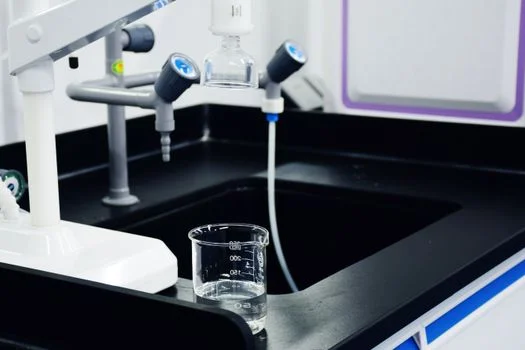
Three realistic process options are in scope for a 2026 Indonesian HPAL polishing plant, and they differ sharply on cost, water-reuse capability, and the final Ni ceiling. Train 1 (hydroxide-only) is the baseline most EPCs carry in their reference design — useful for sizing, but it cannot pass 0.5 mg/L. Train 2 (sulfide + ion exchange) is the 2026 default for new HPAL projects in Sulawesi and Halmahera, and Train 3 (sulfide + RO) is reserved for sites with tight water-reuse or zero-liquid-discharge mandates. Sulfide reagent stoichiometry is roughly 2.5× the theoretical dose for 99.9% Ni removal, and an H₂S scrubber on the clarifier off-gas is mandatory under Indonesian MoEF operational standards — do not omit it from the P&ID.
| Parameter | Train 1: Hydroxide only | Train 2: Sulfide + IX | Train 3: Sulfide + RO hybrid |
|---|---|---|---|
| Effluent Ni (mg/L) | 1–5 | <0.05 | <0.1 (permeate) |
| Reagents | Lime or NaOH | NaHS/Na₂S + 10% H₂SO₄ for IX regen | NaHS/Na₂S + antiscalant |
| Sludge yield (kg DS/m³ at 50 mg/L Ni in) | 2–4 | 6–10 | 6–10 + RO concentrate |
| CAPEX (USD/m³·d installed) | 80–150 | 220–400 | 380–620 |
| OPEX (USD/m³ treated) | 0.15–0.30 | 0.45–0.85 | 0.70–1.20 |
| Water reuse potential | <20% | 30–50% | >60% |
| Meets 0.5 mg/L PP 22/2021? | No | Yes, with margin | Yes, with margin |
Lamella clarification and chemical dosing are common to all three trains — a lamella clarifier for nickel sulfide sludge handles the high settling rates of NiS flocs, and a PLC-controlled NaHS dosing system is the practical way to hold the 0.5–2.0 mg/L S²⁻ residual window. Sites with high SS or F⁻ in the feed typically add a DAF unit for HPAL pre-clarification upstream of the sulfide reactor. For Train 3, the membrane stage is built around a brackish-water RO unit for nickel-bearing effluent operating at 65–80% recovery.
Sulfide Precipitation Stage: Design Numbers That Matter
The sulfide reactor is where the train earns its compliance margin. Hold pH in the 9.0–10.0 window — below 9 the residual Ni climbs sharply, above 10 reagent consumption roughly doubles without any quality benefit (per classic NiS solubility data and HydropureWater commissioning logs, 2025). Dosing rates for the two common reagents are 2.0–3.0 g NaHS (60% solution) per gram of Ni removed, or 1.8–2.6 g Na₂S (60% flakes) per gram Ni. Reactor HRT of 15–25 minutes is sufficient with a submerged mixer at 1.5–2.0 W/L power density; this drives the NiS floc to settling rates of 8–15 m/h in a well-designed lamella clarifier for nickel sulfide sludge.
Sludge is the second design problem. At 50 mg/L influent Ni, expect 6–10 kg dry solids per cubic meter treated; route it to a filter press for nickel-bearing sludge dewatering targeting 55–65% DS cake for stable transport. Reagent delivery is best handled with a PLC-controlled NaHS dosing system linked to the influent Ni online analyzer. Off-gas is non-negotiable: a NaOH wet scrubber pulling the clarifier vent to <1 ppm H₂S at the stack is required to satisfy KLHK field auditors and IFC EHS occupational exposure limits.
Selective Ion Exchange for the 0.05 mg/L Polishing Step
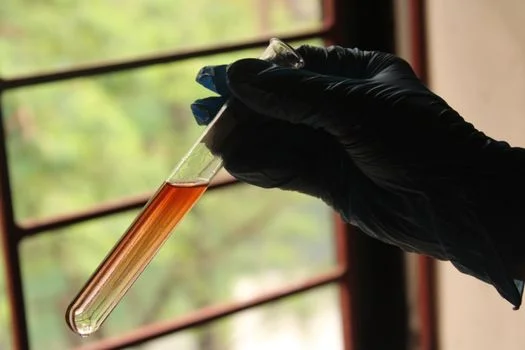
The IX stage provides the 100× polishing step that turns a 1–5 mg/L sulfide effluent into a sub-0.05 mg/L final, which is what gives the plant a real safety margin against a 0.5 mg/L regulatory ceiling. Use an iminodiacetic acid (IDA) resin — Lewatit TP207, Amberlite IRC748, or equivalent — with a working capacity of 25–35 g Ni/L resin at breakthrough. Operate at a service flow rate of 8–12 bed volumes per hour with a 1.0–1.5 m bed depth, and program an automatic backwash every 8–12 cycles to keep the bed clean.
Regeneration uses 2–3 BV of 10% H₂SO₄ followed by a 1.5 BV water rinse; the Ni-rich eluate is too valuable to waste and should be returned upstream of the sulfide reactor for metal recovery. Watch the temperature — IDA resin tops out at 60 °C, and HPAL autoclave bleed running through partial cooling will exceed that. A shell-and-tube heat exchanger dropping the feed to 40–50 °C is standard scope. Resin life is 4–6 years provided the upstream multimedia filter holds TSS below 5 mg/L; a multi-media filter polishing step ahead of the IX vessel is the cheapest insurance on the train. If the reader is also evaluating Brazilian or other regional nickel compliance, the CONAMA 430 nickel discharge limit in Brazil comparison is useful — Brazil is roughly 2× looser than Indonesia on the same HPAL feed.
2026 Commissioning Checklist for Indonesian Nickel Effluent Compliance
- Confirm the discharge permit (izin pembuangan air limbah) cites PP 22/2021 Annex VI, Table 2 (Ni 0.5 mg/L) — not provincial governor decree numbers that may be stricter.
- Install an online Ni analyzer (0.1–10 mg/L range) on the final outfall with 4–20 mA to the plant DCS and an alarm trip at 0.4 mg/L to give operators a 0.1 mg/L response window.
- Validate a 24-hour composite sampling protocol aligned with SNI 6989.59 / APHA 3120 for laboratory cross-check, run at least monthly and archived for three years for the MoEF audit binder.
- Run the H₂S scrubber and lamella clarifier in bypass mode during commissioning until the sulfide dosing loop is tuned and ORP is stable, then switch them in — never the reverse.
- Document the operating envelope (pH 9.0–10.0, ORP -200 to -350 mV, S²⁻ residual 0.5–2.0 mg/L) and the reagent consumption per ton of Ni removed; this is what the KLHK auditor will request first.
For an EPC buyer scoping a 5,000 m³/d Train 2 plant in 2026, the realistic installed CAPEX band is USD 12–22 million, with OPEX of USD 0.45–0.85 per cubic meter treated, and a 14–18 month delivery from PO to mechanical completion. Procurement can pre-qualify vendors against this envelope now; the bottleneck on most 2026 Indonesian HPAL projects is the IX resin and the H₂S scrubber, not the civil scope. For buyers also scoping municipal or hospital effluent at the same site, the Jakarta wastewater treatment plant supplier guide and the Sulawesi hospital wastewater treatment guide lay out the adjacent regulatory stack. Site-level cost sanity-checks for the Sulawesi corridor are in the Makassar WWTP cost benchmark.
Frequently Asked Questions
What is the exact nickel discharge limit in Indonesia under PP 22/2021? 0.5 mg/L total Ni, Annex VI, Table 2 for mining, beneficiation, and metallurgy effluents discharged to water bodies (Indonesian MoEF, 2021).
Does Indonesia have a separate limit for total versus dissolved nickel? PP 22/2021 specifies "total" Ni on an unfiltered, acid-digested sample; some provincial permits tighten to dissolved Ni measured on a 0.45 µm filtered sample, which removes suspended NiS fines from the compliance buffer.
How does the Indonesian limit compare to China GB 25466-2010 for nickel? China GB 25466-2010 allows 1.0 mg/L total Ni, so the Indonesian cap is 2× stricter on the same HPAL feed — a meaningful difference for any multinational EPC benchmarking regional standards.
Can a plant meet the limit with hydroxide precipitation only? No. Residual soluble Ni at pH 9.5 stays at 1–5 mg/L, above the 0.5 mg/L cap. Sulfide precipitation, ion exchange, or a membrane hybrid is required to hit the limit reliably.
What is the typical CAPEX for a 5,000 m³/d HPAL effluent nickel polishing train in 2026? Train 2 (sulfide + IX) is USD 12–22 million installed depending on site geotechnical conditions, chloride content of feed, and IX resin selection (HydropureWater field data, 2026).