Why UAE Heavy Metal Discharge Limits Are Non-Negotiable in 2026
UAE heavy metals discharge limits are governed by Federal Law No. 24 of 1999 and Cabinet Decision No. 12 of 2006, enforced by MOCCaE and local municipalities such as Dubai Municipality and Abu Dhabi DoH. Standard effluent limits include Arsenic <0.01 mg/L, Lead <0.01 mg/L, Mercury <0.001 mg/L, Cadmium <0.02 mg/L, Chromium (total) <0.05 mg/L, Copper <0.2 mg/L, Nickel <0.2 mg/L, and Zinc <0.5 mg/L. Free zones such as JAFZA, DAFZ, and KIZAD enforce comparable or stricter limits, and non-compliance can trigger fines up to AED 500,000 plus operational suspension.
Federal Law No. 24 of 1999 (Protection and Development of the Environment) is the umbrella statute; Cabinet Decision No. 12 of 2006 sets the technical tables — maximum allowable concentrations for 16 regulated metals, BOD, COD, TSS, pH 6–9, and total residual chlorine ≤1.0 mg/L. MOCCaE (Ministry of Climate Change and Environment) drafts national policy and runs the federal self-monitoring portal, but day-to-day inspection, sampling, and permit issuance sit with Dubai Municipality, Abu Dhabi Department of Municipalities & Transport (DMT), and Sharjah City Municipality. For oil & gas contractors, ADNOC EHS-SPP-003 and SABIC EHS frameworks function as de facto enforceable standards, and several EPC majors reject vendors that cannot demonstrate compliance against those specs on bid day.
The commercial exposure is sharper than the headline fine. A 2024 Dubai Municipality enforcement bulletin recorded 47 industrial shutdown orders for wastewater non-compliance, with 12 facilities losing their operating license after a single quarter of repeated exceedances (Dubai Municipality, 2024-11). On top of the AED 100,000–500,000 administrative fine, ISO 14001 and EMAS audit trails carry the violation forward for three years, which complicates ADNOC pre-qualification and most Tier-1 OEM supplier audits.
UAE Heavy Metals Effluent Limits — Complete 2026 Reference Table
Maximum allowable concentrations per Cabinet Decision No. 12 of 2006 (Annex 3, industrial discharge to sewer and marine environment) and Free Zone overlay values as published in 2025 tenant environmental guidelines. Values are ceiling limits; design engineers should target 50–70% of these to absorb measurement uncertainty (typically ±15% at mg/L ranges per APHA 3125 ICP-MS).
| Metal | Federal Sewer Discharge (mg/L) | Marine / Sea Discharge (mg/L) | JAFZA / DAFZ / KIZAD (mg/L) | Notes |
|---|---|---|---|---|
| Arsenic (As) | <0.01 | <0.01 | <0.01 | Common in mining, semiconductor, and glass waste |
| Lead (Pb) | <0.01 | <0.01 | <0.01 | Battery, ammunition, and e-waste sectors |
| Mercury (Hg) | <0.001 | <0.001 | <0.0005 | Tightest limit; chloralkali, oil & gas produced water |
| Cadmium (Cd) | <0.02 | <0.02 | <0.01 | Electroplating, Ni-Cd battery, pigment manufacture |
| Chromium, total (Cr) | <0.05 | <0.05 | <0.05 | Sum of Cr(III) + Cr(VI) |
| Chromium, hexavalent (Cr(VI)) | <0.01 | <0.01 | <0.005 | 2026 revision likely drops to 0.005 mg/L |
| Copper (Cu) | <0.2 | <0.2 | <0.2 | Electroplating rinse water; common influent 50–200 mg/L |
| Nickel (Ni) | <0.2 | <0.2 | <0.2 | Electroplating, stainless pickling, catalyst |
| Zinc (Zn) | <0.5 | <0.5 | <0.5 | Galvanizing, die casting, rayon |
| Silver (Ag) | <0.1 | <0.1 | <0.1 | Photographic, jewellery, mirror waste |
| Barium (Ba) | <1.0 | <1.0 | <1.0 | Oil & gas drilling mud |
| Selenium (Se) | <0.02 | <0.02 | <0.02 | Refinery, glass, pesticide waste |
| Manganese (Mn) | <0.5 | <0.5 | <0.5 | Steel, battery, ceramic |
| Antimony (Sb) | <0.1 | <0.1 | <0.1 | Flame retardant, lead alloy |
| Aluminium (Al) | <1.0 | <1.0 | <1.0 | Anodizing, surface treatment |
| Iron (Fe) | <1.0 | <1.0 | <1.0 | Pickling, mining leachate |
MOCCaE's 2024–2026 revision cycle is moving Cr(VI) from 0.01 to 0.005 mg/L and Hg from 0.001 to 0.0005 mg/L in line with WHO drinking-water guidelines and ADNOC Sour Gas spec. Plants coming online in 2026 should design to the anticipated ceiling, not the 2006 number — retrofit costs after the standard is gazetted are 3–5× higher than building compliant on day one (HydropureWater field data, 2026).
Federal vs. Free Zone: Which Rule Applies to Your Plant
Jurisdiction dictates which inspector shows up and which limit you sign against. A KIZAD tenant in Abu Dhabi is regulated by Kezad Authority Environment, not Abu Dhabi DMT; a DAFZ tenant reports to DAFZ Authority with Dubai Municipality acting as the technical backstop on marine outfalls. JAFZA, the largest industrial cluster, runs environmental compliance through Trakhees — Ports, Customs & Free Zone Corporation, which has its own Trakhees EHS Inspection Procedure TEIP-04 covering sampling frequency, methodology, and 30-day closure deadlines for non-conformities. SAIF Zone and Hamriyah Free Zone Authority (HFZA) operate under Sharjah City Municipality, but SAIF imposes a tenant-lease clause that requires marine discharge TDS ≤35,000 mg/L, effectively forcing zero-liquid-discharge for many processes.
Free Zone authorities adopt Cabinet Decision 12/2006 as a floor and routinely tighten individual metals in the tenant environmental permit. In practice that means a JAFZA electroplating permit may show Hg ≤0.0005 mg/L and Cr(VI) ≤0.005 mg/L even though the federal table still lists 0.001 and 0.01. Sector overlays layer on top: oil & gas operators — including contractors on the Bab, Bu Hasa, and Hail-Jack expansion projects — must satisfy ADNOC EHS-SPP-003 Table 4 limits, which for Hg and Cd are 30–50% below the federal number. Electroplating facilities in Dubai additionally require a DG-12 industrial activity permit, with self-monitoring frequency set at once per quarter and grab-sample limits verified against ICP-MS, not colorimetric methods.
Design engineers should request the actual tenant permit from the plant EHS officer before sizing equipment — designing to the wrong jurisdiction is the single most common reason a treatment train fails its commissioning sample.
How Each Heavy Metal Is Removed: Process Chemistry by Element
Generic "chemical precipitation" is not a treatment train. The reagent, pH window, and residual achievable differ for every metal, and selecting the wrong process is the usual cause of a working system that still fails a compliance sample.
| Metal | Primary Process | Reagent / pH Window | Typical Achievable Residual |
|---|---|---|---|
| Cd, Cu, Ni, Zn | Hydroxide precipitation | NaOH or Ca(OH)₂; pH 8.5–10.5 (Cu: 8.5–9.5; Zn: 9.0–10.0; Ni: 10.0–10.5) | 0.1–0.5 mg/L |
| Cd, Cu (tight) | Sulfide precipitation | Na₂S or NaHS; pH 7–9 | <0.01 mg/L |
| Cu (selective recovery) | Solvent extraction | D2EHPA or LIX 84-I; pH 1.5–3 | <0.1 mg/L with CuSO₄ product |
| Pb | Carbonate / hydroxide | Na₂CO₃ at pH 6–7, or NaOH at pH 8–9; co-precipitate with Fe(OH)₃ | <0.05 mg/L |
| Hg | Sulfide + carbon + ion exchange | NaHS at pH 7–8, then activated carbon, then thiol resin (Duolite GT-73 or equivalent) | <0.001 mg/L |
| Cr(VI) | Reduction + precipitation | FeSO₄·7H₂O at pH 2.5–3 (target ORP <+250 mV), then NaOH raise to pH 8–9 as Cr(OH)₃ | <0.05 mg/L total Cr |
| As | Coagulation + adsorbent | FeCl₃ at Fe:As ≥20:1, pH 7–8; GFH or activated alumina polish | <0.01 mg/L |
| Se, Sb | Iron co-precipitation / biological reduction | FeCl₃ at pH 6–7, or upflow anaerobic bioreactor with methanol feed | <0.02 mg/L Se, <0.1 mg/L Sb |
For arsenic specifically, the engineering economics shift at the 0.01 mg/L boundary — coagulation alone lands at 0.05–0.1 mg/L, while adsorbent media is needed to hit the federal limit reliably. The full reagent-dose math and case data are in our chemical precipitation for arsenic removal deep-dive. For copper recovery projects where the metal value offsets treatment cost, the chemistry is covered in our copper wastewater treatment by chemical precipitation engineering blueprint. Operators designing for multiple Gulf jurisdictions can compare with our regional discharge-limit compliance guides.
Building a 2026-Compliant Treatment Train for UAE Industrial Plants
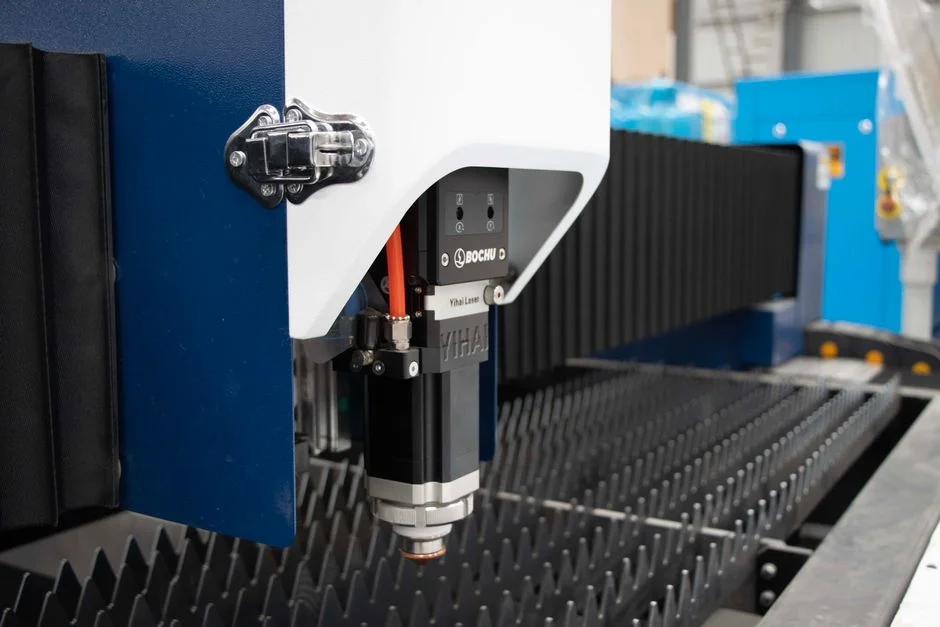
A defensible heavy-metals train in the UAE follows a fixed sequence: equalization → pH adjustment → chemical precipitation reactor with coagulant and flocculant dosing → lamella clarifier → sand or multimedia filtration → ion exchange or RO polishing for Hg, Cr(VI), or reuse targets → sludge dewatering on a filter press. The equalization basin should be sized at 8–24 hours of flow to dampen the diurnal swings typical of plating lines (3–8× variation between shifts).
For a 50 m³/day metal finishing line producing mixed Cd, Cu, Ni, Zn waste at 30–100 mg/L each, the train runs hydroxide precipitation at pH 10 in a 30-minute HRT reactor, followed by a lamella clarifier with 4–6 m³/m²·h surface loading, multimedia filtration, and a polishing industrial RO system for polishing and water reuse if the plant wants to recycle >70% of the effluent for rinse-water makeup. A 500 m³/day oil & gas produced-water plant handling Hg and Ba at the low mg/L range swaps the hydroxide stage for sulfide precipitation plus dual-stage activated carbon and thiol resin, and adds a PLC-controlled chemical dosing system with ORP and pH cascade control. A 1,000+ m³/day mining or quarrying operation adds ballasted flocculation and a high-rate lamella clarifier for metal-hydroxide settling to cut clarifier footprint by 60–70% versus a conventional rectangular basin.
Automation is now table stakes. MOCCaE's quarterly self-monitoring requires electronic submission of pH, flow, and contaminant data; in practice that means a SCADA package logging at 1-minute intervals with auto-dosing trim on pH and ORP loops. Sludge handling closes the loop: a filter press for hazardous metal sludge dewatering brings the cake to 30–35% DS, which is the minimum for licensed landfill acceptance under the UAE Cabinet Decision 65/2021 on hazardous waste.
CAPEX and OPEX Benchmarks for UAE Heavy Metal Compliance (2026)
Capital cost tracks linearly with flow until you cross 200 m³/day, where economies of scale in reactor and clarifier sizing bend the curve. Indicative installed CAPEX for a complete turnkey system — civil, mechanical, electrical, instrumentation, and commissioning — runs as follows: 10 m³/day at AED 250,000–500,000; 50 m³/day at AED 1.2M–2.5M; 200 m³/day at AED 4M–8M; 500+ m³/day at AED 10M+. These figures assume mixed-metal influent at 20–200 mg/L total, hydroxide precipitation, and sludge dewatering to 35% DS; ion-exchange or RO polishing adds 20–35% to the equipment line.
OPEX divides predictably. Chemicals (NaOH, Na₂S, FeCl₃, polymers) account for 35–45% of operating cost; sludge disposal runs 20–30% — EHS-approved Class A disposal at licensed UAE facilities is currently AED 800–1,500 per ton at 35% DS; energy 10–15%; labor 10–15%. For chemical precipitation alone, the all-in OPEX sits at AED 2.8–4.5 per cubic meter treated; adding ion-exchange polishing pushes that to AED 4.5–7.5/m³ (HydropureWater field data, 2026). Sludge from any train where the feed exceeds the MOCCaE leaching thresholds for Pb, Cd, Hg, or Cr(VI) is classified as hazardous — disposal to a licensed UAE facility is mandatory, and uncontrolled landfill or drying-bed disposal is an automatic AED 100,000+ fine under Federal Law 24.
Frequently Asked Questions
What is the UAE limit for chromium in wastewater?
Per Cabinet Decision 12/2006, Cr(VI) must be below 0.01 mg/L and total chromium below 0.05 mg/L in industrial effluent discharged to sewer or marine environment. The 2026 revision is expected to lower Cr(VI) to 0.005 mg/L.
How is mercury removed from industrial wastewater to below 0.001 mg/L?
A three-stage train is required: sulfide precipitation with NaHS at pH 7–8, followed by activated carbon adsorption, finished with a thiol-functional ion-exchange resin (e.g., Duolite GT-73). Single-stage processes cannot reliably meet the 0.001 mg/L federal limit on real industrial matrices.
Do JAFZA and KIZAD follow different discharge limits than federal UAE?
They adopt the federal Cabinet Decision 12/2006 limits as a minimum and frequently impose tighter thresholds through tenant environmental permits. Several Free Zones, including SAIF Zone, require zero liquid discharge to sea for specified activities, which means the treatment train must end in RO and an evaporation or crystallization step.
What happens if a UAE facility exceeds heavy metal limits?
Penalties under Federal Law No. 24 of 1999 include administrative fines of AED 100,000–500,000 per violation, immediate facility shutdown order, suspension of the operating license, and potential criminal liability for repeat or willful offenders. The 2024–2026 enforcement cycle has visibly increased the rate of license revocations, particularly in electroplating clusters.
How much does a UAE heavy metals treatment system cost in 2026?
Installed CAPEX for a 50 m³/day mixed-metal system runs AED 1.2M–2.5M; all-in OPEX including chemicals, sludge disposal, energy, and labor sits at AED 2.8–4.5/m³ for chemical precipitation alone, or AED 4.5–7.5/m³ with ion-exchange polishing.