Why Calvert City Pretreatment Compliance Is a 2026 Priority
The 2024 EPA air quality risk assessment for Calvert City linked elevated ambient volatile organic compound (VOC) levels to higher chronic cancer risk over a 70-year continuous exposure window, and the same report named Westlake Vinyls' Calvert City facility as the source of 96% of the United States' ethylene dichloride (EDC) air emissions over the 2020 National Emissions Inventory period (per S5, LPM, 2025-05-11). Vinyl chloride and benzene are identified human carcinogens; the EPA lists EDC as a probable human carcinogen. Those are the three chemicals the University of Louisville Center for Integrative Environmental Health Sciences (CIEHS), in partnership with Murray State, is now tracking through wastewater, blood, urine, and wildlife sampling across Marshall, Livingston, and McCracken counties (per S5).
CIEHS began wastewater sampling in Livingston County in March 2025. As of May 2025, Calvert City had not yet authorized sampling inside its collection system, so the Calvert City sewer plant influent is the next likely monitoring point if authorization is granted (per S5). That sets up a scenario where a chemical plant discharging to the Calvert City sewer plant is now under both air-side and water-side scrutiny, and where pretreatment design for chemical plants has to anticipate chlorinated VOC load, not just conventional BOD and metals. The August 13, 2025 Tribune-Courier report on Ted Smith's presentation to the Calvert City Council confirmed the request is still working through the utilities board (per S1, Tribune-Courier, 2025-08-13). For a process engineer in the park, that means the categorical pretreatment envelope and the local limits enforced by the Calvert City sewer plant are no longer abstract — they are the next public dataset likely to be released on the same three chemicals the EPA air study flagged.
The Three-Layer Federal Pretreatment Stack That Applies to Calvert City Plants
Chemical plants in the Calvert City industrial park meet pretreatment limits by stacking three compliance layers: 40 CFR 403.5(a) pass-through and interference prohibitions, applicable categorical pretreatment standards (most commonly 40 CFR Part 414 for organic chemicals, Part 415 for inorganic, and Part 433 for metal finishing), and site-specific local limits enforced by the Calvert City sewer plant as Control Authority under 40 CFR 403.5(c) (per EPA, 2026).
Layer 1 is the floor. 40 CFR 403.5(a) prohibits any discharge that causes pass-through, defined at 40 CFR 403.3(p) as a discharge that "exits the POTW into waters of the United States in quantities or concentrations that, alone or in conjunction with a discharge or discharges from other sources, is a cause of a violation of any requirement of the POTW's NPDES permit," or interference, defined at 40 CFR 403.3(k) as a discharge that inhibits or disrupts the POTW, its treatment processes, or its sludge processes and therefore causes an NPDES or sewage-sludge violation. 40 CFR 403.5(b) lists specific prohibitions on ignitable, corrosive, and toxic-gas pollutants that apply regardless of numeric concentration (per EPA, 2026).
Layer 2 is the federal categorical floor. EPA sets numeric effluent limits for specific industry categories in 40 CFR Parts 405–471. For chemical plants the most likely subparts are Part 414 (organic chemicals, plastics, and synthetic fibers), Part 415 (inorganic chemicals), Part 417 (soap and detergent manufacturing), Part 419 (petroleum refining), and Part 433 (metal finishing). The current subpart must be confirmed against the live 40 CFR text because EPA revises these on a multi-year cycle (per EPA, 2026).
Layer 3 is the local limit. The Calvert City sewer plant, as Control Authority, sets site-specific numeric or narrative limits to protect its treatment plant, collection system, sludge quality, NPDES compliance, and worker safety under 40 CFR 403.5(c). Local limits are often more stringent than the federal floor on metals, pH, and BOD/COD surcharges. Statutory authority sits in Clean Water Act §307(b) (directing EPA to set pretreatment standards) and §402(n) (authorizing POTW pretreatment programs as part of the NPDES framework) (per EPA, 2026). Kentucky implements NPDES through the Kentucky Division of Water KPDES program, so a chemical plant must reconcile federal categorical standards with state KPDES delegation before discharge.
| Layer | Citation | What it controls | Trigger that applies to a Calvert City chemical plant |
|---|---|---|---|
| 1 — General prohibitions | 40 CFR 403.5(a)/(b); 403.3(p); 403.3(k) | Pass-through, interference, ignitable/corrosive/toxic-gas pollutants | Any non-domestic discharge; enforceable without a numeric limit being exceeded |
| 2 — Categorical standard | 40 CFR Part 414, 415, 417, 419, or 433 | Numeric effluent limits for the applicable industry category | Triggers the moment a process falls under a listed subpart |
| 3 — Local limit | 40 CFR 403.5(c); Calvert City sewer plant | Site-specific numeric/narrative limits, BMPs, surcharges | Enforced through an Industrial Wastewater Discharge Permit |
| Statutory hooks | CWA §307(b); CWA §402(n); KPDES | Federal authority + state delegation | Kentucky Division of Water KPDES framework |
Significant Industrial User Status, BMRs, and 90-Day Reporting for Marshall County Dischargers

An Industrial User (IU) is any nondomestic discharger to a POTW. A Significant Industrial User (SIU), defined at 40 CFR 403.3(v), is the subset held to a heavier monitoring and reporting bar. SIU status is triggered by any one of three conditions: (1) being subject to a categorical pretreatment standard under 40 CFR Parts 405–471, (2) discharging an average of 25,000 gpd or more of process wastewater, or (3) contributing a process waste stream that makes up 5% or more of the POTW's average dry-weather hydraulic or organic capacity (per EPA, 2026).
Calvert City chemical plants almost always trip trigger (1) the moment they fall under Part 414, 415, 417, 419, or 433 — they become SIUs regardless of flow. That status brings obligations that the non-SIU path does not, starting with a Baseline Monitoring Report (BMR) at categorical standard promulgation or new-discharge startup, 90-day compliance reports on a defined schedule, a written control mechanism from the POTW, and routine POTW inspections and sampling under 40 CFR 403.12. The BMR establishes the pollutant envelope the rest of the compliance program is measured against (per EPA, 2026).
Batch and campaign-style operations common in the Calvert City industrial park must add a slug load control plan under 40 CFR 403.8(f) — a single un-equalized acid or solvent wash can trip pass-through at the headworks. Non-SIU IUs are still bound by 40 CFR 403.5(a)/(b) and can still receive a control mechanism from the POTW — there is no paperwork-free path (per EPA, 2026). For a Marshall County discharger, that means a written slug control plan is effectively part of the SIU control mechanism, not an optional appendix.
The Six-Stage Treatment Train for Chemical Plant Sewer Discharge
Six unit operations, in roughly this order, handle the vast majority of chemical plant wastewater streams that go to a POTW. Not every plant needs all six — the right subset is a function of the controlling pollutant. Under-sizing equalization or PLC-controlled dosing is the most common root cause of failed compliance events at chemical plants (per S2/S3).
Stage 1 — Equalization. Sized for hours to days of retention on batch operations, and 4–8 hours on continuous operations. This is the lowest-cost insurance against a single pass-through excursion (per S2/S3). For a Calvert City batch vinyls operation, retention is sized to the longest campaign cycle plus the largest credible single-batch release.
Stage 2 — PLC-controlled pH adjustment and chemical dosing. Holds the typical 6–9 local pH window. Under-sized or non-PLC dosing is the most common root cause of failed compliance events at chemical plants (per S2/S3). A PLC-controlled chemical dosing skid ties acid, caustic, coagulant, and (where used) oxidant feed to in-line probes rather than operator judgment.
Stage 3 — Dissolved air flotation (DAF). A dissolved air flotation system is the canonical workhorse for oils, FOG, emulsions, and TSS at chemical plants, typically run at 20–40 min HRT with an air-to-solids (A/S) ratio of 0.02–0.06 (per S3, HydropureWater DAF spec). The DAF system process flow diagram walkthrough is a useful reference for stage sequencing.
Stage 4 — Chemical precipitation and lamella clarifier. For dissolved metals (Cd, Cr, Cu, Ni, Pb, Zn) at surface loadings of 4–8 m³/m²·hr; high-efficiency sedimentation tanks with sludge recirculation cut chemical consumption by up to 30% (per S3, HydropureWater lamella spec). A high-efficiency lamella clarifier drives settleable metal-hydroxide flocs into sludge.
Stage 5 — Biological polishing (activated sludge or submerged MBR). For residual BOD/COD; a submerged PVDF MBR system at 0.1 μm pore size delivers near-reuse-quality effluent in a footprint 60% smaller than conventional activated sludge (per S3, HydropureWater MBR/DF spec).
Stage 6 — Multimedia and/or activated-carbon filtration. Final guard against trace organics, color, and chlorinated VOCs such as EDC, vinyl chloride, and benzene — directly relevant to the chemicals driving the current Calvert City exposure concern (per S3; per S5). Each stage ties back to the same three regulatory triggers: pass-through/interference at 40 CFR 403.5(a), the applicable categorical numeric limit, and the local limit layer (per EPA, 2026).
| Stage | Unit operation | Typical design parameter | Regulatory trigger |
|---|---|---|---|
| 1 | Equalization basin | Hours–days retention (batch); 4–8 hr (continuous) | 40 CFR 403.5(a) pass-through; 403.8(f) slug control |
| 2 | PLC pH adjustment and chemical dosing | pH 6–9 local window | 40 CFR 403.5(b) specific prohibitions; local limit |
| 3 | DAF | 20–40 min HRT; A/S 0.02–0.06 | 40 CFR 403.5(a); categorical; local limit on oils/FOG/TSS |
| 4 | Chemical precipitation + lamella clarifier | Surface loading 4–8 m³/m²·hr | 40 CFR Part 433 (or applicable) metals ceilings; local limit |
| 5 | Biological polishing / MBR | 0.1 μm PVDF membrane; ~60% smaller footprint | Categorical; local limit on BOD/COD |
| 6 | Multimedia and/or activated-carbon filtration | Target trace organics to local limit | Local limit; EDC, vinyl chloride, benzene envelope |
Matching the Train to Calvert City's Pollutant Profile
The right subset of the train is set by the controlling pollutant. If oils and TSS from a Westlake-style vinyls operation are the binding load, the DAF becomes the load-bearing stage and the equalization basin is sized for the longest campaign cycle (per S3). A DAF vs clarifier for chemicals wastewater comparison is useful when justifying the choice in a BMR.
If dissolved metals dominate, chemical precipitation plus the lamella clarifier is the binding stage and pH must be tightly controlled at the dosing skid to keep metal-hydroxide flocs settleable (per S3). If the binding limit is the chlorinated VOC envelope — ethylene dichloride, vinyl chloride, benzene — biological polishing alone is insufficient; a GAC or MBR-plus-carbon polishing stage is required to drop influent to the local limit (per S3; per S5). A DF series PVDF flat sheet membrane module upstream of carbon polishing extends membrane life by dropping suspended solids ahead of the carbon bed.
Most Calvert City plants hit two or three of these constraints simultaneously, which is why the full six-stage train is the common case rather than the exception (per S3). The retrofit sequencing question then becomes which stage to over-build first when budget is constrained.
Designing the Equalization and Slug-Control Layer for Batch Vinyls Operations
Batch and campaign-style chemical plants in the Calvert City industrial park should expect a written slug control plan as part of their SIU control mechanism (per S2/S3). The plan has to translate 40 CFR 403.8(f) into physical hardware an inspector can see, not a procedural checklist filed once and forgotten.
Size equalization to absorb the largest credible single-batch release — a 30,000-gallon acid wash, an EDC-rich still-bottom, or a caustic cleanup stream — without letting pH or VOC concentration spike past the local limit (per S3). Pair the basin with a PLC-controlled chemical dosing skid so that pH correction, coagulant addition, and (where used) oxidant feed are tied to in-line probes rather than operator judgment (per S3, HydropureWater dosing spec). A GX series rotary mechanical bar screen upstream protects the equalization basin and downstream stages from rags and debris that show up in shared-park collection systems.
Document the slug plan in the same package as the BMR and 90-day reports so a 40 CFR 403.12 inspection finds a defensible, current record. The slug plan, the BMR envelope, and the 90-day compliance reports are three artifacts the Control Authority will read in sequence — if they tell inconsistent stories about the largest credible batch, that is the first place a pass-through allegation will land.
Retrofit Economics: Where to Spend First on an Existing Calvert City Plant
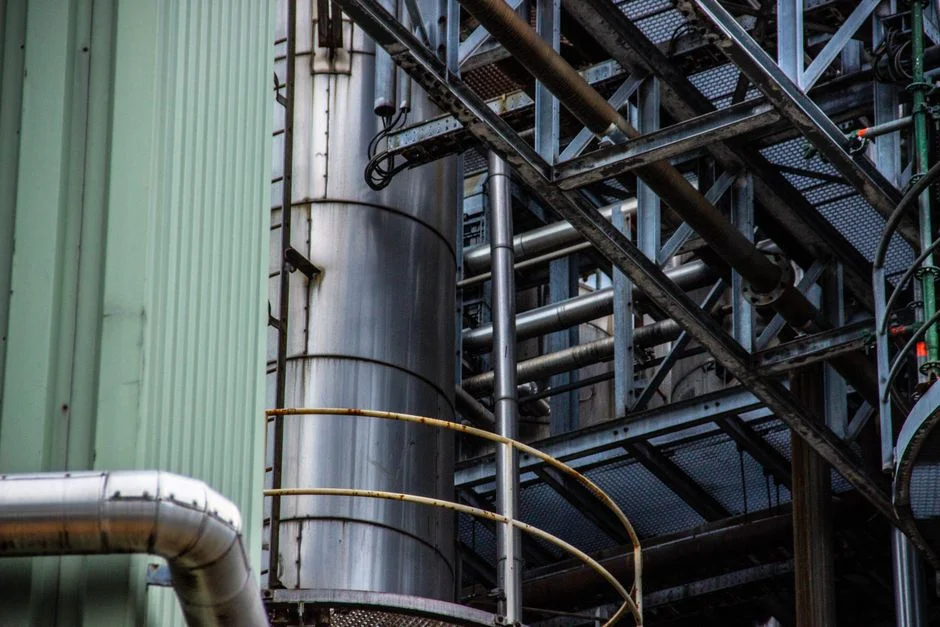
Spending sequence on a constrained capex: equalization and PLC-controlled pH dosing first, DAF second, lamella clarifier third, MBR or biological polishing fourth, carbon polishing last (per S3). Over-sizing equalization costs materially less than a single pass-through excursion, so most engineers in the Calvert City area should err on the long side of retention (per S3).
If water reuse is on the roadmap, the MBR-plus-RO path displaces the secondary clarifier and pays back through reduced fresh-water purchase for non-contact applications. A industrial RO system downstream of the MBR produces reuse-quality water; a plate and frame filter press dewatersthe metal-rich and biological sludge from the clarifier and MBR stages so disposal volume tracks the actual solids load rather than the water fraction (per S3, HydropureWater RO and filter press specs).
Tie the retrofit justification to the categorical standard and the local-limit envelope, not to BOD reduction alone — that is the framing a regulator will accept. The 2024 EPA air study and the CIEHS biomonitoring push have raised the political cost of a pass-through excursion, so the cheapest insurance (a bigger equalization basin and a PLC dosing skid) almost always pencil first.
Frequently Asked Questions
Which 40 CFR categorical subpart applies to a Calvert City chemical plant?
For most chemical plants around Calvert City the most likely subparts are 40 CFR Part 414 (organic chemicals, plastics, and synthetic fibers), Part 415 (inorganic chemicals), Part 417 (soap and detergent manufacturing), Part 419 (petroleum refining), and Part 433 (metal finishing). Confirm the current subpart against the live 40 CFR text because EPA revises these on a multi-year cycle (per EPA, 2026).
Does falling under a categorical standard automatically make a Calvert City plant an SIU?
Yes. Per 40 CFR 403.3(v), an Industrial User becomes a Significant Industrial User the moment it is subject to a categorical pretreatment standard under 40 CFR Parts 405–471, regardless of flow. The Calvert City sewer plant will then issue a control mechanism and require a BMR, 90-day compliance reports, and routine inspections under 40 CFR 403.12 (per EPA, 2026).
What is the typical pH window a Calvert City chemical plant must hold?
Typical local pH limits fall in the 6–9 window, consistent with the federal floor for sanitary sewer discharge. Confirm against the current local-limits letter from the Calvert City sewer plant, because the Control Authority can tighten the window for specific users under 40 CFR 403.5(c) (per S2; per EPA, 2026). A PLC-controlled dosing skid tied to in-line pH probes is the standard hardware answer for holding that window reliably.
How does a chemical plant strip ethylene dichloride, vinyl chloride, and benzene before discharge?
Biological polishing alone is insufficient for chlorinated VOCs. The six-stage train uses equalization, PLC pH control, DAF, chemical precipitation plus a lamella clarifier, a submerged MBR, and a multimedia plus activated-carbon polishing stage as the final guard against trace EDC, vinyl chloride, and benzene — the three chemicals CIEHS is currently tracking in Marshall County (per S3; per S5). GAC contact time and media selection are sized against the local limit envelope, not against influent TOC alone.