What Austin Water Actually Requires from an EV or Auto Plant
An EV or auto plant that ties into the Austin Water sanitary sewer inherits a three-layer compliance stack: a local ordinance, federal categorical standards, and the city's own discharge-permit framework. The local layer is Chapter 15-10 of the Austin City Code, the umbrella wastewater regulation administered by Austin Water's Industrial Waste (Pretreatment) program (per austintexas.gov/water/industrial-waste-plan-review-pretreatment-plan-review). Industrial Waste approval is required before any new construction, plumbing change, or process change that could affect the quality or quantity of industrial wastewater discharged to the City sanitary sewer — a gate the city enforces strictly because every gallon a gigafactory sends to the interceptor must pass through the Walnut Creek or South Austin water reclamation plants.
On top of Chapter 15-10 sits the federal pretreatment framework: 40 CFR 403 (the General Pretreatment Program) plus the categorical standards in 40 CFR Chapter I, Subchapter N. For an auto/EV plant, the most relevant category is almost always 40 CFR 433 (Metal Finishing), which sets numeric daily-maximum and monthly-average limits on lead, zinc, cadmium, copper, nickel, total chromium, oil & grease, TSS, and pH (per austintexas.gov/water/obtaining-renewing-discharge-permit). Any operation that falls under a categorical standard is automatically classified as a Categorical Significant Industrial User, which removes any ambiguity about permit type.
Austin Water splits discharge permits into two tracks. A General Industrial User (GIU) permit covers low-risk operations: no self-monitoring required, periodic inspections by the Pretreatment Program, and automatic renewal each December. A Significant Industrial User (SIU) permit is required when the operation meets any federal SIU criterion (categorical standards, slug potential, hydraulic/organic loading thresholds) and triggers mandatory self-monitoring, reporting, and record-keeping (per austintexas.gov/water/obtaining-renewing-discharge-permit). The plant's process mix — not its size alone — determines which permit applies.
The Wastewater Streams a Gigafactory Actually Generates
Designing pretreatment without a stream-by-stream audit is the most common reason EV/auto projects get a plan-review rejection on the first submission. A Tesla-class plant generates five distinct wastewater streams, each with its own pollutant signature, peak-flow profile, and applicable rule.
Stamping and body shop. Draw lubricants, tramp oil, and oil-in-water emulsions from blanking, stamping, and robotic welding cells drive the 25 mg/L oil & grease limit at the point of discharge (S2). These streams are typically high-flow, intermittent, and prone to slug loads when a die change or coolant top-up occurs.
Pretreatment and e-coat. Phosphate, zinc-rich, and chrome rinse waters from the immersion and e-coat lines fall directly under 40 CFR 433 metal-finishing categorical standards. Lead, zinc, cadmium, total metals, oil & grease, TSS, and pH limits all apply, and the rinse-water flow rates — usually 5–25 gpm per stage in a body shop — add up fast against the 25,000 gpd individual-control trigger.
Cathode/anode coating and electrolyte washwater. EV cell lines add solvent-bearing (NMP), fluoride-bearing (binder wash), and lithium-bearing streams that combine organic and inorganic load. Even with no paint line, this stream is enough to push a plant into categorical SIU status if any 40 CFR 433 subcategory applies.
Paint shop and TMP scrubber blowdown. Overspray, detack washwater, and thermal oxidizer / TMP (tenter-frame oxidative) scrubber blowdown generate high COD, color, and low-pH episodes that demand neutralization and solids removal before discharge. The scrubber itself is a continuous blowdown source typically sized at 5–30 gpm per booth with a pH swing of 2–9 depending on reagent stage.
Boiler blowdown, cooling-tower bleed, and reverse-osmosis reject. Low-pollution streams, but high in temperature and total dissolved solids. Austin enforces a 105°F (65°C) source temperature cap and a 104°F (40°C) headworks cap (S2), so these streams have to be cooled and routed separately from process drains.
| Stream | Key Pollutants | Typical Flow Range | Applicable Rule |
|---|---|---|---|
| Stamping / body shop | Tramp oil, emulsified lubricants, TSS | 20–80 gpm intermittent | 25 mg/L oil limit (S2) |
| Pretreatment / e-coat rinse | Zinc, phosphate, nickel, TSS | 5–25 gpm continuous | 40 CFR 433 categorical metals |
| Cathode/anode coating wash | NMP, fluoride, lithium, COD | 10–40 gpm batch | 40 CFR 433 + slug control |
| Paint + TMP scrubber blowdown | COD, color, low pH, TSS | 5–30 gpm continuous | Chapter 15-10 local limits |
| Boiler / cooling-tower / RO reject | Temperature, TDS, hardness | 15–60 gpm continuous | 105°F source / 104°F headworks (S2) |
Designing the Pretreatment Train: Unit Process by Unit Process
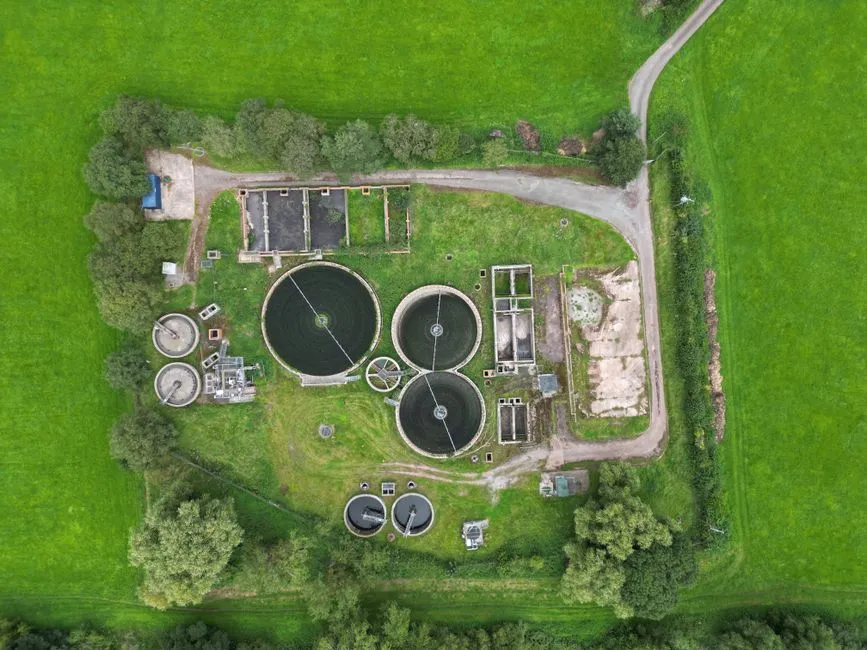
Once the streams are mapped, the train is straightforward — but the unit-process choices have to match the chemistry of each stream, not a generic checklist. The first piece is a rotary mechanical bar screen for industrial headworks, typically 3–6 mm aperture, to protect pumps and the DAF from rags, wipers, and shop debris that always make it past floor drains. Skipping headworks is the most common cause of DAF pump cavitation in the first 90 days of operation.
Next comes oil-water separation. An API/CPI separator or a coalescing plate interceptor ahead of the DAF brings free and emulsified oil down from several thousand mg/L to under 100 mg/L, which gives the downstream DAF system for oil and TSS removal a realistic shot at the 25 mg/L discharge limit. DAF units in this duty class are typically rated 4–300 m³/h, with whitewater saturation at 50–80 psig and hydraulic loading of 2–5 gpm/ft². Field data shows 90%+ oil & grease removal on stamping effluent when the upstream CPI is sized correctly (HydropureWater field data, 2026).
Equalization is explicitly listed by Austin as a permit trigger — using an equalization tank before discharge is one of the criteria for requiring an individual control mechanism (S2). An EQ basin sized to 4–8 hours of average flow with mechanical mixing gives the plant the surge capacity to absorb die-change dumps and CIP return flows without violating the 25 mg/L oil ceiling on a peak day.
pH neutralization is verified by Austin's Industrial Waste team during plan review (austintexas.gov). A two-stage acid/base neutralization skid with mixing and inline pH probes is standard: a 5–10 minute detention stage brings pH to roughly 6–9 before it reaches the DAF, protecting both the float chemistry and the downstream sewer.
PLC-controlled chemical dosing for coagulation ahead of the DAF handles emulsified oil and colloidal metals. Coagulants (alum, PAC, or ferric chloride at 50–200 mg/L) and flocculants (anionic polyacrylamide at 1–5 mg/L) are matched to the stream — flocculant selection is where most gigafactory plants lose 20–30% of DAF performance in the first month of operation.
Heavy-metals precipitation follows DAF on the e-coat and cathode-coating streams. Hydroxide precipitation (pH 8.5–9.5 for zinc, 10–11 for cadmium) or sulfide precipitation (NaHS or Na₂S) drops metals to meet 40 CFR 433 daily-maximum and monthly-average limits. A dedicated reaction tank with 20–30 minutes of detention and a lamella clarifier for solids capture is typical.
Polishing and sludge handling close the train. A lamella clarifier for polishing takes DAF effluent to under 30 mg/L TSS, and a plate-and-frame filter press for ETP sludge dewaters the combined float and clarifier sludge to 25–35% dry solids for off-site disposal. The filter press also reduces haul volume by 80–85% versus liquid sludge.
| Unit Process | Target Pollutant | Typical Performance | Design Note |
|---|---|---|---|
| Rotary bar screen (3–6 mm) | Rags, debris | >95% capture | Headworks protection |
| API / CPI separator | Free oil | Down to <100 mg/L | Pre-DAF |
| Equalization basin | Flow / load spikes | 4–8 hr HRT | Permit trigger if used (S2) |
| pH neutralization (2-stage) | pH excursions | 6–9 steady | Inline probe + auto valve |
| Coagulation / flocculation | Emulsified oil, colloids | >90% turbidity cut | Polymer matched to stream |
| DAF (4–300 m³/h) | Oil & grease, TSS | 90%+ O&G removal | Workhorse unit |
| Metals precipitation | Zn, Pb, Cd, Cu, Ni | Meets 40 CFR 433 | pH 8.5–11 |
| Lamella clarifier | TSS polishing | <30 mg/L TSS | Post-precipitation |
| Filter press | Sludge volume | 25–35% DS cake | Reduces haul 80–85% |
Meeting the Specific Numeric Limits Austin Enforces
The numbers below are what the plant actually has to hit on a daily-max and monthly-average basis. Designing to these limits with margin is the difference between a smooth first year and a notice of violation during commissioning.
Oil & grease. Under 25 mg/L (S2). Design the DAF to consistently deliver under 15 mg/L so a single upset doesn't push the plant over the ceiling — this is the most commonly exceeded parameter on commissioning day.
Temperature. Under 105°F (65°C) at the point of discharge, and the headworks of the receiving WWTF must not exceed 104°F (40°C) (S2). E-coat and welding effluent often need a cooling-tower loop or quench dilution before they reach the sewer.
pH. Austin's convention is 6–9 for continuous discharge. Hold the neutralization skid in this band with auto-dosing, not manual.
Permit-trigger thresholds. A flow above 25,000 gpd, a hydraulic or organic loading above 5% of the WWTF's average dry-weather capacity, use of an equalization tank, or coverage by any EPA categorical standard all force an individual control mechanism (S2). The 25,000 gpd trigger is the single most-misread number in EV/auto plan reviews.
Categorical metals (40 CFR 433). Daily maximum and monthly average limits apply to lead, zinc, cadmium, copper, nickel, and total chromium. Analytical sampling is typically 24-hour composite, with reporting on a monthly cadence per Austin's SIU rules (austintexas.gov/water/obtaining-renewing-discharge-permit). A lab that can return metals by ICP-MS within 48 hours is essentially required.
| Parameter | Austin Limit | Design Target | Sample Type |
|---|---|---|---|
| Oil & grease | <25 mg/L (S2) | <15 mg/L | Grab |
| Temperature (source) | <105°F / 65°C (S2) | <95°F | Continuous |
| Temperature (headworks) | <104°F / 40°C (S2) | <95°F | Continuous |
| pH | 6–9 (City convention) | 6.5–8.5 | Continuous |
| TSS (categorical) | Per 40 CFR 433 | <30 mg/L | Composite |
| Lead (daily max) | 0.69 mg/L (40 CFR 433) | <0.4 mg/L | 24-hr composite |
| Zinc (daily max) | 2.61 mg/L (40 CFR 433) | <1.5 mg/L | 24-hr composite |
| Cadmium (daily max) | 0.69 mg/L (40 CFR 433) | <0.3 mg/L | 24-hr composite |
| Copper (daily max) | 3.38 mg/L (40 CFR 433) | <2.0 mg/L | 24-hr composite |
| Nickel (daily max) | 3.98 mg/L (40 CFR 433) | <2.0 mg/L | 24-hr composite |
Permit Path: From Site Plan to First Discharge
Step 1 — Early contact. Schedule a virtual or in-person appointment with Austin Water Industrial Waste at 512-974-7293 before submitting site plans. Pretreatment specialists are assigned by zip code, and engaging them early avoids a rejected first submission (austintexas.gov).
Step 2 — Site Plan Review. Add Industrial Waste to the reviewer list when plans go to Land Use Review. The IW Site Plan Review Checklist (PDF) covers required sheets; download it and pre-fill before the meeting (austintexas.gov).
Step 3 — Building Plan Review. Submit pretreatment device sizing, P&IDs, and equipment cut sheets. The Industrial Waste Approval Letter is required before procurement or installation — installing before this letter is one of the most common reasons for permit denial and rework (austintexas.gov).
Step 4 — Permit application. File either the GIU or SIU Wastewater Discharge Permit Application. GIU permits renew automatically each December; SIU permits require a baseline monitoring report and a slug-load prevention plan (per austintexas.gov/water/obtaining-renewing-discharge-permit).
Step 5 — Commissioning and first discharge. Run the system on clean water first, then on segregated process streams, then on combined flow. Baseline monitoring reports, slug control documentation, and operator training records must all be on file before any drop enters the City sanitary sewer. For a deeper look at how a comparable plant handled its ETP diligence, see this Ford factory ETP due diligence walkthrough, and for DAF-specific P&ID work, the DAF process flow diagram walkthrough covers the whitewater and skimmer geometry in detail. For plants weighing the same rule stack in a different jurisdiction, the transportation equipment pretreatment compliance in other U.S. jurisdictions piece is a useful cross-check.
Frequently Asked Questions
What permit do I need if my plant is in Travis County but outside Austin city limits?
Any project within Austin's Extra-Territorial Jurisdiction or other political subdivisions that connects to Austin Water for water or wastewater service still requires Industrial Waste review, and any proposed industrial wastewater discharge must include adequate pretreatment and comply with all applicable effluent limitations (per austintexas.gov). If the site uses a different utility — for example, a private POTW or a neighboring municipality — that utility's pretreatment program applies, and the rule stack may differ.
Does a battery gigafactory trigger 40 CFR 433 even if there is no paint line?
It depends on the subcategory. The cathode-coating and electrolyte-wash streams may be covered by 40 CFR 433 if any metal-finishing operation (electroplating, anodizing, etching, or conversion coating) is present. A plant that only does cell assembly with no metal-finishing step may instead fall under a different subcategory or be a non-categorical SIU. The categorical determination should be made in writing with Austin Water's Pretreatment Program before the building plan is submitted.
How fast does Austin Water typically review a pretreatment plan for a new gigafactory?
Plan-review timelines vary with submission quality. A first-cycle review typically takes 3–6 weeks; resubmissions run shorter if the IW Site Plan Review Checklist has been followed. For a multi-billion-dollar plant, the practical risk is not the review duration but a rejection that triggers equipment redesign — which is why early pre-submission meetings with the assigned pretreatment specialist are standard practice.
What happens if I exceed 25 mg/L oil during commissioning?
Exceeding 25 mg/L oil & grease at the point of discharge is a violation of Chapter 15-10 (S2). Austin Water can require pretreatment, control over quantities and rates of discharge, or rejection of the wastes, and may suspend sewer service if the discharge presents an imminent endangerment. A single exceedance can also trigger a formal enforcement action, so a startup plan that holds the DAF on partial recycles until streams stabilize is standard practice.
Can I send my scrubber blowdown to the storm sewer instead?
No. Discharges to the City storm system are regulated by the Watershed Protection Department (512-974-2540), and industrial wastewater — including TMP scrubber blowdown — is not authorized for the storm sewer. The blowdown must be pretreated and routed to the sanitary sewer under an active discharge permit (per austintexas.gov).