Why Chittagong's Industrial Buyers Are Sourcing New ETPs in 2026
Bangladesh DoE ECR 1997 Schedule 10 sets inland discharge at BOD <50 mg/L, COD <200 mg/L, TSS <150 mg/L, and pH 6–9; every export-facing factory in CEPZ, Anwara, and the Karnaphuli industrial belt must hit these numbers to renew its environmental clearance. Knit and woven garments account for more than 60% of Bangladesh's export revenue, and the Chittagong division hosts most of the country's large tanneries, frozen-fish plants, and the Sitakunda ship-breaking yards (Bangladesh DoE ECR 1997, Schedule 10). Compliance pressure is now layered: a buyer audit in the EU or US typically checks ZDHC Foundational or Progressive levels, and many Inditex and H&M suppliers are required to deliver tertiary polishing (MBR or ozone) regardless of what DoE formally enforces.
Audit failure is not theoretical. In 2025, at least three Bangladesh garment suppliers reportedly lost ZDHC Progressive status after audits flagged effluent color and surfactant residuals above ZDHC MRSL thresholds, forcing the facilities into a six-month corrective ETP upgrade cycle. Global pressure is also rising: a January 2025 New Scientist report found that US wastewater treatment plants discharge enough PFAS to push drinking-water exposure above safe limits for an estimated 15 million people (New Scientist, 2025-01). That signal is already being read by European buyers, who are starting to ask Chittagong exporters for PFAS monitoring data on textile and finishing lines. For a procurement manager, the practical question is no longer "do we need an ETP?" but "which process train gets us through both the DoE inspection and the next ZDHC audit?" — and that is the filter the rest of this guide applies, using the global COD and BOD discharge limit standards as the benchmark for tertiary targets.
Chittagong Industrial Effluent Profiles by Sector
Process selection starts with the influent, not the equipment catalog. Typical Bangladesh industrial influents fall in the range BOD 200–4,000 mg/L, TSS 300–3,000 mg/L, and COD/BOD ratio 1.5–2.5 (HydropureWater field data, 2025); matching your effluent to one of the four Chittagong sector profiles below determines which pre-treatment stage you specify to the manufacturer.
- Textile / garment washing (CEPZ, Karnaphuli): pH 9–12, COD 1,000–5,000 mg/L, high color, surfactants, and sulfides. Standard train is equalization → pH correction → DAF system for color and TSS → biological MBR. Direct discharge to a CAS system without DAF is the most common cause of color-compliance failures in ZDHC audits.
- Tannery (relocated Hazaribagh tanneries, Anwara cluster): chromium (total Cr 10–100 mg/L), high TDS, sulfide, BOD 2,000–4,000 mg/L. Chromium precipitation at pH 8–9 with NaOH or lime is mandatory before biological treatment; anaerobic + MBR is the standard polish. Residual Cr in effluent is a buyer-audit disqualifier.
- Food and fish processing (Karnaphuli river-based): high BOD, ammonia-nitrogen 50–200 mg/L, salt and protein load. DAF for fats, oils, and grease, followed by AAO (anaerobic/anoxic/aerobic) is preferred over aerobic-only because AAO handles the nitrogen load and the seasonal flow swings typical of fish processing lines.
- Ship-breaking (Sitakunda): oils, heavy metals, asbestos, and PCBs from hull stripping. Front-end must be dissolved air flotation plus chemical precipitation for metals; biological treatment is secondary to source segregation and hazardous-waste handling.
A common error in Chittagong procurement is sizing a biological stage without first specifying pre-treatment. The DAF or chrome precipitation stage handles 60–80% of the load that would otherwise overload the membranes, so the CAPEX logic in Section 6 only works if the pre-treatment is selected correctly — a pattern also seen in the industrial wastewater treatment in Dhaka market.
Comparing 5 Process Options: MBR, SBR, WSZ, DAF, and Conventional Activated Sludge
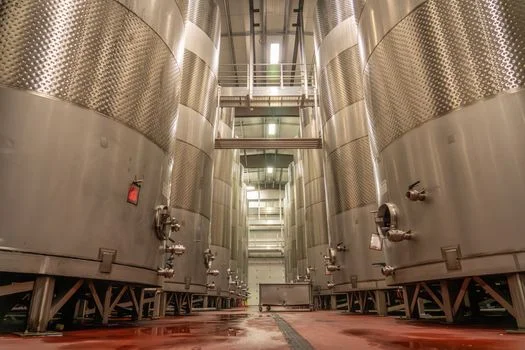
Below is the comparison table most Chittagong buyers will want to print and bring to vendor meetings. The CAPEX column is FOB China for a complete skid- or container-mounted unit, before sea freight, duty, and installation (pricing derived from Made-in-China supplier listings and HydropureWater 2026 catalog data). For an engineering deep-dive on the MBR vs CAS decision specifically, the MBR vs conventional activated sludge comparison covers operating cost and effluent stability in detail.
| Process | Capacity range | BOD removal | COD removal | Footprint vs CAS | CAPEX (USD FOB) | Main OPEX driver | Best Chittagong use case |
|---|---|---|---|---|---|---|---|
| MBR (membrane bioreactor) | 10–2,000 m³/day | 95–98% | Up to 95% (effluent COD <50 mg/L) | ~40% of CAS | $25,000–$180,000 | Membrane replacement every 5–8 yrs | Export-textile, tannery, ZDHC Progressive sites |
| SBR (sequencing batch reactor) | 50–5,000 m³/day | 90–95% | 85–92% | ~70% of CAS | $20,000–$150,000 | Electricity (cycle aeration) | Intermittent fish/food processing loads |
| WSZ underground package | 1–80 m³/h | 85–92% | 80–88% | Buried, zero surface | $8,000–$25,000 | Sludge hauling | Small garment units, CEPZ staff housing, hospitals |
| DAF pre-treatment | 4–300 m³/h | n/a (TSS/oil) | 30–50% | Small (skid) | $5,000–$30,000 | Polymer dosing | Front-end for textile, tannery, ship-breaking |
| CAS (conventional activated sludge) | 100–10,000 m³/day | 85–92% | 80–88% | 1.0× baseline | $15,000–$120,000 | Sludge handling | Low-spec municipal, inland discharge only |
For a textile or tannery plant serving an EU buyer, the MBR is effectively the only option that meets both DoE ECR Schedule 10 and ZDHC effluent quality in a single biological stage. The HydropureWater MBR membrane bioreactor system uses DF series flat sheet membrane modules in 80–225 m² configurations, rated at 32–135 m³/day per unit with 0.1 μm PVDF membranes. A complete WSZ underground package plant from the same manufacturer covers the small-capacity, buried-installation segment at the bottom of the market.
Chittagong-Specific Engineering Requirements: Climate, Logistics, and Materials
Generic Chinese catalogs rarely call out the conditions a Chittagong plant must survive. The city runs 70–85% relative humidity year-round, with monsoon flooding risk from May to October and persistent salt-laden air off the Bay of Bengal — a corrosion profile closer to marine than inland. Specify 316L stainless steel for all wetted parts, epoxy-coated carbon steel for tanks, and IP65-rated control panels; standard SS304 will pit inside 18–24 months in a CEPZ installation.
Containerized and skid-mounted packaging is the only realistic option for buyers without on-site fabrication capacity. A 20-ft or 40-ft ISO container holds a pre-assembled MBR or WSZ plant that has been factory-tested, hydrostatically, and electrically loop-checked before shipment, reducing on-site work to 2–3 weeks of piping and electrical tie-in. Sea transit from Shanghai or Ningbo to Chittagong Port is 14–21 days; build that into your project schedule plus 7–10 days for Bangladesh Customs clearance and inland transport to CEPZ or Anwara. Bangladesh grid instability (frequent load-shedding outside Dhaka) means a backup generator sized for at least the aeration blowers, plus PLC panels with voltage stabilizers. Finally, stock 12 months of membranes, diffusers, and dosing-pump spares on day one — a single missed membrane delivery can idle a 500 m³/day plant for 30+ days, as documented in the MBR system supplier in Indonesia market, where the same 14–21 day sea-transit constraint applies.
How to Evaluate a Wastewater Treatment Plant Manufacturer in Chittagong
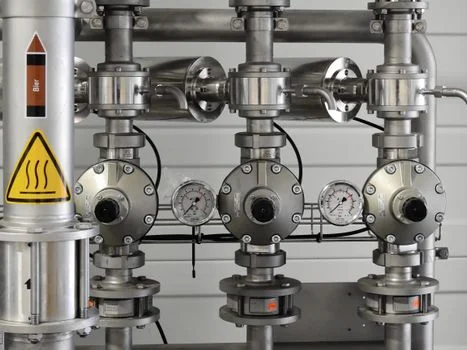
Run any shortlisted vendor — local Chittagong dealer, Dhaka trading house, or Chinese OEM — through this 7-point checklist. The benchmark is the certification stack published by Henan Eco (ISO 9001, ISO 14001, OHSAS 18001, HSE) as a Tier-1 Chinese wastewater OEM, and a comparable checklist was applied to the wastewater treatment plant manufacturer in Tashkent market with the same conclusions.
- Certifications: ISO 9001 quality, ISO 14001 environmental, CE for EU-bound shipments; OHSAS 18001 is a plus.
- Reference installations: minimum 3 reference plants in Bangladesh or South Asia; ask for contact details of the plant engineer, not the sales office.
- Process transparency: require guaranteed effluent parameters in writing on the contract — BOD, COD, TSS, color, chromium (for tannery) — with a liquidated-damages clause if the values are missed during the 30-day performance test.
- Local service: commissioning engineers in Chittagong or Dhaka, with a contractual 24-hour response SLA for the first 12 months.
- Spare parts inventory: either a local warehouse or a guaranteed 7-day air-freight from China for critical spares (membranes, diffusers, dosing pumps).
- Warranty: minimum 12 months on mechanical equipment, 24 months on membrane modules, and a separate performance warranty tied to the guaranteed effluent parameters.
- Documentation: English-language O&M manual, electrical drawings, P&ID, and PLC program backup on a USB drive shipped with the plant — not a WeChat transfer at commissioning.
Vendors who fail on items 3, 5, or 7 are the ones who disappear after the 30% advance payment clears. The contract stage is the only leverage you have to force these commitments.
CAPEX and OPEX in BDT: 2026 Budget Ranges for Chittagong Buyers
The numbers below translate FOB China pricing into a BDT-denominated installed cost, using a 1 USD ≈ 118 BDT reference rate (2026-01), Bangladesh import duty 5%, VAT 15%, AIT 5%, and a typical 15% of FOB for inland installation, piping, electrical, and civil works. The FOB anchors are based on Made-in-China comparable listings ($5,000–$11,900 for containerized biogas units, $20,000–$59,000 for high-density sedimentation tanks) and HydropureWater 2026 MBR catalog pricing.
| Plant size | Process | FOB China (USD) | Sea freight to Chittagong (USD) | Customs + VAT + AIT (USD) | Installed cost (BDT) |
|---|---|---|---|---|---|
| 50 m³/day | WSZ package + DAF | $15,000 | $2,500 | $4,200 | ~30–35 lakh BDT |
| 200 m³/day | MBR + DAF + dosing | $80,000 | $8,000 | $22,400 | ~1.1 crore BDT |
| 500 m³/day | MBR + DAF + AAO | $180,000 | $14,000 | $48,000 | ~2.8–3.0 crore BDT |
| 1,000 m³/day | 2× MBR + DAF + sludge press | $340,000 | $22,000 | $90,000 | ~5.2–5.6 crore BDT |
OPEX for a typical 200 m³/day MBR plant in Bangladesh breaks down as: electricity 30–40% (blowers and pumps are the dominant load), chemicals 20–30% (polymer, NaOH, HCl, defoamer), sludge handling 15%, labor 10%, and membrane replacement 5–8% amortized over 5–8 years (per HydropureWater OPEX model, cross-referenced with the DAF plant operating cost breakdown). For a 200 m³/day MBR, expect monthly OPEX of BDT 4–6 lakh including power, chemicals, and one operator shift. Budget at least 12 months of consumables on day one to ride out Chittagong Port clearance delays.
Frequently Asked Questions
What is the typical CAPEX for a 200 m³/day ETP in Chittagong? A 200 m³/day MBR plant with DAF pre-treatment and an automatic chemical dosing system lands at roughly 1.1 crore BDT installed, with FOB China around $80,000, sea freight $8,000, and Bangladesh duty + VAT + AIT adding about $22,400 to the imported equipment value (HydropureWater 2026 estimate).
Which process train is best for a CEPZ garment exporter facing a ZDHC audit? MBR after DAF pre-treatment is the standard answer — BOD removal of 95–98% and effluent COD below 50 mg/L is what gets textile exporters through ZDHC Foundational and Progressive audits (per HydropureWater field data, 2025).
Does a Chinese-manufactured ETP meet Bangladesh DoE ECR Schedule 10? Yes, provided the contract specifies guaranteed effluent parameters of BOD <50 mg/L, COD <200 mg/L, TSS <150 mg/L, and pH 6–9 — the DoE ECR 1997 Schedule 10 inland discharge limits. Any OEM quoting "meets local standards" without numbers is one to avoid.
How long does it take to ship a containerized ETP from China to Chittagong? Sea transit from Shanghai or Ningbo to Chittagong Port is 14–21 days, plus 7–10 days for Bangladesh Customs clearance and inland transport — plan a total of 30–35 days from factory dispatch to site delivery.
What is the smallest ETP a CEPZ garment unit can install? The WSZ underground package plant handles 1–80 m³/h and is suitable for small garment washing units, with FOB pricing from $8,000–$25,000; a 50 m³/day installed system in Chittagong lands at roughly 30–35 lakh BDT including duties and installation (HydropureWater 2026 estimate).