Why Manila Is a Different WWTP Sourcing Market in 2026
The Manila wastewater treatment sourcing market in 2026 is anchored by the Ilugin 100 MLD SBR plant in Pasig City — a Manila Water Company project expandable to 150 MLD and serving roughly 600,000 residents, executed by WABAG with full biological, thickening, dewatering, and odour-control trains. That single project has reset the design expectations for every Metro Manila quotation, because municipal-grade SBR with fine screening and grit removal is now the baseline reference, not a premium option. The procurement engineer in 2026 is therefore not buying a generic "WWTP" — they are buying a system that must be benchmarked against Ilugin-class process intensity, or it will fail DENR scrutiny on the first discharge test.
Demand is also being pulled outward from Metro Manila proper. PEZA-registered manufacturing in Cavite, Laguna, and Batangas has driven a parallel build-out of industrial STP and ETP capacity outside the NCR, and these ecozone locators face a tighter permitting pathway than free-port Manila buyers. On top of that, the Pasig River rehabilitation program has functioned as a regulatory tailwind through 2025 and into 2026, with stricter enforcement of DENR DAO 2021-19 for industrial discharges into the river's tributaries. The supplier landscape now resolves into three tiers: Manila-based local fabricators with strong service reach but shallow process depth; regional Asian OEMs from India, China, and Korea that ship containerized package plants; and global EPCs that handle the Ilugin-scale municipal work. The cost-vs-service trade-off across these three tiers is the central decision the buyer must make, and it is the reason generic global WWTP guides fail Manila procurement teams. For OPEX reality checks across the three tiers, the MBBR OPEX benchmarks for moving-bed biofilm reactor systems offer a useful cross-reference for biological-process quotations.
DENR DAO 2021-19 Effluent Standards Every Manila WWTP Must Hit
DENR DAO 2021-19 sets the new-source effluent limits that every Manila quotation must be designed to, and any manufacturer that does not name these parameters explicitly in the technical datasheet should be eliminated from the shortlist. The table below consolidates the key parameters from the DAO 2021-19 series for industrial discharges to inland waters (Class C) and to coastal / Manila Bay tributary waters (Class B).
| Parameter | Class C Inland (new source) | Class B Coastal / Manila Bay tributary | Notes for Manila buyers |
|---|---|---|---|
| BOD₅ | ≤ 30 mg/L | ≤ 30 mg/L | Same ceiling across classes; non-negotiable for new discharges |
| TSS | ≤ 50 mg/L | ≤ 50 mg/L | Drives MBR or polishing-sedimentation selection |
| COD | ≤ 100 mg/L | ≤ 100 mg/L | Rarely tighter than BOD×3 in practice; flag any tighter bid |
| Oil & Grease (FOG) | ≤ 5 mg/L | ≤ 5 mg/L | Drives DAF pre-treatment in food, F&B, and metalworking |
| pH | 6.0 – 9.0 | 6.0 – 9.0 | Standard range; chemical dosing system required outside the band |
| Total Coliform | ≤ 3,000 MPN/100 mL | ≤ 1,000 MPN/100 mL | Manila Bay tributaries require the tighter Class B ceiling |
| Ammonia-N (NH₃-N) | ≤ 10 mg/L (typical) | ≤ 7.5 mg/L (typical) | Drives SBR or A/O nitrification design for high-N hog and food waste |
Manila Bay tributaries — Marikina, Pasig, Tullahan, and the Las Piñas–Zapote river system — fall under Class B coastal discharge standards, which means coliform at 1,000 MPN/100 mL and the same BOD/TSS envelope as Class C. Buyers discharging into Laguna de Bay additionally need an LLDA discharge permit under LLDA Resolution 033 series, which layers stricter total phosphorus (≤ 1 mg/L in some catchments) and total nitrogen controls on top of DAO 2021-19. PEZA locators inside the ecozones face a third layer: the PEZA Environment, Safety and Health unit reviews the design against DAO 2021-19 and the ecozone's own effluent guidelines, and the LLDA pathway is replaced by PEZA's in-house discharge approval. A manufacturer that quotes without naming LLDA or PEZA pathway compliance is quoting blind.
Industry-Specific Influent Profiles Shaping Manufacturer Selection
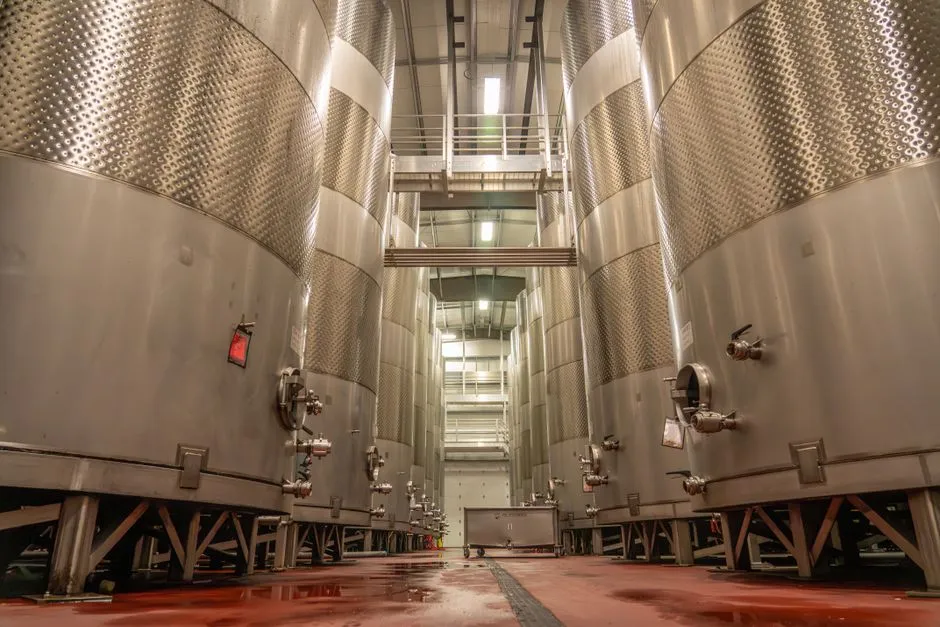
Manila's industrial wastewater character varies more by sector than by plant size, and the manufacturer's reference list must match the actual influent profile or the design will fail at commissioning. Food and beverage facilities — coconut processing in Quezon, sardine canning in Navotas and Zamboanga, and beverage bottling in Laguna — typically show BOD at 1,500–4,000 mg/L and FOG at 200–800 mg/L. That envelope demands a DAF primary stage followed by anaerobic (typically UASB) and aerobic polishing, and a manufacturer without a proven DAF + anaerobic reference should not be on the F&B shortlist.
Semiconductor and electronics facilities in Laguna PEZA — including the large fabs along the Laguna–Cavite border — produce a fundamentally different stream: low BOD (often < 300 mg/L) but elevated fluoride, heavy metals (Cu, Ni, Pb in the µg/L range), and a high fraction of recalcitrant organics from CMP slurries and photoresist. The treatment train here is chemical dosing (lime, coagulants, sulfide or TMT for metals) followed by an MBR or RO polishing stage to meet the strict reuse or discharge limits. A supplier whose only references are municipal STPs is the wrong fit for this segment.
Hog farming in Bulacan and Batangas generates wastewater with ammonia nitrogen in the 400–800 mg/L range, BOD often above 5,000 mg/L, and high suspended solids from manure flushing. Nitrification is the bottleneck stage, and the SBR configuration proven at the Ilugin plant — a fill-react-settle-decant cycle with dedicated aerobic react time — is the same design logic applied at smaller scale for swine operations. Hospital and pharmaceutical facilities in Metro Manila need disinfection to the DAO 2021-19 coliform ceiling of 1,000–3,000 MPN/100 mL, and ClO₂ or ozone is now preferred over chlorination to avoid residual disinfection by-products. For coliform and disinfection compliance, the hospital wastewater treatment process design and coliform compliance guide offers a parallel reference framework.
Manufacturer Evaluation Matrix for Manila Buyers
A defensible Manila shortlist scores every quote against seven weighted criteria, because price alone will mislead the procurement engineer into a Chinese OEM bid that fails at commissioning. The matrix below allocates weights that mirror the actual risk profile of Philippine industrial projects: regulatory compliance is weighted highest, followed by process fit and reference depth, with pure CAPEX given less weight than the global WWTP sourcing guides typically assign.
| Criterion | Weight | Manila local fabricator | Chinese OEM exporter | Regional Asian OEM with Manila agent |
|---|---|---|---|---|
| 1. DAO 2021-19 compliance guarantee | 25% | Strong (3.5/5) | Weak — must be contractually pinned (2.0/5) | Strong (4.0/5) |
| 2. Process fit to influent | 20% | Mixed (3.0/5) | Strong on standard trains (3.5/5) | Strong (4.0/5) |
| 3. Philippine reference list (≥ 50 installs) | 15% | Variable (3.0/5) | Often < 50 (1.5/5) | Often 50+ via agent (3.5/5) |
| 4. CAPEX in PHP/m³/day | 15% | Weak — typically 25–40% above OEM (2.5/5) | Strong (4.5/5) | Balanced (3.5/5) |
| 5. Luzon-based service coverage | 15% | Strong (4.5/5) | Weak — fly-in engineer only (2.0/5) | Balanced (3.5/5) |
| 6. Lead time to Manila port / site | 5% | Strong (4.5/5) | Weak — 8–12 weeks sea freight (2.0/5) | Balanced (3.0/5) |
| 7. Warranty & spare parts (24+ months) | 5% | Strong (4.0/5) | Mixed (2.5/5) | Balanced (3.5/5) |
| Weighted total | 100% | 3.42 / 5 | 2.74 / 5 | 3.71 / 5 |
The weighted score is not a popularity contest — it is an audit trail. A Manila local fabricator with strong service reach but shallow process depth scores 3.42, a Chinese OEM exporter scores 2.74 because of weak service and weak Philippine references, and a regional Asian OEM with an established Manila agent scores 3.71 by balancing CAPEX against compliance and service. The reference-depth threshold should be hard: any supplier below 50 Philippine installs is a red flag, and an OEM with the kind of multi-thousand-installation track record that serious Manila industrial buyers expect — see the 750+ installed projects benchmark that defines credible Indian and regional Asian OEMs — is the floor, not the ceiling. For process-equipment sub-criteria like chemical dosing on F&B streams, the chemical dosing system selection for food and beverage wastewater guide provides a useful pre-qualification filter.
2026 CAPEX and OPEX Benchmarks for Package WWTPs in the Philippines
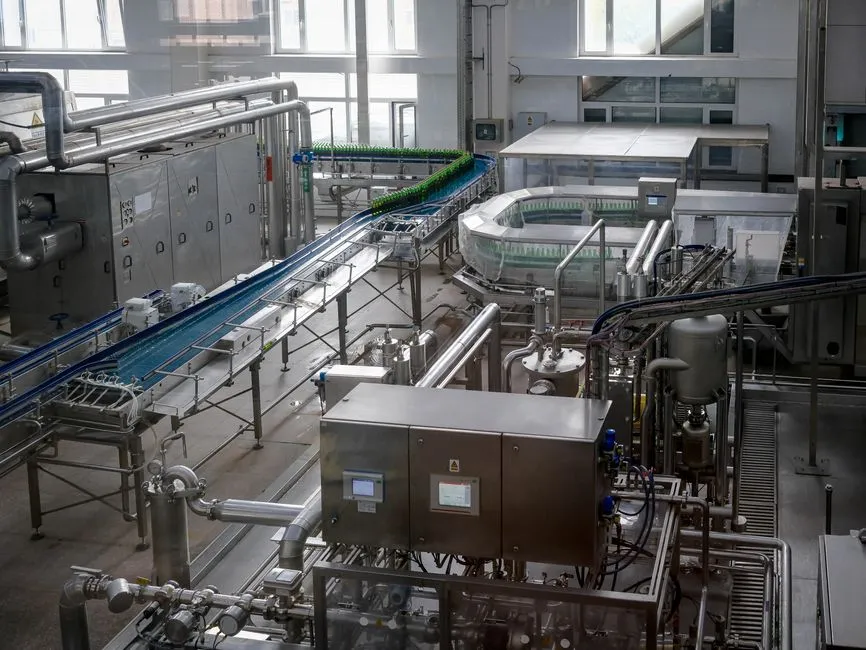
Manila buyers should anchor every quotation to a CAPEX and OPEX benchmark expressed per cubic meter per day, because the absolute PHP figure on a quotation is meaningless without the design capacity attached. The table below consolidates 2026 ranges for package plants shipped into the Philippines, based on HydropureWater field data and cross-referenced against MBBR operating cost data ranges for the larger sizes. Convert at PHP 56–58 per USD for the 2026 reference rate.
| Plant class | Capacity range | CAPEX (USD / m³/day) | CAPEX (PHP / m³/day at PHP 57) | OPEX (USD / m³ treated) | Typical configuration |
|---|---|---|---|---|---|
| Package STP (small) | 10 – 50 m³/day | 250 – 450 | 14,250 – 25,650 | 0.08 – 0.15 | Containerized MBR or SBR, suited to a package sewage treatment plant for small Luzon communities and commercial facilities |
| Mid-size ETP | 50 – 500 m³/day | 350 – 650 | 19,950 – 37,050 | 0.10 – 0.20 | DAF + SBR/MBBR, often paired with a PLC-controlled chemical dosing system for pH and coagulation control |
| Large industrial WWTP | 500 – 5,000 m³/day | 500 – 900 | 28,500 – 51,300 | 0.06 – 0.18 | Anaerobic + MBBR/MBR, with a DAF system for FOG and suspended solids pre-treatment on F&B streams |
| High-purity / semiconductor | 100 – 1,000 m³/day | 700 – 1,400 | 39,900 – 79,800 | 0.15 – 0.35 | Chemical dosing + MBR or RO polishing, requiring an MBR membrane bioreactor system for high-strength industrial effluent |
Chinese OEM bids land 25–40% below Manila local fabricator quotes on like-for-like specifications, but the procurement engineer must add 8–12 weeks of sea freight from Shanghai or Ningpo to Manila port, plus 2–3 weeks for commissioning crew mobilization and visa processing. The OPEX delta is smaller than the CAPEX delta — typically 10–20% lower for Chinese OEMs on electricity and chemicals, but often higher on consumables and spare parts logistics. For larger plant cross-checks, the CAPEX and OPEX breakdown for industrial WWTPs provides a useful sanity check against the Manila figures, since the European mid-range overlaps with the upper Manila band.
Step-by-Step Manufacturer Selection Workflow for Manila Projects
Manila procurement teams should run a structured six-step selection workflow over two to four weeks, because ad-hoc quotation comparison on price alone produces a plant that fails at commissioning. Step 1 is to define the influent profile — flow in m³/day, peak factor, BOD/COD/TSS/FOG/ammonia ranges — and the target effluent per DAO 2021-19 and the LLDA or PEZA pathway. Step 2 is to issue the RFQ to 5–7 manufacturers distributed across the three tiers: two Manila local fabricators, two regional Asian OEMs with Manila agents, and one to three Chinese OEM exporters, with the DAO 2021-19 parameters embedded in the technical datasheet requirements.
Step 3 is to score every returned quotation on the seven-criterion weighted matrix from the previous section, and reject any bid that does not name DAO 2021-19 parameters explicitly. Step 4 is a two-day site visit to the shortlisted manufacturer's nearest reference plant — within Luzon for local fabricators, Cebu or Pampanga for regional agents, and a fly-out to the OEM's home facility for Chinese exporters. Step 5 is to negotiate a performance warranty tied to the effluent test results on the 30-day commissioning run, not just an equipment warranty, with liquidated damages per mg/L above the DAO 2021-19 ceiling. Step 6 is to confirm the commissioning crew mobilization timeline, the local agent SLA for break-down response (target 24 hours in Metro Manila, 48 hours in provincial Luzon), and the spare parts consignment inventory held in a Manila or Laguna warehouse.
Frequently Asked Questions
What is the BOD₅ limit for a new industrial discharge in Manila under DAO 2021-19?
The DENR DAO 2021-19 new-source BOD₅ ceiling is ≤ 30 mg/L for both Class C inland and Class B coastal / Manila Bay tributary discharges, with TSS ≤ 50 mg/L and total coliform ≤ 1,000 MPN/100 mL for Class B (per DAO 2021-19).
How much does a package STP cost in the Philippines in 2026?
A 10–50 m³/day package STP lands at USD 250–450 per m³/day CAPEX (PHP 14,250–25,650 at PHP 57/USD) with OPEX at USD 0.08–0.15 per m³ treated, based on HydropureWater 2026 field data.
Do Manila Bay discharges require tighter effluent limits than inland waters?
Yes. Manila Bay tributaries fall under Class B coastal standards, which tighten total coliform to ≤ 1,000 MPN/100 mL versus ≤ 3,000 MPN/100 mL for Class C inland, while BOD₅ and TSS ceilings remain the same at 30 and 50 mg/L.
What is the typical lead time for a Chinese OEM WWTP shipped to Manila?
Sea freight from Shanghai or Ningpo to Manila port adds 8–12 weeks on top of manufacturing time, and commissioning crew mobilization plus visa processing adds another 2–3 weeks, per HydropureWater 2026 project data.
How many Philippine installations should a credible WWTP manufacturer have?
Manila buyers should require at least 50 Philippine installs as a hard floor, and serious regional Asian OEMs typically exceed 750 installed projects across Southeast Asia, which is the benchmark reference depth for industrial quotations above 100 m³/day.
Do PEZA locators need a separate LLDA discharge permit?
No. PEZA-registered facilities inside ecozone boundaries discharge under PEZA's in-house effluent approval, replacing the LLDA pathway, but the DAO 2021-19 numerical limits still apply as the floor standard.