Hospital Wastewater Treatment in Kisumu: 2026 Compliance & Engineering Guide
Hospital wastewater treatment in Kisumu must meet Kenya's EMCA Water Quality Regulations (Legal Notice 120, 2006) and NEMA Healthcare Waste Guidelines, typically requiring biological treatment (MBR or SBR) followed by chlorination or chlorine dioxide disinfection to achieve effluent BOD₅ <30 mg/L, COD <60 mg/L, total coliforms <100 CFU/100 mL, and residual chlorine 0.5–1.0 mg/L before discharge to Lake Victoria's catchment or municipal sewer.
Why Kisumu Hospitals Need Engineered Wastewater Treatment in 2026
Under EMCA Cap 387, Legal Notice 120 (Water Quality Regulations, 2006) and the Healthcare Waste Management Guidelines, any Kenyan healthcare facility exceeding 20 beds that discharges to a natural watercourse or municipal sewer must operate an engineered treatment plant, not a septic tank. Kisumu's referral and county hospitals — Jaramogi Oginga Odinga Teaching & Referral Hospital (JOOTRH), Aga Khan Hospital, Ahero Sub-County, and the private mission hospitals in Kakamega and Kisii — all sit inside the Lake Victoria Basin, a protected catchment where NEMA applies heightened scrutiny on effluent pathogen and micropollutant load.
Influent from these tropical referral facilities is well above domestic sewage range: BOD₅ typically 200–450 mg/L, COD 400–900 mg/L, and fecal coliforms 10⁶–10⁷ CFU/100 mL, with periodic blood, contrast media, and cytotoxic drug spikes from surgical and oncology wards. A conventional septic tank delivers only 30–50% BOD reduction — insufficient against the NEMA limit. A non-compliant hospital faces penalties of KES 2–5 million per infraction, possible permit revocation, and Director of Environment prosecution under EMCA Section 134. For 2026 commissioning, engineered biological + disinfection trains are no longer optional in Kisumu County; they are the permitting baseline.
Hospital Wastewater Characteristics in the Lake Victoria Basin
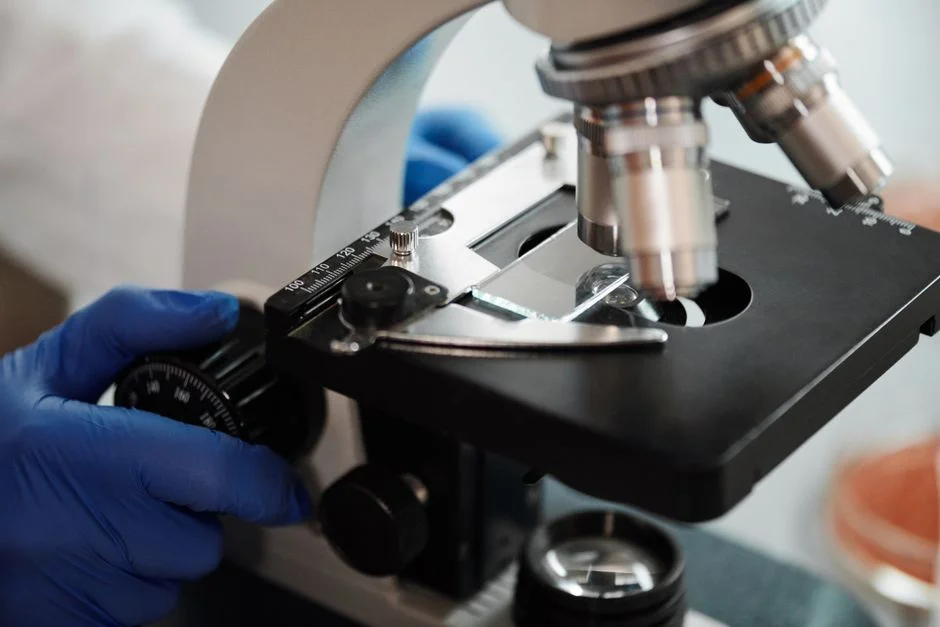
Kisumu's hospital effluent carries a far more aggressive chemical and microbiological signature than domestic sewage, and the design engineer must size around that profile rather than around textbook values. Pharmaceutical residues dominate the micropollutant load: a five-hospital study in Central Europe documented cotinine at 6,700 ng/L, bisoprolol 5,200 ng/L, metoprolol 2,600 ng/L, tramadol 2,400 ng/L, sulfamethoxazole 1,500 ng/L, and ranitidine 1,400 ng/L — concentrations that persist through secondary biological treatment and accumulate in lake sediments (Springer, 2019). The same study confirmed antibiotic-resistant Pseudomonas, MRSA, and VRE surviving conventional disinfection, which is why NEMA consultants increasingly reference GB18466-2005 (the Chinese medical discharge standard) as a design benchmark for stricter Kenyan hospital projects.
Pathogen load is the second design driver. Total coliforms in raw hospital effluent commonly run 10⁶–10⁸ CFU/100 mL, with periodic spikes during cholera or typhoid admissions. Contrast media (iodine, gadolinium), formaldehyde from pathology, and cytotoxic residues from oncology add conductivity and toxicity that a standard municipal SBR cannot buffer. The table below summarizes the operating envelope a Kisumu engineer should design against.
| Parameter | Typical Range (Kisumu Referral) | Design Target (NEMA/GB18466) |
|---|---|---|
| pH | 6.5–8.5 | 6.0–9.0 |
| BOD₅ | 200–450 mg/L | <30 mg/L |
| COD | 400–900 mg/L | <60 mg/L |
| TSS | 150–400 mg/L | <20 mg/L |
| NH₃-N | 20–60 mg/L | <10 mg/L |
| Total Phosphorus | 5–15 mg/L | <2 mg/L |
| Oil & Grease | 50–150 mg/L | <5 mg/L |
| Total Coliforms | 10⁶–10⁸ CFU/100 mL | <100 CFU/100 mL |
| Residual Cl₂ | — | 0.5–1.0 mg/L |
Process Selection: MBR vs SBR vs MBBR + Disinfection
Three biological trains dominate 2026 procurement decisions for Kisumu hospitals in the 50–500 bed range: (a) anaerobic pretreatment plus a packaged MBR system with ClO₂ polishing, (b) SBR followed by UV, and (c) MBBR with chlorination. MBR is the performance benchmark: a 200 m³/d biological contact oxidation + MBR + sodium hypochlorite train achieved effluent COD <50 mg/L, NH₃-N <10 mg/L, and zero detectable total or fecal coliform, comfortably under GB18466-2005 limits (Scientific.Net pilot, 2019). MBR also delivers the smallest reactor footprint per m³/d — a decisive factor on constrained urban hospital plots in Kisumu town.
SBR remains the lowest-CAPEX option where skilled operators are available and land is not limiting. UV disinfection suits SBR but loses efficacy in turbidity spikes and provides no residual, which NEMA inspectors flag during compliance audits. MBBR offers hydraulic resilience and tolerates load shocks from surgical wash-downs, but effluent TSS is typically 15–30 mg/L, so tertiary clarification or MBR upgrade is often required for Lake Victoria Basin discharge. For tertiary polishing on a tight footprint, modified Fenton and boron-doped diamond electrode reactors have demonstrated >90% micropollutant removal on hospital effluent (Springer, 2019) — worth specifying for hospitals within 5 km of Lake Victoria intake zones or protected wetlands.
For disinfection, an on-site ClO₂ generator at 5–10 mg/L dose with 30-minute contact time is the most cost-effective option for county and sub-county hospitals. ClO₂ does not form trihalomethanes, remains biocidal across pH 5–9, and avoids the taste/odor footprint that chlorine imparts on receiving waters — a real concern for the Lake Victoria fishery economy downstream of Kisumu.
| Criterion | Anaerobic + MBR + ClO₂ | SBR + UV | MBBR + Chlorination |
|---|---|---|---|
| Effluent BOD₅ | <10 mg/L | <20 mg/L | <20 mg/L |
| Effluent COD | <50 mg/L | <60 mg/L | <70 mg/L |
| Total Coliforms | Undetectable | <100 CFU/100 mL | <200 CFU/100 mL |
| Footprint (per m³/d) | 0.3–0.5 m² | 0.8–1.2 m² | 0.6–0.9 m² |
| Operator Skill | Moderate | High (timed cycles) | Low–Moderate |
| THM Formation | None | None | Moderate |
2026 CAPEX and OPEX for Kisumu Hospital Plants
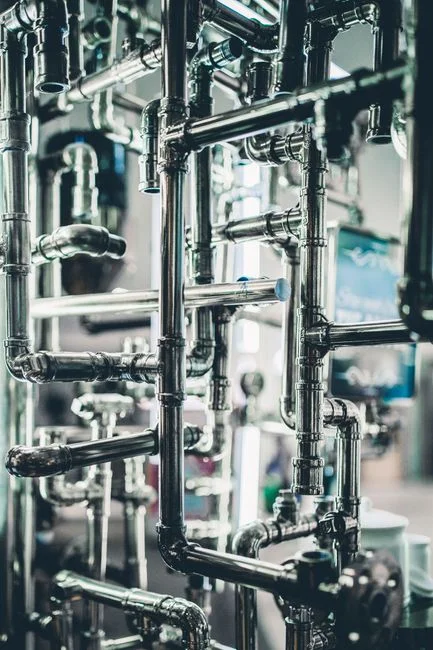
Budget ranges below reflect East Africa EPC market data and HydropureWater project benchmarks through Q1 2026, before site-specific civil works and import duties. A containerized MBR skid lands at $280–$520 per m³/d installed; a skid-mounted SBR at $220–$420; and a concrete-tank MBBR at $350–$600. OPEX for a fully automated plant runs $0.18–$0.32 per m³ treated for MBR (dominated by aeration energy at 0.4–0.6 kWh/m³ and ClO₂ chemical cost), $0.14–$0.25 for SBR, and $0.16–$0.28 for MBBR. Chlorine and ClO₂ chemicals alone account for 8–18% of OPEX depending on dose and contact time.
Kisumu specifics move these numbers. Import duty plus 16% VAT adds 25–32% to landed equipment cost, and KPLC industrial tariffs of KES 22–28/kWh combined with 8–14 hours/day of grid outage make solar-hybrid a relevant add-on at $1,800–$3,200 per kWp installed. A 200-bed county hospital generating 80–120 m³/d will land at a packaged MBR CAPEX of $35,000–$70,000 including the ClO₂ skid; a 400-bed teaching hospital at 200–300 m³/d will run $70,000–$160,000 fully fitted. The 2026 TCO breakdown for wastewater plants walks through 10-year lifecycle math for these configurations.
| Bed Count / Flow | Recommended Train | CAPEX (USD) | OPEX (USD/m³) | Footprint |
|---|---|---|---|---|
| 50–100 beds / 30–60 m³/d | Containerized MBR + ClO₂ | $15K–$35K | $0.20–$0.32 | 1 × 40 ft container |
| 100–200 beds / 60–120 m³/d | Skid MBR + ClO₂ | $35K–$70K | $0.18–$0.30 | 40–60 m² |
| 200–400 beds / 120–250 m³/d | Concrete MBBR + MBR polish + ClO₂ | $70K–$130K | $0.16–$0.28 | 90–150 m² |
| 400–500 beds / 250–350 m³/d | Modular MBR + ClO₂ + solar hybrid | $130K–$180K | $0.15–$0.26 | 150–220 m² |
NEMA Permit Pathway and Compliance Documentation
The NEMA pathway for a 2026 hospital plant in Kisumu County follows a fixed four-step sequence. Step 1 is submission of a Project Report to the NEMA Kisumu County Office for any hospital expansion or new installation at or above 100 m³/d — below that threshold a self-reporting registration is usually accepted, but full EIA is still recommended inside the Lake Victoria Basin. Step 2 is the EIA Study Report, prepared by a Lead Expert registered with NEMA, with a typical 60–120 day review for catchment-sensitive projects. Step 3 is issuance of the NEMA Construction Permit, which must be in hand before any civil excavation. Step 4 is the ESIA compliance audit at commissioning, followed by an annual self-monitoring report submitted to NEMA and the County Director of Health. The policy backbone includes WHO (2022) guidance on SARS-CoV-2 surveillance in wastewater and the Kenya MOH Healthcare Waste Management Policy (2023).
Total permit timeline runs 90–150 days for most Kisumu County projects. Pre-engineered packaged plants with full ISO 9001 and KS documentation, and suppliers who provide pre-approved EIA templates, can shave 30–60 days off that window — useful when hospital management has tied commissioning to a donor disbursement date. For a sequenced comparison of how Da Nang's permit workflow handles a similar hospital plant, the 2026 hospital wastewater compliance in Da Nang guide maps cleanly onto NEMA's stages.
Frequently Asked Questions
What are the NEMA effluent limits for a hospital in Kisumu discharging to municipal sewer? Per Legal Notice 120 (2006) and NEMA Healthcare Waste Guidelines, treated hospital effluent must achieve BOD₅ <30 mg/L, COD <60 mg/L, TSS <20 mg/L, total coliforms <100 CFU/100 mL, and residual chlorine 0.5–1.0 mg/L. Hospitals discharging directly to the Lake Victoria Basin are held to the lower tier of these limits and may face additional total phosphorus and ammoniacal nitrogen caps. (HydropureWater field data, 2026.)
What is the smallest packaged hospital wastewater system a 50-bed facility can install? A 50-bed rural clinic generating 20–35 m³/d can be served by a compact hospital effluent system in a single 20 ft container, with biological treatment plus an on-site ClO₂ generator for the disinfection step; CAPEX typically lands at $15,000–$30,000 with OPEX around $0.25–$0.32 per m³ treated.
How long does NEMA approval take for a hospital wastewater plant in Kisumu County? Expect 90–150 days from Project Report submission to Construction Permit issuance, with an additional 60–120 days for the EIA Study Report review inside the Lake Victoria Basin catchment. Pre-approved EIA templates and complete ISO/KS documentation typically shave 30–60 days off the sequence.