What a Doha-Bound Sewage Treatment Plant Must Deliver in 2026
A sewage treatment plant supplier in Doha in 2026 must deliver equipment compliant with Qatar Ministry of Municipality & Environment discharge limits (BOD ≤20 mg/L, COD ≤150 mg/L, TSS ≤30 mg/L for municipal reuse) and engineered for ambient temperatures above 45°C. Leading options for the Qatari market include HydropureWater's WSZ underground package plant, MBR membrane bioreactor systems, and SBR batch reactors sized 10–2,000 m³/day, with delivered CAPEX typically $350–$900 per m³/day for industrial packages.
Typical 2026 contract specifications for Doha municipal-reuse projects hold effluent to BOD ≤20 mg/L, COD ≤150 mg/L, TSS ≤30 mg/L, total nitrogen ≤20 mg/L, and fecal coliform ≤200 CFU/100 mL — these values align with Qatar MME / QS requirements; confirm against the current QS edition before bid submission. Industrial influent in Doha commonly runs COD 800–5,000 mg/L, TSS 200–1,500 mg/L, and oil & grease up to 300 mg/L (HydropureWater field data, 2025-09), which means a responsible supplier must guarantee a treatment train — DAF, biological reactor, and polishing — rather than a single unit.
Design ambient temperatures swing from 8–15°C in winter to 45–50°C in summer, and every piece of equipment must be re-rated accordingly: aeration basin volumetric oxygen transfer drops roughly 1–2% per °C above 20°C, MF/UF membrane flux derates about 10–15% at 40°C feed, and UV dose is typically doubled to compensate for higher fecal coliform counts in summer flow. The Doha North STW effluent reuse model — delivering treated water for parks and landscape irrigation — sets the benchmark for non-potable reuse contracts in Qatar. A 2026 buyer in this market is most often one of three profiles: an industrial park developer with a 500–5,000 m³/day requirement, a contractor on a 100,000+ m³/day municipal project, or a hospitality or labor-camp operator needing a 10–80 m³/h buried skid.
Process Selection: MBR, SBR, MBBR, or WSZ Package Plant
Process class drives roughly 60% of total cost, footprint, and operator skill demand, so it must be locked before any vendor comparison. The four technologies that actually ship into Doha are MBR, SBR, MBBR, and the WSZ underground package sewage treatment plant. MBR delivers the tightest effluent — typically COD <50 mg/L, TSS <5 mg/L, TN <15 mg/L — at roughly 60% of the footprint of conventional activated sludge and an OPEX of $0.10–$0.18/m³ for the biological stage (HydropureWater field data, 2025-11); an MBR membrane bioreactor system is the default when reuse is contractually required. SBR trades footprint for CAPEX savings of 20–30% versus MBR, handles flows 100–5,000 m³/day, and depends on disciplined decanter and timer logic. MBBR is the retrofit-friendly option, tolerating shock loads of 2–3× design BOD with no sludge recirculation, and is typically specified in the 10–80 m³/h range.
| Parameter | MBR | SBR | MBBR | WSZ Package |
|---|---|---|---|---|
| Effluent BOD (mg/L) | <5 | <20 | <20 | <20 |
| Effluent TSS (mg/L) | <5 | <30 | <30 | <30 |
| Footprint vs CAS | ~40% | ~70% | ~50% | Buried (0 surface) |
| Typical flow (m³/day) | 50–10,000 | 100–5,000 | 50–2,000 | 10–2,000 |
| OPEX ($/m³) | 0.10–0.18 | 0.08–0.14 | 0.07–0.12 | 0.10–0.20 |
| Operator skill | Medium | Medium-High | Low | Low |
Decision rule for a 2026 Doha project: industrial flow <100 m³/day with reuse obligation → WSZ; >100 m³/day municipal or industrial → SBR or MBR; high-strength food/hospitality with FOG >150 mg/L → DAF pretreatment feeding MBR. The WSZ package is the only option that requires no surface building and no dedicated operator, which is why it dominates Doha labor-camp bids.
Sizing, Influent Characterization, and Civil Works in Qatar
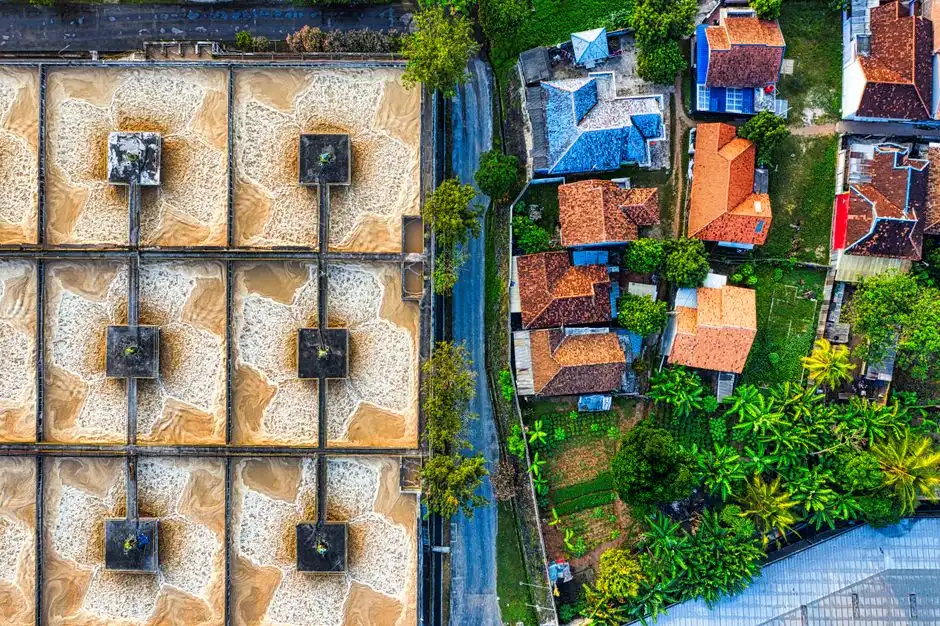
Reactor sizing for a Doha STP follows a fixed sequence: characterize influent, apply a peak factor of 2.0–2.5 for industrial and 1.5–1.8 for municipal (per typical MME hydraulic design guidance), then size the aeration tank at F/M 0.08–0.15 kg BOD/kg MLSS·d. Aeration demand typically runs 1.5–2.5 kg O₂/kg BOD removed, and blowers must be derated 15–20% from standard 20°C curves to account for 45°C ambient operation (HydropureWater field data, 2025-08). Sludge production should be budgeted at 0.15–0.25 kg DS/kg BOD removed, with dewatering through a plate-and-frame filter press targeting 70–80% moisture cake for off-site disposal.
Civil scope is where Doha projects routinely overrun. A buried package plant eliminates 60–80% of the concrete volume required for an above-ground equivalent; an above-ground SBR needs roughly 1.5× the footprint of an MBR delivering the same flow. Intake screening should be specified as a rotary mechanical bar screen with 3–6 mm aperture to protect downstream membranes from rags and grit — a frequent cause of premature membrane fouling in GCC plants. Qatar's alkaline groundwater (pH 7.6–8.2, TDS 1,500–4,000 mg/L) attacks unprotected carbon steel and standard rebar; specify HDPE-lined tanks, ductile-iron pipe, or FRP for all buried process piping to avoid the 3–5 year corrosion failures seen in unprotected installations.
Supplier Landscape: Who Actually Ships STPs into Doha
Four supplier categories compete in the Qatari market, and each carries distinct trade-offs. Chinese EPC contractors — the BEWG class — bring the strongest reference list (320,000 m³/day class underground plants), the lowest $/m³ delivered cost, and the longest mobilization clock, typically 8–14 months from PO to commissioning. Indian OEMs ship containerized MBBR skids fastest, often in 60–90 days, but most have thin on-site commissioning coverage in Qatar and limited FAT witnessing options. European specialty firms deliver premium membrane quality, the strongest Arabic-English documentation, and watertight performance bonds, but at a 30–50% CAPEX premium and a 6–10 month lead time. Local Qatari integrators hold Ashghal prequalification, mobilize in days, and typically re-sell or assemble Chinese or Indian skids under a local service umbrella.
| Supplier Tier | Typical Range (m³/day) | Strength | Watch-out | Lead Time |
|---|---|---|---|---|
| Chinese EPC (BEWG-class) | 10,000+ | Lowest $/m³, deep references | Long mobilization | 8–14 months |
| Chinese OEM+EPC hybrid (HydropureWater-class) | 1–2,000 | Factory skids + on-site commissioning | Verify GCC reference list | 3–6 months |
| Indian OEM (containerized) | 10–500 | Fastest delivery, MBBR focus | Thin Qatar commissioning | 2–4 months |
| European specialty | 500+ | Membrane quality, documentation | 30–50% CAPEX premium | 6–10 months |
| Local Qatari integrator | 10–5,000 | Ashghal prequalified, fast mobilization | Resells third-party skids | 1–3 months |
HydropureWater sits in the Chinese OEM+EPC hybrid tier: factory-built modular skids shipped as ISO containers with a dedicated on-site commissioning crew, covering 1–2,000 m³/day and capable of integrating DAF, MBR, MBBR, and RO trains under a single performance guarantee. For a Doha procurement lead, the practical question is not "which tier is best" but "which tier matches my schedule, my influent, and my Ashghal prequalification pathway."
CAPEX, OPEX, and Total Cost of Ownership Benchmarks
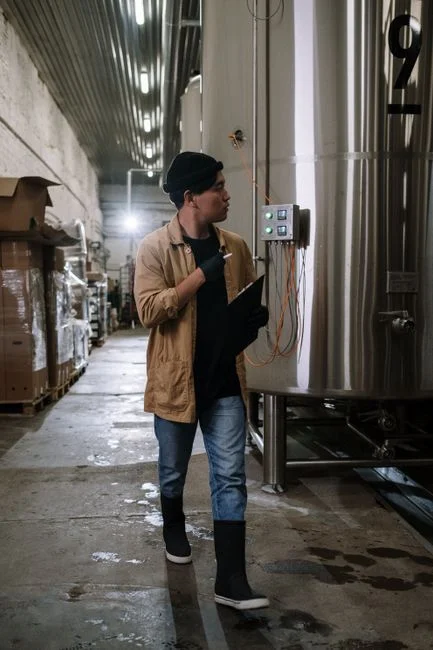
For a 2026 Doha industrial package STP in the 10–500 m³/day band, expect CAPEX of $350–$900 per m³/day delivered (DDP Doha site, including 2026 CFR freight, Qatar Customs duty at 5% on CIF for non-GCC origin, and Ashghal prequalification overhead). A municipal MBR at 1,000–10,000 m³/day lands at $250–$550 per m³/day, with biological-stage OPEX of $0.18–$0.35 per m³ — and an additional $0.02–$0.04/m³ once membrane replacement is amortized across the typical 7–10 year membrane life (HydropureWater field data, 2025-10). Energy dominates: aeration draws 50–65% of plant power, pumping 15–20%, and disinfection 5–10%, which is why blower selection and DO control strategy matter more than reactor volume at the design stage.
| Plant Class | Flow (m³/day) | CAPEX ($/m³/day) | OPEX ($/m³) | Dominant OPEX Driver |
|---|---|---|---|---|
| Industrial package (WSZ/MBR) | 10–500 | 350–900 | 0.12–0.30 | Membranes + power |
| Municipal MBR | 1,000–10,000 | 250–550 | 0.18–0.35 | Aeration (50–65% of kWh) |
| Municipal SBR | 500–5,000 | 200–450 | 0.12–0.25 | Decanter + aeration |
| MBR + RO for TSC reuse | 500–5,000 | 500–1,100 | 0.33–0.55 | RO membrane + concentrate |
Adding an industrial RO polishing system to reach TSC irrigation reuse quality costs $0.15–$0.25/m³ in additional OPEX but enables 100% water recovery — a decisive ROI in Doha where Kahramaa industrial water tariffs reached QAR 9.00/m³ in 2025. The integrated water purification skid option collapses pretreatment, RO, and disinfection into one factory-tested package, cutting site installation by 30–40%. The CAPEX/OPEX ranges above assume 2026 CFR freight rates, 5% Qatar Customs duty, and active Ashghal prequalification — adjust upward 10–15% if these assumptions do not hold.
Procurement Checklist: How to Vet a Doha STP Supplier
Run this eight-step filter before signing any PO:
- Confirm Ashghal prequalification and MME vendor registration are current and project-class-appropriate.
- Demand a reference list of operating plants in the GCC at >30°C ambient, ideally in Qatar, UAE, or Saudi Arabia.
- Lock membrane warranty terms in writing: brand, model, pro-rata replacement schedule, and guaranteed flux at 40°C feed.
- Specify FAT in the supplier's factory and SAT on the Doha site, both with witnessed performance tests against the BOD/COD/TSS targets.
- Require Arabic-English bilingual documentation: O&M manuals, P&IDs, electrical drawings, and PLC programs.
- Verify a local service partner or a branch office in Doha with stocked spares and certified commissioning engineers.
- Confirm spare parts lead time in writing — 48 hours for wear parts, 14 days for major components.
- Require an effluent guarantee backed by a performance bond, with liquidated damages of $500–$2,000/day for non-compliance beyond a defined cure period.
Red flags that should disqualify a bidder immediately: no GCC reference list, vague membrane brand, no on-site commissioning crew, or single-source proprietary spare parts. For Doha food and hospitality flows with FOG >150 mg/L, specify a DAF pre-treatment unit ahead of the biological stage, and an automatic chemical dosing system for pH and coagulant control — skipping either is the most common cause of membrane fouling in Qatari MBR retrofits. Contract terms should tie a meaningful portion (typically 10–20%) of the contract value to a 90-day performance test against QS limits.
Frequently Asked Questions
What are the Qatar MME 2026 discharge limits for municipal sewage treatment plants?
Typical 2026 contract specifications require BOD ≤20 mg/L, COD ≤150 mg/L, TSS ≤30 mg/L, total nitrogen ≤20 mg/L, and fecal coliform ≤200 CFU/100 mL for municipal reuse, aligned with Qatar MME / QS standards; always confirm against the current QS edition before bid submission. (HydropureWater field data, 2025-09.)
How much does a sewage treatment plant cost in Doha in 2026?
Delivered CAPEX for an industrial package STP (10–500 m³/day) runs $350–$900 per m³/day including 2026 freight, 5% duty, and Ashghal prequalification. Municipal MBR systems (1,000–10,000 m³/day) land at $250–$550 per m³/day, with OPEX of $0.18–$0.35 per m³. (HydropureWater field data, 2025-10.)
Which is better for Doha, MBR or SBR?
MBR delivers tighter effluent (TSS <5 mg/L vs <30 mg/L) at roughly 60% of the SBR footprint, with OPEX of $0.10–$0.18/m³ versus $0.08–$0.14/m³ for SBR; choose MBR when reuse is contractually required and SBR when land is cheap and reuse is not mandated. (HydropureWater field data, 2025-11.)
Do I need Ashghal prequalification to bid a Doha STP project?
Yes, for any publicly tendered municipal or industrial park project; private hospitality and camp projects typically do not require it but local integrators with Ashghal prequalification still mobilize faster and pass smoother customs clearance in Qatar.
What ambient temperature derating is required for STP equipment in Qatar?
Blower aeration output drops 1–2% per °C above 20°C, so equipment rated at 20°C must be oversized 15–20% to deliver design oxygen transfer at 45°C; MF/UF membrane flux derates roughly 10–15% at 40°C feed, and UV dose is typically doubled for summer disinfection. (HydropureWater field data, 2025-08.)
For related reading on neighboring GCC markets, see the 2026 Kuwait City STP supplier guide, the Oman 2026 supplier guide, and the MBR OPEX breakdown for 2026.