Why Oman Is a High-Priority WWTP Market in 2026
Oman's renewable freshwater supply sits below 500 m³ per capita per year, placing the country in the UN's "high water stress" category and forcing national planners to treat every cubic meter of effluent as a recoverable resource. Vision 2040 formalizes this priority with a 35% non-conventional water reuse target, of which treated wastewater is the largest single stream; the policy effectively guarantees WWTP capex through 2030 regardless of oil-price swings. The demand is concentrated in four industrial corridors — Sohar Port, Duqm Special Economic Zone, Salalah Free Zone, and the Nizwa food-processing cluster — where tenants in petrochemical, mining, food, and hospitality verticals typically need a packaged 50–2,000 m³/day plant delivered within 12–18 months of permit award. For procurement engineers, that compression of timeline plus regulatory specificity is the reason Oman now rewards suppliers who hold local service partners and pre-approved MECAE reference plants over cheaper bidders shipping directly from factory.
Oman MECAE Discharge Limits and Permitting Pathway
Royal Decree 10/2014 and Ministerial Decision 159/2005 form the legal backbone of wastewater regulation, with the Ministry of Environment, Climate Affairs and Water (MECAE) setting the operational discharge thresholds. For industrial discharge to municipal sewer, the binding limits are BOD ≤30 mg/L, COD ≤150 mg/L, TSS ≤30 mg/L, oil and grease ≤10 mg/L, and pH 6–9 (MECAE, per Ministerial Decision 159/2005). Coastal discharges into the Gulf of Oman or Arabian Sea carry an additional layer: the Royal Oman Police coastal zone authority requires continuous monitoring of salinity (typically <40 ppt for tertiary reuse), temperature (ΔT ≤3°C vs ambient sea), and total residual chlorine (<0.2 mg/L) before any outfall permit is issued.
MECAE evaluates bidders on documented reference-plant performance, not on lab bench data or theoretical removal rates. A supplier quoting 99% BOD removal from a clean synthetic feed is non-compliant on evidence; a supplier with 12 months of composite sampling from an operating Oman or GCC plant at the same influent strength is compliant. Flag any bidder who cannot produce a MECAE-style effluent analysis report from a comparable site, and require them to list the lab accreditation (ISO 17025 is the working minimum) that produced the data.
| Parameter | Industrial discharge limit (to sewer) | Coastal discharge limit (to sea) | Governing instrument |
|---|---|---|---|
| BOD₅ | ≤30 mg/L | ≤25 mg/L | Ministerial Decision 159/2005 |
| COD | ≤150 mg/L | ≤125 mg/L | Ministerial Decision 159/2005 |
| TSS | ≤30 mg/L | ≤30 mg/L | Ministerial Decision 159/2005 |
| Oil & grease | ≤10 mg/L | ≤5 mg/L | Ministerial Decision 159/2005 |
| pH | 6–9 | 6–9 | Ministerial Decision 159/2005 |
| Total residual chlorine | ≤0.5 mg/L | ≤0.2 mg/L | ROP coastal zone rules |
Process Technology Options: MBR vs SBR vs MBBR vs DAF
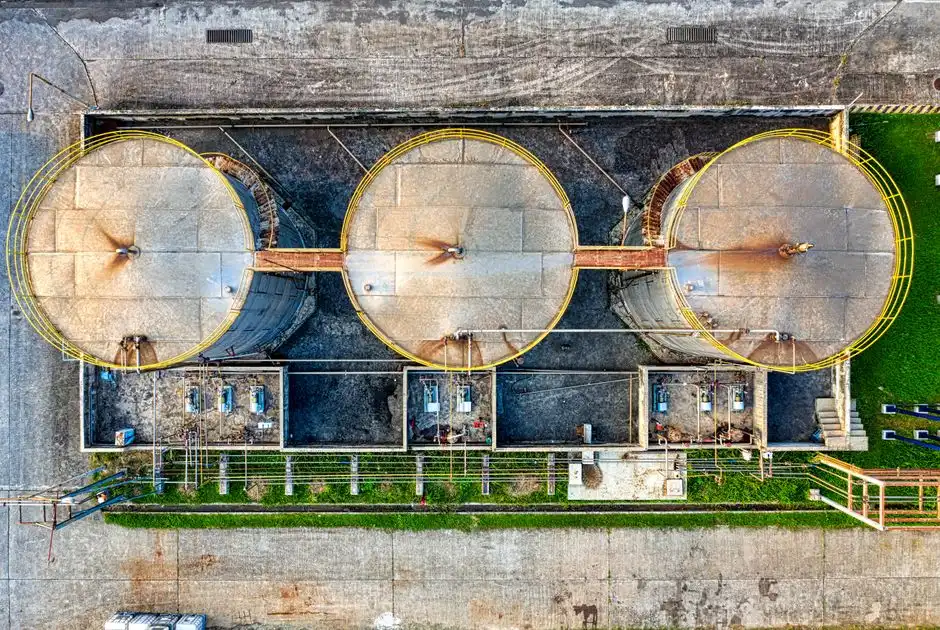
Process selection drives 60–70% of total lifecycle cost in a packaged WWTP, so the bid envelope must be set against influent characteristics and reuse end-use — not against the supplier's preferred stack. An MBR with submerged PVDF membranes at 0.1–0.4 μm pore size produces near-reuse effluent (TSS <1 mg/L, turbidity <1 NTU) and cuts plant footprint by roughly 60% versus conventional activated sludge, which is why it is the default for hospitality and hospital tenders feeding cooling towers or landscape irrigation. An integrated MBR membrane bioreactor skid is also the lowest-blower option in MECAE's coastal zone, since membrane scour replaces much of the aeration energy that a CAS basin would consume.
SBR (sequencing batch reactor) remains the right pick for variable-flow food, fish-processing, and small municipal plants of 10–500 m³/day where intermittent operation and batch settle/decant cycles tolerate shock loads. MBBR (moving bed biofilm reactor) delivers the lowest CAPEX per m³ for 500–5,000 m³/day plants where reuse is not a contractual requirement, but its effluent TSS holds at 20–30 mg/L — adequate for sewer discharge, marginal for MECAE reuse credits. DAF (dissolved air flotation) is almost never a standalone biological stage; it is the pre-treatment workhorse for fats, oils, grease, and colloidal solids at 4–300 m³/h, and any DAF-equipped bid should pair it downstream with an MBR or SBR. A DAF pre-treatment system typically removes 60–90% of influent TSS and 70–95% of FOG before the biological stage, which protects membranes and shortens HRT in the downstream reactor. For hospitality bids under 200 m³/day where the client wants zero visible plant, a WSZ packaged buried sewage plant with submerged MBR delivers reuse-quality effluent with no surface footprint.
| Process | Flow range (m³/day) | Typical effluent BOD (mg/L) | Typical effluent TSS (mg/L) | CAPEX index (per m³/day) | Best fit |
|---|---|---|---|---|---|
| MBR (submerged) | 10–5,000 | <5 | <1 | 0.9–1.2× | Reuse, hospitality, hospitals, cooling tower makeup |
| SBR | 10–500 | ≤20 | ≤30 | 0.7–1.0× | Variable-flow food, fish, small municipal |
| MBBR | 500–10,000 | ≤20 | 20–30 | 0.5–0.8× | Large industrial, sewer discharge, no reuse |
| DAF + biological | 100–5,000 | ≤25 (post-bio) | ≤30 (post-bio) | 0.8–1.1× | FOG-heavy influent (dairy, slaughterhouse, refinery) |
Anatomy of a Packaged WWTP: Core Equipment Checklist
A line-by-line bill of quantities is the only reliable way to compare two packaged bids that look similar on the cover page. Headworks should start with a rotary mechanical bar screen at 3–10 mm aperture, which protects downstream blowers and membranes from ragging and grit; a screen step-down to 1 mm is justified only for fine-bubble MBR aeration grids. Equalization must hold 8–24 hours of HRT with pH and ORP probes for shock-load protection — anything under 8 hours is a red flag for food or refinery tenders. The biological stage quotation must declare MLSS range (typically 8,000–12,000 mg/L for MBR, 2,000–4,000 mg/L for SBR, 200–600 g/m² biofilm for MBBR), HRT, and SRT; vague "biological reactor" line items are a sign the supplier is substituting at commissioning.
The sludge line is where lifecycle cost gets decided: a plate-and-frame filter press or screw press must dewater to 18–25% dry solids cake to keep haulage costs off the OPEX line. For Reem or Darsait-style sites with limited vehicle access, an enclosed screw press with integrated polymer dosing is usually the lower-maintenance choice. Disinfection should be specified by end-use: a chlorine dioxide generator at 50 g/h to 20,000 g/h suits sewer-discharge and irrigation reuse, while UV skids (30–40 mJ/cm² dose) are mandatory where the reuse stream contacts cooling towers or hospital laundry to avoid trihalomethane formation.
2026 CAPEX and OPEX Benchmarks for Oman
Packaged skid-mounted plants of 50–2,000 m³/day from Chinese OEMs land at $180–$650 per m³/day CAPEX in 2026 (HydropureWater field data, 2026), roughly 30–45% below EU equivalents at $400–$1,200 per m³/day. OPEX typically runs $0.12–$0.32 per m³ treated, dominated by aeration energy: blowers and pumps account for 55–70% of OPEX, which is why MBR with intermittent aeration and VFD-driven blowers beats SBR in Oman despite the higher membrane replacement line item. Three Oman-specific cost adders swing landed cost by 20–40% and must be priced into every bid: the 5% customs duty applied to imported skids at Sohar or Salalah ports, civil works at $45–$90 per m³ of concrete for the equalization and sludge tankage, and grid power at $0.06–$0.08 per kWh which materially favors low-energy designs.
| Cost line | Chinese OEM (50–2,000 m³/day) | EU OEM (50–2,000 m³/day) | Oman-specific adder |
|---|---|---|---|
| CAPEX per m³/day (skid + membranes) | $180–$650 | $400–$1,200 | +5% customs duty at port |
| OPEX per m³ treated | $0.12–$0.28 | $0.18–$0.32 | Power $0.06–$0.08/kWh |
| Civil works (EQ + sludge tanks) | $45–$90/m³ concrete | $45–$90/m³ concrete | Local rate, bidder should itemize |
| Energy share of OPEX | 55–70% | 50–65% | Favors MBR + VFD blowers |
| Typical delivery lead time | 10–16 weeks | 20–32 weeks | Add 2–4 weeks for Oman's summer heat logistics |
7-Point Supplier Scorecard for Oman WWTP Tenders
Paste this scorecard into your RFP and weight it explicitly; price-only awards fail commissioning at roughly 1 in 3 plants across the GCC (HydropureWater commissioning data, 2024–2025), which is the cost lesson behind the framework below.
| # | Criterion | Weight | What to verify in the bid |
|---|---|---|---|
| 1 | Local service presence in Muscat or Sohar | 15% | Office address, Omani-registered entity, GCC reference list of 3+ plants |
| 2 | MECAE reference plant data (not lab data) | 15% | 12-month composite sampling at comparable influent strength, ISO 17025 lab |
| 3 | ISO 9001 / 14001 / 45001 certificates, CE marking | 10% | Current certificates, issuing body, scope statement |
| 4 | Process selection matched to influent and reuse goal | 15% | MLSS/HRT/SRT declared; reuse end-use explicitly addressed |
| 5 | CAPEX vs 10-year OPEX lifecycle cost (NPV) | 15% | Energy kWh/m³, membrane replacement cost, sludge haulage per ton DS |
| 6 | Spare parts inventory and 24/7 response SLA | 10% | SLA in hours, parts warehouse location, escalation contact |
| 7 | Vision 2040 reuse-readiness and water reuse offset | 20% | Reuse quality documented, irrigation/cooling tower compatibility stated |
Frequently Asked Questions

What MECAE discharge limits must a WWTP in Oman meet for industrial effluent?
MECAE requires BOD ≤30 mg/L, COD ≤150 mg/L, TSS ≤30 mg/L, oil and grease ≤10 mg/L, and pH 6–9 for industrial discharge to municipal sewer under Ministerial Decision 159/2005; coastal discharges to the Gulf of Oman additionally require total residual chlorine ≤0.2 mg/L and a ΔT ≤3°C versus ambient sea (ROP coastal zone rules).
How much does a packaged WWTP cost in Oman in 2026?
Chinese-OEM packaged plants of 50–2,000 m³/day land at $180–$650 per m³/day CAPEX (HydropureWater field data, 2026), with EU equivalents at $400–$1,200 per m³/day; add 5% Oman customs duty, $45–$90/m³ civil works, and power at $0.06–$0.08/kWh for a realistic landed cost.
What is the Vision 2040 water reuse target driving WWTP demand?
Vision 2040 sets a 35% non-conventional water reuse target by 2040, of which treated wastewater is the largest stream, guaranteeing sustained WWTP capex through 2030 in Sohar, Duqm, Salalah, and Nizwa industrial estates.
Which process is best for a hotel or hospital WWTP in Muscat?
Submerged MBR at 0.1–0.4 μm pore size delivers reuse-grade effluent (TSS <1 mg/L, turbidity <1 NTU) and a roughly 60% smaller footprint than conventional activated sludge, making it the default for hospitality and hospital tenders that feed cooling towers or landscape irrigation.
Should I choose a Chinese or European WWTP supplier for a Sohar industrial estate project?
Chinese OEMs price 30–45% below EU equivalents and deliver in 10–16 weeks versus 20–32 weeks for EU plants, but only if the bidder holds a local service partner in Muscat or Sohar, MECAE reference plant data, and ISO 9001/14001 certificates — otherwise the apparent savings evaporate at commissioning.