Why Kuwait City STP Procurement in 2026 Demands More Than a Catalog Match
Kuwait municipal sewage runs hot, saline, and concentrated — and a 2026 tender that ignores that reality will fail on day one of commissioning. Typical influent sits at BOD 250–400 mg/L, COD 500–800 mg/L, TSS 250–350 mg/L, and total nitrogen 40–60 mg/L, but with TDS often climbing to 2,000–5,000 mg/L from brackish groundwater infiltration into aging collection networks. Above roughly 3,000 mg/L TDS, nitrification kinetics slow measurably: ammonium-oxidizing bacteria lose 20–40% of their specific activity per 1,000 mg/L salinity step, and ammonia breakthrough follows within 7–14 days unless the design compensates.
Ambient temperature swings make it worse. Summer design peaks hit 45–50°C in unshaded equipment rooms and 5–15°C in winter nights, so conventional activated sludge (ASP) drifts out of its comfort band twice a year. MBBR and MBR tolerate these swings far better because biofilm carriers and membrane cassettes buffer biomass against thermal and osmotic shock. The binding compliance framework is Kuwait Environment Public Authority (KEPA) Law 42/2014 and its 2026 implementing rules; every tender specification should be cross-checked against that text before a vendor is shortlisted. Kuwait Vision 2035 is simultaneously funding several new STPs in Al-Jahra, South Sabahiya, and Kuwait City expansion zones, which is pushing supplier demand through 2027 and lengthening lead times for membrane skids, blowers, and UV racks.
| Parameter | Typical Kuwait municipal range | Design implication |
|---|---|---|
| BOD | 250–400 mg/L | MBR MLSS 8,000–12,000 mg/L or MBBR fill 40–60% |
| COD | 500–800 mg/L | BOD:COD ≈ 0.45, readily biodegradable |
| TSS | 250–350 mg/L | Pre-screening mandatory to protect membranes |
| Total nitrogen | 40–60 mg/L | Pre-anoxic stage for denitrification |
| TDS (brackish infiltration) | 2,000–5,000 mg/L | Biofilm or MBR preferred over ASP |
| Summer ambient | 45–50°C peak | Shade all equipment rooms; vent blowers |
Kuwait EPA Effluent Standards Every Supplier Must Hit in 2026
KEPA's 2026 discharge limits are non-negotiable, and any vendor that cannot name them in a tender response should be filtered out. Treated-sewage discharge to municipal collection or marine outfall must meet BOD ≤25 mg/L, COD ≤125 mg/L, TSS ≤30 mg/L, oil & grease ≤10 mg/L, total nitrogen ≤45 mg/L (where reuse is specified), and fecal coliform ≤200 MPN/100 mL. Where effluent feeds landscape irrigation at a hotel, residential compound, or roadside median, Kuwait Municipality reuse targets tighten further: BOD ≤10 mg/L, TSS ≤10 mg/L, and FC ≤100 MPN/100 mL, which almost always forces a tertiary filtration plus disinfection step on top of the biological stage.
Disinfection chemistry also needs a deliberate choice. A free chlorine residual of 0.5–1.0 mg/L at the discharge point is permitted, but Kuwait's 30–40°C summer sewage already drives trihalomethane (THM) formation rates 2–3× higher than temperate climates, so chlorination is increasingly replaced by on-site ClO₂ or medium-pressure UV for any reuse duty. WHO 2006 irrigation reuse guidelines reinforce KEPA for hotel and residential projects with on-site landscaping demand, and most international EPCs reference both in the same specification clause. Put these numbers verbatim into the tender and reject any bid that softens them.
| Parameter | KEPA discharge limit | Kuwait reuse target | Method |
|---|---|---|---|
| BOD | ≤25 mg/L | ≤10 mg/L | 5-day BOD, 5210B |
| COD | ≤125 mg/L | — | Closed reflux, 5220C |
| TSS | ≤30 mg/L | ≤10 mg/L | Total suspended solids, 2540D |
| Oil & grease | ≤10 mg/L | ≤5 mg/L | Partition-gravimetric, 5520B |
| Total nitrogen | ≤45 mg/L | ≤15 mg/L | TKN + NO₃, 4500-N |
| Fecal coliform | ≤200 MPN/100 mL | ≤100 MPN/100 mL | MTF, 9221E |
| Residual Cl₂ | 0.5–1.0 mg/L | — | DPD, 4500-Cl G |
Matching the Right Technology to Kuwait Influent — MBR vs MBBR vs SBR vs WSZ Package
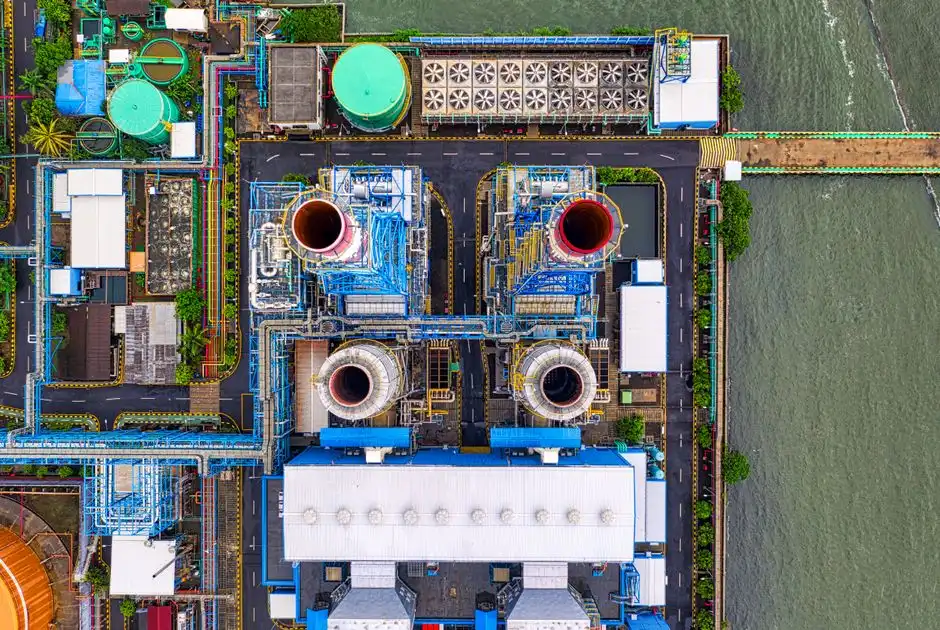
Process selection should follow site constraints, not vendor preference. A buried WSZ packaged STP (1–80 m³/h, A/O + sedimentation + disinfection, fully buried) is the cleanest fit for hotels, residential compounds, and schools under 1,000 m³/day where landscaping has to remain above grade and civil footprint is at a premium. A MBR membrane bioreactor package using submerged PVDF cassettes at <1 μm pore size delivers reuse-quality effluent in 60% of the footprint of an equivalent ASP train and scales from 10 to 2,000 m³/day — typically the choice for Kuwait City retrofits and tight urban sites.
MBBR is the workhorse for 100–5,000 m³/day municipal tenders: biofilm carriers absorb salinity and temperature shocks that would destabilize flocs, and OPEX stays lower because there are no membrane cassettes to replace. The trade-off is downstream clarification plus disinfection to reach KEPA TSS ≤30 mg/L. SBR remains attractive for variable hotel and compound loadings because the same tank cycles through fill/react/settle, but the larger concrete tankage and Kuwait's alkaline soil both push civil cost up by 15–25% versus MBR. The decision table below sizes each option against Kuwait influent and typical site constraints.
| Technology | Typical capacity | Footprint index | Effluent BOD / TSS | Kuwait suitability |
|---|---|---|---|---|
| WSZ buried package | 1–80 m³/h (≈ 25–1,920 m³/day) | 0.4× (fully buried) | ≤20 / ≤20 mg/L | High for compounds, hotels, schools |
| MBR (submerged PVDF) | 10–2,000 m³/day | 0.6× | ≤5 / ≤1 mg/L | High for reuse or tight retrofits |
| MBBR | 100–5,000 m³/day | 0.8× | ≤20 / ≤25 mg/L | High for large municipal tenders |
| SBR | 50–1,000 m³/day | 1.0× | ≤20 / ≤25 mg/L | Medium — civil cost penalty |
Kuwait-Specific CAPEX and OPEX Breakdown for 50–500 m³/day Packaged STPs
Budget defensibly. For a 200 m³/day MBR plant landed in Kuwait City in 2026, equipment runs $180K–$280K ex-works, container shipping CIF Shuwaikh adds $25K–$40K, civil works $80K–$140K (driven by Kuwait City's high water table and rocky limestone in some plots), installation and commissioning $40K–$70K, plus a 10% contingency. Total CAPEX lands at $350K–$590K. A WSZ package on the same duty is typically 15–25% cheaper on equipment but needs deeper excavation and dewatering during the wet season, which erases part of the saving.
OPEX is dominated by membrane replacement every 5–7 years ($15K–$40K per cassette set), ClO₂ or NaOCl dosing, energy at 0.8–1.4 kWh/m³ (notably higher than temperate designs because of cooling and ventilation loads), and sludge hauling to KEPA-approved disposal sites. Typical OPEX settles at $0.18–$0.45 per m³ treated depending on technology, salinity, and whether reuse polishing is included. Falling membrane unit costs are confirmed by the 2026 MBR market growth data, which tracks the global MBR market at $3.4–5.4B with 5.3–7.75% CAGR — meaning cassette pricing should continue easing through 2026. For a deeper process spec and reference costs, the domestic sewage process engineering specs reference is a useful cross-check.
| Cost line (200 m³/day MBR, CIF Shuwaikh) | Low (USD) | High (USD) |
|---|---|---|
| Equipment ex-works | 180,000 | 280,000 |
| Container shipping CIF Shuwaikh | 25,000 | 40,000 |
| Civil works (tanks, pipework, building) | 80,000 | 140,000 |
| Installation & commissioning | 40,000 | 70,000 |
| Contingency 10% | 32,500 | 53,000 |
| Total CAPEX | 357,500 | 583,000 |
| Annual membrane replacement (amortized) | 3,000 | 8,000 |
| Energy @ 1.0 kWh/m³ × 200 × 365 × $0.04 | 2,920 | 2,920 |
| Chemicals (ClO₂ or NaOCl) | 1,500 | 3,500 |
| Sludge hauling | 2,000 | 4,500 |
| OPEX range per m³ treated | $0.18 | $0.45 |
Headworks, Sludge, and Reuse Equipment to Bundle in a Kuwait STP Scope
Headline quotes routinely omit the auxiliary process steps that make or break a Kuwait plant. A GX series headworks bar screen with 3–6 mm aperture should always be specified — Kuwait's high-debris sewage carries rags, plastics, and construction grit that shred MBR fibers and clog MBBR carriers within weeks if screening is missed. For hotel, food-service, and mixed-use compounds, a dissolved air flotation unit (4–300 m³/h) ahead of the biological stage cuts FOG and colloidal solids, which protects downstream membranes and prevents the Nocardia foaming that plagues MBRs in hot climates.
Sludge handling is the line item most often under-scoped. A plate and frame sludge dewatering press dewatering to ≥22% DS cuts hauling volume to KEPA-approved sites by 70–80% versus liquid sludge, which more than pays back the capex in the first 18 months. For tertiary disinfection, an on-site ClO₂ disinfection generator (50 g/h to 20,000 g/h) avoids the THM problem that chlorination creates in 35–45°C sewage. Where combined sewer inputs cause TSS spikes during rare winter storm events, a lamella clarifier ahead of the MBR polish step keeps the cassettes in spec. Bundle these into the BOQ from day one.
Supplier Shortlist — How to Score Sewage Treatment Plant Vendors for Kuwait
A defensible shortlist is a scored one. Use the five-criterion rubric below to evaluate every vendor on the same scale, then carry the top three into commercial negotiation. The Kuwait Society of Engineers pre-qualification process remains the final compliance gate for public tenders, so confirm registration before issuing the LOI.
| Criterion | Weight | What to verify | Scoring (0–5) |
|---|---|---|---|
| GCC / MENA reference projects in last 36 months | 25% | Commissioning certificates, site visit rights | 0 = none, 5 = ≥3 reference plants |
| KEPA / NCEC / FED compliance test certificates | 20% | Lab reports dated within 12 months | 0 = verbal claim, 5 = signed & stamped |
| Local service footprint (agent, spares, Arabic-speaking engineer) | 20% | Agent address in Kuwait City, spares list | 0 = indirect only, 5 = resident engineer + 6-mo spares |
| Process guarantee & warranty terms | 20% | Membrane ≥5 years, biological ≥2 years | 0 = 1 year, 5 = ≥5 years membrane + 3 years biology |
| Engineering documentation quality (P&ID, GA, schematics, O&M in EN + AR) | 15% | Sample documents in bid envelope | 0 = generic, 5 = full Arabic O&M + as-built |
Reference plant weight dominates because suppliers without hot-climate, high-TDS operating history consistently miss biological performance targets by month three. The maintenance plan documented in the integrated STP 12-step maintenance protocol is a useful benchmark for evaluating the O&M side of any vendor bid. For a comparable non-GCC reference case, the Tangier STP supplier guide illustrates the same scoring discipline applied to a Mediterranean tender.
Frequently Asked Questions
What are the 2026 KEPA effluent limits a packaged STP in Kuwait City must meet?
KEPA's 2026 discharge ceiling is BOD ≤25 mg/L, COD ≤125 mg/L, TSS ≤30 mg/L, oil & grease ≤10 mg/L, total nitrogen ≤45 mg/L where reuse is specified, and fecal coliform ≤200 MPN/100 mL. Reuse for landscape irrigation tightens BOD to ≤10 mg/L, TSS to ≤10 mg/L, and FC to ≤100 MPN/100 mL, which forces tertiary filtration plus disinfection on top of the biological stage. Any vendor that cannot reference Law 42/2014 and these exact values should be excluded from the shortlist.
Is MBR or a buried WSZ package a better fit for a 200 m³/day hotel or compound in Kuwait?
For a 200 m³/day hotel or residential compound with on-site landscape reuse, an MBR with submerged PVDF cassettes (<1 μm pore) is the better fit: it delivers BOD ≤5 mg/L and TSS ≤1 mg/L in roughly 60% of the footprint, handles Kuwait's 2,000–5,000 mg/L TDS, and integrates tertiary filtration. A buried WSZ package is 15–25% cheaper on equipment but typically needs additional polishing to reach reuse targets, so its CAPEX advantage shrinks once reuse is in scope.
What CAPEX should a Kuwait City buyer budget for a 200 m³/day packaged MBR in 2026?
Budget $350K–$590K landed CIF Shuwaikh in 2026 for a 200 m³/day MBR: equipment $180K–$280K ex-works, container shipping $25K–$40K, civil works $80K–$140K, installation and commissioning $40K–$70K, and a 10% contingency. Civil works sit at the high end in Kuwait City because of the high water table and limestone excavation. A WSZ package on the same duty is typically 15–25% lower on equipment but the saving is largely consumed by deeper excavation.
What is the realistic lead time for a packaged STP from a Chinese or Indian supplier into Kuwait in 2026?
Plan on 14–20 weeks from PO to CIF Shuwaikh for a packaged MBR or WSZ in 2026, driven by membrane cassette manufacturing slots and Kuwait Vision 2035 demand stretching fabricator capacity. Add 6–10 weeks for KEPA pre-import notification, customs clearance at Shuwaikh, and on-site installation. Total project span from LOI to KEPA commissioning certificate typically runs 8–12 months, so lock the supplier slot before tender submission rather than after award.