Why Tangier's 2026 Wastewater Market Demands a Different Supplier Shortlist
A sewage treatment plant supplier in Tangier in 2026 should be evaluated on four criteria: proven reference plants in the Tanger Med, automotive, or textile corridors; ability to deliver packaged MBR (10–2,000 m³/day) or underground WSZ units (1–80 m³/h) compliant with Morocco Law 10-95 and ONEE discharge norms; documented CAPEX between roughly 600–3,500 MAD per m³/day; and full commissioning, operator training, and Arabic/French technical documentation.
Morocco's industrial wastewater engineering capacity is concentrated in four cities. Casablanca, Tangier, Rabat, and Fes together host the majority of the country's wastewater treatment plant suppliers, with smaller clusters in Agadir and Marrakech (per Sourcia supplier directory, 2025). Tangier is not a peripheral market — the Tangier harbour SPRET plant is one of the country's main water purification installations, signalling sustained national focus on the corridor (per Clemessy Maroc project notice, 2019-07). What changed since that 2019 reference is demand intensity, not regulatory direction.
Three load drivers are reshaping 2026 procurement. First, Tanger Med port zone expansion continues to pull in food processing, metallurgy, and logistics tenants with effluent loads that municipal plants cannot absorb. Second, the Renault Melloussa plant and its tier-1 supplier ring operate with discharge limits stricter than public sewer norms because most outflow routes to landscaped infiltration inside the zone. Third, the Tétouan and Fnideq textile parks generate high-COD, high-TSS, variable-pH wastewater that needs pretreatment discipline before any biological step.
Buyers searching for a sewage treatment plant supplier in Tangier will notice that most top SERP results are UK or Malaysia turnkey firms with no Morocco delivery history, no ONEE submissions on file, and no French-language O&M manuals. A vendor that has never commissioned a plant within 200 km of Tangier cannot meet a 48-hour on-site SLA when a membrane skid faults at 02:00 — that gap alone disqualifies them from a serious shortlist.
Morocco Discharge and Reuse Standards a Tangier Supplier Must Meet
Morocco Law 10-95 on water, paired with implementing decrees from the Ministry of Energy, Mines, Water and Environment, sets the binding discharge framework. The MTIPME-aligned typical municipal thresholds for surface discharge are COD ≤ 120 mg/L, BOD₅ ≤ 40 mg/L, TSS ≤ 50 mg/L, and total nitrogen ≤ 30 mg/L; for industrial zones feeding ONEE-controlled reuse networks the bands tighten, often to COD ≤ 90 mg/L and TSS ≤ 30 mg/L (MTIPME Decree 2-14-499 framework, as cited in industry compliance summaries). A supplier that cannot quote these numbers from a commissioned plant — not from a brochure — is not yet qualified.
Inside Tanger Med and the Renault Melloussa catchment, the operating reality is stricter than the public sewer limit. Landscape irrigation reuse, the most common end-of-pipe route inside the zone, demands effluent stable enough to meet WHO-1989-style microbial targets (faecal coliform ≤ 200 CFU/100 mL for unrestricted irrigation) and low enough in salinity and sodium adsorption ratio to avoid soil structure damage. Suppliers should be able to produce third-party effluent analysis from a commissioned plant operating under comparable influent within the last 24 months — anything older is not evidence of current capability.
Documentation language is a procurement filter that buyers routinely miss. ONEE submissions and grid-connected reuse applications require French-language technical files. Operator handover inside the plant demands Arabic safety summaries, lockout-tagout procedures, and chemical handling cards. A supplier that delivers only an English O&M manual forces the buyer to pay for translation and re-review — typically 3–6 weeks of project slip and 40,000–80,000 MAD in additional cost. Bake the language requirement into the RFQ on day one.
Two more compliance artefacts belong on the supplier shortlist checklist: a valid ONEE grid-connection agreement (or evidence of an in-flight application for reuse projects), and an environmental conformity certificate from a referenced plant issued by the relevant watershed agency. A packaged STP supplier Morocco buyers can trust will have both ready in a shared folder within 48 hours of request.
Four Sewage Treatment Plant Technologies Compared for Tangier Sites
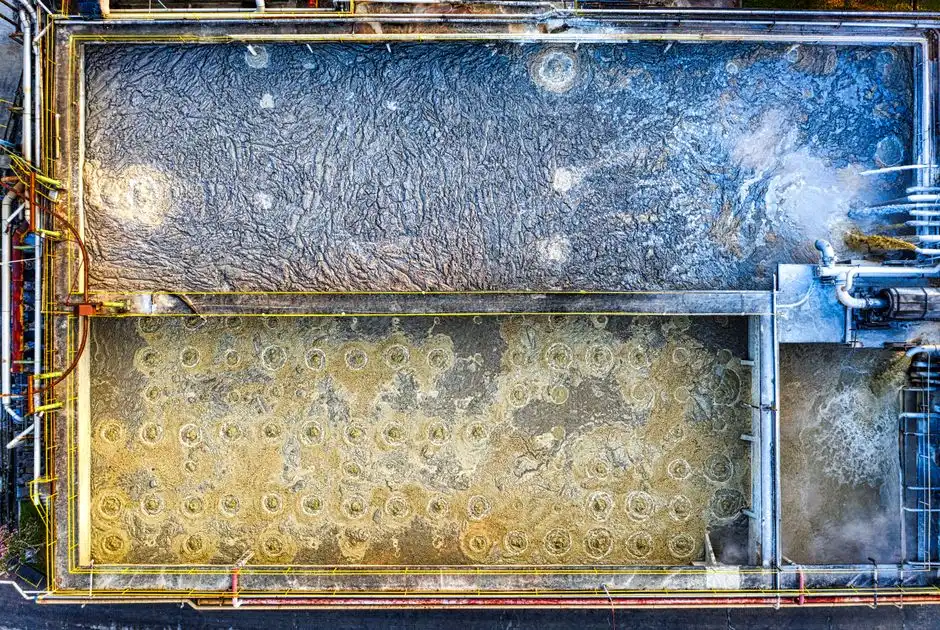
Process selection drives 60–70% of lifecycle cost on a Tangier wastewater project, so the technology decision should be made before any vendor is invited to bid. The four families that cover roughly 90% of 2026 Tangier industrial and municipal bids are MBR, underground WSZ, SBR, and DAF pretreatment. Each fits a different influent, footprint, and reuse envelope.
MBR (membrane bioreactor) is the workhorse for water-reuse and tight-footprint sites. Packaged units cover 10–2,000 m³/day, deliver sub-1 μm filtered effluent with BOD₅ typically ≤ 5 mg/L and TSS ≤ 1 mg/L, and run roughly 60% smaller than a conventional activated-sludge plant at the same load. A skid-mounted MBR membrane bioreactor packaged plant suits Tanger Med tenants who must reuse effluent for landscape irrigation or boiler feed.
Underground WSZ (A/O contact oxidation + sedimentation + disinfection) is the default for buried, low-attention sites — hotels, hospitals, residential compounds, and remote admin buildings. Standard flow range is 1–80 m³/h, fully buried with no surface structure, and operationally unattended beyond quarterly sludge withdrawal. A WSZ underground packaged sewage treatment plant is the lowest-footprint option when the buyer has no reuse requirement and the local sewer has capacity headroom.
SBR (sequencing batch reactor) is the right answer for variable industrial influent — textile, dairy, and food plants where flow and load swing 3:1 across the week. The fill–react–settle–decant cycle runs 4–6 cycles per day on a single tank with no separate clarifier, which simplifies civils on congested brownfield sites. SBR tolerates shock loads better than continuous-flow CAS and is easier to idle during seasonal shutdowns in the Tétouan textile parks.
DAF (dissolved air flotation) is a pretreatment step, not a stand-alone plant, but it belongs in any Tangier process selection conversation because textile, food, and oily wastewater streams carry emulsified FOG and colloids that will choke a biological reactor. A dissolved air flotation pretreatment skid typically removes 70–90% of TSS and 60–80% of FOG upstream of MBR or SBR, which directly cuts the biological tank size and aeration energy. For a deeper look at the engineering logic, the DAF system engineering process and efficiency guide covers micro-bubble sizing, recycle ratios, and polymer selection in detail.
| Technology | Capacity range | Typical effluent (BOD₅ / TSS) | Footprint vs CAS | 2026 Morocco-fit rating |
|---|---|---|---|---|
| MBR | 10–2,000 m³/day | ≤ 5 mg/L / ≤ 1 mg/L | ~40% of CAS | Best for reuse-grade and tight sites in Tanger Med |
| Underground WSZ | 1–80 m³/h | ≤ 20 mg/L / ≤ 30 mg/L | Buried, zero surface | Best for hotels, hospitals, residential compounds |
| SBR | 20–5,000 m³/day | ≤ 20 mg/L / ≤ 30 mg/L | ~70% of CAS | Best for variable textile, dairy, food loads |
| DAF (pretreatment) | 4–300 m³/h | Removes 70–90% TSS upstream | Compact skid | Pair with MBR or SBR for textile, food, oily waste |
For buyers in adjacent emerging markets, the municipal sewage treatment plant engineering guide for similar emerging-market contexts walks through process selection logic under tighter budget constraints; the parallel Sewage Treatment Plant Supplier in Muscat 2026 Buyer's Guide is a useful reference for arid-coast discharge frameworks comparable to Tangier.
2026 CAPEX and OPEX Ranges for a Tangier Sewage Treatment Plant
Budget numbers belong in the RFQ before vendor selection, not after, because they set the line of acceptance. The 2026 ranges below are typical bands for Tangier-region projects, drawn from regional EPC benchmarks and packaged-supplier quotes. Use them to reject bids that fall more than 20% below — underbid CAPEX almost always reappears as change-order OPEX.
For packaged municipal or light-industrial plants in the 50–500 m³/day range, total CAPEX lands at roughly 600–3,500 MAD per m³/day (≈ $60–$350), driven mainly by automation level, discharge class, and tank material (GRP vs concrete). For MBR plants sized to deliver reuse-grade effluent, CAPEX climbs to 2,000–6,000 MAD/m³/day (≈ $200–$600) because membrane skids, UV polishing, and the tighter control panel carry the budget. Textile or oily wastewater with DAF + biological treatment runs the upper band at 4,000–8,000 MAD/m³/day, reflecting the pretreatment intensity and larger equalization volume.
| Plant class | Capacity | CAPEX (MAD/m³/day) | CAPEX (USD/m³/day) | OPEX (MAD/m³) |
|---|---|---|---|---|
| Packaged municipal/light-industrial | 50–500 m³/day | 600–3,500 | 60–350 | 0.6–2.5 |
| MBR (reuse-grade) | 50–1,000 m³/day | 2,000–6,000 | 200–600 | 2.0–6.0 |
| Textile / oily with DAF + biological | 50–500 m³/day | 4,000–8,000 | 400–800 | 2.5–7.0 |
OPEX drivers stack predictably. Packaged plants land at 0.6–2.5 MAD/m³ (≈ $0.06–$0.25) when sludge handling is outsourced and energy is the main variable. MBR OPEX runs 2.0–6.0 MAD/m³ because membrane cleaning chemistry, periodic replacement (membrane life typically 7–10 years on hollow-fibre PVDF, 5–7 years on flat-sheet), and higher aeration duty push the number up. The four OPEX line items a buyer should always ask a supplier to break out separately are energy (kWh/m³), chemicals (MAD/m³), sludge handling (MAD/m³ or MAD/tonne), and membrane replacement (MAD/m³ amortized).
Zero-Risk Supplier Evaluation Checklist for Tangier Buyers
Procurement in the Tangier-Tétouan-Al Hoceima corridor fails at the commissioning stage, not at the bid stage, because vendors overstate reference plants and understate local service depth. The scorecard below is a defensive filter — every item is a documented disqualifier if missing.
| Criterion | Pass threshold | Evidence to request |
|---|---|---|
| Local reference plants | ≥ 3 commissioned within 200 km of Tangier | Site visit permission + contactable operator |
| Compliance proof | Third-party effluent analysis ≤ 24 months old | Lab report + influent/effluent parameter table |
| Local service | French-speaking commissioning engineer resident in Morocco | CV + work permit + 48-hour SLA in contract |
| Documentation language | French O&M, Arabic safety summary, P&IDs, electrical drawings, PLC ladder logic, spare parts list | Sample package from a referenced plant |
| Warranty & guarantees | ≥ 12 months mechanical, ≥ 24 months membrane integrity, bonded performance guarantee tied to discharge limits | Contract clause with penalty mechanism |
Two items deserve a closer look in the bid meeting. First, "48-hour on-site response" must be tied to a named engineer and a documented escalation path — vague SLAs collapse the first time a membrane skid faults on a Friday night. Second, the bonded performance guarantee should specify a measurable parameter (COD, BOD₅, or TSS at the discharge sampling port) and a remedy mechanic (liquidated damages per day of non-compliance), not a generic "plant performs to specification" clause that is unenforceable in practice.
Frequently Asked Questions
What is the typical CAPEX for a packaged sewage treatment plant in Tangier in 2026?
For a packaged municipal or light-industrial plant in the 50–500 m³/day range, CAPEX typically lands between 600 and 3,500 MAD per m³/day (≈ $60–$350), with MBR reuse-grade plants running 2,000–6,000 MAD/m³/day due to membrane and UV polishing costs.
Which discharge parameters does Morocco Law 10-95 enforce for industrial zones?
The MTIPME Decree 2-14-499 framework typically requires COD ≤ 120 mg/L, BOD₅ ≤ 40 mg/L, TSS ≤ 50 mg/L, and total nitrogen ≤ 30 mg/L for surface discharge, with Tanger Med reuse networks often tightening to COD ≤ 90 mg/L and TSS ≤ 30 mg/L.
What capacity range does an MBR system cover for Tanger Med industrial buyers?
Packaged MBR units cover 10–2,000 m³/day with effluent BOD₅ typically ≤ 5 mg/L and TSS ≤ 1 mg/L, fitting most automotive tier-1 and logistics tenants inside the port zone.
How much does it cost to operate an MBR plant per cubic metre of treated wastewater?
MBR OPEX in 2026 typically runs 2.0–6.0 MAD/m³ (≈ $0.20–$0.60), dominated by aeration energy, membrane cleaning chemistry, and amortized membrane replacement on a 7–10 year cycle.
Which documents must a supplier provide for ONEE grid-connected reuse projects?
Buyers should expect a French-language technical file, P&IDs, electrical drawings, PLC ladder logic, a third-party effluent analysis from a comparable plant within 24 months, and an Arabic safety summary for operator handover.