What a Sewage Treatment Plant Supplier in Muscat Actually Delivers
A sewage treatment plant supplier in Muscat should be evaluated on three things: in-region service coverage, technology fit for Oman's 22–32 °C coastal influent, and demonstrated compliance with Oman EPA effluent targets (BOD₅ ≤ 20 mg/L, TSS ≤ 30 mg/L for irrigation reuse). For projects of 25–2,000 m³/day, packaged MBBR or MBR units shipped as skid-mounted containers with PLC automation are the dominant 2026 choice, with typical CAPEX of USD 350–1,400 per m³/day for MBBR and USD 900–2,800 per m³/day for MBR.
The supplier landscape in Oman splits into three tiers. Tier 1 is the Chinese OEM shipping containerized or skid units ex-works — a representative design is the WSZ skid range at 1–80 m³/h, fully automated with A/O biological contact oxidation. Tier 2 is the Indian or Pakistani regional EPC, often with a sales office in Ruwi but fabrication abroad. Tier 3 is the local Omani agent acting as system integrator, taking a Chinese or Indian skid and adding civil works, cabling, and commissioning. What physically lands in Muscat is what separates a real supplier from a web listing: process design, GA drawings, P&ID, a factory acceptance test (FAT) video, containerized shipment to Sohar or Salalah Port, and a 12-month warranty backed by a 48-hour response SLA.
The SERP reality in mid-2026 is that the top three "Muscat supplier" results are an Indian OEM with no Oman office, a Malay-translation page, and a Baidu security wall — none of which answer a procurement committee's actual question. The in-region service gap is the single biggest risk in the 25–500 m³/day segment, and it is the reason the eight-point vetting scorecard later in this article exists.
Oman EPA and MECAWR Effluent Standards That Drive STP Selection
Compliance for a Muscat STP is set by Ministerial Decision 145/93 and the MECAWR (Ministry of Environment, Climate Affairs and Water Resources) discharge guidelines, which for irrigation-reuse applications require BOD₅ ≤ 20 mg/L, TSS ≤ 30 mg/L, COD ≤ 150 mg/L, and fecal coliform ≤ 200 CFU/100 mL (per the Oman supplier guide cross-referenced in the 2026 regulatory summary). These are not aspirational — they are the limits a MECAWR inspector will sample against during commissioning sign-off, and the same limits that decide whether a hotel can legally irrigate its landscape with treated effluent.
Muscat's coastal-hot-arid climate pushes raw-sewage influent temperatures to 22–32 °C year-round, which is helpful for biological kinetics — nitrification rates roughly double for every 10 °C rise up to about 30 °C — but it accelerates membrane fouling in MBR designs. Any MBR quoted for Muscat needs tropicalized aeration scouring sized for continuous 35 °C ambient, not the 20 °C rating used in temperate reference plants. The BOD₅ ≤ 20 mg/L ceiling is also the line that disqualifies septic-tank-only designs from being called "STPs": a passive septic system at 22–32 °C reliably delivers 80–150 mg/L BOD₅, which is 4–7× over the limit. Any supplier offering a buried plastic tank as a "treatment plant" for a Muscat hotel should be removed from the shortlist immediately.
Process Selection: MBBR vs SBR vs MBR for Muscat Projects
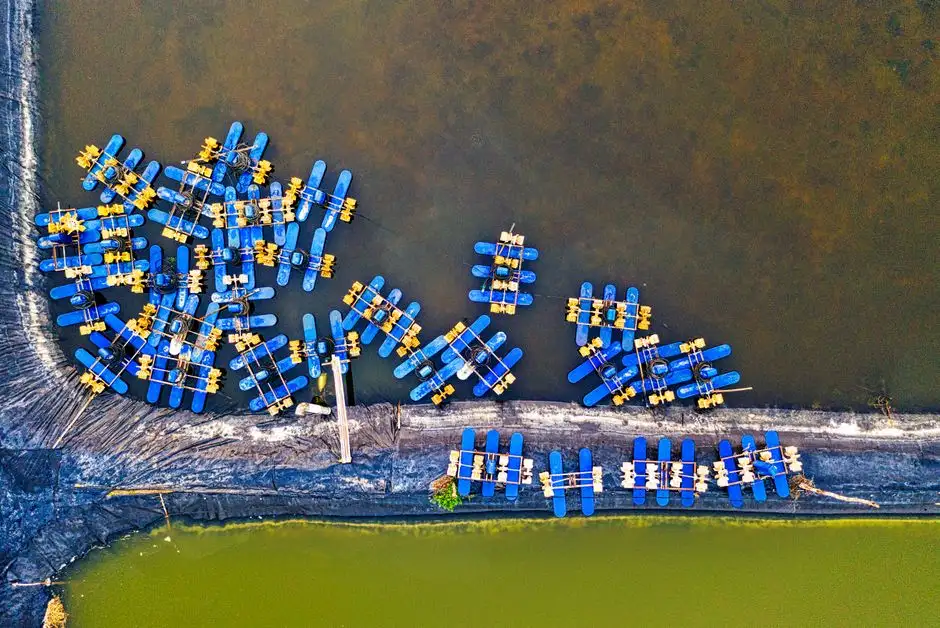
Process choice in Muscat is driven by three variables: capacity band, reuse intent, and available footprint. MBBR (moving bed biofilm reactor) is the default for 50–500 m³/day municipal, hotel, labor-camp, and mall projects where CAPEX dominates and the operator is non-specialist. It tolerates influent load shocks, has no sludge recirculation pump to fail, and runs unattended for weeks. SBR (sequencing batch reactor) is competitive below 200 m³/day where the footprint can absorb the larger tankage and the controls package is simple, but the short settling window in a 40 °C Muscat summer can drag TSS above 30 mg/L if the decant phase is mis-tuned.
MBR is the only realistic option when the treated water feeds landscape irrigation or toilet flushing, because a well-run MBR membrane bioreactor system routinely hits BOD₅ < 5 mg/L and TSS < 1 mg/L. The HydropureWater MBR range covers 10–2,000 m³/day, uses < 1 μm PVDF filtration, and delivers roughly 60% footprint reduction versus conventional activated sludge. The upgrade path for an existing SBR is the DF-series PVDF flat-sheet membrane module with 0.1 μm pore size, 80–225 m² configurations, 32–135 m³/day per unit, and 10–20× lower energy than external cross-flow designs. For tight Muscat sites with no surface area for an above-grade plant, the WSZ underground integrated sewage treatment plant buries the entire process below grade, runs without an operator, and covers 24–1,920 m³/day.
| Process | Capacity sweet spot | Effluent BOD₅ / TSS | CAPEX (USD/m³/day) | OPEX (USD/m³) | Muscat fit score |
|---|---|---|---|---|---|
| MBBR | 50–500 m³/day | ≤ 20 / ≤ 30 mg/L | 350–1,400 | 0.08–0.25 | High — robust, low-skill operation |
| SBR | < 200 m³/day | ≤ 20 / ≤ 30 mg/L (if tuned) | 400–1,200 | 0.10–0.30 | Medium — footprint and summer-decant risk |
| MBR | 50–2,000 m³/day | < 5 / < 1 mg/L | 900–2,800 | 0.18–0.55 | High where reuse required; higher OPEX |
Sizing and Cost Benchmarks for 2026
2026 GCC CAPEX bands for packaged STPs land at USD 350–1,400 per m³/day for MBBR, USD 400–1,200 for SBR, and USD 900–2,800 for MBR, with OPEX of USD 0.08–0.25 per m³ for MBBR and USD 0.18–0.55 per m³ for MBR (electricity and periodic membrane replacement dominate the MBR OPEX stack). The range is wide because the same process can be quoted as a bare skid or as a turnkey plant with civil works and 12 months of O&M, and a buyer who only compares equipment CAPEX will under-budget by 40–60%.
Hidden costs Muscat buyers consistently forget: ISO containerization for Sohar or Salalah port clearance (USD 1,500–4,000 per 40 ft unit), 380–415 V / 50 Hz panel reconfiguration for GCC mains (USD 800–2,500 per panel if the unit ships at 220 V), and a 6 kVA/m³/day standby genset sized for grid-outage resilience — Muscat's grid is reliable, but a 12-hour MBR shutdown during a hotel occupancy peak can cost more than the genset. Worked example for a 200 m³/day hotel STP in Muscat: MBBR equipment USD 70K–140K, MBR equipment USD 200K–360K, install plus civil at 1.0–1.4× equipment cost, total project USD 140K–500K plus contingency.
| Cost line | MBBR (200 m³/day) | MBR (200 m³/day) | Notes |
|---|---|---|---|
| Equipment, ex-works China | USD 70,000–140,000 | USD 200,000–360,000 | Skid + PLC + blowers |
| Shipping (Sohar/Salalah) | USD 4,000–8,000 | USD 6,000–12,000 | 2–3× 40 ft containers |
| Civil + install (1.0–1.4× equip.) | USD 70,000–196,000 | USD 200,000–504,000 | Tanks, pipework, cabling |
| Commissioning + 12-mo O&M | USD 15,000–30,000 | USD 25,000–50,000 | Often bundled |
| Annual OPEX (electricity, sludge, membranes) | USD 5,800–18,250 | USD 13,140–40,150 | At 0.08–0.25 / 0.18–0.55 per m³ |
Supplier Vetting Checklist for the Muscat Market
Eight binary checks separate a Muscat-capable supplier from a catalog reseller: (1) an Oman or GCC reference list with at least one commissioned STP above 50 m³/day, (2) FAT video capability before shipment, (3) 40 °C ambient-temp-tested enclosure, (4) GCC-voltage panel (380–415 V / 50 Hz, 3-phase), (5) PLC with remote monitoring over 4G or Ethernet, (6) a local service agent in Muscat or Salalah — not just a sales rep, (7) 12-month warranty with a written 48-hour response SLA, and (8) an Arabic-language O&M manual. A "no" on any of the eight is a red flag.
Hard red flags: suppliers who cannot name a single commissioned STP in Oman, who will only quote ex-works China, or who refuse to share a P&ID before a purchase order. The WSZ underground integrated sewage treatment plant is worth flagging specifically for the hotel and residential buyer with no surface area for an above-grade plant — fully buried, no operator, 24–1,920 m³/day coverage, and the buried envelope eliminates the 40 °C ambient enclosure concern entirely.
| # | Vetting check | Pass criterion | Failure consequence |
|---|---|---|---|
| 1 | Oman / GCC reference list | ≥ 1 commissioned STP > 50 m³/day | Unproven commissioning capability |
| 2 | FAT video | Pre-shipment test on identical skid | Defects surface on site, weeks of delay |
| 3 | 40 °C enclosure rating | Panel HVAC or sun-shield design | PLC trips, sensor drift, summer shutdowns |
| 4 | GCC-voltage panel | 380–415 V / 50 Hz, 3-phase | Rework, certification failure |
| 5 | PLC + remote monitoring | 4G/Ethernet SCADA or web HMI | No alarm visibility, manual site visits |
| 6 | Local service agent | Engineer in Muscat or Salalah | Flying technician, 5–7 day response |
| 7 | Warranty + 48 h SLA | Written commitment in contract | Vendor disputes responsibility post-shipment |
| 8 | Arabic O&M manual | Bound copy + softcopy in Arabic | Operator errors, MECAWR audit findings |
Pre-Treatment, Disinfection, and Sludge Handling Essentials
Any quote from a sewage treatment plant supplier in Muscat that omits headworks, disinfection, and sludge handling is incomplete. Fine screening should be a GX-series rotary mechanical bar screen as the baseline — continuous-duty, stainless rake teeth, dual overload protection — sized to protect downstream MBR or MBBR membranes from ragging and grit. If the project is a food-processing or oil-rich labor-camp kitchen waste stream, dissolved air flotation is mandatory upstream of the biological stage; the dissolved air flotation system handles 4–300 m³/h and reliably cuts FOG to below 15 mg/L before the MBBR or MBR.
Disinfection choice depends on the reuse end-use. Chlorine dioxide generators at 50–20,000 g/h are the workhorse for municipal irrigation reuse and avoid the trihalomethane problem of chlorine. Hospital and hotel projects with pool or cooling-tower reuse should evaluate ozone instead, since chlorinated byproducts become a concern at those reuse points — WHO Guidelines for Drinking-water Quality remain the operating benchmark for any reuse stream. Sludge handling is the line item that breaks budgets late: a plate-and-frame filter press with 1–500 m² filtration area is the de facto standard for Muscat plants producing 50–200 kg DS/day of waste activated sludge, and a supplier who does not include it in the quote is leaving the buyer to handle 90% water-content sludge with a subcontractor.
Frequently Asked Questions
What does a typical 2026 STP cost in Muscat? Packaged plants in 2026 run USD 350–2,800 per m³/day in CAPEX depending on process, plus 1.0–1.4× equipment cost for civil and install (HydropureWater 2026 GCC benchmarks).
MBR vs MBBR for a 200 m³/day hotel in Muscat — which wins? MBBR wins on CAPEX at USD 70K–140K equipment and OPEX at USD 0.08–0.25/m³; MBR wins on effluent quality (BOD₅ < 5 mg/L) and is required if the hotel reuses water for irrigation or toilet flushing.
Which regulator issues STP discharge permits in Oman? MECAWR (Ministry of Environment, Climate Affairs and Water Resources) under Ministerial Decision 145/93 sets BOD₅ ≤ 20 mg/L and TSS ≤ 30 mg/L for irrigation reuse; permit-to-discharge timelines run 8–16 weeks from full submission.
How long does shipping a packaged STP from China to Muscat take? Sea freight to Sohar or Salalah typically runs 6–9 weeks, followed by 2–3 weeks for site install and commissioning, so a realistic 2026 delivery window from PO to commissioned plant is 10–14 weeks.
What is the best packaged STP option for a Muscat site with no surface area? The WSZ underground integrated sewage treatment plant buries the entire process below grade, runs without an operator, and covers 24–1,920 m³/day — the standard answer for hotel, residential, and mall retrofits where footprint is the binding constraint. For broader process context, see the Oman-wide wastewater treatment plant supplier buyer's guide.