What 'Sewage Treatment Plant Supplier in Dammam' Actually Means in 2026
In 2026, the most competitive sewage treatment plant suppliers in Dammam deliver packaged MBR, SBR, and buried WSZ units in the 10–2,000 m³/day range at CAPEX of roughly $80–$1,500 per m³/day (USD), with MBR favored for reuse-quality effluent under Saudi NCEC and Royal Commission limits. The right choice depends on influent TDS, peak load, and whether the plant must meet PME irrigation reuse thresholds (BOD ≤40 mg/L, fecal coliform ≤100 CFU/100 mL).
Three supplier tiers are active in the Eastern Province. Chinese OEM exporters ship containerized or skid-mounted plants ex-factory, typically landing via King Abdulaziz Port in Dammam at an estimated 8–12% lower CIF cost than Jeddah routing for equivalent equipment. Local Saudi EPC integrators combine civil works, installation, and commissioning under one contract — useful when the buyer wants a single point of responsibility. European premium brands (WABAG, Suez, Veolia) serve industrial and municipal tenders above ~5,000 m³/day but rarely compete below 2,000 m³/day on price. For residential compounds, worker camps, hotels, and small commercial developments in Dammam, a buried packaged WSZ sewage treatment plant typically falls in the $80–$300/m³/day band, while an integrated MBR membrane bioreactor system for reuse-grade effluent sits between $400 and $1,500/m³/day, before civil works and 15% Saudi VAT. Roughly 90% of Dammam STP inquiries land inside the 50–2,000 m³/day envelope, which is the band this guide focuses on.
Saudi Discharge Limits Every Dammam STP Must Hit
Saudi discharge compliance is governed by NCEC (National Center for Environmental Compliance) and PME (Presidency of Meteorology and Environment) at the national level, with the Royal Commission adding stricter rules inside Yanbu and Dhahran industrial cities — both reachable from Dammam within 90 minutes. Any supplier quoting without naming these three bodies is a red flag.
The table below translates the regulatory thresholds into equipment selection criteria. The numbers are the typical limits applied to municipal and industrial discharge in 2026; specific site permits may be tighter.
| Parameter | Municipal discharge limit | PME irrigation reuse (Rule 14) | Treatment stage responsible |
|---|---|---|---|
| BOD₅ | ≤25 mg/L | ≤40 mg/L | Biological (aerobic / anoxic) |
| COD | ≤150 mg/L | ≤200 mg/L | Biological + chemical polishing |
| TSS | ≤30 mg/L | ≤50 mg/L | Clarification + filtration |
| pH | 6–9 | 6.5–8.5 | Final pH correction |
| Fecal coliform | ≤200 CFU/100 mL | ≤100 CFU/100 mL | UV or ClO₂ disinfection |
| Oil & grease | ≤10 mg/L | ≤5 mg/L | Oil-water separation, DAF |
| Total nitrogen | ≤45 mg/L (sensitive receptors) | ≤45 mg/L | Nitrification / denitrification |
| Residual chlorine | 0.5–1.0 mg/L (reportable) | ≤1.0 mg/L | Continuous NCEC telemetry |
Since 2024, NCEC has tightened residual chlorine reporting and now requires continuous online effluent monitoring for any plant above 500 m³/day. That spec alone filters out weak suppliers, because it demands a PLC with bilingual HMI and remote telemetry — not a control panel with a local display. Screening the influent before biological treatment matters too: a rotary mechanical bar screen for STP headworks protects downstream MBR or MBBR media from ragging, and a chlorine dioxide disinfection generator delivers a stable residual that UV cannot, which is why ClO₂ has become the default for PME irrigation reuse projects in the Kingdom.
Choosing the Right Process: MBR vs SBR vs MBBR vs Packaged WSZ
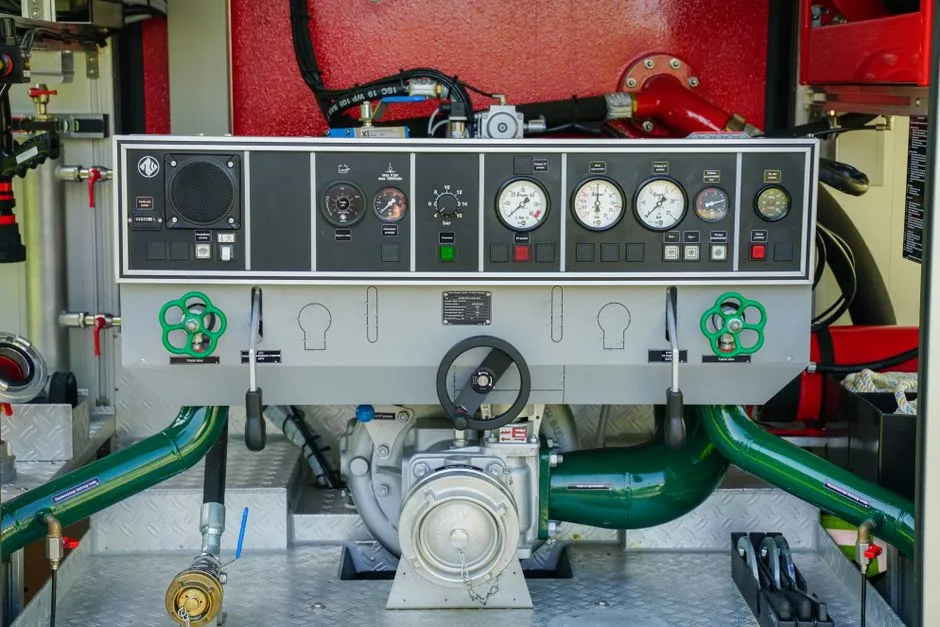
Pick the process before you pick the supplier. Four technologies cover roughly 95% of Dammam STPs in the 10–10,000 m³/day band, and each has a defensible niche. The table below compares them on the criteria a procurement engineer will be asked about first.
| Criterion | Packaged WSZ | SBR | MBBR | MBR |
|---|---|---|---|---|
| Flow range | 24–1,920 m³/day | 20–5,000 m³/day | 50–10,000 m³/day | 10–2,000 m³/day |
| Footprint vs conventional | ~40% | ~70% | ~80% | ~60% |
| Effluent TSS | ≤30 mg/L | ≤20 mg/L | 20–30 mg/L | <5 mg/L |
| Effluent turbidity | — | — | — | <1 NTU |
| CAPEX (USD/m³/day) | $80–$300 | $200–$700 | $150–$500 | $400–$1,500 |
| Operator skill | None (fully automatic) | Moderate | Moderate | High (membrane care) |
| Best fit in Dammam | Compounds, camps, hotels <1,000 m³/day | Variable industrial loads | Retrofit, toxic-shock tolerance | Reuse, tight footprint, >1,000 m³/day |
The decision framework is short. Below ~1,000 m³/day on a residential or commercial site with no reuse obligation, choose a buried packaged WSZ sewage treatment plant — it is the cheapest installed option, fully automatic, and invisible once landscaped. Above 1,000 m³/day, or anywhere PME irrigation reuse thresholds apply, move to an integrated MBR membrane bioreactor system with PVDF flat-sheet membranes, which deliver sub-5 mg/L TSS and sub-1 NTU turbidity in a single step. SBR wins for industrial parks with shock loads (batch food processing, laundry effluent, refinery runoff) because its batch cycle absorbs variation that continuous-flow systems cannot. MBBR is the conservative retrofit choice for existing concrete tanks or for influent with periodic toxic spikes.
One Dammam-specific note: ambient air reaches 45–50°C from May to September, and mixed liquor temperatures inside aeration tanks commonly run 38–42°C. MBR membranes at the lower end of their thermal tolerance need to be specified for sustained 40°C operation, otherwise flux drops 15–25% in peak summer (HydropureWater field data, 2025).
What Separates a Serious Dammam STP Supplier from a Trading Company
The Eastern Province has dozens of trading companies reselling Chinese-made plants. Most cannot service what they sell. A 10-point checklist filters them out before the RFQ goes out.
| # | Checkpoint | Pass / fail criterion |
|---|---|---|
| 1 | In-house membrane manufacture or authorized OEM | Not a sourcing agent |
| 2 | Documented KSA project references | Royal Commission Jubail/Dhahran, SABIC affiliates, SADARA |
| 3 | Saudi-compliant electrical panels | IECEx / SASO certified, 50°C enclosure cooling |
| 4 | FAT video, ISO 9001 / 14001, CE marking | Auditable, dated documents |
| 5 | PLC with bilingual Arabic/English HMI | Remote telemetry for NCEC online monitoring |
| 6 | Dammam / Al-Khobar / Jubail service partner | 24–48 hour SLA achievable |
| 7 | Hydraulic and biological design calculations | Issued with the bid, not on request |
| 8 | Process flow diagram in the proposal | With mass balance, not just a sales GA drawing |
| 9 | Sludge handling scope | A plate and frame filter press for STP sludge sized to the design dry-solids load |
| 10 | Defined warranty and annual service price | 2 years mechanical, membrane integrity guarantee |
A "yes" on items 1, 3, 5, and 6 is non-negotiable. Items 2 and 4 take 30 minutes to verify by phone and document download. Item 7 is the most common deal-breaker: if a supplier cannot produce a hydraulic profile and biological loading rate, they are guessing, and you will inherit the guess at commissioning. Pair the checklist with a shortlist of two KSA references per vendor and a factory video for each bid above 500 m³/day.
2026 CAPEX and OPEX Benchmarks for Dammam Sewage Treatment Plants
These are the figures to anchor an internal board paper. All numbers are ex-works, exclusive of civil works and 15% Saudi VAT, and reflect 2026 Eastern Province pricing (HydropureWater field data, 2026). SAR equivalents are calculated at 1 USD ≈ 3.75 SAR.
| Technology | CAPEX (USD/m³/day) | CAPEX (SAR/m³/day) | Typical OPEX (USD/m³ treated) |
|---|---|---|---|
| Packaged WSZ | $80–$300 | 300–1,125 SAR | $0.15–$0.30 |
| MBBR | $150–$500 | 563–1,875 SAR | $0.18–$0.35 |
| SBR | $200–$700 | 750–2,625 SAR | $0.20–$0.40 |
| MBR | $400–$1,500 | 1,500–5,625 SAR | $0.30–$0.55 |
OPEX decomposes roughly as: electricity $0.06–$0.18 per m³ (membrane aeration dominates MBR), chemicals $0.02–$0.06 per m³, sludge handling $0.03–$0.10 per m³, and membrane replacement amortized $0.04–$0.12 per m³ for MBR over a 5–8 year membrane life. For a 500 m³/day packaged plant in Dammam, 20-year life-cycle cost is approximately $2.1M CAPEX plus $0.9M cumulative OPEX at current industrial electricity tariffs of SAR 0.20–0.32/kWh.
Containerized MBR systems cut on-site civil works by 40–60%, which often offsets the higher unit CAPEX in tight urban Dammam sites where excavation is constrained by adjacent structures or high groundwater. If the site has even modest salinity, include a polishing stage such as an RO unit or a high-efficiency sedimentation tank ahead of any reuse loop, otherwise turbidity drift will foul the downstream irrigation network within months.
How to Run an Effective Supplier Evaluation in 2026
The five-step process below is the one we see Dammam EPC contractors run when a project moves from feasibility to RFQ in under four weeks.
- Issue a 2-page technical questionnaire. Ask for influent/effluent assumptions, full equipment list, GA drawings, PLC I/O list, and two KSA installation references. Reject any vendor who cannot return it within 10 working days.
- Shortlist to 3 vendors and request a paid or no-cost technical and commercial proposal, each with a process flow diagram and mass balance. Use the responses to compare like-for-like with the parallel Manama guide if you are running a GCC-wide procurement.
- Score each vendor against the 10-point checklist from the previous section. Anything scoring under 7/10 is out.
- Request a 2-week pilot or skid rental for MBR bids above 500 m³/day; for packaged units, a factory FAT visit is the equivalent due-diligence step. Cross-check the MBR vs MBBR engineering comparison to confirm the proposed process is fit for the actual influent, not the one the vendor prefers to quote.
- Negotiate a 2-year warranty including membrane integrity, a defined annual service contract price for the first 3 years, and a guaranteed 24–48 hour response SLA from a Dammam or Al-Khobar depot.
For an equivalent checklist covering the UAE side of the Gulf, the wastewater treatment plant manufacturer in Sharjah guide applies the same logic to Federal Decree-Law 12/2018, and the pH discharge limit compliance guide for the Gulf is worth reading before you lock the effluent spec. If your project also touches central Saudi Arabia, the parallel sewage treatment equipment suppliers in Riyadh guide covers the capital's distinct logistics and regulatory profile.
Frequently Asked Questions
What is the typical CAPEX for a 500 m³/day sewage treatment plant in Dammam in 2026?
For a packaged WSZ unit, expect $40,000–$150,000 total CAPEX (USD), or roughly 150,000–562,500 SAR. An MBR with reuse polishing typically lands between $200,000 and $750,000, or 750,000–2,812,500 SAR. Both figures are ex-works, before civil works and 15% VAT.
Which STP technology is best for high-TDS industrial wastewater in Saudi Arabia?
MBR with RO polishing is the safest default when influent TDS exceeds 2,000 mg/L, which is common in petrochemical and desalination-adjacent flows. The PVDF flat-sheet MBR membrane module tolerates the salinity spikes that hollow-fiber designs handle less gracefully.
Do STP suppliers in Dammam handle NCEC permitting and PME compliance documentation?
Reputable suppliers provide the design basis, mass balance, and equipment data sheets needed for the permit application. The permit itself is filed by the owner or the owner's environmental consultant. Suppliers that claim to "issue permits" are usually referring to letters of no objection from the local municipality, not the NCEC operating permit.
How long does it take to deliver and install a packaged sewage treatment plant in Saudi Arabia?
For a 100–500 m³/day packaged unit shipped ex-factory, allow 8–12 weeks for production, 3–4 weeks for sea freight to Dammam, and 4–6 weeks for installation and commissioning. Total project duration is typically 5–7 months from PO to compliant effluent.
What is the membrane replacement cost for an MBR system operating at 40–50°C ambient?
PVDF flat-sheet membranes at sustained 40°C have a service life of 5–8 years, with replacement cost typically 15–25% of original MBR CAPEX. Operating above 45°C shortens life materially; consider a covered tank or diffused aeration cooling if your site runs hot year-round.