Why the 11,000 m³/day Nizwa Benchmark Matters for Industrial Plants
Industrial wastewater treatment in Nizwa in 2026 must comply with Oman's Ministerial Decision 159/2017 under Royal Decree 18/2009, which caps BOD at 25 mg/L, COD at 150 mg/L, and TSS at 30 mg/L for discharge to inland waters. The Nizwa municipal plant processes 11,000 m³/day using modified activated sludge at ~99% removal efficiency — a valid benchmark for sizing an industrial system in Ad Dakhiliyah governorate.
The Nizwa sewage treatment plant was commissioned in 2008 and currently treats roughly 11,000 m³/day of municipal flow, making it the single largest publicly cited wastewater throughput in inland Ad Dakhiliyah (per Zawya, 2024 incident report; efficiency figures per the Nizwa new sewage treatment plant study, Sultan Qaboos University). For an EPC sizing a food, dairy, or date-processing plant, that 11,000 m³/day figure is a useful order-of-magnitude anchor: most industrial facilities in the wilayat of Nizwa, Bahla, and Adam fall in the 50–5,000 m³/day range, with date-processing effluents typically peaking at 800–2,000 m³/day during the August–October harvest window.
The municipal train relies on a modified activated sludge configuration optimized for domestic loading (typical BOD 200–250 mg/L, TSS 200–300 mg/L). Industrial buyers should treat the 99% removal figure as a reference for what is technically achievable, not as a process prescription — food and dairy streams commonly arrive at 1,500–4,000 mg/L COD with FOG spikes above 300 mg/L, conditions that push conventional activated sludge past its comfort zone and justify a membrane-based train instead.
Oman Discharge Limits That Apply to a Nizwa Industrial Plant in 2026
Royal Decree 18/2009 (the Water Law) is the binding statute, and Ministerial Decision 159/2017 sets the numerical discharge limits that any Nizwa industrial discharger must meet before releasing effluent to a wadi, an injection well, or a third-party reuse network. Because Ad Dakhiliyah is landlocked, the Standard B limits for inland discharge apply — these are the same values used in 2026 compliance audits under the Ministry of Energy and Minerals' Environment Affairs function (the regulatory mandate formerly held by MECA, restructured 2024–2025). Permits are issued through the Ad Dakhiliyah regional office on a per-wilayat basis, and Nizwa falls within that jurisdiction.
| Parameter | Standard B (inland discharge, MD 159/2017) | Haya Water TSE reuse target (where applicable) |
|---|---|---|
| BOD5 | 25 mg/L | < 10 mg/L |
| COD | 150 mg/L | 50 mg/L |
| TSS | 30 mg/L | < 10 mg/L |
| Oil & grease | 15 mg/L | < 5 mg/L |
| Total nitrogen | 50 mg/L | 15 mg/L |
| pH | 6.0–9.0 | 6.5–8.5 |
| Residual chlorine | 1.0 mg/L | 0.5 mg/L (TSE contact) |
| Fecal coliform | 200 CFU/100 mL | < 1 CFU/100 mL (Haya Class A) |
| Turbidity | — | < 2 NTU |
If the treated stream is to be handed to Haya Water's Treated Sewage Effluent (TSE) network for landscape or agricultural irrigation — a common disposal route for plants near the Nizwa industrial corridor — the reuse spec is the binding target, not Standard B. Haya's Class A reuse window typically requires BOD under 10 mg/L, TSS under 10 mg/L, and turbidity under 2 NTU, which is roughly 2–3× tighter than the inland discharge cap. Confirm the discharge path with Haya before finalizing the process train; switching from Standard B to TSE reuse after procurement adds a tertiary polishing stage that costs 15–25% of the original CAPEX.
Process Selection: MBR vs SBR vs DAF+MBR vs MBBR for Nizwa Conditions
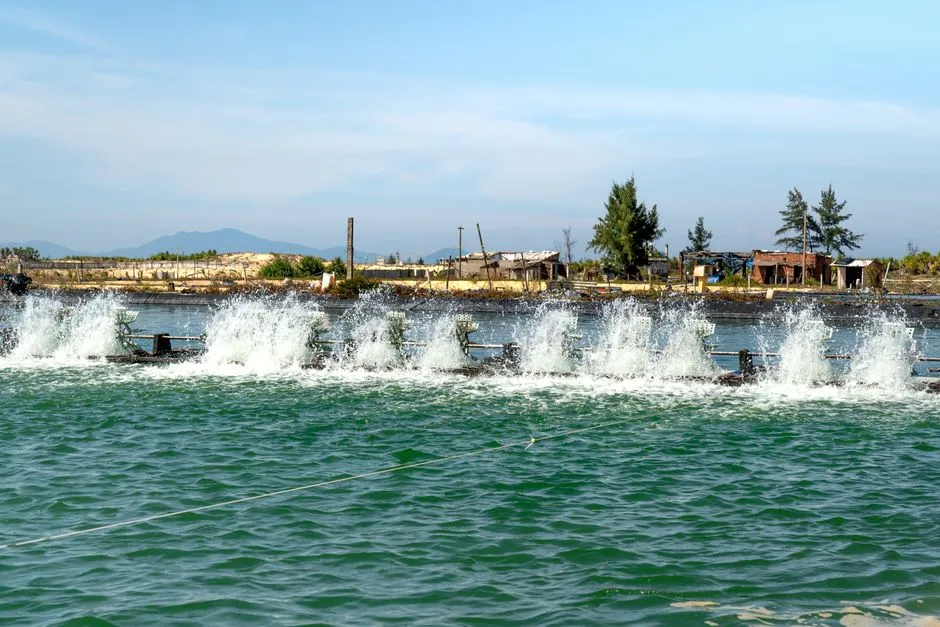
For Ad Dakhiliyah's hot-arid climate and the high-strength, high-FOG effluent typical of Omani food, dairy, and date processing, the four trains that realistically win are MBR (activated sludge plus a submerged PVDF membrane), SBR (batch-fill activated sludge in a single tank), DAF+MBR (dissolved air flotation pre-treatment followed by MBR), and MBBR (moving bed biofilm reactor with free-floating carriers). Selection is driven by four Oman-specific criteria: effluent quality against MD 159/2017, footprint (MBR is roughly 60% smaller than conventional activated sludge at the same loading), tolerance to 45–48°C ambient swings, and ability to absorb FOG/TSS spikes from date and dairy wash water.
| Criterion | MBR | SBR | DAF + MBR | MBBR |
|---|---|---|---|---|
| Effluent BOD (typical) | < 5 mg/L | 15–25 mg/L | < 5 mg/L | 15–30 mg/L |
| Effluent TSS (typical) | < 1 mg/L | 15–30 mg/L | < 1 mg/L | 20–40 mg/L |
| Footprint at 1,000 m³/day | ~80 m² | ~250 m² | ~110 m² (incl. DAF) | ~120 m² |
| FOG tolerance (mg/L influent) | Up to 150 with pre-screen | Up to 80 | Up to 400+ (DAF handles it) | Up to 100 |
| 45–48°C ambient tolerance | Good with covered tanks | Moderate (DO sag risk) | Good with covered tanks | Moderate |
| Meets MD 159/2017 without tertiary? | Yes | Borderline | Yes | No — needs polishing |
For a typical 500–2,000 m³/day date-processing or dairy plant in Nizwa, an MBR membrane bioreactor system sized off the 11,000 m³/day municipal benchmark is the default pick. When influent FOG routinely exceeds 150 mg/L, add a DAF pre-treatment skid upstream to drop oil and grease below 30 mg/L before the membrane; this protects the PVDF flat sheet MBR membrane module and stretches cleaning intervals from weekly to monthly. Limit SBR to flows under 500 m³/day where civil simplicity outweighs the larger footprint, and avoid MBBR for date or dairy effluent — the biofilm carriers foul quickly when FOG rises above 100 mg/L. MBBR is a better fit for low-FOG industrial process water such as cooling-tower blowdown or mining support camps.
Engineering Specs That Hold Up in 45°C+ Nizwa Summers
Nizwa's summer ambient routinely hits 45–48°C, with metal enclosures under direct sun exceeding 50°C internally; equipment not rated for that envelope fails within 12–18 months, not the 20-year design life. Three spec lines are non-negotiable for any vendor quoting a Nizwa-bound train.
| Subsystem | Minimum spec for Nizwa | Why |
|---|---|---|
| MBR membrane | PVDF, 0.1–0.4 μm pore, rated to 40°C continuous | Standard MBR membranes lose integrity above 40–45°C; PVDF holds to 45°C with margin |
| Bioreactor tank | Covered, shaded, or buried; HDPE or concrete with reflective coating | Prevents DO sag and odor volatilization in 48°C air |
| PLC enclosure | IP55 minimum, cabinet AC sized for +15°C above ambient | Inside-enclosure temps can exceed 60°C without AC; Siemens S7-1500 trips at 60°C |
| Chemical dosing | 316L stainless skids, not 304 | Hajar foothill fog + chloride dosing pitting on 304 within 24 months (field data, 2025) |
| Disinfection | UV sized for post-MBR effluent, or on-site chlorine dioxide generator | ClO₂ avoids trihalomethane formation that MD 159/2017 flags for any TSE reuse pathway |
| Chemical feed | Automatic chemical dosing skid with PE tanks | Manual dosing drifts under shift fatigue in 45°C plant rooms |
Require membrane integrity test certificates issued within 30 days of shipment — a hollow-fiber or flat-sheet module that sits in a hot Sohar container for six weeks during inland trucking can arrive with already-stressed fibers, and the only way to prove fitness pre-installation is a pressure-decay test on the actual serial-numbered module. For broader GCC benchmarking on similar climates, see the Sharjah wastewater treatment plant manufacturer buyer's guide, which documents the same 45°C+ envelope in UAE installations.
2026 CAPEX and OPEX Bands for an Industrial Plant in Nizwa
For a 100–5,000 m³/day industrial system sourced from China on a CIF Sohar or Salalah basis, installed CAPEX for a skid-mounted MBR + DAF train typically lands at USD 280–520 per m³/day, with OPEX at USD 0.18–0.42 per m³ treated (HydropureWater field data, 2025–2026 GCC projects). The 1.85× spread inside that CAPEX band is driven by influent strength (a 4,000 mg/L COD dairy stream costs nearly double a 1,000 mg/L COD food stream at the same flow), automation level, and whether the bid is Ex-Works versus CIF.
| Cost line | Low (USD/m³/day) | High (USD/m³/day) | Notes |
|---|---|---|---|
| Skid-mounted MBR + DAF equipment (CIF Sohar) | 280 | 380 | 20-ft or 40-ft ISO frames |
| Civil works & erection | 60 | 90 | Concrete tankage, pipe racks |
| Inland transport Sohar → Nizwa (~220 km) | 6% of CIF | 9% of CIF | Request Ex-Works quote to compare |
| Electrical & instrumentation | 20 | 40 | PLC panel, cabling, VFDs |
| Commissioning & first-year spares | 15 | 25 | Vendor engineer on-site |
| Total installed CAPEX | ~380 | ~540 |
Worked example for a 1,000 m³/day food-processing plant: USD 380/m³/day × 1,000 = USD 380,000 for the skid train, plus ~USD 80,000 inland transport and overland logistics from Sohar (Nizwa sits ~220 km inland, partly through Hajar foothills), plus ~USD 60,000 civil works, equals roughly USD 520,000 total installed CAPEX. OPEX is dominated by membrane replacement (budget a replacement at year 5–7, ~USD 40–60 per m³/day of capacity), electricity (~0.4 kWh/m³ for aeration at Oman's subsidized industrial tariff of ~USD 0.06/kWh), and chemical dosing. For a packaged reference unit at lower flow rates, an integrated water purification skid is worth requesting as a baseline quote before sizing a full MBR train.
Supplier Due-Diligence Checklist for Chinese Equipment Bound to Nizwa
Buying from a non-Oman vendor at 1,400 km from the nearest authorized service tech means warranty enforcement is your problem, not the factory's. Use this checklist before signing a purchase order.
- Prior GCC or Oman reference plants. Require at least one operating ≥ 12 months, with the end-user's contact verified. A vendor without a hot-climate reference is gambling with your commissioning window.
- Factory-acceptance-test (FAT) video. Demand video of the actual skid being shipped — not a stock clip — and an invitation to witness testing at the Chinese facility or via live stream. Without that, there is no enforceable acceptance criterion.
- Component traceability. PLC must be Siemens S7-1500 or Allen-Bradley CompactLogix; electrical components in hazardous zones must carry IECEx or ATEX certification, both of which the Ad Dakhiliyah regional inspector recognizes.
- Membrane documentation. Pre-shipment integrity test certificate per module serial number, 24-month mechanical warranty, 60-month membrane pro-rata warranty.
- Service-level agreement. Signed SLA binding the vendor to commissioning in Nizwa within 30 days of arrival, with remote monitoring VPN access and a guaranteed 48-hour on-site response for warranty events.
- Packaging. Skid-mounted containerized systems in standard ISO 20/40 ft frames cut port handling, customs, and overland trucking time — a flat-rack skid can add 2–3 weeks to the inland leg.
For the upstream dewatering end of the train, a plate-frame filter press paired with the MBR membrane bioreactor system gives a complete packaged bid that single-source vendors can hold accountable. For regional context on what a well-run GCC supplier package looks like, the sewage treatment plant suppliers in Manama buyer's guide covers Bahrain's parallel import path, and the industrial wastewater treatment in Krakow guide offers a useful EU compliance contrast for vendors pitching dual-region certifications. For deeper process detail on MBR versus MBBR, the MBR vs MBBR comparison expands on the trade-offs summarized above.
Frequently Asked Questions
What are the binding effluent limits for a Nizwa industrial discharge in 2026?
Oman's Ministerial Decision 159/2017 under Royal Decree 18/2009 sets Standard B limits for inland discharge: BOD 25 mg/L, COD 150 mg/L, TSS 30 mg/L, oil & grease 15 mg/L, total nitrogen 50 mg/L, pH 6.0–9.0, residual chlorine 1.0 mg/L, fecal coliform 200 CFU/100 mL. Ad Dakhiliyah is landlocked, so these inland limits — not the marine limits — apply.
What is the typical CAPEX for a 1,000 m³/day industrial wastewater plant in Nizwa?
A skid-mounted MBR + DAF train sourced from China at CIF Sohar typically runs USD 280–380 per m³/day for equipment, plus ~USD 60–90 per m³/day for civil works, yielding ~USD 380,000–520,000 total installed CAPEX for a 1,000 m³/day food-processing plant once inland transport to Nizwa is included (HydropureWater field data, 2026).
Which treatment process is best for a dairy or date-processing plant in Nizwa?
MBR or DAF+MBR is the default for FOG-rich food and dairy effluent above 500 m³/day, because it reliably achieves the 30 mg/L TSS and 25 mg/L BOD limits without tertiary polishing. SBR is only suitable below 500 m³/day, and MBBR is not recommended when FOG exceeds 100 mg/L.
How hot can ambient get in Nizwa, and what equipment rating is required?
Nizwa summer ambient reaches 45–48°C, with metal enclosures under direct sun exceeding 50°C internally. Required ratings are PVDF membranes to 40°C continuous, IP55 PLC enclosures with cabinet air conditioning, and 316L stainless chemical dosing skids to resist Hajar foothill humidity.
Does treated wastewater from a Nizwa plant have to meet Haya Water reuse standards?
Only if the effluent is discharged to the Haya TSE network for irrigation. Haya's Class A reuse target is roughly 2–3× tighter than Standard B (BOD < 10 mg/L, TSS < 10 mg/L, turbidity < 2 NTU), and confirming the discharge path with Haya before procurement avoids a 15–25% CAPEX retrofit later.
What is the operating permit process for an industrial discharger in Nizwa?
Operating permits are issued by the Ministry of Energy and Minerals' Environment Affairs function (formerly MECA) through the Ad Dakhiliyah regional office on a per-wilayat basis. Nizwa, Bahla, and Adam all fall under that regional office, and Standard B compliance must be demonstrated before commissioning sign-off.