Why Industrial Wastewater in Krakow Is a Different Problem Than the TWTP
Every top-ranking 2026 result for "Krakow wastewater" points to the Kraków Thermal Waste Treatment Plant (TWTP) — the eco-incinerator in District XVIII that processes 220,000 t/yr of municipal solid waste, generates roughly 65,000 MWh of electricity and 280,000 MWh of heat, and is regulated under the Ordinance of the Minister of the Environment of 4 November 2014 on emission standards for incineration/co-incineration of waste (Sala & Bieda 2019). That is a solid-waste and air-emissions problem, not a liquid effluent problem. Industrial wastewater in Krakow is a separate engineering and permitting question, and the two share almost no equipment, no discharge route, and no regulator.
For an industrial discharger in Małopolska, the binding framework is the EU Industrial Emissions Directive 2010/75/EU, the Polish Water Law Act (Prawo wodne, consolidated text Journal of Laws 2024 item 594), and the Regulation of the Minister of Maritime Economy and Inland Navigation on substances particularly harmful to the aquatic environment (Journal of Laws 2019 item 1229, with 2022 amendments). For installations above IED Annex I capacity thresholds, the applicable BAT reference is the Common Waste Water and Waste Gas Treatment/Management Systems document (BREF CWW, 2016), with sector-specific BREFs — including BREF STS (Surface Treatment of Metals) — supplying the activity-level emission limit values. A packaged DAF + MBR train configured to those references is the realistic 2026 answer for most Krakow plants, not anything that comes out of the TWTP's exhaust gas cleaning train.
Polish and EU Discharge Limits That Apply to Krakow Industrial Plants in 2026
Polish industrial discharge permits are issued by the regional Wody Polskie (Polish Waters) office — for Krakow, the Małopolska branch in Krakow — under Chapter IV of the Water Law Act. Limits are set case-by-case in the integrated permit but are anchored to a defensible set of national benchmark ranges used in 2026 engineering practice:
| Parameter | Typical 2026 industrial discharge range (mg/L) | Reference |
|---|---|---|
| COD | ≤ 125–150 | Water Law implementing regulations / BREF CWW BAT-AEL |
| BOD₅ | ≤ 25–30 | Water Law implementing regulations |
| TSS | ≤ 30–35 | Water Law implementing regulations |
| Total nitrogen | ≤ 15 | For sensitive receivers (Wisła catchment) |
| Total phosphorus | ≤ 2 | For sensitive receivers (Wisła catchment) |
| Cadmium (Cd) | 0.05–0.2 | Journal of Laws 2019 item 1229 |
| Lead (Pb) | 0.2–0.5 | Journal of Laws 2019 item 1229 |
| Mercury (Hg) | 0.01–0.05 | Journal of Laws 2019 item 1229 |
| Chromium VI (Cr VI) | 0.1–0.5 | Journal of Laws 2019 item 1229 |
| Nickel (Ni) | 0.2–1.0 | Journal of Laws 2019 item 1229 |
The substances regulation (Journal of Laws 2019 item 1229) imposes the tighter end of these ranges on heavy metals and certain persistent organic pollutants; the Wisła (Vistula) and its Małopolska tributaries (Raba, Dłubnia, Wilga) are designated sensitive receivers, which is why the Wody Polskie Krakow office typically requires nutrient removal and metals polishing even where generic national limits would allow higher concentrations. For IED installations, BREF CWW BAT-AEL ranges and the 2024 BREF STS update supersede generic national limits in the integrated permit — buyers should size treatment equipment to the BAT-AEL band, not the bare statutory minimum, because the Wody Polskie permit is increasingly written to BAT-AEL.
For a global comparison of how Poland's COD and BOD limits sit against other jurisdictions, the 2026 COD and BOD discharge limit standards guide gives the full benchmark table.
Krakow's Industrial Effluent Profiles: Metals, Food, and Chemicals
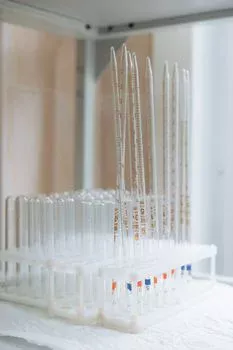
Three effluent profiles dominate the Krakow industrial base, and each drives a different upstream treatment logic:
| Cluster | Typical influent characteristics | Key contaminants | Required pre-treatment unit operation |
|---|---|---|---|
| Nowa Huta metals & machinery legacy | COD 1,000–10,000 mg/L; TSS 200–2,000 mg/L; oil & grease 50–500 mg/L | Cr, Ni, Zn, Fe; machining oils; phosphates from surface treatment | Dissolved air flotation (DAF) system, oil/water separator, chromium reduction (if Cr VI present) |
| Food & beverage (Vistula corridor) | BOD/COD 2,000–8,000 mg/L; TSS 500–3,000 mg/L; FOG 100–1,000 mg/L; high seasonal variability | Fats, oils, grease; sugars/proteins; N and P nutrients | DAF, equalization, nutrient balancing |
| Chemicals & electronics (Krakow Technological Park, Kazimierz) | Variable pH (2–12 spikes); COD 500–5,000 mg/L; complex organics | Solvents, fluorides, cyanides (process-dependent), trace metals | pH adjustment, equalization, dedicated chemical destruction (e.g., CN oxidation, F precipitation) |
Nowa Huta's metals and machinery installations still define Krakow's industrial backbone, and the legacy of surface treatment, stamping, and machining produces wastewater where oil and grease removal plus chromium/nickel reduction are non-negotiable upstream of any biological stage. Food processors along the Vistula corridor generate high-strength organic wastewater with strong seasonal swings, which is why equalization (8–24 h HRT) is the single most cost-effective piece of equipment in the train. Chemical and electronics sites in Kazimierz and the Krakow Technological Park need the most flexible pre-treatment because pH excursions and solvent slugs can shock a biological stage within hours.
The 2026 Process Train for Industrial Wastewater in Krakow
The defensible 2026 process train for a Krakow industrial plant runs in six steps. Each step has a specific operating envelope a buyer can put on a data sheet:
| Step | Unit operation | Typical 2026 operating envelope | Function |
|---|---|---|---|
| 1 | GX series rotary mechanical bar screen | Bar spacing 2–5 mm; automatic rake | Removes solids ≥2–5 mm; protects downstream pumps and membranes |
| 2 | Equalization + pH adjustment | 8–24 h HRT; target pH 6.5–8.5 | Smooths hydraulic and pollutant load; conditions influent for biology |
| 3 | DAF pre-treatment | Hydraulic loading 4–25 m³/m²/h; TSS removal 80–95%; FOG removal 70–90% | Removes FOG, colloidal TSS, and floated metals hydroxides |
| 4 | Biological — CAS or integrated MBR membrane bioreactor system | MBR effluent: COD ≤50 mg/L, TSS ≤10 mg/L; footprint ~60% of CAS | Carbon and nutrient removal; MBR adds solids barrier |
| 5 | Polishing + disinfection (UV or chlorine dioxide generator) | UV dose 30–40 mJ/cm² or ClO₂ residual 0.2–0.5 mg/L | Meets microbiological limits; enables water reuse |
| 6 | Sludge handling — plate-and-frame filter press or screw press | Cake dryness 22–28% DS (filter press) | Volume reduction for off-site disposal |
The MBR choice at Step 4 deserves a closer look, because it is the single biggest CAPEX differentiator in a Krakow plant today. An MBR vs conventional activated sludge comparison for 2026 typically shows MBR delivering COD ≤50 mg/L and TSS ≤10 mg/L reliably, at a footprint ~60% smaller than CAS, but with a membrane replacement cycle of 7–10 years that needs to be priced into the 20-year lifecycle. CAS remains the lower-CAPEX path for sites with land available and discharge limits in the COD 125 mg/L / TSS 35 mg/L range.
Equipment Selection Matrix: DAF, MBR, and Polish Compliance
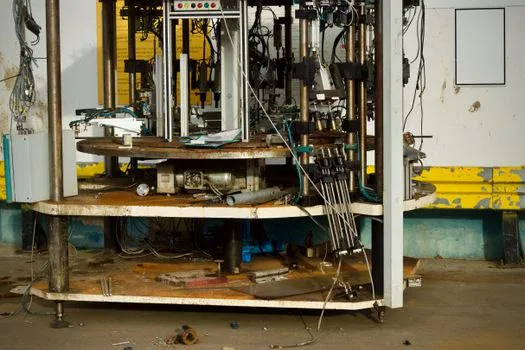
Match the influent profile and the discharge target to one of three reference configurations. The CAPEX band below is the typical 2026 European market range for packaged skid-mounted systems at 50–200 m³/day and is what a Wody Polskie permit engineer will recognize as defensible:
| Configuration | Influent fit | Effluent target | Biological stage | Polish/EU compliance anchor | Typical 2026 CAPEX band (EUR, 50–200 m³/day) |
|---|---|---|---|---|---|
| A — DAF + CAS | High-FOG food, metalworking with moderate limits | COD ≤125 mg/L; TSS ≤35 mg/L | Conventional activated sludge | Water Law Act + BREF CWW | 180,000–350,000 |
| B — DAF + MBR | Tight footprint, water reuse, strict TSS/turbidity | COD ≤50 mg/L; TSS ≤10 mg/L | MBR with PVDF membranes | Water Law Act + BREF CWW BAT-AEL | 300,000–650,000 |
| C — DAF + MBR + RO polish | Electronics, pharma; ZLD potential | Near-deionized reuse water | MBR + reverse osmosis | Water Law Act + BREF CWW + site-specific reuse | 500,000–1,200,000+ |
Configuration B (DAF + MBR) is the dominant 2026 selection for Krakow food and metalworking plants because it lands inside BREF CWW BAT-AEL without oversizing civil works. Configuration C only pays back where the receiving water body's assimilative capacity is constrained or where on-site water reuse displaces a costly municipal water purchase. Across all three, a PLC-controlled automatic chemical dosing system for coagulant, flocculant, and pH correction is essentially mandatory — manual dosing on a Krakow plant in 2026 will fail an audit.
CAPEX, OPEX, and Supplier Evaluation for Krakow Industrial Buyers
For a 100 m³/day DAF + MBR system in southern Poland in 2026, OPEX typically breaks down as follows (HydropureWater field data, 2026; cross-checked against the published DAF plant operating cost breakdown for 2026):
| OPEX line item | Share of annual OPEX (100 m³/day DAF + MBR) |
|---|---|
| Electricity (blowers, recirculation pumps, membrane aeration) | 30–40% |
| Chemical dosing (coagulant, flocculant, pH adjuster, defoamer) | 25–35% |
| Membrane replacement (PVDF, 7–10-year cycle) | 10–15% |
| Sludge disposal | 10–20% |
| Labor and preventive maintenance | ~10% |
CAPEX for a packaged skid-mounted DAF + MBR at 50–200 m³/day in 2026 sits in the EUR 180,000–650,000 band; the spread is driven by SS304 vs SS316 material selection, automation level (PLC/HMI vs full SCADA), and how much civil work is in the supplier's scope. Supplier evaluation should run against a fixed checklist: (1) valid EU/CE declaration and ISO 9001/14001 certification, (2) documented reference installations in Poland or Central Europe, (3) ability to deliver Polish-language O&M documentation, (4) local service partner in southern Poland, (5) compliance with EU Machinery Directive 2006/42/EC and ATEX where hazardous-area zones exist, and (6) warranty terms of 12–24 months mechanical and 5–10 years structural.
On the funding side, the FEnIKS Operational Programme 2021–2027 continues to co-finance industrial wastewater upgrades, with grants typically covering 30–70% of eligible CAPEX for SMEs in Małopolska. NFOŚiGW (Narodowy Fundusz Ochrony Środowiska i Gospodarki Wodnej) programmes are the usual funding channel, and a procurement manager building the 2026 budget should price the net CAPEX on the post-grant figure — not the pre-grant one — when presenting to the board.
Frequently Asked Questions
What permit does a Krakow factory need to discharge industrial wastewater in 2026?
A water permit (pozwolenie wodnoprawne) under the Water Law Act (Journal of Laws 2024 item 594), issued by the Wody Polskie regional office in Krakow. IED installations additionally need an integrated permit covering the BAT conclusions in BREF CWW (2016) and any applicable sector BREF such as BREF STS.
Does EU IED 2010/75/EU apply to my facility?
IED applies if your installation crosses the capacity thresholds in Annex I — for example, surface treatment of metals above 2 t/hour input, food processing above specified daily tonnage, or chemical manufacturing above the listed production volumes. Below the thresholds, the Water Law Act and the substances regulation still apply, but the integrated-permit and BAT-AEL obligations do not.
MBR vs CAS for a 100 m³/day Krakow food plant — which is the right call?
MBR if you need COD ≤50 mg/L / TSS ≤10 mg/L, are footprint-constrained, or plan water reuse. CAS if land is available, the discharge limit is in the COD 125 / TSS 35 range, and CAPEX is the binding constraint. Lifecycle OPEX over 20 years often closes the gap once membrane replacement and sludge handling are priced in.
What is the typical cost of a packaged DAF + MBR system delivered to Krakow?
EUR 180,000–650,000 for 50–200 m³/day in the 2026 European market, with the spread driven by material grade (SS304 vs SS316), automation scope, and whether civil works are included. Site-specific factors — inlet sewer depth, power supply, and discharge routing — can move the number by 15–25%.
Are EU grants available for industrial wastewater upgrades in Małopolska in 2026?
Yes. The FEnIKS Operational Programme 2021–2027 funds industrial wastewater upgrades, typically covering 30–70% of eligible CAPEX for SMEs in Małopolska. NFOŚiGW is the standard funding channel, and the application needs to align with both the Water Law Act compliance case and the relevant BAT conclusions.