Scotland's industrial wastewater treatment is defined by SEPA's 2025 effluent standards (BOD ≤20 mg/L, COD ≤125 mg/L, TSS ≤30 mg/L) and Scottish Water's sludge processing network. With 300+ treatment facilities handling loads >2,000 population equivalent (pe), industrial operators must choose between Dissolved Air Flotation (DAF), Membrane Bioreactors (MBR), or conventional sedimentation—each with distinct cost and compliance trade-offs. This guide provides Scotland-specific technology comparisons, cost benchmarks (£80–£250/m³ for DAF, £120–£350/m³ for MBR), and supplier selection criteria for 2025 upgrades.
Scotland's Industrial Wastewater Challenge: A 2025 Compliance Case Study
A prominent Speyside distillery recently faced SEPA enforcement for consistently exceeding its permitted Chemical Oxygen Demand (COD) discharge limits, reporting an average of 280 mg/L against the upcoming 2025 target of 125 mg/L. This scenario is increasingly common across Scotland's industrial sectors, as the Scottish Environment Protection Agency (SEPA) tightens its regulatory framework under the 2025 Industrial Emissions Directive (IED) compliance deadlines for existing facilities. Facilities with a population equivalent (pe) greater than 2,000, representing over 300 treatment sites across Scotland, are under particular scrutiny.
The impact of non-compliance extends beyond immediate environmental harm. SEPA enforcement notices can lead to significant fines, mandatory operational changes, and reputational damage within the community and supply chain. Scottish Water levies substantial surcharges, estimated at £0.85/m³ for non-compliant discharge, directly impacting operational budgets. Industrial hotspots such as Glasgow, Edinburgh, Aberdeen, and Grangemouth, with their dense concentration of food processing, chemical, and pulp/paper facilities, are particularly vulnerable to these pressures. Upgrading wastewater infrastructure is now essential for these facilities to maintain their license to operate, avoid escalating penalties, and ensure sustainable production in line with evolving Scottish environmental policy.
These challenges underscore the importance of understanding the specific regulations governing industrial wastewater discharge in Scotland.
SEPA & Scottish Water Regulations: What Industrial Operators Must Know in 2025
SEPA's 2025 effluent standards for industrial discharge mandate strict limits across a range of parameters, with specific variations depending on the industrial sector and the receiving water body. For most industrial discharges, the general limits include Biochemical Oxygen Demand (BOD) ≤20 mg/L, Chemical Oxygen Demand (COD) ≤125 mg/L, Total Suspended Solids (TSS) ≤30 mg/L, and pH maintained between 6 and 9 (SEPA Guidance, 2025). Specific sectors face additional stringent requirements; for instance, distilleries must adhere to a copper limit of ≤2 mg/L, while food processing plants typically have a Fats, Oils, and Grease (FOG) limit of ≤15 mg/L. These limits are designed to protect Scotland's aquatic environments from industrial pollution.
Scottish Water's trade effluent charging scheme is a significant operational cost, directly linked to the volume and strength of discharged wastewater. Charges are primarily COD-based, with pricing tiers ranging from £0.60–£1.20/m³ depending on the load, and additional surcharges applied for non-compliance with permit conditions. Effective sludge disposal presents a significant regulatory concern. Land application of biosolids is restricted by heavy metal concentrations, such as zinc ≤400 mg/kg dry solids (DS), requiring careful monitoring. Scottish Water operates a network of 'core' sites capable of processing industrial sludge, while 'non-core' sites may reject loads exceeding specific contaminant thresholds, necessitating alternative, often more costly, disposal routes.
The permitting process with SEPA requires facilities to demonstrate they are a 'Fit and Proper Person' to hold an environmental permit, encompassing technical competence and financial solvency. Application fees typically range from £500 to £5,000, and the average approval timeline can be 12–18 weeks, underscoring the need for proactive planning. By 2025, SEPA's digital reporting mandate requires real-time monitoring, requiring the installation of online sensors for parameters like pH, turbidity, and flow, integrating directly into regulatory compliance systems. Understanding how Scotland's regulations compare to other regions can highlight the unique demands placed on Scottish industrial operators.
| Parameter | SEPA 2025 General Limit | Sector-Specific Example (Distillery) | Scottish Water Impact |
|---|---|---|---|
| BOD | ≤20 mg/L | ≤20 mg/L | Contributes to discharge strength charges |
| COD | ≤125 mg/L | ≤125 mg/L | Primary basis for trade effluent charges (£0.60–£1.20/m³) |
| TSS | ≤30 mg/L | ≤30 mg/L | Contributes to discharge strength charges |
| pH | 6–9 | 6–9 | Excursions trigger surcharges/non-compliance |
| FOG | ≤15 mg/L | N/A (unless specific process) | High FOG can cause blockages and surcharges |
| Copper | N/A (general) | ≤2 mg/L | Strict limits due to distillery by-products |
To meet these stringent regulations, industrial operators must carefully select appropriate wastewater treatment technologies.
Industrial Wastewater Treatment Technologies: Scotland-Specific Comparison
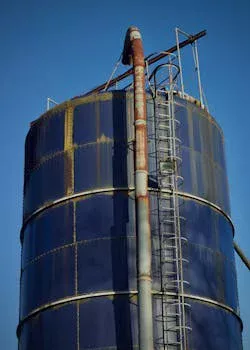
Selecting the optimal industrial wastewater treatment technology in Scotland requires a detailed understanding of performance, energy consumption, and sludge production tailored to specific influent characteristics and regulatory demands. Dissolved Air Flotation (DAF), Membrane Bioreactors (MBR), conventional sedimentation, and chemical precipitation each offer distinct advantages and trade-offs. For instance, DAF systems for Scottish industrial wastewater are highly effective for pre-treatment in food processing, excelling at Fats, Oils, and Grease (FOG) and Total Suspended Solids (TSS) removal, which are prevalent in dairy, meat, and seafood processing effluents. MBR systems for space-constrained Scottish facilities are often preferred by distilleries for their ability to achieve very high effluent quality, crucial for meeting stringent COD and BOD limits, and their compact footprint.
Performance benchmarks vary significantly: DAF systems typically achieve 85–95% TSS removal and 60–80% COD reduction (HydropureWater field data, 2024), making them ideal for initial load reduction. MBR technology, with its advanced membrane filtration, consistently delivers 95–99% TSS removal and 90–95% COD reduction, producing effluent suitable for direct discharge or reuse. Conventional sedimentation, while lower in capital cost, offers more modest removal rates (e.g., 50–70% TSS, 20–40% COD). Scottish industrial influent data, such as distillery wastewater, often presents high organic loads, with COD ranging from 5,000–15,000 mg/L, necessitating robust treatment solutions. For effectively reducing COD in such challenging streams, various methods to reduce COD in distillery wastewater are explored.
Energy consumption is a significant operational expenditure in Scotland, where industrial electricity rates typically range from £0.12–£0.18/kWh. DAF systems generally consume 0.3–0.6 kWh/m³, while MBR systems, due to their aeration and membrane filtration requirements, use more energy, typically 0.8–1.5 kWh/m³. Sludge handling also presents challenges; DAF produces a relatively dry sludge (3–5% DS), which can be easier to dewater, whereas MBR generates biological sludge with lower solids content (1–2% DS), often requiring further conditioning. Scottish Water's disposal fees for industrial sludge, ranging from £40–£120/tonne, make efficient sludge dewatering a key factor in overall operational cost. Comparing DAF vs oil water separators for industrial applications can further illustrate efficiency gains for specific effluent types.
| Technology | Footprint | Energy Use (kWh/m³) | Sludge Production | Effluent Quality (COD Removal) | Scotland-Specific Use Case |
|---|---|---|---|---|---|
| Dissolved Air Flotation (DAF) | Medium | 0.3–0.6 | High (3–5% DS) | 60–80% | Food processing (FOG/TSS removal) |
| Membrane Bioreactor (MBR) | Compact | 0.8–1.5 | Medium (1–2% DS) | 90–95% | Distilleries (high-quality discharge, space-constrained) |
| Conventional Sedimentation | Large | Low | Medium (2–4% DS) | 20–40% | Pulp/paper (fibre recovery, pre-treatment) |
| Chemical Precipitation | Medium | Low-Medium | High (chemical sludge) | 50–70% (for specific pollutants) | Heavy metal removal, pH adjustment |
Evaluating these technologies also requires a clear understanding of their associated costs.
Cost Benchmarks for Industrial Wastewater Treatment in Scotland (2025)
Capital Expenditure (CAPEX) for industrial wastewater treatment systems in Scotland varies significantly based on technology, capacity, and site-specific requirements. DAF systems typically range from £80–£250/m³ of treatment capacity, while MBR systems, offering higher effluent quality and a smaller footprint, fall between £120–£350/m³ (HydropureWater cost analysis, 2024). Conventional sedimentation systems generally represent a lower initial investment, costing £50–£150/m³ of capacity. Installation costs in Scotland can add 20–40% to the equipment cost, encompassing civil works, piping, electrical connections, and commissioning. These figures are crucial for businesses evaluating the costs of treating wastewater for 2025 compliance.
Operational Expenditure (OPEX) is a continuous cost, with energy consumption accounting for 30–50% of the total, particularly for aeration-intensive processes like MBR. Chemical dosing for SEPA compliance, including coagulants and flocculants for DAF or pH adjustment, constitutes 20–30% of OPEX. Sludge disposal fees, as charged by Scottish Water (£40–£120/tonne), account for 15–25%, while routine maintenance and spare parts make up the remaining 10–20% (Scottish industrial averages, 2024). Calculating Return on Investment (ROI) for these systems often focuses on avoiding SEPA enforcement fines and reducing Scottish Water surcharges. A DAF system might offer a payback period of 3–5 years, driven by immediate reductions in COD/TSS surcharges, whereas an MBR system, with its higher CAPEX, typically sees ROI over 5–8 years, primarily due to achieving full compliance and potential water reuse savings.
Several financing options exist for Scottish industrial facilities investing in wastewater treatment upgrades. SEPA's Water Environment Fund offers grants of up to 50% for Small and Medium-sized Enterprises (SMEs) undertaking environmental improvements. Scottish Enterprise also provides loans and grant funding for projects enhancing sustainability and competitiveness. Leasing programs for industrial equipment can help spread the capital cost over several years. A 10-year Total Cost of Ownership (TCO) comparison for a 50 m³/h distillery wastewater system might show DAF as initially cheaper but MBR offering greater long-term value through consistent compliance and potentially lower overall operational risk, especially as regulations tighten further.
| Cost Category | DAF System (50 m³/h) | MBR System (50 m³/h) | Conventional Sedimentation (50 m³/h) |
|---|---|---|---|
| CAPEX (Equipment Only) | £4,000 – £12,500 (£80-£250/m³) | £6,000 – £17,500 (£120-£350/m³) | £2,500 – £7,500 (£50-£150/m³) |
| Installation Costs (20-40% of CAPEX) | £800 – £5,000 | £1,200 – £7,000 | £500 – £3,000 |
| Annual OPEX (Energy) | £2,000 – £4,000 (30-50%) | £5,000 – £9,000 (30-50%) | £500 – £1,500 (30-50%) |
| Annual OPEX (Chemicals) | £1,500 – £3,000 (20-30%) | £1,000 – £2,500 (20-30%) | £500 – £1,000 (20-30%) |
| Annual OPEX (Sludge Disposal) | £1,000 – £2,000 (15-25%) | £800 – £1,800 (15-25%) | £700 – £1,400 (15-25%) |
| Annual OPEX (Maintenance) | £700 – £1,500 (10-20%) | £1,000 – £2,000 (10-20%) | £300 – £700 (10-20%) |
| Typical ROI Period | 3–5 years | 5–8 years | N/A (often insufficient for 2025 compliance) |
Beyond understanding the costs, selecting the right supplier is crucial for successful project implementation.
Selecting a Wastewater Treatment Supplier for Scottish Industrial Facilities

Choosing a wastewater treatment supplier in Scotland requires a focused evaluation beyond just equipment specifications, prioritizing regulatory expertise and local support. A critical supplier checklist includes demonstrated SEPA compliance expertise, ensuring the proposed system meets current and future effluent standards and assists with the complex permitting process. Verification of Scottish Water approvals is necessary, particularly regarding trade effluent discharge and industrial sludge disposal protocols. A robust local service network, capable of response times under 4 hours for critical issues, minimizes downtime and ensures operational continuity. Suppliers should provide relevant case studies in Scotland, showcasing successful implementations for similar industrial influent characteristics, such as distillery wastewater with COD concentrations often exceeding 10,000 mg/L.
Equipment certifications are another key consideration. Look for ISO 9001 certified wastewater equipment manufacturers, which signifies adherence to international quality management standards. WRAS (Water Regulations Advisory Scheme) approval is important for any equipment connected to the potable water supply, and SEPA's 'Fit for Purpose' testing ensures industrial applications meet specific environmental performance criteria. Service considerations extend to comprehensive on-site training for facility staff, as Scottish Water often requires certified operators for industrial treatment plants. Remote monitoring capabilities are important, aligning with SEPA's 2025 digital reporting mandate for real-time data submission. Guaranteed spare parts availability with lead times under 72 hours is vital to prevent prolonged operational interruptions. HydropureWater, a provider of DAF systems for Scottish industrial wastewater, prioritizes these localized service and compliance aspects, alongside offering MBR systems for space-constrained Scottish facilities.
Facility managers should be wary of red flags during supplier evaluation. These include a lack of Scottish references or case studies, an inability to provide comprehensive SEPA permitting support, or the offering of generic equipment not specifically sized or designed for the unique challenges of Scottish industrial influent. For instance, a system not robust enough to handle the high organic load and specific contaminants in distillery wastewater (e.g., copper, tannins) will inevitably lead to compliance failures. Prioritizing suppliers with a proven track record and localized expertise, like those found on a shortlist of top industrial wastewater treatment providers active in Scotland, can mitigate significant operational and regulatory risks. Further guidance on supplier quality can be found in our ISO 9001 certified wastewater equipment manufacturer guide.
Frequently Asked Questions
What are the 2025 SEPA effluent limits for industrial wastewater in Scotland?
The 2025 SEPA effluent limits for industrial wastewater in Scotland generally include BOD ≤20 mg/L, COD ≤125 mg/L, TSS ≤30 mg/L, pH 6–9, and FOG ≤15 mg/L. Specific industries, such as distilleries, may have additional limits, like copper ≤2 mg/L.
How much does it cost to install a DAF system in Scotland?
The cost to install a DAF system in Scotland typically ranges from £80–£250/m³ of capacity for equipment, with an additional 20–40% for installation, including SEPA permitting support. This makes DAF systems for Scottish industrial wastewater a cost-effective solution for many facilities.
What happens if my facility fails SEPA compliance?
Failure to meet SEPA compliance can result in an enforcement notice, significant Scottish Water surcharges (typically £0.85/m³ for non-compliant discharge), and potential prosecution for repeat offenses, leading to substantial fines and reputational damage.
Can I send my industrial sludge to Scottish Water for disposal?
Yes, industrial sludge can be sent to Scottish Water for disposal, but only to designated 'core' sites that are equipped to process it. Non-core sites may reject industrial sludge with high heavy metal concentrations or excessive FOG, requiring alternative, potentially more expensive, disposal arrangements.
What is the best wastewater treatment technology for a Scottish distillery?
For a Scottish distillery, a common and effective approach involves DAF for initial FOG and TSS removal, followed by biological treatment for significant COD/BOD reduction. For space-constrained sites requiring very high effluent quality, MBR systems for space-constrained Scottish facilities are often the preferred choice due to their compact footprint and superior performance.
Related Equipment
The following HydropureWater products are engineered for the wastewater challenges discussed above:
- chemical dosing for SEPA compliance — view specifications, capacity range, and technical data
Need a customized solution? Request a free quote with your specific flow rate and pollutant parameters.