Why Auckland Hotels Need a Different STP Selection Logic
Auckland Council issues a network discharge consent under the Resource Management Act 1991 for any on-site sewage treatment plant (STP) discharging to the reticulated network, and Taumata Arowai sets the baseline performance expectations for commercial premises. Hotel flows differ from residential flows: a 150-key property will see morning shower peaks (07:00–09:00), evening F&B surges (18:00–21:00), laundry lint pulses (09:00–14:00), and pool backwash events that can momentarily double influent solids. These loadings are absent from the residential packaged STP design curves most overseas suppliers assume. The Auckland region adds a second layer: warm, humid summers drive mixed-liquor temperatures to 25–30 °C (which lowers oxygen solubility and pushes MLSS toward 8,000–12,000 mg/L), and high-rainfall events cause infiltration into on-site buffers that can shock the biological stage. A 2018 academic case study in Membrane Technology of a packaged MBR serving a remote Canadian community (Auricle Global Society of Education and Research, 2018-12) confirmed that factory-built, skid-mounted MBRs are the default choice for small, space-constrained, high-strength sites — directly applicable to urban Auckland hotel footprints where plant room space is measured in tens of square metres.
Sizing the Packaged MBR: A Calculation Walkthrough for Hotels
The defensible sizing rule for a New Zealand hotel is 0.20–0.30 m³ per guest-night as the average dry-weather flow (ADWF), derived from 180–250 L/person-day domestic loading plus on-site restaurant, laundry and pool contributions. Apply a peaking factor of 1.5–2.0× to capture full-occupancy and conference blocks, then size the aeration tank to a 10–14 hour hydraulic retention time (HRT) and a 20–30 day sludge retention time (SRT) to maintain stable nitrification under loading swings. For a 150-key hotel at 80% occupancy: 0.25 × 120 guests = 30 m³/day ADWF, peaking to 45–60 m³/day on a fully booked Saturday — well within the 10–2,000 m³/day envelope of an integrated MBR wastewater treatment system. Typical hotel influent parameters to provide the supplier: BOD 250–400 mg/L, TSS 200–350 mg/L, FOG up to 80 mg/L, temperature 10–30 °C, pH 6.5–8.5. Diurnal peaking matters: morning shower loads and evening F&B peaks arrive 10–12 hours apart, so a buffer/equalisation tank of at least 8 hours ADWF flattens the curve before the membranes. These sizing parameters ensure the system remains resilient against the hydraulic fluctuations inherent in hospitality operations.
| Parameter | Design value | Comment |
|---|---|---|
| ADWF per guest-night | 0.20–0.30 m³ | Includes F&B, laundry, pool backwash |
| Peaking factor | 1.5–2.0× | Full-occupancy / conference block |
| BOD loading | 250–400 mg/L | 0.06–0.10 kg BOD per guest-night |
| HRT | 10–14 h | Aeration tank volume at ADWF |
| SRT | 20–30 days | Stabilises nitrification at low NH₃-N |
| MLSS | 8,000–12,000 mg/L | Higher than CAS due to membrane solids capture |
Submerged MBR Membranes: Hollow-Fiber vs Flat-Sheet for Hotels
Submerged MBR architecture immerses PVDF membrane modules directly in the aeration tank, with permeate drawn through a suction pump at 0.1–0.4 μm pore size; the configuration eliminates the secondary clarifier and routinely achieves >99% suspended-solids capture (per integrated MBR wastewater treatment system product data). For a hotel under 200 m³/day, the choice between hollow-fiber and flat-sheet modules is a maintenance-versus-fouling trade-off. Choosing the correct membrane geometry is essential for long-term operational success in space-constrained hotel environments.
| Criterion | Hollow-fiber | Flat-sheet (DF series) |
|---|---|---|
| FOG / hair / lint tolerance | Moderate — fibres snag on lint | High — flat surface sheds debris |
| Footprint per m³/day | 0.05–0.08 m² | 0.07–0.10 m² |
| Cleaning frequency | Backflush every 10–15 min + CIP monthly | Periodic housekeeping clean weekly |
| Module replacement cost | Replace whole cassette | Replace individual panels |
| Hotel suitability (<200 m³/day) | Acceptable with pre-screen | Generally preferred |
DF series flat-sheet PVDF MBR modules ship at 0.1 μm pore size with an integrated aeration box and stainless-steel frame, in 80–225 m² configurations producing 32–135 m³/day per cassette, and use 10–20× less energy than external cross-flow systems. For a hotel under 200 m³/day, flat-sheet MBR is generally preferred because housekeeping-grade periodic cleaning is sufficient and the supplier can ship pre-tested replacement cassettes for off-season swap-out without a service visit.
Pretreatment, Disinfection and Sludge Handling for Hotel MBRs
The MBR tank functions as the primary biological stage, but it requires robust pretreatment and post-treatment to meet regulatory standards. Ahead of the tank, a GX series rotary mechanical bar screen at ≤2 mm aperture removes hair, lint and plastics that would otherwise blind membrane fibres. A buffer / equalisation tank sized to at least 8 hours of ADWF dampens laundry and F&B surges before the membranes. For disinfection, on-site chlorine dioxide generation is more tolerant of high-pH MBR permeate than sodium hypochlorite and clears faecal coliforms to Auckland Council's typical <200 CFU/100 mL target — a chlorine dioxide generator sized to 5–10 g ClO₂ per m³ treated is typical. Sludge wasted from the MBR at 8,000–12,000 mg/L MLSS needs dewatering: a small plate-and-frame filter press will reach 18–22% dry solids, which keeps off-site disposal tonnage and cost in check. A 150-key hotel typically generates 8–15 kg dry sludge per day, or roughly 1.5–3 m³ of dewatered cake per week.
Auckland Council and Taumata Arowai Compliance Checklist for 2026
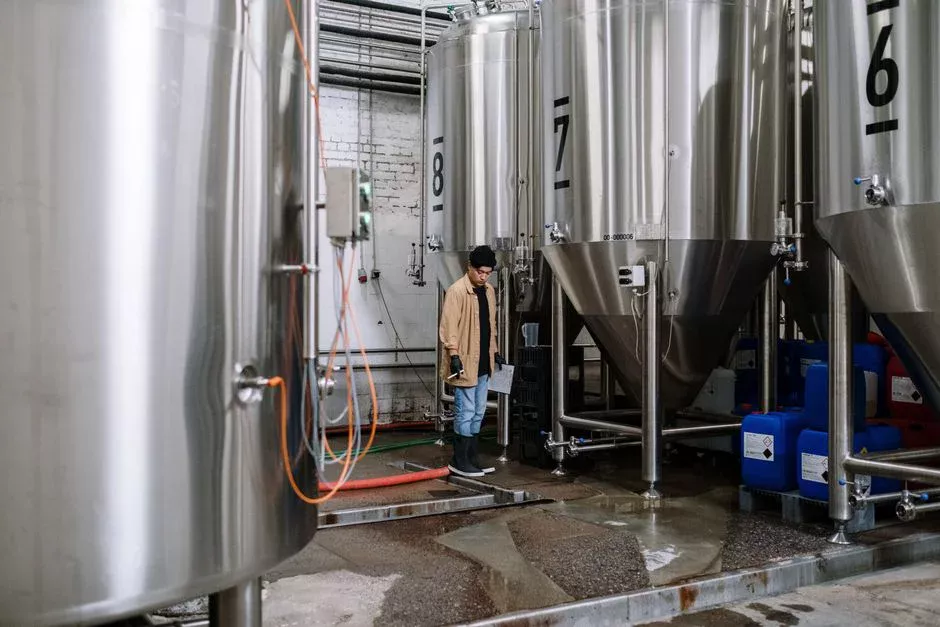
A network discharge consent lodged with Auckland Council typically requires treated effluent to meet: BOD ≤20–30 mg/L, TSS ≤30 mg/L, NH₃-N ≤10–15 mg/L, faecal coliforms <200 CFU/100 mL, and pH 6.5–8.5. The engineer should confirm the current limits with Auckland Council before lodging. The New Zealand Building Code G14 (Industrial Liquid Waste) governs the on-site installation, and the supplier must provide a Producer Statement (PS1–PS4) for consenting. Taumata Arowai's wastewater quality expectations apply to commercial premises and align with the consent limits; the supplier should be able to deliver a current O&M manual consistent with that guidance. For projects where a 50–250-key hotel exceeds the local network's downstream capacity, a WSZ underground package sewage treatment plant may be considered as a buffer / polishing stage downstream of the MBR. The following checklist can be copied into a consent application:
| # | Item | Tick |
|---|---|---|
| 1 | Network discharge consent application lodged with Auckland Council | |
| 2 | Producer Statement (PS1–PS4) received from STP supplier | |
| 3 | Effluent targets confirmed: BOD ≤20–30, TSS ≤30, NH₃-N ≤10–15 mg/L | |
| 4 | Faecal coliform target <200 CFU/100 mL achievable with ClO₂ | |
| 5 | NZ Building Code G14 compliance documented | |
| 6 | Taumata Arowai-aligned O&M manual provided | |
| 7 | Remote monitoring / SCADA tag list submitted | |
| 8 | Sludge disposal route approved (off-site to licensed receiver) |
Supplier Evaluation Matrix and Total-Cost-of-Ownership
Convert the engineering spec into a defensible supplier shortlist by scoring on eight criteria: membrane type and pore size, factory pre-tested skid, NZ or local service partner, remote monitoring, chemical consumption, membrane replacement cost per m², warranty term, and lead time. Indicative 2026 pricing for a packaged MBR skid in the 10–200 m³/day band is NZ$80,000–NZ$350,000 CAPEX, with OPEX at NZ$0.30–0.60 per m³ treated and membrane replacement every 8–12 years. Where a cross-border supplier is short-listed, request an NZ-based service partner with stockholding of spares and a documented remote-monitoring platform before signing. The integrated MBR wastewater treatment system is one technically evaluated option to shortlist against local NZ integrators; for cross-checking the supplier shortlist, the MBR wastewater treatment supplier checklist and the packaged STP cost and ROI benchmark from previous engineering guides offer useful comparison points, alongside the packaged STP selection guide for a remote community for the small-flow / factory-built-skid context. Diligent evaluation of these factors prevents hidden long-term operational costs.
| Criterion | Weight | Supplier A | Supplier B | Supplier C |
|---|---|---|---|---|
| Membrane type & pore size | 15% | |||
| Factory pre-tested skid | 10% | |||
| NZ / local service partner | 15% | |||
| Remote monitoring / SCADA | 10% | |||
| Chemical consumption (kg/m³) | 10% | |||
| Membrane replacement cost ($/m²) | 15% | |||
| Warranty term (years) | 10% | |||
| Lead time (weeks) | 15% |
Frequently Asked Questions
What flow rate should I size a packaged MBR STP for in an Auckland hotel?
Size at 0.20–0.30 m³ per guest-night as the ADWF, then apply a 1.5–2.0× peaking factor for full-occupancy and conference blocks. A 150-key hotel at 8
Frequently Asked Questions
How do I size a packaged MBR STP for a hotel in Auckland?
Sizing is determined by calculating the daily design flow based on the Auckland Council’s Wastewater Code of Practice. For hotels, this typically ranges from 150 to 250 liters per guest per day, depending on the star rating and the presence of commercial laundries or kitchens.
Engineers must also account for peak flow factors to ensure the hydraulic capacity of the MBR membranes is not exceeded during morning and evening surges. A peaking factor of 2.5 to 3.0 is standard for hotel applications to prevent membrane fouling and hydraulic overflow.
What discharge limits does a hotel STP in Auckland have to meet?
Discharge limits are governed by the Auckland Unitary Plan and specific resource consents issued by Auckland Council. Common requirements for sensitive receiving environments include Biochemical Oxygen Demand (BOD5) of less than 10 mg/L, Total Suspended Solids (TSS) below 5 mg/L, and Total Nitrogen (TN) levels often capped at 10–15 mg/L.
If the treated effluent is discharged near coastal waters or sensitive catchments, nutrient removal limits for Total Phosphorus (TP) may be restricted to 1–2 mg/L. Always verify the specific discharge consent conditions for the property’s catchment area, as these can vary significantly between zones.
Is flat-sheet or hollow-fiber MBR better for a small hotel?
Hollow-fiber membranes are generally preferred for small-to-medium hotel projects due to their higher packing density, which allows for a smaller physical footprint in the plant room. They offer superior flux rates and ease of mechanical backwashing, which is beneficial for the fluctuating flow patterns typical of the hospitality industry.
Flat-sheet membranes are more robust against clogging from hair and debris, which can be an issue in hotel wastewater streams. While they require less frequent chemical cleaning, they occupy a larger footprint and may require a more complex tank arrangement, making them better suited to sites where space is not the primary constraint.
How much does a packaged MBR sewage treatment plant cost in New Zealand?
Capital costs for a fully packaged, containerized MBR system for a hotel typically range from $150,000 to $450,000 NZD, depending on the design capacity and the level of automation required. This estimate generally covers the treatment modules, aeration blowers, control panels, and commissioning, but excludes civil works and site plumbing.
Ongoing operational expenditure (OPEX) should be budgeted at $15,000 to $30,000 per annum. This covers electricity for aeration, chemical cleaning agents, membrane replacement cycles every 5 to 7 years, and the mandatory maintenance contracts required to satisfy Auckland Council compliance monitoring.
Do I need Taumata Arowai approval for a hotel STP in Auckland?
Taumata Arowai regulates drinking water safety under the Water Services Act 2021, but it does not directly regulate private wastewater treatment plants unless the discharge impacts a source of drinking water. For a standard hotel STP, the primary regulatory body remains the Auckland Council via the Resource Management Act.
However, if your hotel site utilizes a private water supply or if the treated wastewater is recycled for non-potable use (such as toilet flushing or irrigation), you may be subject to additional health and safety requirements. In these cases, you must demonstrate that the recycled water quality meets the standards set out in the Ministry of Health’s Guidelines for the Safe Use of Recycled Water.