What a Wastewater Treatment Plant Manufacturer in Abuja Actually Delivers
A wastewater treatment plant manufacturer in Abuja typically delivers packaged or containerized STPs and industrial ETPs in the 10–2,000 m³/day range using MBR, SBR, A/O, or DAF pretreatment. In 2026, qualifying suppliers should meet NESREA effluent limits (BOD ≤50 mg/L, COD ≤250 mg/L, TSS ≤50 mg/L), provide a 12-month performance warranty, and deliver full installation plus 7-day commissioning support in FCT.
Three product categories cover roughly 90% of what Abuja buyers procure. Packaged and containerized sewage treatment plants serve the 1–500 m³/day band — fully assembled, skid-mounted, factory-tested, and shipped in 20- or 40-ft ISO containers. Skid-mounted industrial effluent treatment plants cover 5–2,000 m³/day with upstream equalization, DAF or primary clarification, biological treatment, and tertiary polishing tailored to the influent. Decentralized underground units in the 1–80 m³/h range, such as the WSZ underground packaged sewage treatment plant (A/O + sedimentation + disinfection, no operator required), fit Abuja's high-end estates, embassy compounds, and hospital basements where surface footprint is constrained.
For reuse applications — cooling-tower make-up at the Idu Industrial Area, irrigation at Karu township developments, or process water at FMCG facilities — buyers should specify an MBR membrane bioreactor system with sub-1 μm effluent, typically delivering TSS <5 mg/L and turbidity <1 NTU. MBR's footprint is 60% smaller than conventional activated sludge at the same loading, which matters in Abuja where plot sizes are tight and land cost in Wuse, Maitama, and the Central Business District runs ₦800K–₦1.2M per square meter (per FCT land registry benchmarks, 2025-11).
Confirm the practical scope in writing before PO: process design and P&IDs, equipment fabrication, containerization, Factory Acceptance Test (FAT), shipping to Lagos or Tema, on-site assembly, commissioning, and 12-month defect liability. If any line item is missing, expect scope creep and at least 20% cost variance during erection.
2026 Regulatory Baseline: NESREA, FMEnv, and FCT Requirements
NESREA enforces EGASPIN (Environmental Guidelines and Standards for the Petroleum Industry in Nigeria, 1991) and the National Environmental (Sanitation and Water Supply) Regulations as the headline 2026 compliance anchor for any wastewater treatment plant manufacturer in Abuja. For industrial discharges into FCT watercourses, the binding limits are BOD 50 mg/L, COD 250 mg/L, TSS 50 mg/L, oil and grease 10 mg/L, pH 6–9, and total nitrogen 40 mg/L (per EGASPIN 1991 baseline still enforced in 2026). Total coliform for hospital and municipal effluents is capped at 400 CFU/100 mL.
FCDA imposes an additional overlay: any plant above 250 m³/day requires an Environmental Impact Assessment approved before construction, and setbacks apply to the Katampe, Jabi, and Usuma dam catchments — typically 200 m from any surface watercourse and 500 m from a reservoir. FCT waterboard applications (for reuse or discharge consent) typically take 60–90 days, so procurement must run in parallel with permitting, not after it.
NESREA's 2026 enforcement posture has shifted materially: unannounced site audits on hospitality, brewery, and hospital facilities in Abuja now trigger immediate shutdown orders for non-compliant discharges, not just fines (per NESREA enforcement update, 2026-01). Three brewing facilities in the FCT corridor received 14-day compliance notices in late 2025; a Lagos hospital was shut for 72 hours in 2025-09 for TSS exceedance. Procure to the limit, not to the marketing claim.
Matching Process Technology to Abuja's Dominant Wastewater Streams
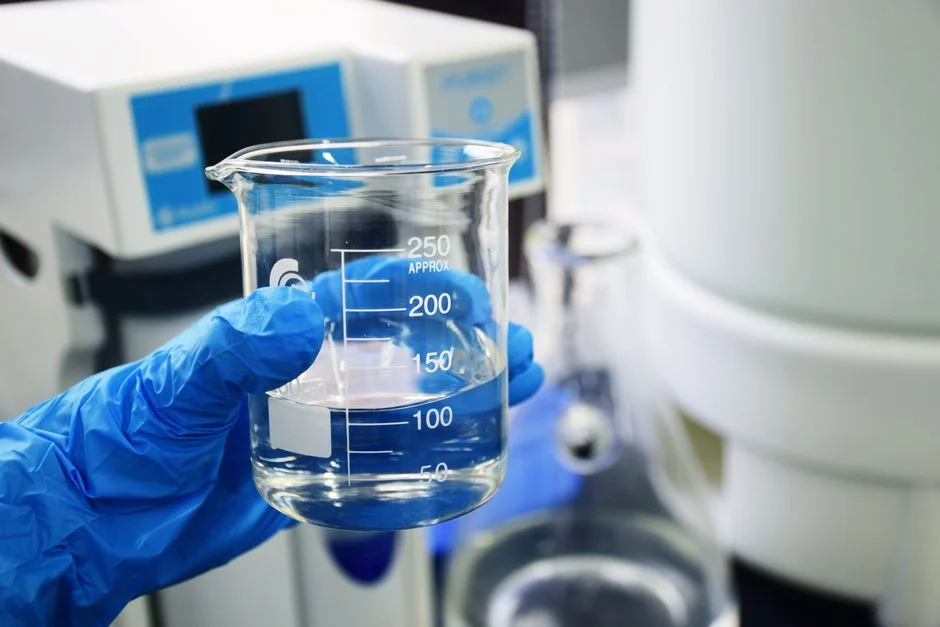
Procurement readers should self-route to technology by industry, not delegate the decision to the vendor. The table below maps Abuja's dominant wastewater streams to the process train each requires, with the loadings and discharge targets a credible supplier must hit.
| Sector (Abuja example) | Typical Influent | Recommended Process Train | Effluent Target |
|---|---|---|---|
| Breweries / beverages (Niger Breweries satellite, International Breweries) | BOD 1,500–4,000 mg/L; TSS 800–2,500 mg/L; pH 4–6 | Screening → equalization → dissolved air flotation system (4–300 m³/h) → anaerobic UASB → MBR polishing | BOD ≤30 mg/L, TSS ≤20 mg/L |
| Hospitals / diagnostic labs (National Hospital, diagnostic chains) | BOD 200–600 mg/L; pathogen load; cytotoxins | Screening → biological → hospital wastewater treatment system (ozone) or ClO₂ generator (50 g/h–20 kg/h) | 99%+ pathogen kill; EU Directive 91/271/EEC compliant |
| Real estate / estates / sewered districts (Lugbe, Lokogoma, Gwarinpa) | BOD 200–400 mg/L; domestic strength | WSZ underground packaged STP (A/O contact oxidation, 1–80 m³/h) | BOD ≤50 mg/L, TSS ≤50 mg/L |
| Oil & gas servicing camps (Kuje, Gwagwalada) | High salinity; oil 50–500 mg/L; BOD 400–1,200 mg/L | DAF → biological A/O → plate and frame filter press for sludge dewatering → polishing | Oil & grease ≤10 mg/L, BOD ≤50 mg/L |
| Municipal / AMAC tenders | BOD 250–500 mg/L; variable | Containerized MBR (10–2,000 m³/day); fast deployment to Lagos port then trucked to FCT | BOD ≤30 mg/L, TSS ≤20 mg/L |
FCT climate adds a sizing constraint many international suppliers miss: ambient 28–38°C and a 5-month dry season mean biological reactors must be sized with a temperature correction factor of 1.15–1.25 for the harmattan months (Dec–Feb) when reactor performance drops. Rainy-season peak flow factors of 2.5–3.0× dry-weather flow must also be accommodated in equalization, particularly for estate and municipal plants where stormwater ingress is common.
CAPEX and Lead-Time Benchmarks for Abuja Projects in 2026
The 4 plant sizes below represent roughly 85% of what Abuja buyers actually procure. Ranges are illustrative and should be revalidated against a vendor RFQ before budget lock-in. The "landed Abuja" multiplier of 1.4–1.6× covers sea freight (Apapa), ECOWAS duty, demurrage risk, and inland haul to FCT.
| Plant Capacity | Typical Process | Ex-Works CAPEX (USD) | Landed Abuja CAPEX (USD) | Lead Time (PO → Site) |
|---|---|---|---|---|
| 10 m³/day | WSZ packaged STP, A/O + disinfection | 8,000–18,000 | 12,000–28,000 | 60–85 days |
| 50 m³/day | Containerized A/O + MBR | 28,000–57,000 | 42,000–85,000 | 70–95 days |
| 200 m³/day | SBR or A/O + DAF + tertiary | 110,000–220,000 | 165,000–330,000 | 80–100 days |
| 500 m³/day | MBR with upstream DAF and filtration | 280,000–480,000 | 420,000–720,000 | 90–120 days |
Lead-time reality (HydropureWater field data, 2026): 30–45 days fabrication and FAT at factory, 25–35 days sea freight to Lagos, 5–7 days customs clearance at Apapa, 7–10 days inland haul to Abuja — total 70–100 days from PO to site delivery for the smaller plants. The 500 m³/day MBR typically sits at the upper end because the MBR module delivery chain (membrane elements from Japan, Europe, or China) is the gating item. Containerized builds reduce on-site civil work by 40–60% versus greenfield concrete basins; in Abuja this matters because contractor day rates have risen 18–25% post-2024 FX adjustments (per Nigerian construction sector index, 2025-Q4).
All USD figures assume a 2026 Q1 FX of roughly ₦1,550–1,650/USD; revalidate with the manufacturer before RFQ issuance. Budget a 10–15% contingency for FX slippage and customs delays — both are normal in Nigerian procurement.
7-Point Vendor Qualification Checklist for Abuja Buyers
Attach this checklist to every RFQ. A supplier who cannot answer "yes" to all seven within 10 working days is not yet qualified.
- Verifiable manufacturing facility. Insist on a live video walk-through at minimum, ideally an in-person audit. Trading companies and brokers fail this test routinely.
- Operating reference plant in West Africa or similar tropical climate. Request discharge test reports dated within 24 months. Names like "supplied to Client X" without contact details do not count.
- Published process design basis and hydraulic profile. Not a marketing brochure — a process description with flow rates, retention times, MLSS, and aeration capacity at design load.
- Scope-of-supply line items in writing. Clarify whether the quoted price includes pumps, blowers, control panel, MCC, instrumentation, and cabling. Pumps and blowers are the most common "extras" inserted after PO.
- Installation, commissioning, and training. Confirm at least 7 on-site days with a process engineer, and operator training in English or Hausa. Translated manuals alone are not training.
- Spares package and 12-month warranty with response time SLA. Insist on a written SLA — 48 hours remote, 7 days on-site for Abuja. Without it, warranty language is unenforceable.
- Payment terms aligned with ECOWAS norms. 30% T/T advance against PO, 70% against B/L copy is standard. LC at sight is the safer path for first orders. Avoid 100% advance — it exposes the buyer to delivery risk with limited recourse.
Logistics, Incoterms, and After-Sales: The Section Nigerian Buyers Wish They Had Read First
Most WWTP procurements into Abuja do not fail on process selection; they fail on logistics, customs, and after-sales support. The three pitfalls below account for the majority of project overruns and warranty disputes.
Incoterm choice. Negotiate EXW or FOB Shanghai as the baseline so you control shipping, insurance, and customs. CFR Apapa is workable if the supplier has a proven Nigerian freight forwarder; CIP Abuja shifts the inland haul risk onto the seller but typically costs 8–12% more. Avoid DDP — the seller will recover duty and inland costs inside the price, and you lose visibility into line items.
Duty exposure. Under the ECOWAS Common External Tariff, most WWTP equipment falls under HS 8421 (filtering/purifying machinery) at 5% duty + 7.5% VAT + 1% NHIL. Pre-register your TIN with FIRS before the consignment departs; unregistered buyers routinely sit at Apapa for 14–25 extra days, with demurrage running ₦35K–₦60K per day per container.
Inland haul Lagos → Abuja averages ₦450K–₦900K per 40-ft container depending on fuel index (per Nigerian logistics index, 2026-Q1). Route security via the Okene–Lokoja corridor has improved since 2024 but escorts are still recommended for high-value or multiple-container loads. Build 5–7 days of buffer into the schedule; this is not pessimism, it is normal.
After-sales is where Chinese and Indian OEMs most often disappoint Nigerian buyers. Insist on remote-monitoring readiness (Modbus/4G gateway) and identify the local service partner in FCT or Lagos. Confirm the agent's technical depth, not just commercial authority — many "partners" are sales offices without commissioning engineers. A useful test: ask the agent to name the last two plants they commissioned in Nigeria, and request the end-user contact.
Frequently Asked Questions
What capacity range does a typical wastewater treatment plant manufacturer in Abuja cover? Most qualified suppliers deliver packaged or containerized plants from 10 m³/day up to 2,000 m³/day, using MBR, SBR, A/O, or DAF pretreatment depending on influent characteristics. Below 10 m³/day, decentralized underground units such as the WSZ series (1–80 m³/h) handle estates, hospitals, and embassy compounds without on-site operators.
What are the 2026 NESREA discharge limits that apply in FCT? For industrial effluents, the binding limits are BOD 50 mg/L, COD 250 mg/L, TSS 50 mg/L, oil and grease 10 mg/L, pH 6–9, and total nitrogen 40 mg/L, enforced under EGASPIN 1991 and the National Environmental (Sanitation and Water Supply) Regulations. Hospitals face additional pathogen-kill requirements typically aligned with EU Directive 91/271/EEC.
How much does a 50 m³/day packaged STP cost in Abuja in 2026? Ex-works from a Chinese or Indian OEM, a containerized 50 m³/day A/O + MBR runs USD 28,000–57,000. Landed in Abuja, expect USD 42,000–85,000 after the 1.4–1.6× multiplier for shipping, ECOWAS duty, and inland haul. Always revalidate against a vendor RFQ before budget lock.
Which technology suits brewery wastewater in Nigeria? High-strength brewery effluent (BOD 1,500–4,000 mg/L) is best handled with a DAF upfront, followed by an anaerobic UASB reactor for BOD reduction, then an MBR polishing stage to meet the BOD ≤30 mg/L reuse or discharge target. DAF units such as HydropureWater's cover 4–300 m³/h and handle the high TSS load typical of brewery wastewater.
What payment terms are standard for an Abuja WWTP procurement? ECOWAS norm is 30% T/T advance against purchase order and 70% against B/L copy. First-time buyers should consider LC at sight for additional recourse. Avoid 100% advance payment — it concentrates delivery risk on the buyer with limited contractual remedy if the supplier delays.