Why Casablanca Needs a Morocco-Specific Manufacturer Shortlist
Casablanca-Settat generates roughly 40% of Morocco's industrial GDP, and the region's effluent profile is not generic — it is textile, leather, agro-food, and chemicals, each with distinct loadings. The textile cluster alone includes 1,650+ firms concentrated around Ain Sebaa, Sidi Maârouf, and Tit Mellil, with COD typically running 800–2,500 mg/L and color removal requirements that exceed 70% under Arrêté 2942-13. Tanneries in the same corridor discharge high-chromium, high-sulfide streams that fail generic municipal packages within days. A Casablanca buyer who treats this as a "global" WWTP procurement problem will over-spec for irrelevant regulations and under-spec for chromium, salinity, and reuse-grade turbidity.
Logistics shape the shortlist just as much as process fit. Casablanca port handles ~35% of Morocco's containerized imports, making it the default entry point for FOB Yantian or Shanghai shipments. A containerized 500 m³/day MBR skid from East Asia lands at Casa port in 18–25 days plus 7–10 days for customs and inland transport to site. Any vendor that cannot quote FOB-to-Casa transit, FAT video, and bilingual documentation should drop off the list immediately.
The legal filter is also local, not European. Morocco's Loi 12-06 (2003) on water quality, amended by Arrêté conjoint 2942-13 (2013), is the binding discharge framework, administered jointly by ONEE, ONEP, and the Secrétariat d'État chargé de l'Eau. Vendors quoting only EU UWWT Directive 91/271/EEC numbers or Chinese GB 18918-2002 thresholds miss the sector-specific chromium and color clauses that drive design in this region.
Morocco's 2026 Discharge Standards Every Casablanca Buyer Must Meet
Direct discharge to surface water or wadis under Loi 12-06 is bounded by BOD5 ≤40 mg/L, COD ≤150 mg/L, TSS ≤50 mg/L, pH 6.5–8.5, and temperature ≤30°C. ONEE/ONEP STEP reuse targets — the path for industrial zones tied into municipal STEPs — tighten these to BOD5 ≤25 mg/L, COD ≤125 mg/L, TSS ≤35 mg/L, total nitrogen ≤15 mg/L, and total phosphorus ≤2 mg/L (per ONEP STEP specification, confirmed in scraper data and Loi 10-95 on water use). Sector annexes add total chromium ≤2 mg/L for tanneries and color removal ≥70% for textile finishers. For FOG and oil parameters, the FOG discharge limits benchmark gives a useful cross-jurisdiction comparison.
Morocco's National Sanitation Plan 2025–2040 commits to 1,200+ new STEPs in industrial zones, with Ain Sebaa, Sidi Maârouf, and Tit Mellil named as priority clusters. A vendor that already holds an ONEP approval or has commissioned a Moroccan STEP in the last 24 months will move faster through pre-qualification.
| Parameter | Surface-water discharge (Loi 12-06) | ONEE/ONEP STEP reuse target | Typical MB MBR flat-sheet performance |
|---|---|---|---|
| BOD5 | ≤40 mg/L | ≤25 mg/L | ≤5 mg/L |
| COD | ≤150 mg/L | ≤125 mg/L | ≤30 mg/L |
| TSS | ≤50 mg/L | ≤35 mg/L | ≤1 mg/L |
| Total nitrogen | — | ≤15 mg/L | ≤10 mg/L (with A/O stage) |
| Total phosphorus | — | ≤2 mg/L | ≤1 mg/L (with chemical precipitation) |
| Turbidity | — | — | <1 NTU |
| pH | 6.5–8.5 | 6.5–8.5 | 6.5–8.5 |
| Temperature | ≤30°C | ≤30°C | ≤35°C operating |
Matching Process Selection to Casablanca's Industrial Effluents
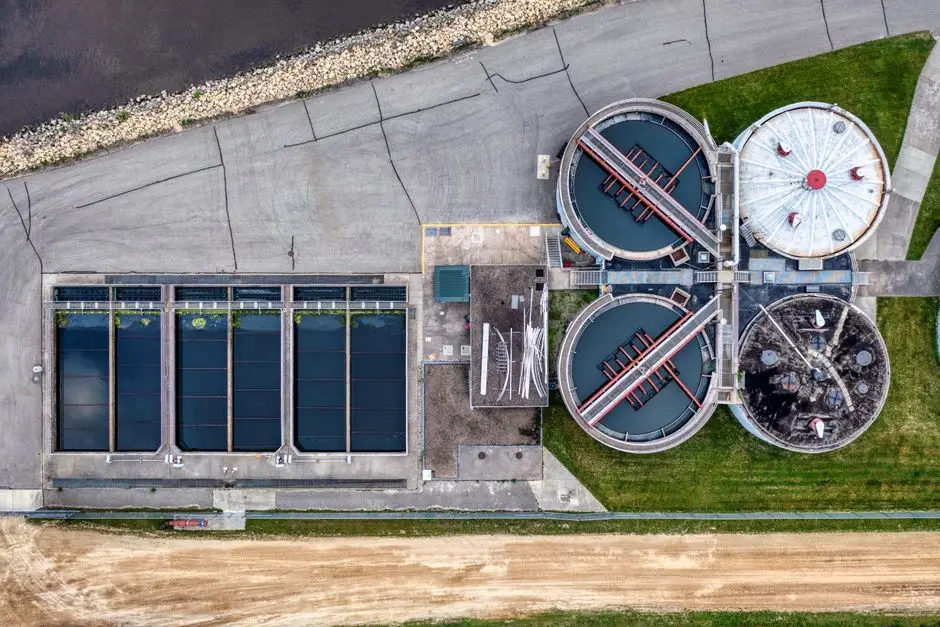
Process selection is driven by influent type, not by what a vendor happens to build. A buyer who skips this step will receive a quotation for a unit that technically runs but never complies. The matrix below maps the dominant Casablanca-Settat effluent types to the configuration that actually meets Loi 12-06 and ONEE/ONEP thresholds in 2026.
- Municipal / domestic sewage (50–5,000 m³/day): Buried A/O package plants (1–80 m³/h) or a buried A/O package sewage plant for low-footprint sites; MBR is preferred for plants adjacent to the coast or where reuse for irrigation is intended.
- Textile effluent (COD 800–2,500 mg/L, variable pH, color): DAF pretreatment for color and suspended solids, followed by MBR or SBR. A containerized MBR system fitted with a DF-series PVDF MBR flat sheet module typically delivers 70–80% color removal and 90–95% COD removal, sufficient for the 70% color clause in Arrêté 2942-13. For deeper process guidance, see the textile WWTP process selection reference.
- Tannery (high chromium, sulfides, salinity, FOG): Equalization + DAF for FOG and TSS reduction, followed by biological treatment and dedicated chromium precipitation. A DAF for textile and tannery pre-treatment in the 4–300 m³/h range handles the suspended-solids load before biology.
- Agro-food (high BOD, FOG, seasonal peaks): Rotary bar screen + DAF + A/O or SBR. Hydraulic and load balancing are critical; undersizing equalization is the most common commissioning failure in this segment.
- Pulp & paper / chemical: Typically requires MBR or two-stage A/O plus chemical precipitation. Site-specific jar testing is a CTQ step — no Casablanca vendor should quote a price without a recent influent characterization.
| Effluent type | Typical influent | Recommended train | Critical removal target |
|---|---|---|---|
| Municipal / domestic | BOD5 200–400 mg/L | WSZ A/O or MBR | BOD5 ≤25 mg/L |
| Textile | COD 800–2,500 mg/L; color strong | DAF + MBR or SBR | Color ≥70%, COD ≤125 mg/L |
| Tannery | Cr total 5–50 mg/L; sulfides; FOG | Eq + DAF + Bio + Cr precipitation | Cr ≤2 mg/L |
| Agro-food | BOD5 1,000–5,000 mg/L; FOG | Bar screen + DAF + A/O or SBR | BOD5 ≤25 mg/L, oil/grease ≤15 mg/L |
| Pulp & paper / chemical | COD 2,000–8,000 mg/L; variable pH | Two-stage A/O + MBR + chemical ppt | COD ≤125–150 mg/L (site-specific) |
2026 CAPEX and OPEX Ranges for Casablanca WWTP Buyers
Indicative CAPEX for a 2026 Casablanca procurement, in USD, FOB origin port:
- Containerized / packaged plants (50–500 m³/day): $45,000–$120,000 for 50–200 m³/day; $150,000–$350,000 for 200–500 m³/day. The WSZ series and similar buried packages dominate this band (HydropureWater field data, 2026).
- MBR skids (10–2,000 m³/day): $280,000–$1,800,000 depending on capacity, reuse-grade finish, and automation. Add 15–22% for containerization, FAT, and Casa port logistics. Similar costing patterns for related process lines are covered in the coking wastewater cost reference and the wood-processing wastewater cost guide, both useful for benchmarking CAPEX intensity.
OPEX benchmarks for Morocco 2026 (energy + chemicals + labor, excluding sludge off-site disposal):
- MBR: $0.18–$0.35 per m³, energy-dominant at 0.6–1.2 kWh/m³.
- A/O package plant: $0.12–$0.22 per m³.
- Constructed wetlands >5,000 m³/day: $0.04–$0.08 per m³, but land-intensive and rarely viable inside the Casablanca-Settat industrial corridor.
Sludge handling is a separate line. A plate-and-frame sludge dewatering press taking biosolids to 30–40% dry solids is the local standard, with polymer + disposal at $0.05–$0.09 per m³ of treated wastewater.
| Plant class | Capacity (m³/day) | CAPEX (USD, FOB) | OPEX (USD/m³) | Energy intensity |
|---|---|---|---|---|
| Packaged / WSZ | 50–200 | $45K–$120K | $0.12–$0.22 | 0.3–0.6 kWh/m³ |
| Packaged / WSZ | 200–500 | $150K–$350K | $0.12–$0.22 | 0.3–0.6 kWh/m³ |
| MBR skid | 10–500 | $280K–$900K | $0.18–$0.35 | 0.6–1.2 kWh/m³ |
| MBR skid | 500–2,000 | $900K–$1.8M | $0.18–$0.35 | 0.6–1.2 kWh/m³ |
| Constructed wetland | >5,000 | Site-dependent | $0.04–$0.08 | <0.1 kWh/m³ |
Vendor Due-Diligence Checklist for Sourcing from Asia to Casablanca
Procurement should score every Casablanca WWTP shortlist on the same ten points. A vendor that scores below 7/10 on this scorecard has historically produced more warranty claims than performance data. For cross-region context, the Dubai WWTP sourcing benchmark and the Ghana WWTP buyer's guide use similar criteria and are worth reading before RFQ issuance.
| # | Criterion | Audit-ready evidence | Weight |
|---|---|---|---|
| 1 | ISO 9001 + ISO 14001 | Current certificates, scope matching WWTP | Mandatory |
| 2 | CE marking on electrical panels | Declaration of conformity | Mandatory |
| 3 | ASME/EN pressure vessels (if any) | Nameplate + PED/ASME stamp | If applicable |
| 4 | FAT protocol with 72h continuous run | Video + signed test sheets | Mandatory |
| 5 | Containerization to FOB Yantian / Shanghai | Packing list + container photos | Mandatory |
| 6 | Transit to Casa port plan (18–25 days) | Forwarder quote, Incoterm | Mandatory |
| 7 | Bilingual French/English manuals | Sample chapter | Mandatory |
| 8 | Arabic documentation (municipal STEP) | Sample chapter | Preferred |
| 9 | On-site commissioning 15–25 days | Engineer CV + mobilization plan | Mandatory |
| 10 | Local partner or fly-in engineer in Casablanca-Settat | Contract or LOI | Strongly preferred |
Pair the scorecard with a 4-step procurement workflow: RFQ with the matrix above as Annex A; FAT witnessed on video before containerization; container shipped FOB with Casa port as the named port of discharge; on-site commissioning with bilingual sign-off. Long-term, plan predictive maintenance for Casablanca WTPs from day one — membrane fouling alarms and aeration-blower analytics pay back inside 18 months on most MBR skids above 200 m³/day.
Frequently Asked Questions
What BOD5 limit applies to industrial discharge in Morocco in 2026? Surface-water discharge under Loi 12-06 requires BOD5 ≤40 mg/L, while ONEE/ONEP STEP reuse targets tighten this to BOD5 ≤25 mg/L (per ONEP STEP specification, Loi 10-95).
Which regulation governs tannery effluent in Casablanca? Arrêté conjoint 2942-13 sets sector-specific limits, including total chromium ≤2 mg/L, in addition to Loi 12-06 baseline parameters.
What is the typical CAPEX for a 500 m³/day MBR plant delivered to Casablanca? Roughly $900,000–$1,400,000 USD FOB origin, plus 15–22% for containerization, FAT, and Casa port logistics (HydropureWater field data, 2026).
How long does shipping take from Asia to Casablanca port? Typically 18–25 days for ocean transit from Yantian or Shanghai, plus 7–10 days for customs clearance and inland transport.
Which process meets ONEE/ONEP reuse turbidity requirements? MBR with PVDF flat-sheet membranes delivers <1 NTU turbidity, comfortably inside the ONEP STEP reuse envelope for BOD5 ≤25 mg/L, COD ≤125 mg/L, and TSS ≤35 mg/L.