What a Lima Buyer Actually Needs from a Sewage Treatment Plant Supplier
A sewage treatment plant supplier in Lima typically delivers containerized WSZ package plants (1–80 m³/h) for commercial sites, MBR membrane bioreactors (10–2,000 m³/day) for reuse-grade industrial effluent, and DAF pre-treatment (4–300 m³/h) for high-FOG streams — all shipping from China via Callao with effluent compliant to D.S. 003-2010-MINAM (industrial) and D.S. 010-2019-VIVIENDA (municipal sewage).
Lima's industrial effluent mix is unusually concentrated: fishmeal plants in Callao and Chancay generate streams with 4,000–8,000 mg/L BOD and high FOG; textile mills in Gamarra and San Juan de Lurigancho discharge dye baths with TDS above 3,000 mg/L and recalcitrant COD; breweries in Ate (Backus and Union) send BOD of 1,500–3,000 mg/L; and mining camps feeding the Lima grid bring heavy metals and high TSS. Each of these requires a different treatment train, and each has a different discharge route — sewer (SEDAPAL), river (Rímac), or ocean outfall under DIGESA/IMO-aligned protocols.
What a Lima procurement engineer needs from a supplier is therefore narrow and verifiable: a flow-matched equipment line sized to the actual hydraulic load, documented effluent compliant to one of the two Peruvian standards, and a supplier who can ship FOB Shanghai to CIF Callao with Spanish-language O&M documentation. The 28–35 day Shanghai–Callao transit window is a fixed planning parameter — versus 55–65 days from European suppliers, which extends the whole project cycle and inflates financing cost. With this baseline, the next step is mapping the three equipment families to the actual industrial streams.
Three Equipment Families for Lima Projects: WSZ, MBR, and DAF
The WSZ underground integrated plant handles 1–80 m³/h with an A/O contact oxidation process, runs unattended, and is typically buried or trailer-mounted for hotels, hospitals, and residential flows under 500 m³/day — the WSZ underground package sewage treatment plant removes the land-cost line item in tight Ate or Miraflores sites. The MBR membrane bioreactor covers 10–2,000 m³/day, uses PVDF 0.1 μm pore flat-sheet or hollow-fibre modules, holds BOD ≤5 mg/L and COD ≤50 mg/L in the effluent, and reduces footprint roughly 60% against conventional activated sludge (CAS) — see the MBR membrane bioreactor for Lima industrial reuse. The DAF covers 4–300 m³/h in 13 standard models, delivers 85–95% TSS removal and FOG under 10 mg/L, and is the standard front-end for fishmeal, textile sizing, and edible-oil streams via the DAF pre-treatment system.
The typical Lima process train stacks these three: DAF for FOG/TSS reduction → biological stage (WSZ for low-flow municipal, MBR for high-load industrial or reuse) → ClO₂ or UV disinfection → optional RO for boiler-feed or process reuse. For retrofits into existing Lima aeration tanks — common in Callao fishmeal and Ate brewery sites — the DF series flat sheet MBR modules come in 80–225 m² panel sizes, delivering 32–135 m³/day per cassette without rebuilding the civil structure.
| Parameter | WSZ Package Plant | MBR Membrane Bioreactor | DAF |
|---|---|---|---|
| Flow range | 1–80 m³/h | 10–2,000 m³/day | 4–300 m³/h |
| Process | A/O contact oxidation | PVDF 0.1 μm membrane + biological | Micro-bubble flotation |
| Effluent BOD | ≤20 mg/L | ≤5 mg/L | Pre-treatment only |
| Effluent COD | ≤60 mg/L | ≤50 mg/L | Pre-treatment only |
| TSS removal | — | — | 85–95% |
| Footprint | Buried (zero surface) | ~60% of CAS | Compact skid |
| Typical Lima use | Hotels, hospitals, <500 m³/day | Brewery, mining camp, reuse | Fishmeal, textile, edible-oil front-end |
| CAPEX band | US$3,000–$15,000 per m³/h | US$15,000–$45,000 per m³/day | US$25,000–$180,000 per unit |
Peruvian Discharge Compliance: D.S. 003-2010-MINAM vs D.S. 010-2019-VIVIENDA
D.S. 003-2010-MINAM sets general industrial discharge limits at BOD 100 mg/L, COD 200 mg/L, TSS 100 mg/L, pH 6.0–9.0, and oils & grease 20 mg/L — with sector-specific annexes tightening these for fishmeal, textile, and mining effluent (per El Peruano, D.S. 003-2010-MINAM). D.S. 010-2019-VIVIENDA sets the municipal sewage bar at BOD ≤25 mg/L, COD ≤60 mg/L, TSS ≤30 mg/L, total nitrogen ≤15 mg/L, and total phosphorus ≤2 mg/L — the thresholds any WSZ or MBR plant must clear before sending effluent to the SEDAPAL sewer in Lima. The regulator stack is the Autoridad Nacional del Agua (ANA), which issues the discharge authorization, and OEFA, which enforces; food facilities also need DIGESA sanitary registration.
Lima fishmeal plants discharging to the Pacific under D.S. 010-2019-VIVIENDA face an additional marine protection requirement analogous to IMO MARPOL Annex IV — a DAF + MBR + ClO₂ train is the standard compliance package for these sites. Textile mills targeting Gamarra's strict SEDAPAL pretreatment program (PTS) need a DAF + MBR combination to simultaneously remove color, sizing, and the residual COD that breaks through primary settling. For mining leachate entering the Rímac basin, coagulation + lamella + MBR with metal precipitation is the established train; the Lima buyer's RFQ should explicitly call out the ANA authorization pathway and the specific sector annex under D.S. 003-2010-MINAM.
CAPEX and OPEX Bands for Lima Sewage Treatment Plants (2026)
WSZ underground systems run US$3,000–$15,000 per m³/h turnkey, with OPEX of US$0.05–$0.12 per m³ treated (energy dominant, ~0.3–0.5 kWh/m³). MBR integrated systems sit at US$15,000–$45,000 per m³/day installed, OPEX US$0.12–$0.28 per m³, with membrane replacement at year 5–7 adding roughly 15–20% to lifecycle OPEX. DAF units range US$25,000–$180,000 per unit depending on flow, with polymer-driven OPEX of US$0.005–$0.02 per m³ (HydropureWater field data, 2026). Land cost in Lima industrial zones — Ate, Lurín, Chilca, Callao — runs US$30–$80 per m², which is why a buried WSZ plant removes a meaningful line item from the Lima CAPEX sheet.
On the landed-cost side, CIF Callao carries 6% ad valorem import duty on HS 8421.21 (water filtering/purifying machinery), 18% IGV, plus US$2,500–$4,000 per 40' HQ container handling at Callao (Callao port authority tariffs, 2026). For a 200 m³/day MBR plant (~US$200,000–$300,000 ex-works), the all-in Lima landed figure typically lands 35–45% above factory price once duty, IGV, freight, and port handling stack. A 100 m³/h DAF unit shipping 1 × 40' FR + 1 × 40' HQ adds roughly US$8,000–$12,000 in freight alone, so the cost-per-m³-of-treatment comparison must be made on a CIF Callao basis, not ex-works.
| Cost line | WSZ 50 m³/h | MBR 200 m³/day | DAF 100 m³/h |
|---|---|---|---|
| Equipment ex-works | US$150,000–$300,000 | US$200,000–$300,000 | US$80,000–$150,000 |
| Freight (CIF Callao) | US$4,000–$6,000 | US$8,000–$14,000 | US$8,000–$12,000 |
| Duty (6% on HS 8421.21) | US$9,000–$18,000 | US$12,000–$18,000 | US$5,000–$9,000 |
| IGV (18%) | US$29,000–$58,000 | US$40,000–$60,000 | US$17,000–$31,000 |
| Port + inland | US$3,000–$5,000 | US$4,000–$6,000 | US$3,500–$5,000 |
| CIF Callao landed total | US$195,000–$387,000 | US$264,000–$398,000 | US$113,500–$207,000 |
Shipping a Sewage Plant from China to Lima: Container, Incoterms, and Lead Time
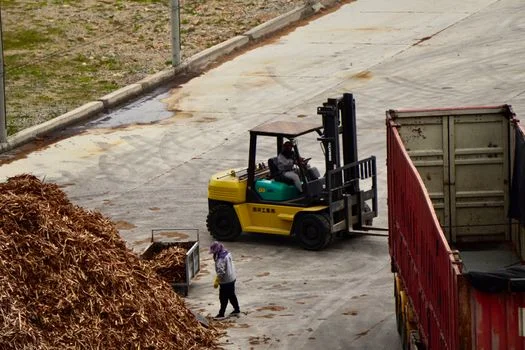
Containerization is straightforward once the equipment is skid-mounted: a 40 m³/day WSZ unit fits one 20' HQ, a 200 m³/day MBR typically needs 2 × 40' HQ (one for the membrane cassette and blower, one for the tank and control panel), and a 100 m³/h DAF ships in 1 × 40' FR (for the flotation tank) plus 1 × 40' HQ (for the skids, pump, and polymer system). The lead-time stack is 25–35 days factory production + 28–35 days Shanghai–Callao sea transit + 7–10 days Callao customs clearance + 14–21 days on-site assembly and commissioning in Lima — a 74–101 day total project cycle for a typical Lima industrial STP.
CIF Callao is the most common Incoterm for Lima buyers because it transfers risk to the supplier at the Callao quay. Some procurement teams request DAP Lima (warehouse) to avoid the US$1,800–$3,500 per container port handling fees and reduce demurrage exposure. Documentation that has to be in order before the container reaches Callao: a Spanish-language O&M manual, CE and ISO 9001/14001 certificates, a SUNAT invoice with HS code 8421.21, and a DIGESA sanitary registration if the plant serves a food facility (fishmeal, brewery, dairy). Missing any of these at Callao routinely extends clearance from 7 days to 21+ days.
How to Choose Between HydropureWater, Local Lima Assemblers, and Other Chinese Suppliers
A defensible supplier scorecard for a Lima buyer has five criteria: a flow-capable product line, documented Peru or LATAM export track record, Spanish O&M plus on-site commissioning, remote-monitoring capability (PLC + IoT), and a CIF Callao price that holds for 30 days. The three sourcing paths in Lima are (a) direct Chinese OEM like this Lagos STP supplier comparison pattern shows for similar emerging markets, (b) a Lima-based assembler importing skid parts and welding tanks locally, and (c) a European engineering firm using imported components. The MBR supplier evaluation framework from the Indonesia guide applies directly — a verified reference plant in the region matters more than Alibaba response-rate badges.
The direct OEM path — HydropureWater ships 13 product lines from one factory, including WSZ, MBR, DAF, ClO₂, RO, multi-media filters, lamella clarifiers, FGD, and baghouses — so a Lima brewery project can consolidate a DAF + MBR + RO train into a single shipment and reduce supplier count by 60–70%. The local Lima assembler path trades 35–60% higher unit cost for a 24–48 hour service response and is usually the right call only for flows under 50 m³/day. Alibaba "Gold Supplier" badges (92.6%–94.7% response rate, per Alibaba supplier directory) correlate with chat responsiveness, not engineering depth — request at least one operating reference plant in the Lima region before any deposit.
| Criterion | Direct Chinese OEM | Lima Local Assembler | European EPC |
|---|---|---|---|
| CAPEX (200 m³/day MBR) | US$200,000–$300,000 | US$320,000–$480,000 | US$450,000–$650,000 |
| Lead time | 74–101 days | 40–60 days | 120–180 days |
| Spanish O&M | Yes (translate) | Native | Yes |
| Service response | Remote + fly-in | 24–48 h local | 5–10 days |
| Flow range served | 1–2,000 m³/day | <50 m³/day typical | 50–5,000 m³/day |
| Reference in Lima | Request explicitly | Usually yes | Yes |
Industry-Specific Picks for Lima: Fishmeal, Textiles, Breweries, Mining Camps
Fishmeal plants in Callao and Chancay run DAF for FOG/TSS → covered anaerobic lagoon or MBR for ammonia → ClO₂ disinfection before ocean outfall; peak season (May–September anchovy catch) doubles hydraulic load, so the DAF is sized for 1.5× nominal flow. Textile mills in Gamarra and San Juan de Lurigancho run equalization + DAF for sizing/dye → MBR for color and COD → RO for dye bath reuse, with influent TDS above 3,000 mg/L driving the RO selection — see the global COD and BOD discharge limit guide for the Peru textile annex thresholds. Breweries in Ate (Backus, Union) run MBR for raw BOD of 1,500–3,000 mg/L → RO for boiler-feed reuse; biogas recovery via covered UASB is optional but recovers 0.3–0.5 m³ biogas per m³ wastewater at 60–70% CH₄ (similar train to the food-processing wastewater treatment in Singapore benchmarks). Mining camps feeding Lima's grid face high-COD plus heavy metal streams, so the standard train is coagulation + lamella clarifier + MBR before discharge to an ANA-permitted drain. For low-flow biological retrofits, the SBR vs AAO process comparison helps decide whether to upgrade an existing SBR basin to AAO within the WSZ envelope.
Frequently Asked Questions
What is the minimum effluent standard a Lima sewage treatment plant must meet for SEDAPAL discharge?
Under D.S. 010-2019-VIVIENDA, Lima sewage plants discharging to SEDAPAL must hold BOD ≤25 mg/L, COD ≤60 mg/L, and TSS ≤30 mg/L; the MBR membrane bioreactor for Lima industrial reuse clears this with 2–5× margin and enables water reuse.
How much does a 200 m³/day MBR plant cost CIF Callao in 2026?
A 200 m³/day MBR plant lands at US$264,000–$398,000 CIF Callao including 6% duty, 18% IGV, freight, and port handling; the WSZ underground package sewage treatment plant is cheaper at low flow but does not hit reuse-grade effluent.
Which equipment family handles fishmeal wastewater in Callao and Chancay?
The DAF + MBR combination is the standard train: the DAF pre-treatment system strips FOG and TSS to 85–95% removal, and the downstream MBR clears the ammonia load before ocean outfall.
What is the Shanghai-to-Callao shipping time for a containerized STP?
The Shanghai–Callao transit is 28–35 days; combined with 25–35 days production, 7–10 days customs, and 14–21 days on-site assembly, a typical Lima project runs 74–101 days from purchase order to commissioned plant.
Do Lima food facilities need DIGESA registration for the treatment plant?
Yes — any STP serving a fishmeal, brewery, or dairy plant requires DIGESA sanitary registration before commissioning; missing this documentation is the most common cause of customs clearance delays at Callao.