What 'wastewater treatment plant manufacturer in Manama' actually means in 2026
A "wastewater treatment plant manufacturer in Manama" is, in 2026, almost always one of three entities: a local EPC system integrator assembling skids in a Bahraini workshop, a regional Gulf trading office representing a Chinese OEM, or a direct Chinese factory shipping CIF Khalifa Bin Salman Port. The Shandong cluster dominates the export listings — Qingdao Yimei Environment Project Co., Qingdao Dongmao Environmental Protection Equipment, and Qingdao Yihua Environmental Protection all hold audited Made-in-China supplier status and post containerized MBR and MBBR units sized 10–5,000 m³/day. Audited supplier records show Yihua certified to ISO9001:2015, ISO14001, and ISO45001:2018, with a CE certificate valid since 2023-12-25; Yimei carries a CE certificate valid since 2022-03-29. These are the certificates a buyer will see attached to quotations, and they are the difference between an audited OEM and an unverified trading house.
Observed 2026 FOB China price bands frame the buyer's dilemma. Qingdao Dongmao lists MBR/MBBR package plants at $3,840–$9,665 per set for 50–200 m³/day capacities, and buried integrated STP units at $4,687–$8,746 per set. Qingdao Yihua posts a buried domestic STP at $5,600–$5,899 per piece. Qingdao Yimei's industrial slaughterhouse and food-processing packages run $5,800–$13,000 per piece. None of these numbers include sea freight, Bahrain customs duty, civil works, commissioning, or contingency. A buyer who reads "from $3,840" as a landed price will under-budget by 50–80%.
The realistic 2026 decision is a triangle of trade-offs: lowest FOB price (which usually means a small Shandong fab with thin after-sales support), shortest delivery (a Gulf stocking office shipping standard skids in 6–8 weeks), or nearest service (a Bahraini or Saudi EPC integrator with 24–72 hour on-site response). This guide ranks those trade-offs against Bahrain-specific climate, compliance, and lifecycle data so a procurement engineer can defend a shortlist to MOEW, finance, and the board.
Bahrain discharge rules every Manama WWTP must meet
Bahrain MOEW Decree No. 3/2012 is the executive bylaw for Public Health Law No. 23/2012, and its technical annex "Standards and Specifications for Treated Wastewater Discharge" is the document every RFQ must reference. For industrial discharge to a marine outfall, the limits are BOD ≤30 mg/L, COD ≤150 mg/L, TSS ≤50 mg/L, FOG ≤10 mg/L, pH 6–9, residual Cl₂ 0.5–1.0 mg/L, with TDS thresholds set by receiving environment. For irrigation reuse, the same decree cross-references WHO 2006 Guidelines for Safe Use of Wastewater, with tighter TDS (typically ≤1,500 mg/L for unrestricted irrigation) and fecal coliform ≤200 CFU/100 mL. These are the numbers a supplier's design basis has to hit — a BOD of 50 mg/L or a TSS of 80 mg/L, even if the supplier calls it "compliant," is not.
Compared to EU Directive 91/271/EEC, Bahrain's 30/150/50 envelope is tighter on BOD and equivalent on COD/TSS for sensitive catchments. Saudi NCEC follows a comparable 25/150/40 envelope for industrial discharge, so a plant designed to MOEW limits will typically pass NCEC, which simplifies cross-GCC procurement. The 2024–2025 update cycle tightened TDS limits for the Tubli Bay catchment after documented salinity drift, and desalination-concentrate blending from sita-side plants is now a design driver — any influent above 5,000 mg/L TDS needs explicit RO or evaporator polishing in the scope.
| Parameter | Bahrain MOEW 3/2012 (industrial, marine outfall) | Bahrain irrigation reuse | EU 91/271/EEC (sensitive) |
|---|---|---|---|
| BOD₅ | ≤ 30 mg/L | ≤ 20 mg/L | ≤ 25 mg/L |
| COD | ≤ 150 mg/L | ≤ 100 mg/L | ≤ 125 mg/L |
| TSS | ≤ 50 mg/L | ≤ 30 mg/L | ≤ 35 mg/L |
| FOG | ≤ 10 mg/L | — | — |
| pH | 6.0–9.0 | 6.5–8.5 | — |
| Residual Cl₂ | 0.5–1.0 mg/L | — | — |
| TDS (Tubli Bay catchment) | ≤ 2,000 mg/L (post-2024 guidance) | ≤ 1,500 mg/L | — |
| Fecal coliform | — | ≤ 200 CFU/100 mL | — |
Three permits must be in hand before discharge starts. First, a construction permit from the relevant Municipality (Manama, Northern, Muharraq) for the civil and skid footprint. Second, an operating permit from MOEW plus a separate marine discharge endorsement from the Supreme Council for Environment if the outfall runs to Tubli Bay or to a coastal discharge zone. Third, a sludge manifest — generated by the plant operator and countersigned by the licensed sludge hauler — required for every cubic meter of dewatered cake leaving the site.
Process selection: MBR vs MBBR vs SBR vs conventional activated sludge
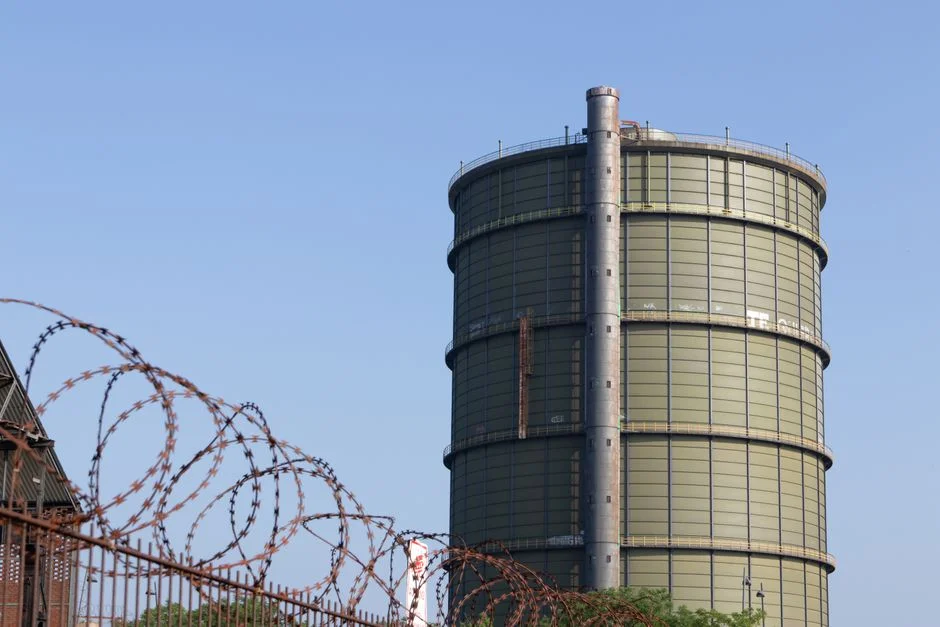
Most Bahrain WWTP RFQ failures are process failures, not equipment failures. A membrane bioreactor specified for a site that really needs a high-rate DAF, or an SBR sized for a footprint that does not exist, costs the owner six to twelve months of retrofit. The decision matrix below scores four biological options on the six axes that actually drive Bahrain outcomes: effluent quality, footprint, energy, operator skill, climate tolerance at 45°C ambient, and CAPEX per m³/day.
| Process | Effluent BOD / TSS | Footprint (m² per m³/day) | Energy (kWh/m³) | Operator skill | Climate tolerance 45°C | CAPEX USD/m³/day (2026 FOB reference) |
|---|---|---|---|---|---|---|
| MBR (PVDF submerged, 0.1–0.4 μm) | <5 mg/L BOD, <1 NTU turbidity | 0.05–0.10 | 0.6–1.2 | Medium (membrane care) | High (enclosed tank) | $80–$180 |
| MBBR | 20–30 mg/L BOD, 30–50 mg/L TSS | 0.10–0.15 | 0.3–0.6 | Low–medium | High (open tank OK) | $40–$90 |
| SBR / cyclic activated sludge | 15–25 mg/L BOD, 20–30 mg/L TSS | 0.15–0.25 | 0.4–0.7 | High (sequencing logic) | Medium (timer drift in heat) | $30–$70 |
| Conventional activated sludge (CAS) + clarifier | 20–30 mg/L BOD, 20–40 mg/L TSS | 0.20–0.40 | 0.4–0.8 | Medium | Medium | $50–$110 |
For a 2026 Bahrain industrial plant under 5,000 m³/day — the typical envelope for a food processor in Sitra, an aluminum smelter in Hidd, or a hotel cluster in Manama — MBR is the default. Submerged PVDF modules at 0.1–0.4 μm cut turbidity to under 1 NTU, which lets the downstream ClO₂ dose stay at 0.5 mg/L rather than 2 mg/L, and that matters when residual decay in 40°C summer water is already aggressive. For sites where FOG exceeds 50 mg/L or where the influent is hot refinery desalter water, MBR must be paired with a DAF upstream; MBR alone will foul in 30 days on those streams. MBBR remains the right call when the discharge is to a sea outfall with no reuse obligation and the operator team is small — no membrane replacement, no backwash sequencing, and TDS swings to 8,000 mg/L are absorbed by the biofilm without shock loss. SBR is still specified in food plants where batch influent matches the reactor cycle, and conventional activated sludge is now rare in 2026 Bahrain outside municipal Tubli expansion. Where reuse for irrigation is a contractual obligation, MBR is the only biological stage that pairs cleanly with RO and ClO₂ polishing to hit WHO 2006 unrestricted-irrigation quality — a packaged MBR membrane bioreactor package plant with a DF series PVDF membrane module consolidates BOD removal, solids separation, and disinfection-ready effluent in a single skid.
Pretreatment and post-treatment packages Bahrain actually requires
A biological reactor is rarely the full scope. The pretreatment and post-treatment balance of plant is where 30–50% of the skid cost hides, and it is the section most shortlist comparisons get wrong. Five packages are standard on a 2026 Bahrain industrial WWTP.
Headworks starts with a GX series rotary bar screen at 3 mm spacing, sized for peak flow with a peak factor of 1.5–2.0× average daily flow. Bahrain influent carries high grit load from cooling-tower bleed, desalination brine cross-connections, and food-processing wash water — under 3 mm spacing the membrane tank is safe; above 5 mm, rags and plastic reach the MBR and shorten membrane life by 30–50%. Flow equalization follows, sized at 8–24 hours HRT (typical design: 12 hours) to absorb refinery batch discharges and food-plant CIP surges; the formula is peak instantaneous flow × 0.5 day for a buffer tank, then average daily flow × 12 hr for the EQ basin.
For FOG above 50 mg/L — typical in dairy, slaughterhouse, edible-oil, and refinery wastewater — a DAF unit is non-negotiable. DAF removes 60–90% TSS and 70–95% FOG at hydraulic loading 4–25 m³/(m²·h), and it protects the downstream biology from oil poisoning. pH correction and chemical dosing use an automatic chemical dosing skid sized for pH 6–9 compliance, with coagulant (PAC 5–20 mg/L) and polymer (0.5–2 mg/L) injection points ahead of DAF and ahead of the MBR tank.
Disinfection in Bahrain favors a ClO₂ generator over chlorination. ClO₂ is dosed at 50 g/h to 20,000 g/h capacity depending on plant size, and at 0.5–1.0 mg/L residual it achieves the 0.5–1.0 mg/L compliance band without forming trihalomethanes — a real concern with Bahrain's high-bromide source water. Sludge handling closes the loop with a plate-and-frame filter press (1–500 m² filtration area) that dewaters waste activated sludge to 18–22% dry solids, producing a cake that passes the MOEW sludge manifest for offsite landfill or co-incineration.
What a Bahrain-landed WWTP really costs in 2026
The Made-in-China price bands cited above are FOB Qingdao, not landed Manama. A defensible 2026 budget for a Bahrain buyer starts with the FOB baseline, then layers five cost lines that most shortlist quotations quietly omit: sea freight Qingdao-to-Manama at 18–22 days transit, Bahrain customs duty at 5% CIF for most WWTP equipment (some skid HS codes are duty-free under GCC industrial tariff — verify), site civil works at 5–8% of equipment cost, commissioning and operator training at 10–15%, and 10% contingency. The composite landed multiplier in 2026 sits at 1.5–1.8× FOB.
| Capacity (m³/day) | Process | 2026 FOB range (USD) | 2026 landed range (USD, multiplier 1.5–1.8×) | Indicative OPEX (USD/m³) |
|---|---|---|---|---|
| 50 | Containerized MBR / MBBR | $25,000–$80,000 | $80,000–$150,000 | $0.22–$0.32 |
| 500 | Industrial MBR with DAF + ClO₂ | $220,000–$550,000 | $350,000–$900,000 | $0.18–$0.30 |
| 5,000 | Multi-module MBR + RO polish | $1.4M–$3.5M | $2.5M–$6.0M | $0.15–$0.25 |
| 10,000 | Cassette MBR with full pretreatment | $0.8M–$5.0M (FOB spread) | $1.2M–$8.5M | $0.12–$0.22 |
OPEX benchmarks: MBR at $0.18–$0.30/m³ in 2026 (energy 0.6–1.2 kWh/m³ at $0.08–$0.12/kWh Bahrain grid, plus chemicals $0.02–$0.04/m³, plus membrane replacement amortized); MABR runs $0.15–$0.25/m³ per the MABR vs MBR OPEX comparison; conventional activated sludge is cheaper on energy at $0.10–$0.18/m³ but pays it back in sludge haulage. PVDF membrane replacement is the line item that decides 20-year TCO: modules last 7–10 years at $40–$80/m² of membrane area, so a 500 m³/day MBR with roughly 800 m² of installed membrane faces a $32,000–$64,000 membrane event every 7–10 years. A 20-year TCO model for a WWTP that omits membrane replacement understates lifecycle cost by 8–15%. The cross-GCC comparison is also useful — the Doha WWTP manufacturer's guide applies a similar cost logic against Qatar's GAC standards. Finally, a 10,000 m³/day sewage plant cost benchmark is the right cross-reference for any Bahrain project that scales past 5,000 m³/day. Cheaper FOB does not automatically mean cheaper TCO because freight, duty, membrane life, and energy dominate over 20 years.
How to vet a wastewater treatment plant manufacturer for Bahrain
Six non-negotiable checks separate a defensible shortlist from a purchase-order regret. First, certificates: ISO 9001:2015, ISO 14001, and ISO 45001:2018, each verified by querying the issuing body's online register — a PDF attachment is not proof. Yihua and Yimei both publish the certificate numbers on their Made-in-China audited profiles. Second, GCC or MENA reference plants, with named contact referees and at least one operating for two or more years in ambient above 40°C. Third, CE-marked electrical panels with IP54 enclosures for indoor MCCs and IP65 for outdoor cabinets, explicitly rated for 50°C ambient — Bahrain summer peaks regularly exceed 45°C, and a panel rated only to 40°C will trip within six months. Fourth, PVDF membrane source traceability: ask for the membrane brand and origin (Toray, Suez, Memstar, or equivalent) — generic unbranded PVDF is a 3-year life membrane, not a 7–10 year one. Fifth, warranty terms: 24 months mechanical and 12 months biological performance guarantee, with a defined third-party effluent testing protocol and a liquidated-damages clause for non-compliance. Sixth, O&M manuals in both Arabic and English plus a Manama-based or GCC-based service engineer on call within 48 hours.
Red flags are easy to spot. A "CE certified (contact issuer for current status)" string with no certificate number is unverified. An FOB-only quotation with no commissioning line, no training line, and no performance test clause is a parts sale, not a plant sale. The absence of a membrane replacement schedule in the O&M manual means the supplier has not run a Bahrain-grade plant. For any plant above 500 m³/day, insist on a 4–8 week on-site pilot trial before signing the FAT. Typical 2026 payment terms anchor at 30% T/T advance, 40% against B/L copy, 25% after commissioning, and 5% retention until the 12-month performance test passes — a buyer who accepts 100% against B/L is financing the supplier.
Frequently Asked Questions
What is the typical cost of a 500 m³/day WWTP in Bahrain?
CAPEX lands between $350,000 and $900,000 in 2026 for an MBR with DAF pretreatment and ClO₂ disinfection, with OPEX of $0.18–$0.30/m³ over a 20-year horizon.
Which process is best for high-TDS industrial wastewater in Bahrain?
MBR handles influent TDS up to 8,000 mg/L when paired with DAF pretreatment; above 8,000 mg/L, add an RO polish to hit MOEW irrigation reuse TDS ≤1,500 mg/L or Tubli Bay catchment ≤2,000 mg/L.
How long does it take to deliver a package WWTP from China to Manama?
8–10 weeks fabrication at the Chinese OEM, 18–22 days sea transit Qingdao to Khalifa Bin Salman Port, plus 4–6 weeks site commissioning, totaling 4–5 months from PO to handover.
Does the manufacturer handle Bahrain MOEW permitting?
No. The owner appoints a Bahraini EPC consultant to manage MOEW and Supreme Council for Environment submissions; the manufacturer supplies the design basis, P&ID, mass balance, and effluent test reports that the consultant files.
Can a package plant meet Bahrain irrigation reuse standards?
Yes. MBR with RO polish and ClO₂ disinfection achieves WHO 2006 unrestricted-irrigation quality, including fecal coliform ≤200 CFU/100 mL, and is the standard configuration for Bahrain landscape and golf-course reuse contracts.