
Why Hotel Wastewater in Hanoi Needs a Purpose-Built MBR
Hotel wastewater in Hanoi contains specific contaminants driven by room count, kitchen FOG load, laundry greywater, spa output, and pool backwash. Imemflo treats hotel effluent as a distinct biological application, sized separately from residential or office flows (Imemflo, hotel wastewater treatment solution). Vietnam's discharge rule is QCVN 14:2008/BTNMT, and the 2025 draft tightens Column A to BOD₅ 15 mg/L and total nitrogen 20 mg/L — limits the Yixing regional retrofit study places within MBR capability but outside reliable conventional activated sludge performance (Yixing, containerized MBR retrofit study for Saudi Arabia, Indonesia, and Vietnam, 2025-08).
Hanoi's urban sewerage coverage sits at roughly 45% against a Ministry of Construction target of 60% by 2030, and the Yen Xa facility is already being retrofitted to 270,000 m³/d with membrane technology (Yixing, 2025-08). That regulatory and project direction leaves little room for a hotel to specify a conventional activated sludge plant and still defend a QCVN 14 Column A performance guarantee. Tight central-Hanoi plots compound the problem: civil tankage dominates both schedule and cost on infill sites, which pushes designers toward compact, packaged membrane systems that can be factory pre-commissioned and craned into a basement or service yard — a logic also documented in MBR design parameters for high-strength wastewater.
Step 1 — Quantify the Hotel's Actual Wastewater Load
Hotel sizing starts with a per-occupied-room flow assumption in litres per day, layered with a kitchen FOG load and a separate greywater stream for laundry. Imemflo recommends this split-flow approach because kitchen and laundry streams carry different pollutant profiles and may need different pre-treatment (Imemflo). The benchmark most suppliers accept as a sanity check is Imemflo's installed hollow-fiber MBR at a 200-bed 5-star luxury hotel rated at 250 m³/d — a useful anchor when scaling to 100-bed, 300-bed, or 500-bed schemes (Imemflo).
Apply a peak factor of 1.5–2× the daily average to account for hotel flows that spike at morning turn-down and evening check-in. MBR handles these swings better than settling-based plants because hydraulic retention is decoupled from clarifier performance (Imemflo). Where the operator wants a separate greywater plant for laundry, the procurement scope must clarify whether the packaged MBR includes the kitchen FOG line, or whether a DAF pre-treatment unit is needed upstream to protect the membranes from grease shock loads. The table below consolidates the variables a consultant should confirm with the operator before issuing an MBR bid enquiry.
| Sizing input | Source/benchmark | What to confirm with hotel operator |
|---|---|---|
| Average flow (m³/d) | 250 m³/d at 200-bed 5-star (Imemflo) | Occupancy rate, seasonality, banquet/event load |
| Peak factor | 1.5–2× daily average (Imemflo) | Morning turn-down + evening check-in overlap |
| FOG load (kitchen) | Hotel duty flag (Imemflo) | Number of covers/day, grease trap upstream, FOG concentration |
| Laundry greywater | Separate plant common (Imemflo) | Whether greywater enters the MBR or runs in parallel |
| Pre-treatment | DAF for FOG (HydropureWater DAF unit) | Sizing, polymer dose, sludge yield |
Step 2 — Match QCVN 14 Effluent Targets to MBR Performance
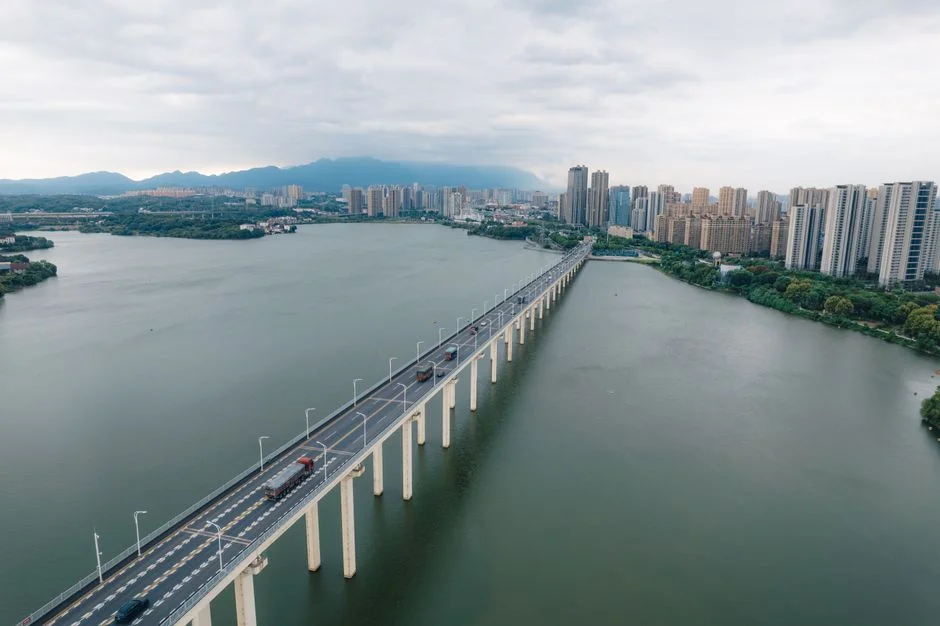
MBR removes 90–95% of harmful substances from hotel wastewater, producing permeate suitable for non-potable reuse such as toilet flushing, irrigation, and cooling-tower make-up (Imemflo). Compared with conventional activated sludge effluent, MBR permeate carries lower pathogen and suspended-solid counts, which makes it a strong feed source for downstream nanofiltration or reverse osmosis polishing if the hotel wants higher-grade reuse (Camix, MBR technology page).
The 2025 draft QCVN 14 Column A values — BOD₅ 15 mg/L and TN 20 mg/L — are achievable with MBR operated at the standard MLSS window of 8,000–10,000 mg/L that Camix documents for the process (Camix). The single most defensible document at handover is a supplier compliance matrix that shows guaranteed influent versus effluent values for BOD₅, COD, TSS, TN, TP, and E. coli against QCVN 14 Column A. Without that matrix, the consultant has no contractual lever if the municipal environmental authority samples the discharge during commissioning.
Step 3 — Choose Between Hollow-Fiber and Flat-Sheet Membrane Modules
Imemflo supplies both hollow-fiber (HF MBR) and flat-sheet (FS MBR) modules with ultrafiltration pore size, and both have hotel track records. Flat-sheet modules with an integrated aeration box, such as the DF series PVDF flat-sheet MBR module, use 10–20× less energy than external cross-flow systems and allow individual element replacement, which is useful when FOG spikes cause localized fouling (HydropureWater DF series product catalog). Hollow-fiber achieves higher packing density and is well established in large municipal retrofits in Vietnam, with the Hanoi Yen Xa project at 270,000 m³/d providing long-term operating data in the same climate and sewerage context as a hotel site (Yixing, 2025-08).
Membrane brand is a procurement line item, not a footnote. The brands circulating in Vietnam hotel projects include Suez, Dow, DuPont, and Mitsubishi on the hollow-fiber side, and Toray on the flat-sheet side (Imemflo). Confirm regional stock of replacement elements before signing — a six-week membrane air-freight delay during peak tourist season is a commercial risk the operator will not accept. The table below summarizes the comparison.
| Parameter | Hollow-fiber MBR | Flat-sheet MBR |
|---|---|---|
| Packing density | High (Imemflo) | Lower, easier element swap (HydropureWater DF catalog) |
| Aeration energy | Standard coarse-bubble scour | 10–20× less than external cross-flow (HydropureWater DF catalog) |
| FOG tolerance | Robust at module scale (Yixing, 2025-08) | Individual element replacement limits fouling spread (HydropureWater DF catalog) |
| Vietnam reference | Hanoi Yen Xa 270,000 m³/d (Yixing, 2025-08) | Hotel-scale installations (Imemflo) |
| Common brands | Suez, Dow, DuPont, Mitsubishi (Imemflo) | Toray (Imemflo) |
Step 4 — Evaluate the Packaged Form Factor and Civil Works
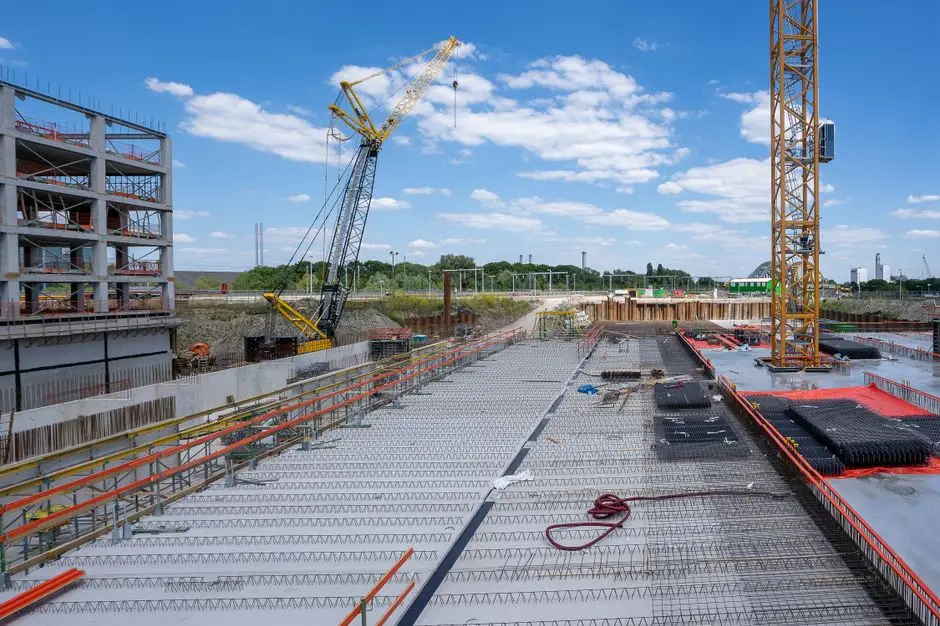
A containerized MBR delivers reuse-grade water in roughly 40% less footprint than a conventional activated sludge plant of the same capacity, according to Yixing's regional retrofit benchmarks (Yixing, 2025-08). Construction time compresses to 8–12 weeks for a containerized system versus 14–18 months for a conventional plant — a decisive variable for a hotel working to a fixed commercial opening date. Civil scope shrinks to inlet screening, optional equalization, container foundation pads, a permeate tank, and sludge storage; the consultant should still specify a rotary mechanical bar screen upstream to protect the membranes from rag and grit carryover (Yixing, 2025-08).
PLC-based automation, as built into packaged MBR systems such as the Wipro MBR STP, enables remote monitoring and reduces on-site operator hours. Yixing also reports that factory pre-commissioning cuts the on-site installation to 4–6 weeks once containers arrive, which is the schedule number a procurement engineer should write into the contract.
Step 5 — Run the Reuse-Water Economics Before You Sign
The technical decision becomes a financial one when reuse water enters the model. Yixing values reuse water at $0.40–1.20/m³ versus zero for discharge-grade effluent, a direct revenue line for irrigation, cooling-tower make-up, or toilet flushing inside the hotel (Yixing, 2025-08). Imemflo frames water reuse as both a sustainability lever and a cost-savings line for hotel operators, and the same logic defends the MBR premium to a board that sees capital cost first and lifecycle cost second (Imemflo).
Carry a 7-year membrane replacement cycle and chemical cleaning into the lifecycle model rather than burying it in OPEX, and add a fouling contingency because Camix flags membrane fouling — requiring periodic chemical cleaning and a larger installed membrane area than nominal flow suggests — as the main MBR bottleneck (Camix). Sludge handling should also be priced; a plate and frame filter press sized to the hotel's dry-solids yield keeps the dewatering scope inside the packaged supply rather than a separate contract.
Procurement Checklist for a Packaged MBR STP in Hanoi
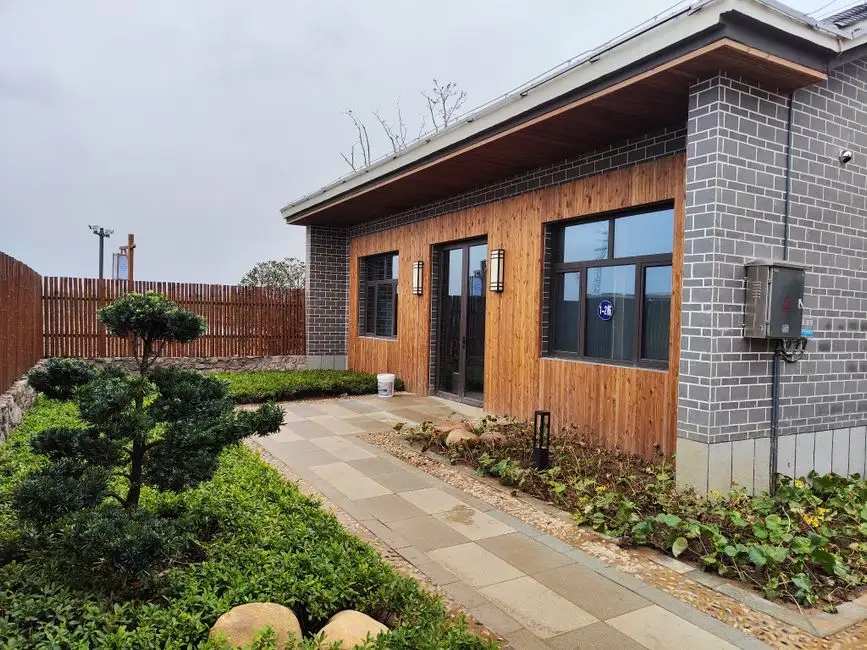
A shortlist is only useful if every bidder answers the same questions. The checklist below is the minimum a Hanoi consultant should send with the enquiry.
| Item | What to require | Source |
|---|---|---|
| QCVN 14 Column A compliance matrix | Influent vs effluent values for BOD₅, COD, TSS, TN, TP, E. coli, with test protocol | Yixing, 2025-08 |
| Membrane brand and model | Suez, Dow, DuPont, Mitsubishi, or Toray; regional replacement stock confirmed | Imemflo |
| Footprint and container count | Layout drawing, foundation loads, craneage plan | Yixing, 2025-08 |
| Factory pre-commissioning plan | FAT scope, then 4–6 week site install | Yixing, 2025-08 |
| Automation | PLC + remote monitoring, SCADA tag list, alarm philosophy | Wipro Water |
| Sludge handling | Screw press or plate press included, cake dryness target | Yixing, 2025-08 |
| After-sales response | Local Vietnam presence, response time, spares list | Imemflo |
| Reference projects | Similar-capacity Vietnam hotel or commercial sites, operating data older than 12 months | Yixing, 2025-08 |
For a side-by-side lifecycle view, the MBR vs conventional activated sludge comparison lays out the CAPEX/OPEX split that the Yixing regional retrofit dataset also reports.
Frequently Asked Questions
What is the typical CAPEX range for a packaged MBR STP sized to a 200-bed Hanoi hotel?
The Yixing regional retrofit study reports a comparative cost table for a 10,000 m³/d containerized MBR retrofit, but it does not publish a hotel-scale price. A buyer must request a sized quotation per m³/d from each shortlisted supplier, ask for the same scope of supply (membranes, automation, sludge dewatering, pre-commissioning), and normalize freight, installation supervision, and a 7-year membrane replacement reserve into the comparison.
How do I shortlist packaged MBR STP suppliers for a Vietnam hotel project?
Filter on three hard requirements: a documented QCVN 14 Column A compliance matrix, a Vietnam reference project older than 12 months, and a membrane brand with regional replacement stock (Yixing, 2025-08; Imemflo). Anything that fails one of those three should be excluded before price is even opened.
How long does a packaged MBR STP take to install at a Hanoi hotel site?
Yix