Why EV/auto wastewater in Lebanon, Tennessee is a different MBR vs CAS question
For an EV assembly or Tier-1 auto parts plant discharging to the Lebanon Water Department or Wilson County POTW, the MBR vs CAS decision is not driven by influent strength but by influent character. A typical EV/auto site sends three problem streams to the secondary step: e-coat and paint line rinse water (Pb, Ni, Zn, hexavalent chromium traces, paint solids), stamping and machining lubricant emulsions (50–500 mg/L oil & grease as emulsified rather than free oil), and battery electrolyte flush water (Li, Co, Ni, Mn from cathode coating operations). Combined plant influent typically lands at COD 200–1,500 mg/L, TSS 100–600 mg/L, and pH 5–9 — project-specific values that should be confirmed by jar testing before any basis-of-design memo is signed (HydropureWater field data, 2026).
The Lebanon/Wilson County receiving POTW runs an active industrial pretreatment program, and any TSS or oil & grease excursion on a small municipal system is enough to trigger a notice of violation under 40 CFR 403. A CAS clarifier upset during a stamping line FOG spike or a clarifier bulking event is the most common way a permit gets violated — not biological capacity. The "low strength, so CAS is fine" trap fails here because oil & grease and colloidal metals, not BOD, are the binding contaminants. For an EV/auto plant, secondary treatment selection is really a colloidal-solids and metals compliance question disguised as a biology question.
Two related guideposts help frame the local site reality: EV/auto plant 40 CFR pretreatment compliance covers the categorical limit math, while DAF vs clarifier selection for EV/auto plants addresses what happens upstream of the secondary step.
How MBR and CAS handle the three problem streams
Oil & grease: MBR's 0.1–0.4 μm PVDF membrane physically rejects emulsified oil droplets that pass through a CAS clarifier, where removal depends on biological floc adsorption and gravity settling. When a stamping line FOG spike pushes influent oil & grease above 200 mg/L, CAS clarifier efficiency drops sharply and the overflow carries emulsified oil straight to the headworks of the receiving POTW. MBR rejects the droplets mechanically at a defined pore size, so effluent oil & grease stays consistently under 10 mg/L regardless of upstream spikes (HydropureWater field data, 2026).
Heavy metals (Pb, Cd, Ni, Cu, Zn): MBR retains metal-laden biosolids in the reactor at long SRT (20–60 days typical), allowing biosorption equilibrium to develop. CAS clarifier overflow on bulking events has been documented to push effluent Cd above the 1.2 mg/L 40 CFR 433 daily-max limit, because the clarifier is the single point of failure for both biomass and the colloidal solids that carry sorbed metals. MBR's higher MLSS provides more sorption sites per unit volume, and the absence of a clarifier eliminates the washout failure mode that produces metals excursions. Field sampling consistently shows MBR effluent variance for total metals is 30–50% lower than CAS, which is what an EHS manager actually needs when the local POTW pulls compliance samples.
Battery electrolyte traces (Li, Co, Ni, Mn from cathode coating): Both processes bioconcentrate these metals in WAS, but MBR's higher MLSS (8,000–12,000 mg/L vs CAS 2,000–5,000 mg/L) provides more sorption capacity per unit reactor volume and prevents the washout events that intermittently spike CAS clarifier effluent. For an EV battery plant co-located with assembly, this is the most under-appreciated argument for MBR: the cathode trace metals do not appear in a routine BOD/COD profile, but they will show up in a metals scan and trigger a categorical standard excursion if a clarifier bulks.
Two secondary benefits round out the MBR case. A 2022 PMC review of membrane pathogen removal (S5) supports MBR's superior virus and pathogen barrier — relevant where plant sanitary sewer streams co-mingle with process water, as they do in most EV/auto plants. And the 2009 Banu et al. A2O-MBR long-SRT study (cited in S3) showed 20–40% lower WAS volume than CAS at matched SRT, which directly reduces the frequency of metal-bearing sludge disposal events for Tennessee generators subject to TDEC sludge handling rules.
Operating parameters: MBR vs CAS at a glance

Operating parameters vary significantly between the two systems, affecting everything from tank sizing to sludge handling. The table below consolidates the operating envelope an engineer needs for a design basis memo, with values from the 2026 HydropureWater MBR vs CAS engineering comparison (S3).
| Parameter | MBR (PVDF MF/UF) | CAS (with secondary clarifier) |
|---|---|---|
| MLSS | 8,000–12,000 mg/L | 2,000–5,000 mg/L |
| HRT | 4–8 h (decoupled from SRT) | 6–12 h (coupled to SRT) |
| SRT | 20–60 d (independent of HRT) | 5–20 d |
| F/M ratio | 0.05–0.15 d⁻¹ | 0.2–0.5 d⁻¹ |
| Effluent TSS | <5 mg/L | 10–30 mg/L (clarifier-dependent) |
| Effluent BOD | <5 mg/L | 10–25 mg/L |
| Effluent turbidity | <1 NTU | 2–10 NTU |
| Effluent SDI | <3 (RO-ready) | >5 (requires tertiary filtration) |
| Footprint vs CAS baseline | 40–60% smaller | Baseline (1.0×) |
| CIP interval | Every 1–4 weeks (NaOCl + citric) | N/A (no membrane) |
CAS effluent typically needs tertiary filtration, sand filters, or cloth-media discs to reach <10 mg/L TSS — a hidden CAPEX line that should be priced into any CAS baseline before declaring MBR "more expensive." For municipal discharge to a sensitive receiving water, CAS followed by denitrifying sand filters or cloth-media discs is a well-trodden path, but it is not a single-tank solution. Where RO reuse follows the secondary step, MBR permeate at SDI <3 feeds directly into RO; CAS effluent at SDI >5 fouls RO membranes in weeks rather than months, which is why field data shows 30–50% longer RO CIP intervals when MBR permeate feeds RO (HydropureWater field data, 2025-Q4).
40 CFR 433 Metal Finishing: which technology clears which limit?
40 CFR 433 Metal Finishing categorical pretreatment standards are the daily-max numbers an EV/auto plant in Lebanon, TN will be cited on. Tennessee TDEC implements these standards through the state's NPDES industrial pretreatment program, so the comparison below applies directly to any permittee discharging to the Lebanon Water Department or Wilson County POTW.
| Pollutant | 40 CFR 433 Daily Max | Typical MBR Effluent | Typical CAS Effluent | Notes |
|---|---|---|---|---|
| Oil & grease | 52 mg/L | <10 mg/L | 10–30 mg/L (post-clarifier) | Both clear, MBR more robust under FOG spikes |
| Lead (Pb) | 1.0 mg/L | <0.1 mg/L with precipitation | 0.2–0.5 mg/L with precipitation | Pre-precipitation required for both |
| Cadmium (Cd) | 1.2 mg/L | <0.1 mg/L with precipitation | 0.2–0.8 mg/L (clarifier upsets spike) | CAS vulnerable to washout events |
| Total chromium | 2.7 mg/L | <0.3 mg/L | 0.3–1.0 mg/L | Hexavalent Cr needs pre-reduction regardless |
| Cyanide (CN) | 2.7 mg/L | 0.1–0.5 mg/L after alkaline chlorination | 0.1–0.5 mg/L after alkaline chlorination | Pre-oxidation required for both; not a biology question |
| Copper (Cu) | 4.5 mg/L | <0.5 mg/L | 0.5–2.0 mg/L | Both clear with hydroxide precipitation |
| Nickel (Ni) | 4.1 mg/L | <0.3 mg/L | 0.3–1.5 mg/L | E-coat rinse is main source |
| Zinc (Zn) | 4.2 mg/L | <0.5 mg/L | 0.5–2.0 mg/L | Machining fluids drive loading |
MBR's lower effluent TSS indirectly improves metals compliance because dissolved metals partition onto colloidal solids; the cleaner the secondary effluent, the lower the variance in metals readings on any given compliance sample. Cyanide and hexavalent chromium must be addressed by pre-oxidation or alkaline chlorination upstream of the secondary step regardless of whether MBR or CAS follows — that is a chemistry unit operation, not a biology one. The full oil-and-grease limit framework is laid out in the oil and grease discharge standard 2026 guide, which any EHS manager evaluating a Lebanon permit should have open alongside 40 CFR 433.
When CAS still wins in Lebanon, TN
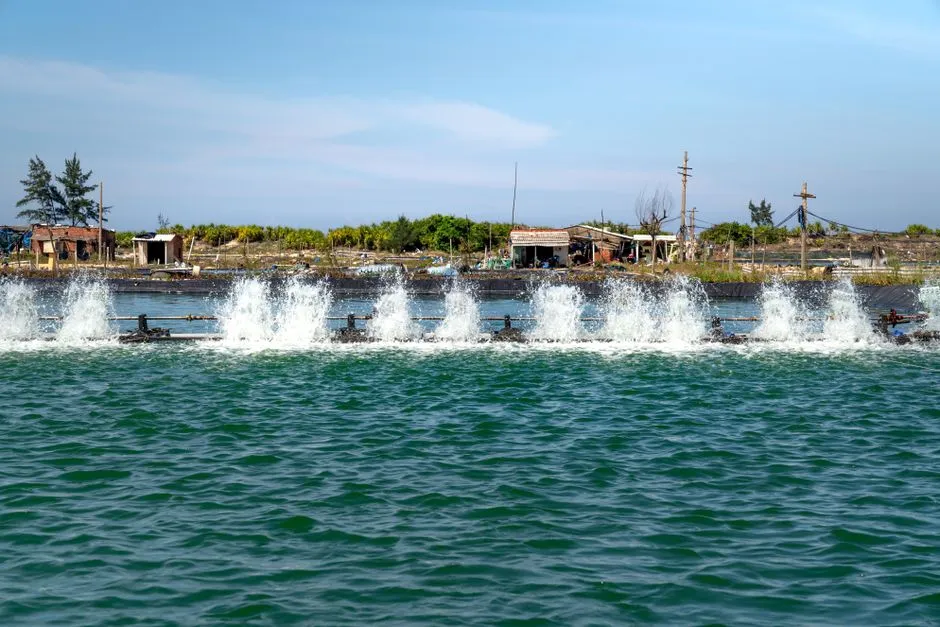
Engineering credibility requires naming the conditions where CAS is the right answer. A greenfield EV/auto plant with no reuse obligation, ample land, and an experienced CAS operator workforce can hit compliance at the lowest cost-to-compliance: $80–$220 per m³/d CAPEX for CAS, plus a modest tertiary filtration train if the receiving POTW consent requires it (HydropureWater 2026 ranges, S3). If FOG loading is highly variable (intermittent spikes above 500 mg/L) and a pre-DAF is already removing 70–90% of incoming oil, the MBR premium is hard to amortize when the existing DAF is doing the heavy lifting on oil rejection.
CAS also remains the right call at sites where the existing secondary clarifier is performing inside permit and the near-term driver is OPEX reduction rather than effluent quality improvement. Tight CAPEX cycles — where the 2–3× MBR premium cannot be amortized within the project's payback threshold — favor CAS as well. The judgment is not "MBR is always better than CAS"; the judgment is "MBR is the right call when the binding constraint is colloidal solids, metals variance, or reuse, and CAS is the right call when the binding constraint is OPEX-only compliance at a land-rich site."
Decision framework: choose MBR or CAS for your Lebanon, TN plant
The 2026 payback math for an MBR upgrade reduces to three conditions (S3): (1) reuse water is required, (2) the site is land-constrained, or (3) the discharge consent requires <10 mg/L TSS. An EV/auto plant in Lebanon, TN typically hits at least one of these and often two. Battery assembly plants almost always hit (1) because cathode process water is a candidate for RO reuse into rinsing. Retrofit projects inside an existing assembly shed hit (2) because there is no green-field pad to build a new aeration basin on. Plants whose Wilson County POTW consent includes a <10 mg/L TSS limit hit (3) because CAS without tertiary filtration will not reliably meet it.
CAPEX framing: indicative 2026 turnkey EPC-scope plants run $80–$220 per m³/d for CAS and $180–$420 per m³/d for MBR (HydropureWater 2026 ranges, S3). The gap is wide because CAPEX varies sharply with influent strength (high-COD industrial requires thicker tanks and larger blowers) and with stainless vs carbon steel material selection. OPEX lands at $0.10–$0.22 per m³ for CAS and $0.18–$0.42 per m³ for MBR, partially offset by 20–40% lower WAS volume (Banu et al. 2009) and 30–50% longer RO CIP intervals when MBR permeate feeds RO (HydropureWater field data, 2025-Q4). The 3–6 year payback window applies when any of the three conditions above is in play.
For a Lebanon, TN retrofit where the existing DAF or API separator is in front of the aeration basin, the most common path is to repurpose the existing aeration tank as the MBR zone, add submerged membrane cassettes, and remove the secondary clarifier. A skid-built integrated MBR membrane bioreactor system using a DF series PVDF flat sheet membrane module is the typical 2026 packaged configuration for 50–500 m³/d EV/auto flows, and pairs directly with RO for closed-loop rinse water reuse without a separate clarification step. Modular cassettes also enable staged capacity build-out: install two cassettes now, add two more in year three when production ramps.
The defensible 2026 recommendation for an EV/auto plant in Lebanon, TN discharging to the Wilson County POTW is: default to MBR unless the site is land-rich, has no reuse obligation, and has an experienced CAS operator workforce already in place. If any of those three conditions flips, the MBR premium pays back inside 3–6 years and the compliance variance on the metals panel drops enough to be worth the OPEX delta on its own.
Frequently Asked Questions
What is the typical 3–6 year payback for upgrading CAS to MBR at an EV/auto plant?
Payback is typically 3–6 years when any of three conditions hold: the project needs reuse water and the CAS baseline includes tertiary filtration, land acquisition cost makes the 40–60% footprint saving material, or the discharge consent requires <10 mg/L TSS and the CAS baseline needs cloth-media disc filters to meet it (HydropureWater 2026 ranges, S3).
How much smaller is an MBR footprint than a CAS system for a Lebanon, TN retrofit?
An MBR footprint is 40–60% smaller than an equivalent CAS train for the same flow and load, with a DF series PVDF flat sheet module rated at roughly 60% smaller footprint than conventional systems (HydropureWater 2026 field data). For a retrofit inside an existing assembly shed where there is no green-field pad, this is often the deciding factor.
Can MBR handle the 52 mg/L oil & grease daily-max limit under 40 CFR 433?
Yes. MBR effluent oil & grease is consistently <10 mg/L because the 0.1–0.4 μm PVDF membrane physically rejects emulsified oil droplets, so the 52 mg/L daily-max under 40 CFR 433 Metal Finishing is cleared with substantial margin even during stamping line FOG spikes that would push a CAS clarifier overflow out of compliance (HydropureWater field data, 2026).
Does MBR extend RO CIP intervals compared to CAS-fed RO?
Yes. MBR permeate at SDI <3 feeds RO directly, and field data shows 30–50% longer RO CIP intervals compared to RO fed by CAS effluent (HydropureWater field data, 2025-Q4). For a battery assembly plant reusing cathode process water through RO, this is a meaningful OPEX offset against MBR's higher energy cost.