What Sewage Treatment Plant Suppliers in Lagos Actually Deliver
A sewage treatment plant supplier in Lagos typically delivers a packaged or skid-mounted system rated 10–2,000 m³/day, designed to meet Nigerian National Environmental (Sanitation and Waste Control) Regulations 2009 limits — BOD ≤50 mg/L, TSS ≤50 mg/L, and faecal coliform ≤200 cfu/100 mL. Lagos buyers in 2026 face a three-way market: Chinese turnkey OEMs (lowest CAPEX, 8–12 week Apapa clearance), Indian EPCs (15-day ex-works, moderate support), and local integrators (fastest site response, 20–35% CAPEX premium). For flows under 100 m³/day, packaged WSZ packaged underground sewage treatment plant units or MBR skids are most cost-effective; above 500 m³/day, containerised MBR trains dominate.
Three supplier tiers operate in Lagos. The first is overseas OEMs shipping factory-built skids from Guangzhou, Shanghai, or Delhi — typically sold FOB and cleared through Apapa by a Nigerian agent. The second is Nigerian system integrators who assemble or repackage imported components locally, with their own panel shops and welding facilities. The third is full EPC firms handling civil, mechanical, electrical, and commissioning under a single performance warranty. The tier you pick determines lead time, spares availability, and your exposure to foreign-exchange risk on a 14–40 week delivery window.
The price gap between tiers is real and quantifiable. A UK-domestic packaged STP at the low end (Crystal Tanks' Vortex line) lists from £1,550 ex-works — roughly $1,950 — but is not tropical-rated and is not engineered for Nigerian discharge limits. Lagos duty, clearing, and tropical-duty upgrades push comparable units to $18,000–$45,000 landed, 22–30% above FOB (HydropureWater field data, 2026). Established overseas OEMs publish ex-works delivery in 15 days for an Indian-built MBR skid (Nicoles Water Treatment, operating since 2004) and 20–30 days for Chinese containerised plants; what kills the schedule is the 6–8 week Apapa clearance window, not the build.
Lagos demand is concentrated in the Lekki–Victoria Island corridor for high-end residential estates, hotels, and hospitals, with secondary clusters in Ikeja and the Apapa industrial belt. Reiken Solutions (585-586 Block D3, Lekki-Epe Expressway) and Devtek Tanks (Plot 15, s'Mart, Lekki) both anchor the local-integrator tier on the Lekki-Epe axis. Typical project flow windows are 50–500 m³/day for housing estates, 100–1,000 m³/day for hotels and hospitals, and 500–2,000 m³/day for industrial parks and institutional campuses — the ranges that anchor every CAPEX table further in this guide.
Lagos Compliance Framework: NESREA, LASEPA, and FMEnv in 2026
The binding federal instrument is the Federal Republic of Nigeria National Environmental (Sanitation and Waste Control) Regulations 2009, enforced by the National Environmental Standards and Regulations Enforcement Agency (NESREA). Every packaged STP delivered into Lagos must demonstrate compliance with its effluent limits or the supplier carries the retrofit liability — not the buyer.
Key discharge parameters a Lagos STP must hit on a 90-day performance test:
| Parameter | NESREA 2009 limit | Typical MBR performance | Notes |
|---|---|---|---|
| BOD₅ | ≤50 mg/L | <5 mg/L | 5-day biochemical oxygen demand |
| TSS | ≤50 mg/L | <1 mg/L | Total suspended solids |
| Faecal coliform | ≤200 cfu/100 mL | <100 cfu/100 mL (with UV) | UV or chlorination required |
| Residual chlorine | 0.5–1.0 mg/L | 0.5–1.0 mg/L | If chlorination is used |
| pH | 6.5–8.5 | 6.5–8.5 | Standard biological range |
| Oil & grease | ≤10 mg/L | ≤5 mg/L with dissolved air flotation (DAF) pretreatment | Critical for hotel/food-service sites |
LASEPA — the Lagos State Environmental Protection Agency — runs a parallel state-level permitting process that NESREA alone does not cover. LASEPA typically adds 8–14 weeks for an Environmental Impact Assessment and an Effluent Discharge Permit, even after the plant is mechanically complete; plan for this in your project schedule, not after. FMEnv (Federal Ministry of Environment) sits above both for federal installations and cross-state discharges.
For comparison, the EU Urban Waste Water Directive 91/271/EEC sets stricter limits (BOD 25 mg/L, TSS 35 mg/L) — most Chinese OEM standard packages are already engineered to meet it, which is why a CE-marked skid often passes Lagos compliance with margin. The harder Lagos-specific constraint is site-specific: Lekki and Epe coastal projects face salinity intrusion with influent chloride of 250–800 mg/L, which conventional biological treatment handles poorly. A coastal site above 1,500 mg/L chloride should default to MBR, not conventional activated sludge — flag this as a pre-spec question for any supplier before you sign the PO.
Technology Comparison: MBR, SBR, WSZ Packaged, and Conventional Activated Sludge
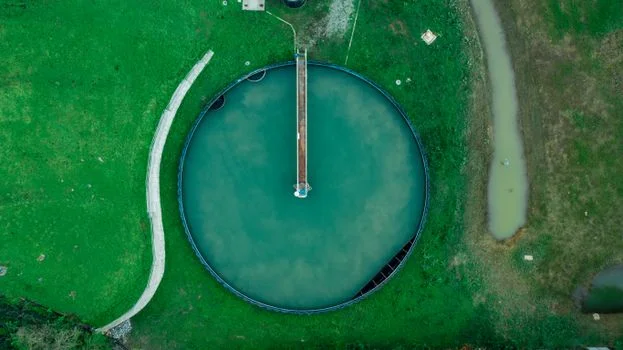
The right process train is the single most consequential technical decision you make before supplier selection. MBR (Membrane Bioreactor) covers 10–2,000 m³/day, takes roughly 60% of the footprint of a conventional plant of equal capacity, and produces BOD <5 mg/L, TSS <1 mg/L — clean enough for landscape irrigation and toilet-flushing reuse. The OPEX drivers are membrane module replacement every 5–7 years at $180–$320/m² and aeration energy of 0.4–0.7 kWh/m³, which is material in Lagos given grid instability and diesel-generator OPEX.
SBR (Sequencing Batch Reactor) covers 50–5,000 m³/day with no separate clarifier, producing BOD ≤20 mg/L and TSS ≤20 mg/L in typical operation. SBR is flexible under variable hydraulic load — useful for hotels and estates where occupancy swings 40% between weekday and weekend. OPEX is driven by decanter maintenance and timer integrity across 4–6 cycles per day; the equipment is mechanically simple but control-logic sensitive.
A WSZ packaged underground sewage treatment plant covers 1–80 m³/h (roughly 24–1,920 m³/day) using A/O biological contact oxidation with integrated sedimentation and disinfection in a single buried package. It is fully automatic, requires no dedicated operator, and is the lowest-CAPEX option for residential estates, schools, and clinics in the Lagos fringe where above-grade footprint is constrained. For flows above 80 m³/h, an MBR membrane bioreactor system takes over.
Conventional activated sludge becomes economic only above 500 m³/day, has the largest footprint, lowest CAPEX per m³, weakest effluent (BOD ≤30 mg/L), and requires a permanent on-site operator — best reserved for large institutional projects with land available and no reuse requirement.
| Technology | Flow range (m³/day) | Footprint vs CAS | Effluent BOD / TSS | Main OPEX driver | Best Lagos fit |
|---|---|---|---|---|---|
| MBR | 10–2,000 | ~40% | <5 / <1 mg/L | Membrane replacement 5–7 yr ($180–$320/m²) | Hotels, hospitals, water-reuse sites |
| SBR | 50–5,000 | ~70% | ≤20 / ≤20 mg/L | Decanter & timer integrity | Hotels, variable-load estates |
| WSZ packaged | 24–1,920 | ~30% (buried) | ≤20 / ≤20 mg/L | Blower service, no operator | Housing estates, schools, fringe sites |
| Conventional ASP | 500+ | 100% baseline | ≤30 / ≤30 mg/L | Sludge handling, operator cost | Large institutional campuses, industrial parks |
Match the train to the scenario: a Lekki housing estate of 100–300 m³/day typically goes WSZ or MBR; a 4-star Victoria Island hotel with 300–600 m³/day and a tight site goes MBR or SBR; a teaching hospital with strict reuse targets goes MBR; an industrial park with high oil & grease influent goes SBR or conventional ASP upstream of a dissolved air flotation (DAF) pretreatment step, with sludge dewatering handled by a plate and frame filter press for sludge dewatering downstream.
Chinese OEM vs Indian EPC vs Local Lagos Integrator: A Real Comparison
The three supplier tiers diverge on price, lead time, and post-commissioning support in ways the brochures do not acknowledge. A Chinese turnkey OEM delivers 30–45% the lowest CAPEX of the three, with 8–12 weeks total Apapa clearance plus inland transport to your site, a factory acceptance test recorded in China, and a 12–24 month warranty (HydropureWater field data, 2026). The weakness is post-commissioning spares lead time of 4–10 weeks air/sea from Guangzhou or Shanghai — fatal if a membrane stack fails in week three of a 90-day performance test.
An Indian EPC (Nicoles-class, operating since 2004) brings strong documentation, 15-day ex-works India delivery per published specifications, and an 18% typical CAPEX premium over Chinese for an equivalent MBR skid. Nigerian agent coverage is thinner than Chinese, so site response tends to be remote-diagnostic rather than in-person. The documentation advantage matters in bankable feasibility studies, where process and instrumentation drawings need to satisfy a lender's technical adviser.
A Lagos local integrator (Reiken, Devtek-class) carries a 20–35% CAPEX premium but delivers 24–72 hour site response, in-country welding and panel-building for fast retrofits, and the easiest LASEPA inspection liaison. Their sweet spot is 20–200 m³/day; they typically sub-contract larger projects rather than self-execute.
| Criterion | Chinese turnkey OEM | Indian EPC | Lagos local integrator |
|---|---|---|---|
| CAPEX vs baseline | −30 to −45% | +18% | +20 to +35% |
| Total lead time (PO to site) | 8–12 weeks | 10–14 weeks | 4–8 weeks (smaller units) |
| Site response after commissioning | 4–10 weeks (spares from China) | 2–6 weeks (remote + agent) | 24–72 hours in-country |
| Documentation quality | Variable | Strong (banker-ready) | Project-specific |
| LASEPA permit liaison | Via Nigerian agent | Via Nigerian agent | Direct, in-state |
| Warranty | 12–24 months | 12–18 months | 12 months typically |
The 2026 sweet spot for a Lagos housing estate of 250–500 m³/day is a hybrid: a Chinese-OEM MBR skid for the process heart, paired with a local integrator for civil works, installation supervision, and a 2-year O&M handover. The classic procurement trap is buying a Chinese package below $15,000 landed for a 50 m³/day site and discovering it cannot meet NESREA 50 mg/L BOD under Lagos 28–34°C ambient load conditions — the unit was specced for a cooler climate and the biological kinetics fall short.
2026 CAPEX and Lead Time by Plant Capacity in Lagos
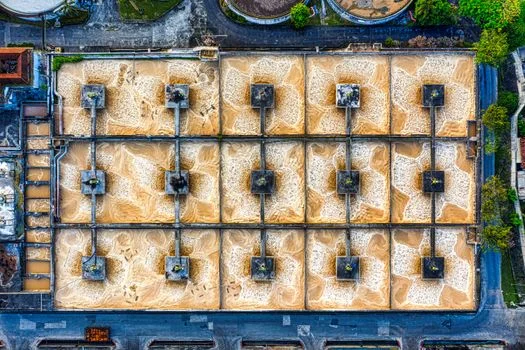
These figures assume a Q1 2026 NGN/USD rate of ₦1,580 = $1, 22% import duty plus 7.5% VAT on electromechanical STPs, and ₦4–7M Lagos inland transport from Apapa. Civil works are excluded; for a packaged skid on an existing concrete pad, these numbers are within ±15% of what a competitive bid should produce.
| Capacity | FOB China (USD) | Landed Lagos (USD) | Landed Lagos (NGN, millions) | Total PO to commissioning |
|---|---|---|---|---|
| 20 m³/day packaged | $18,000–$32,000 | $24,000–$42,000 | ₦37.9–₦66.4M | 10–14 weeks |
| 100 m³/day WSZ or MBR | $75,000–$140,000 | $95,000–$180,000 | ₦150–₦284M | 14–18 weeks (6–8 wk Apapa) |
| 250 m³/day MBR | $200,000–$320,000 | $260,000–$420,000 | ₦411–₦664M | 18–24 weeks |
| 500 m³/day SBR or MBR | $380,000–$580,000 | $480,000–$720,000 | ₦758–₦1,138M | 22–30 weeks (incl. civil) |
| 1,000 m³/day MBR train | $680,000–$950,000 | $850,000–$1,200,000 | ₦1,343–₦1,896M | 28–40 weeks (incl. LASEPA + 90-d test) |
The two largest cost variables on a Lagos bid are the 22% import duty line and the LASEPA permitting window. Negotiate the duty treatment explicitly — some electromechanical SKUs qualify for a lower rate under the ECOWAS tariff code for water-treatment equipment, but only if your supplier has the classification paperwork ready at Apapa.
6-Step Supplier Evaluation Checklist for a Lagos STP Project
- Confirm the reference list. At least 3 operating Lagos STP plants, visitable in person, not just Nigerian-flagged projects in Ghana or Cameroon. A Lekki estate reference beats a generic "West Africa" portfolio claim.
- Verify certifications and FAT. CE / ISO 9001 / ISO 14001, and request a recent Factory Acceptance Test video at the OEM's facility for an MBR or WSZ skid of your exact capacity. If the supplier cannot produce a 5-minute FAT walkthrough, walk away.
- Demand a process guarantee with liquidated damages. BOD ≤50 mg/L, TSS ≤50 mg/L, FC ≤200 cfu/100 mL on a 90-day performance test, with a refund or retrofit obligation if the plant fails. Vague "best efforts" language is not a guarantee.
- Validate the LASEPA track record. Ask for the file reference numbers of the last 5 permits the supplier pulled for Lagos projects, then call LASEPA to verify. Permitting is the most common cause of 6-month Lagos project slips.
- Lock the spares package. Membrane modules, diffusers, UV lamps, dosing pumps — with prices, lead time, and the in-country stocking location named. A membrane set air-freighted from Shanghai in week 8 of a performance test is a contractual breach, not a surprise.
- Negotiate a 2-year O&M handover with the local integrator as sub-tier to the OEM, not the OEM direct. You get Lagos-time-zone support and a single throat to choke, without giving up the OEM's process warranty.
Frequently Asked Questions
What does a 50 m³/day sewage treatment plant cost in Lagos in 2026? A packaged 50 m³/day unit lands in Lagos at $40,000–$75,000 (₦63–₦119M), assuming the 22% import duty + 7.5% VAT structure on a Chinese or Indian skid. A 500 m³/day MBR train lands at $480,000–$720,000 (₦758M–₦1.14B) including civil works allowance (HydropureWater field data, 2026).
Which Nigerian regulations govern STP discharge in Lagos? The Federal Republic of Nigeria National Environmental (Sanitation and Waste Control) Regulations 2009, enforced by NESREA, set the binding effluent limits: BOD₅ ≤50 mg/L, TSS ≤50 mg/L, and faecal coliform ≤200 cfu/100 mL. LASEPA adds state-level permitting on top.
How long does it take to install a packaged STP in Lagos? A 100 m³/day WSZ unit runs 14–18 weeks from PO to commissioning, including 6–8 weeks for Apapa clearance. A 1,000 m³/day MBR train runs 28–40 weeks, driven by the LASEPA EIA window and a 90-day performance test.
Which STP technology handles coastal salinity in Lekki and Victoria Island? MBR is preferred when influent chloride exceeds 1,500 mg/L. Conventional activated sludge performance degrades sharply above this threshold; MBR's controlled biomass retention and tighter effluent specification tolerate brackish loading that conventional plants cannot.
Is a Chinese OEM or a Lagos local integrator the better choice? A Lagos local integrator carries a 20–35% CAPEX premium over a Chinese OEM but cuts post-commissioning spares lead time from 4–10 weeks (air/sea from Guangzhou) to 24–72 hours in-country. For projects above 200 m³/day, the dominant 2026 pattern is a hybrid: Chinese-OEM skid + local integrator for civil works and O&M handover.